


 Deutsch
 English
 Español
 Français
 Nederlands
 Português


 Share
Share




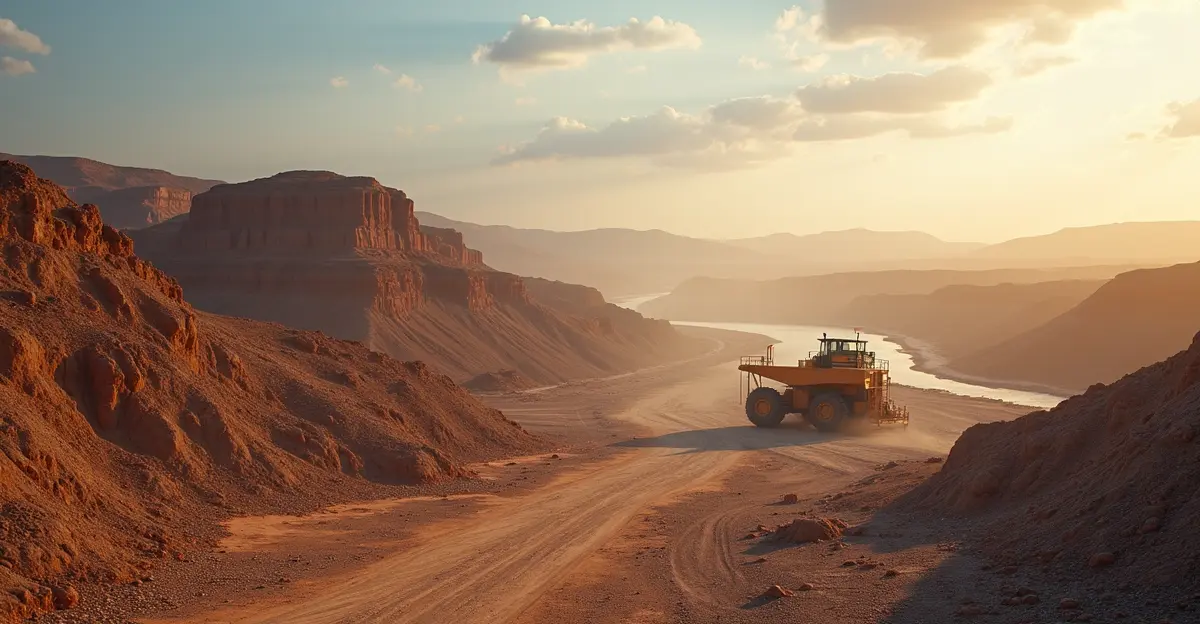
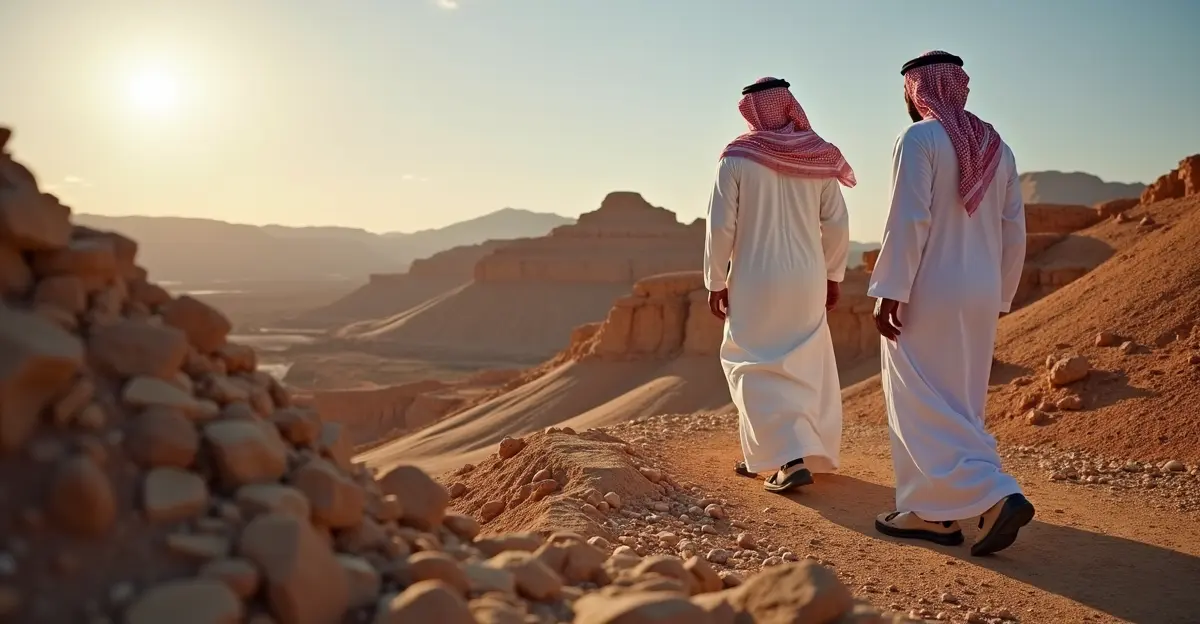
As China tightens its grip on the metals powering electric vehicles, wind turbines and defense systems, a new front in the Gulf critical minerals race has opened. Saudi Arabia and the United Arab Emirates are executing a historic strategic pivot from oil dependency to critical minerals dominance, deploying more than $100 billion through sovereign wealth funds to acquire lithium, copper and rare earth assets across Africa, Latin America and Central Asia.
Why the Gulf is moving from oil to critical minerals
China controls over 70% of rare earth mining and nearly 90% of global processing, according to Fortune and the Atlantic Council. Beijing has restricted rare earth exports before, and imposed new export controls in 2024-2025. For Gulf states, the next century of strategic power will be built not on hydrocarbons but on the minerals that electrify economies.
Saudi Arabia has upgraded its identified mineral wealth to an estimated $2.5 trillion under Vision 2030, while the UAE is positioning Abu Dhabi as a critical minerals processing hub. Both frame their strategy as diversification rather than decoupling from China, their largest oil customer.
Saudi Arabia's Manara Minerals and the $2.5 trillion bet
At the center of Riyadh's push is Manara Minerals, a PIF-Ma'aden joint venture. Launched in 2023 with $2.5 billion, Manara has completed a $2.5 billion acquisition of a 10% stake in Vale Base Metals, securing offtake for copper and nickel. It aims to scale to $20 billion by 2030, targeting copper, lithium, nickel, cobalt and rare earths.
In November 2025, Saudi Arabia announced a rare earth refinery joint venture with MP Materials and the U.S. Department of War. MP and the DoW hold a combined 49% stake while Ma'aden holds at least 51%, producing separated rare earth oxides for U.S., Saudi and allied defense sectors. 'This expands the global rare earth supply chain beyond China,' MP Materials said.
The UAE's Orion Consortium and the neutral hub strategy
The UAE is taking a different route. In October 2025, Abu Dhabi's ADQ joined the U.S. DFC and Orion Resource Partners to form the Orion Critical Mineral Consortium, a $1.8 billion platform targeting $5 billion. It focuses on near-term production assets and domestic sovereign wealth fund investments in processing.
Analysts at IISS and ODI describe the Gulf states as emerging intermediary powers that can sit between Chinese supply and Western demand without choosing sides.
How Saudi Arabia and the UAE compare
| Dimension | Saudi Arabia | UAE |
|---|---|---|
| Lead vehicle | Manara Minerals (PIF/Ma'aden) | Orion Critical Mineral Consortium (ADQ/DFC) |
| Initial capital | $2.5 billion, targeting $20 billion | $1.8 billion, targeting $5 billion |
| Flagship deal | 10% Vale Base Metals; rare earth refinery with MP Materials | Orion CMC with U.S. DFC and ADQ |
What the Gulf pivot means for China, the US and Europe
The Gulf's entry introduces a third pole into the critical minerals order. For Washington and Brussels, Gulf processing hubs offer a friend-shoring alternative to Chinese refineries, especially as the EU Critical Raw Materials Act sets a 65% import ceiling from any single supplier by 2030. For Beijing, the risk is that Gulf refining erodes its pricing power.
Yet the pivot brings new geopolitical complications. Gulf states are balancing security ties with the U.S. against China's role as their largest energy customer, and Western policymakers remain wary of sensitive technology leaks.
Frequently asked questions
What is the Gulf critical minerals race?
It refers to Saudi Arabia's and the UAE's multibillion-dollar push to secure lithium, copper and rare earth assets and build processing capacity, challenging China's supply chain dominance.
How much are the Gulf states investing?
More than $100 billion through sovereign wealth funds. Saudi Arabia aims to mobilize $100 billion in mining investment by 2035, while the UAE's Orion Consortium has raised $1.8 billion toward $5 billion.
Can the Gulf replace China in rare earth processing?
Not in the short term. China retains nearly 90% of global processing capacity, and catching up could take a decade. Gulf hubs are a diversification option, not an immediate substitute.
The outlook for 2026 and beyond
As the U.S. and EU race to diversify under the EU Critical Raw Materials Act and new bilateral resource deals, the Gulf's aggressive entry is reshaping the balance of power over minerals essential to the energy transition and advanced technology.


Follow Discussion