


 Deutsch
 English
 Español
 Français
 Nederlands
 Português


 Share
Share




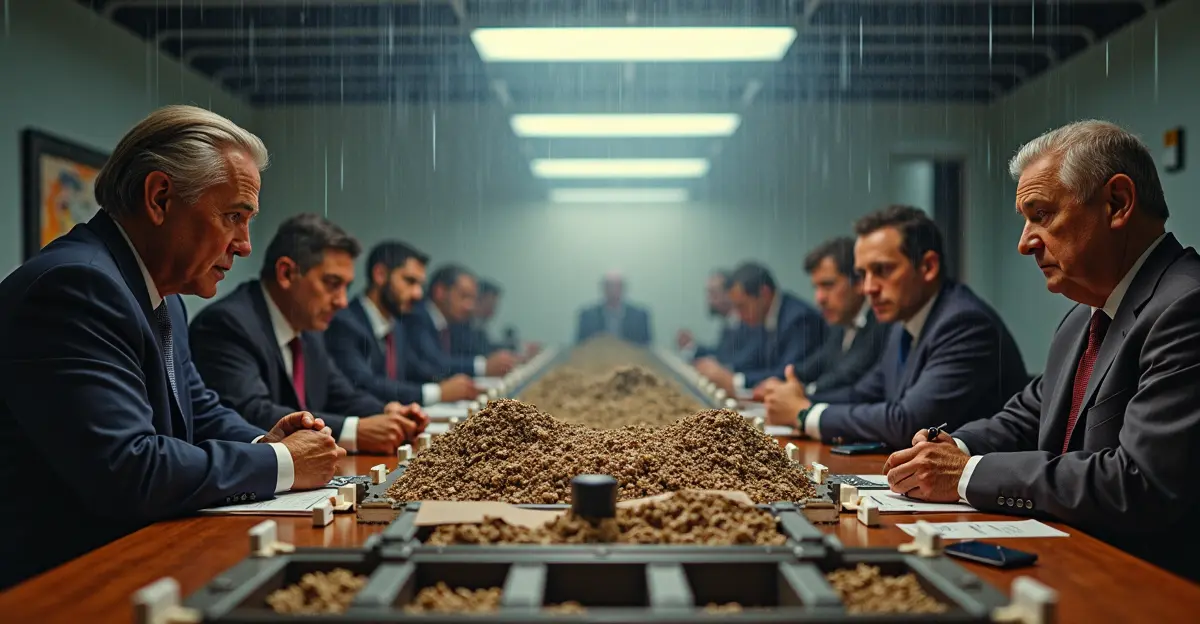
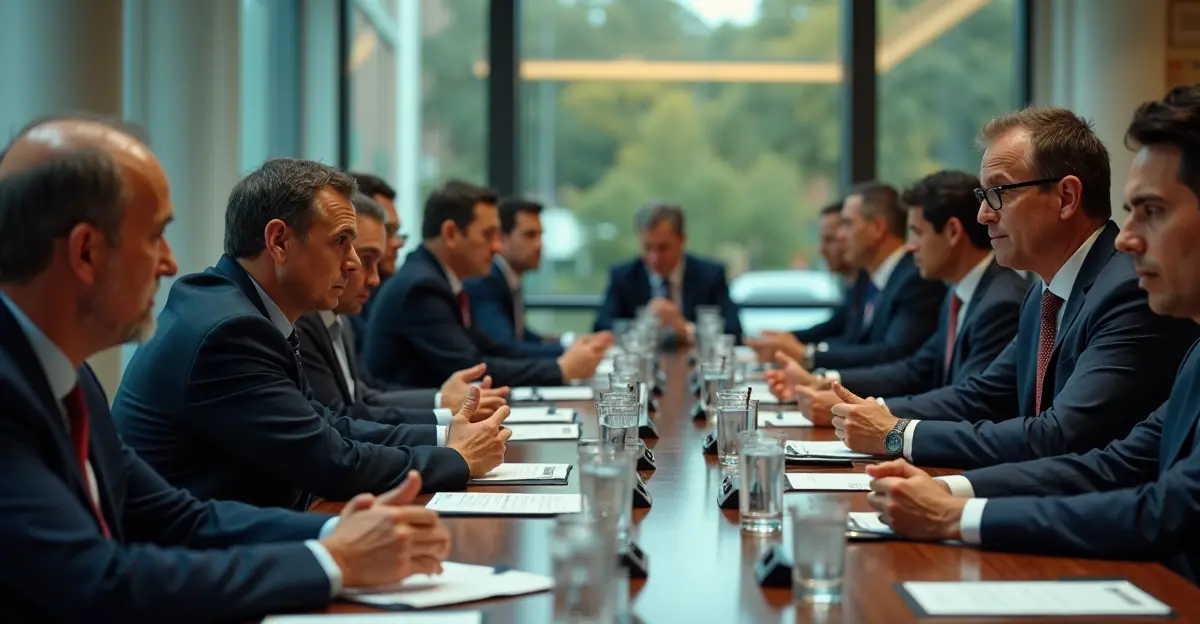
On February 4, 2026, the United States hosted the Critical Minerals Ministerial in Washington, D.C., bringing together representatives from 54 nations and the European Commission to launch the most ambitious coordinated Western effort yet to break China's stranglehold on critical mineral supply chains. The event, led by Secretary of State Marco Rubio and Vice President JD Vance, produced the FORGE initiative (Forum on Resource Geostrategic Engagement), 11 new bilateral frameworks, and over $30 billion in mobilized financing — marking a defining geopolitical and economic pivot of 2026.
What Is the FORGE Initiative?
FORGE — the Forum on Resource Geostrategic Engagement — is a permanent multilateral platform that succeeds the Minerals Security Partnership (MSP). Chaired by the Republic of Korea, FORGE aims to coordinate investment, technology transfer, and policy alignment among allied nations to secure supply chains for critical minerals essential to AI, defense, batteries, robotics, and advanced manufacturing. The initiative represents a structural upgrade from the MSP's project-based approach to a standing body with dedicated secretariat and funding mechanisms.
According to the U.S. State Department, FORGE will focus on three pillars: accelerating mining and processing projects, promoting recycling and circular economy solutions, and establishing transparent market standards. The FORGE initiative critical minerals framework is designed to be inclusive of both resource-rich developing nations and industrialized consumers, offering a value proposition beyond simple extraction.
Why This Matters: China's Near-Total Dominance
China currently controls approximately 90% of global rare earth refining capacity and nearly 99% of heavy rare earth separation — a concentration that the U.S. government has labeled an unacceptable national security risk. Rare earths and critical minerals are indispensable for permanent magnets in electric vehicle motors, wind turbines, precision-guided munitions, and advanced electronics. The rare earth supply chain dependency on China has been a longstanding vulnerability, but the accelerating demand from AI data centers and defense applications has turned this into an urgent crisis.
"We cannot allow any single nation to hold a chokehold over the technologies that define our future," Secretary Rubio said at the ministerial. "FORGE is our collective answer to that challenge."
Key Outcomes of the 2026 Critical Minerals Ministerial
11 New Bilateral Frameworks
The United States signed bilateral critical minerals agreements with Argentina, Morocco, Peru, the Philippines, the United Arab Emirates, the United Kingdom, and several other nations. These frameworks cover joint geological surveys, investment facilitation, environmental standards, and technology transfer. Each agreement is tailored to the partner country's resource endowment — for instance, Argentina's lithium reserves and Morocco's phosphate and cobalt potential.
Project Vault: $10 Billion Strategic Reserve
The Export-Import Bank of the United States (EXIM) announced Project Vault, a $10 billion initiative to establish a U.S. Strategic Critical Minerals Reserve. This reserve will stockpile processed rare earth oxides, lithium, cobalt, and other key materials to buffer against supply disruptions. The project is structured as a public-private partnership, with initial funding from EXIM and matching commitments from industry consortia.
Pax Silica and Private Sector Mobilization
A complementary $250 million fund, Pax Silica, was launched to secure semiconductor-grade silicon supply chains. Additionally, a memorandum of understanding between Glencore and Orion Resource Partners will channel investments into copper and cobalt projects in the Democratic Republic of Congo, diversifying sources away from Chinese-dominated supply chains.
U.S.-EU Critical Minerals Action Plan
Alongside the ministerial, the United States and the European Union released a joint Critical Minerals Action Plan. The plan outlines a plurilateral trade initiative aimed at reducing tariffs, harmonizing environmental standards, and co-financing processing facilities in allied nations. The US EU Critical Minerals Action Plan is expected to serve as a template for broader Transatlantic cooperation on resource security.
Impact on Global Trade and Geopolitics
The February 2026 realignment is already reshaping global trade flows. Analysts at the Center for Strategic and International Studies estimate that full Western supply chain independence from China remains 5–7 years away, requiring approximately $60 billion in cumulative investment over the next decade. However, the FORGE initiative's scale and speed have surprised many observers.
"This is not just about mining more — it's about building an entirely new ecosystem of processing, refining, and recycling outside of China," said Dr. Sarah Kim, a critical minerals expert at the Atlantic Council. "The $30 billion mobilized in just six months signals a level of political will we haven't seen since the Manhattan Project."
China has responded by tightening export controls on gallium, germanium, and antimony — materials critical for semiconductors and defense — and by accelerating its own overseas mining investments in Africa and Latin America. The geopolitical competition for critical minerals is intensifying, with both blocs offering infrastructure deals and trade agreements to resource-rich nations.
Expert Perspectives
"FORGE represents a paradigm shift from reactive crisis management to proactive strategic planning," said former U.S. Deputy Assistant Secretary of Defense for Industrial Policy, William Greenwalt. "The inclusion of South Korea as chair is particularly significant — it signals that Asia-Pacific allies are central to this effort, not afterthoughts."
However, some experts caution that the initiative faces significant hurdles. Environmental and indigenous rights groups have raised concerns about the social and ecological impacts of rapid mining expansion. The U.S. State Department has pledged that all FORGE projects will adhere to the highest environmental, social, and governance (ESG) standards, but implementation remains a challenge.
Frequently Asked Questions
What is the FORGE initiative?
FORGE (Forum on Resource Geostrategic Engagement) is a permanent multilateral platform launched in February 2026 to coordinate allied efforts in securing critical mineral supply chains. It succeeds the Minerals Security Partnership and is chaired by South Korea.
Why are critical minerals important?
Critical minerals such as rare earths, lithium, cobalt, and gallium are essential for manufacturing electric vehicle batteries, wind turbines, defense systems, AI hardware, and consumer electronics. China dominates processing, creating supply chain vulnerabilities for Western economies.
How much funding has been mobilized?
Over $30 billion in U.S. government financing has been mobilized, including $10 billion for Project Vault (a strategic reserve) and $250 million for Pax Silica (semiconductor supply chains). Additional private sector commitments are expected to bring total investment to over $60 billion within a decade.
Which countries signed bilateral agreements?
Eleven new bilateral frameworks were signed with Argentina, Morocco, Peru, the Philippines, the United Arab Emirates, the United Kingdom, and others. These agreements cover joint exploration, investment, and technology sharing.
When will Western supply chains be independent from China?
Analysts estimate 5–7 years for meaningful independence, assuming sustained investment and policy support. Full decoupling may take longer due to China's entrenched processing infrastructure.
Conclusion: A New Era of Resource Geopolitics
The 2026 Critical Minerals Ministerial and the FORGE initiative represent a watershed moment in global resource strategy. By combining bilateral deals, multilateral coordination, massive public investment, and private-sector partnerships, the U.S. and its allies are building an end-to-end supply chain spanning mining, processing, and recycling. While challenges remain — from environmental concerns to China's countermeasures — the direction is clear: the era of passive dependency on concentrated supply chains is over. The critical mineral arms race has begun, and 2026 will be remembered as the year the West finally mobilized.




Follow Discussion