


 Deutsch
 English
 Español
 Français
 Nederlands
 Português


 Share
Share




In early 2026, the BRICS+ alliance launched BRICS Pay, a cross-border settlement platform that integrates national payment systems such as China's CIPS, India's UPI, Russia's SPFS, and Brazil's Pix, enabling local-currency trade settlement without relying on SWIFT or the US dollar. At the heart of this system lies 'The Unit,' a gold-backed digital settlement token that settles transactions in under 60 seconds on a permissioned Cardano blockchain. With intra-bloc local currency trade surpassing 67% and the dollar's global reserve share falling below 57%, the question arises: does BRICS Pay represent a genuine structural shift toward a multipolar monetary system, or is it a fragmented arrangement vulnerable to internal political tensions and technological disparities?
What Is BRICS Pay and How Does It Work?
BRICS Pay is a decentralized payment messaging and settlement platform designed to bypass the SWIFT network. It connects the existing fast payment systems of member nations: China's Cross-Border Interbank Payment System (CIPS), India's Unified Payments Interface (UPI), Russia's System for Transfer of Financial Messages (SPFS), and Brazil's Pix. The platform allows direct transactions in local currencies, eliminating the need for dollar conversion. The BRICS Pay architecture includes a Decentralized Messaging System (DCMS) and multi-currency support, with governance managed through a DAO-like structure among central banks.
The Unit: A Gold-Backed Digital Settlement Token
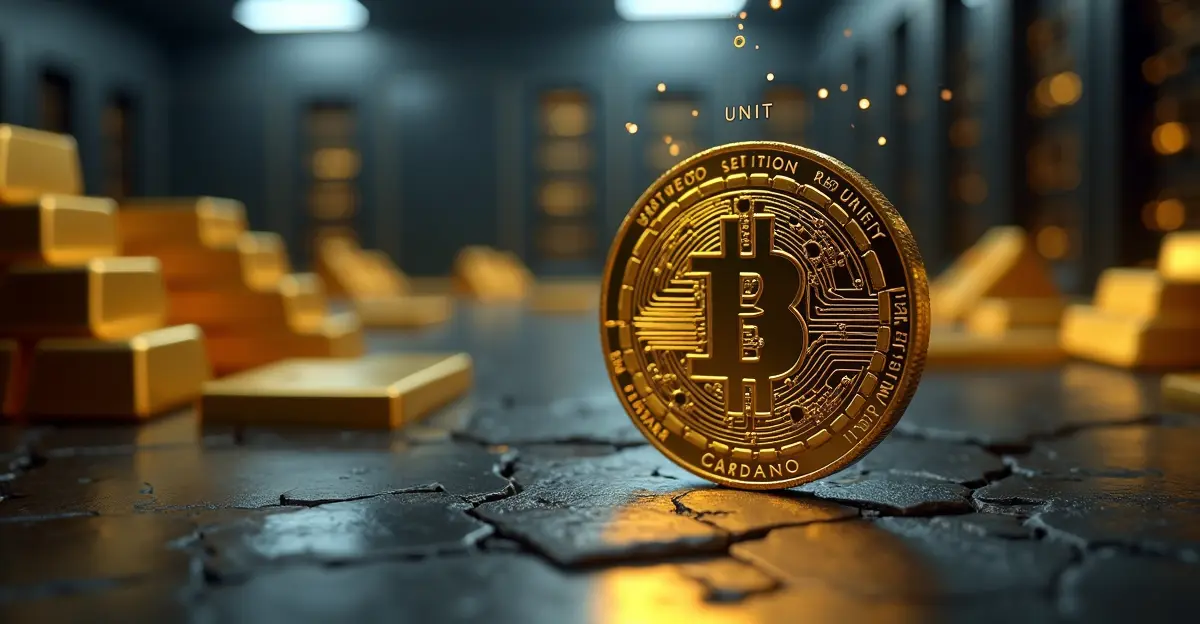
The Unit is a digital token backed 40% by physical gold held by member central banks and 60% by a basket of five BRICS currencies (Brazilian real, Chinese yuan, Indian rupee, Russian ruble, and South African rand). Its value is recalibrated daily. Operating on a permissioned Cardano blockchain, The Unit enables near-instant settlement—under 10 seconds compared to 1–3 days via SWIFT—at 30–40% lower cost. As of March 2026, the pilot processes approximately $2.5 billion monthly, primarily in energy and commodity transactions. Russia has used The Unit for oil shipments to China and India, while Brazil has settled soybean and iron ore exports through the token.
The Erosion of Dollar Hegemony
The launch of BRICS Pay coincides with historic shifts in the global monetary landscape. The US dollar's share of global foreign exchange reserves fell to 56.32% in early 2026, its lowest level since the IMF began tracking in 1995. Meanwhile, the de-dollarization trend among BRICS nations has accelerated: intra-bloc local currency trade reached 67%, up from less than 30% a decade ago. China's CIPS system now handles over $14.7 trillion in annual transaction volume, connecting 1,500+ institutions across 117 countries. Central banks globally purchased 263 tonnes of gold in the first quarter of 2026 alone, continuing a multi-year buying spree.
The Petrodollar Shift
A critical catalyst was the expiration of Saudi Arabia's 50-year petrodollar exclusivity pact with the United States in 2025. Riyadh has since begun accepting yuan and other currencies for oil sales, with yuan-priced crude rising from 15% to 22% in a new Saudi-China deal. This severs the automatic demand for US dollars that underpinned the petrodollar system for half a century. Other major oil exporters, including the UAE and Nigeria, are exploring non-dollar pricing, further eroding the dollar's commodity pricing dominance.
Internal Challenges: Political Tensions and Technical Disparities
Despite its operational launch, BRICS Pay faces significant hurdles. Political divisions among members—particularly between China and India, and between Russia and other members over the Ukraine war—threaten consensus on governance and expansion. Technical interoperability remains a challenge: India's UPI processes over 10 billion transactions monthly, while Russia's SPFS handles far fewer, creating asymmetry. The challenges facing BRICS Pay adoption include limited liquidity for The Unit, which remains an institutional-grade instrument not accessible to retail users. The dollar still dominates 88% of global forex transactions, and SWIFT processes over $150 trillion annually—dwarfing BRICS Pay's initial volumes.
Impact on Global Finance and Investors
For investors and policymakers, BRICS Pay signals a concrete institutional challenge to dollar hegemony. The platform offers emerging economies a sanctions-resistant alternative, reducing vulnerability to Western financial penalties. However, the most likely outcome is not the dollar's replacement but a multipolar system where multiple settlement currencies coexist. The implications of BRICS Pay for global trade include lower transaction costs for intra-bloc trade, potential fragmentation of global payment standards, and increased demand for gold as central banks diversify reserves. Multinational corporations must now prepare for a world with parallel payment rails, each with different compliance and currency risk profiles.
Expert Perspectives
"The Unit proves that alternative settlement infrastructure can operate at scale," says Dr. Elena Morozova, a monetary policy researcher at the Moscow-based Institute for Global Finance. "But liquidity and trust take decades to build. The dollar's network effects are not going away overnight." Meanwhile, Indian central bank officials leading the BRICS Pay technical coordination emphasize that the platform is designed as a complement, not a replacement, to existing systems. "We are building resilience through diversity," a senior RBI official stated at the 2026 India summit.
Frequently Asked Questions
What is BRICS Pay?
BRICS Pay is a cross-border settlement platform launched in 2026 that integrates national payment systems of BRICS+ members to enable local-currency trade without SWIFT or the US dollar.
What is The Unit token?
The Unit is a gold-backed digital settlement token used within BRICS Pay, backed 40% by physical gold and 60% by a basket of five BRICS currencies, settling transactions in under 60 seconds on a permissioned blockchain.
How does BRICS Pay affect the US dollar?
BRICS Pay reduces reliance on the dollar for intra-bloc trade, contributing to the dollar's declining reserve share (56.32% in 2026) and accelerating the trend toward a multipolar monetary system.
What are the main challenges for BRICS Pay?
Key challenges include political tensions among members, technical interoperability issues, limited liquidity for The Unit, and the entrenched dominance of the dollar in global forex and reserve markets.
When will BRICS Pay be fully operational?
Full operational deployment was targeted at the 2026 BRICS summit in India, with the platform already processing pilot transactions in energy and commodities as of early 2026.
Conclusion: A Multipolar Future, Not a Dollar Collapse
BRICS Pay and The Unit represent the most concrete institutional challenge to dollar hegemony in decades. With intra-bloc local currency trade at 67% and the dollar's reserve share below 57%, the infrastructure for a multipolar monetary system is being built in real time. However, the dollar's deep liquidity, network effects, and role in 88% of forex transactions ensure it remains dominant for the foreseeable future. The most realistic outlook is a gradual transition toward a world with multiple reserve currencies and payment systems—where BRICS Pay serves as a parallel rail for the Global South, not a replacement for SWIFT. For investors and businesses, the era of a single global payment standard is ending; adaptability to a fragmented financial landscape is now a strategic imperative.




Follow Discussion