


 Deutsch
 English
 Español
 Français
 Nederlands
 Português


 Share
Share




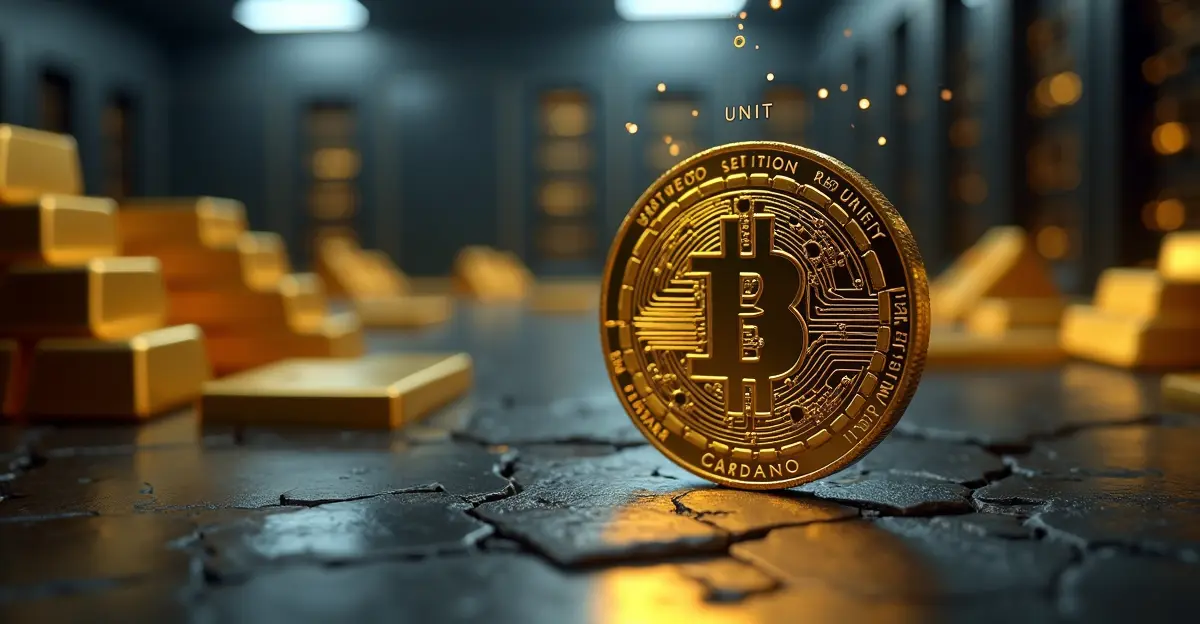
In early 2026, the BRICS+ bloc officially launched 'The Unit,' a gold-backed digital settlement token designed to facilitate intra-bloc trade in local currencies, bypassing the SWIFT system and reducing reliance on the US dollar. Backed 40% by physical gold and 60% by a basket of five BRICS currencies (Brazilian real, Chinese yuan, Indian rupee, Russian ruble, and South African rand), The Unit operates on a permissioned blockchain — reportedly Cardano-based — enabling near-instant settlement for energy and commodity transactions among member nations. This launch represents the first operational alternative to dollar-denominated settlement among major economies and coincides with historic de-dollarization milestones: the US dollar's share of global foreign exchange reserves has fallen to 56.32%, its lowest level since 1995, while intra-bloc local-currency trade has reached 67%.
Context: The De-Dollarization Landscape in 2026
The launch of The Unit is the culmination of a multi-year push by BRICS+ nations to build an alternative financial architecture. The weaponization of Western financial sanctions, particularly the 2022 freeze of Russia's $300 billion in central bank reserves, accelerated efforts to reduce dependence on dollar-based systems. Central banks globally have responded by diversifying reserves: gold purchases exceeded 1,100 tonnes in 2025 alone, marking the largest annual increase in 70 years. China's Cross-Border Interbank Payment System (CIPS) now connects over 5,000 institutions across 190 countries, while Russia's SPFS, India's UPI, and Brazil's Pix have expanded interoperability under the BRICS Pay umbrella.
The US dollar's reserve share decline — now eight consecutive quarters below 57% — reflects structural shifts rather than cyclical fluctuations. IMF COFER data shows the dollar's share dropping from 71% in 2000 to 56.32% in Q2 2025. Meanwhile, yuan-denominated energy trade now approaches 24% of Brent crude volumes, and Saudi Arabia has increased yuan-priced oil exports to China, signaling erosion of the petrodollar system.
How The Unit Works: Architecture and Mechanism
Gold-Backed Stability
The Unit's 40% gold backing provides a stable anchor distinct from purely fiat-based systems. Each Unit represents a claim on physical gold held in BRICS member vaults, audited quarterly by a rotating panel of international firms. The remaining 60% is backed by a weighted basket of member currencies, rebalanced annually based on trade volumes and GDP contributions. This hybrid structure aims to combine gold's historical store of value with the liquidity of major emerging-market currencies.
Permissioned Blockchain and Settlement
Built on a permissioned version of the Cardano blockchain, The Unit enables near-instant settlement — transactions settle in under 10 seconds compared to 1-3 days via SWIFT. Access is restricted to central banks, sovereign wealth funds, and authorized commercial banks within the BRICS+ network. Each transaction is validated by a distributed network of member nodes, ensuring transparency while maintaining privacy for trade counterparties. The system also integrates with BRICS Pay and CBDC frameworks, allowing seamless conversion between The Unit and domestic digital currencies.
Use Cases: Energy and Commodity Trade
The initial pilot, launched in late 2025 and expanded to full operations in early 2026, focuses on energy and commodity transactions. Russia has already settled several oil shipments to China and India using The Unit, while Brazil has used it for soybean and iron ore exports. The system processes approximately $2.5 billion in monthly trade volume as of March 2026, according to BRICS+ financial officials. While still a fraction of total intra-bloc trade (estimated at $1.2 trillion annually), the trajectory suggests rapid scaling as more members integrate their payment infrastructure.
Impact and Implications for Global Finance
The Unit represents the most concrete de-dollarization effort to date, but experts caution against overinterpreting its near-term impact. The US dollar still dominates 88% of foreign exchange transactions and remains the primary invoicing currency for global trade. However, the gradual erosion of dollar hegemony is evident in multiple metrics: central bank reserve diversification, the rise of local-currency trade agreements, and the operational launch of alternative settlement systems.
For BRICS+ members, The Unit offers tangible benefits: reduced transaction costs (estimated 30-40% savings compared to SWIFT-based dollar settlements), elimination of correspondent banking fees, and insulation from unilateral sanctions. For the broader global financial system, it introduces a precedent for multipolar settlement infrastructure — one that could be adopted by other regional blocs, including ASEAN and the African Union.
Challenges and Limitations
Despite its promise, The Unit faces significant hurdles. Liquidity remains thin compared to dollar markets, and the basket's composition creates complexity in valuation and hedging. Political disagreements among BRICS+ members — particularly between India and China — could hinder governance and expansion. Moreover, the permissioned blockchain model limits transparency and may face resistance from nations advocating for open, decentralized systems. The Unit is not a retail currency; it is an institutional-grade instrument for governments and central banks, which limits its direct impact on everyday commerce.
Expert Perspectives
"The Unit is a symbolic milestone, but it is not yet a dollar replacement," says Dr. Elena Morozova, a former Russian central bank advisor now at the Moscow-based Institute for International Finance. "Its real significance lies in proving that an alternative settlement system can operate at scale. The infrastructure is now in place; the question is adoption velocity."
Western analysts are more skeptical. "The dollar's dominance is supported by deep, liquid capital markets, rule of law, and network effects that cannot be replicated overnight," argues James Carter, a senior fellow at the Atlantic Council in Washington. "The Unit may facilitate intra-BRICS trade, but it will not challenge the dollar's role in global finance for at least a decade."
Market participants are watching closely. A recent survey by the Official Monetary and Financial Institutions Forum (OMFIF) found that 68% of central bank reserve managers expect a multipolar reserve system to emerge within 10 years, with gold, the yuan, and digital settlement tokens playing larger roles.
Frequently Asked Questions
What is The Unit?
The Unit is a gold-backed digital settlement token launched by BRICS+ nations in early 2026. It is backed 40% by physical gold and 60% by a basket of member currencies, designed to facilitate cross-border trade in energy and commodities without using the SWIFT system or the US dollar.
How does The Unit differ from a BRICS common currency?
The Unit is not a common currency for everyday use. It is a settlement instrument for central banks and authorized financial institutions to settle trade transactions. It does not replace domestic currencies and is not intended for retail payments.
Which countries are participating in The Unit?
The initial participants are the original BRICS nations (Brazil, Russia, India, China, South Africa) plus new members Egypt, UAE, Saudi Arabia, Iran, and Ethiopia. Other BRICS+ members may join as the system scales.
What blockchain does The Unit use?
The Unit operates on a permissioned version of the Cardano blockchain, chosen for its low energy consumption, high throughput, and smart contract capabilities. The permissioned model ensures only authorized entities can validate transactions.
Will The Unit replace the US dollar?
Most experts agree that The Unit will not replace the dollar in the near term. It represents a step toward a multipolar financial system where multiple currencies and settlement instruments coexist. The dollar's dominance is expected to erode gradually over decades, similar to the British pound's historical trajectory.
Conclusion: A Multipolar Future Takes Shape
The launch of The Unit marks a pivotal moment in the evolution of the global financial system. While it does not spell the end of dollar dominance, it demonstrates that viable alternatives can be built and operated at scale. The combination of gold backing, blockchain technology, and political will among BRICS+ nations creates a template that other regional blocs may follow. As the US dollar's reserve share continues its structural decline and intra-bloc trade in local currencies reaches new highs, the question is no longer whether a multipolar system will emerge, but how quickly it will take shape. For now, The Unit remains a symbolic yet operational first step — a bridge between the old financial order and the new.
Sources
IMF COFER data, Q2 2025; BRICS+ Joint Statement on Financial Cooperation, January 2026; World Gold Council, 2025 Annual Gold Demand Trends; OMFIF Central Bank Reserve Management Survey, 2025; informedclearly.com; forerunner.com; bestbrokers.com.




Follow Discussion