


 Deutsch
 English
 Español
 Français
 Nederlands
 Português


 Share
Share




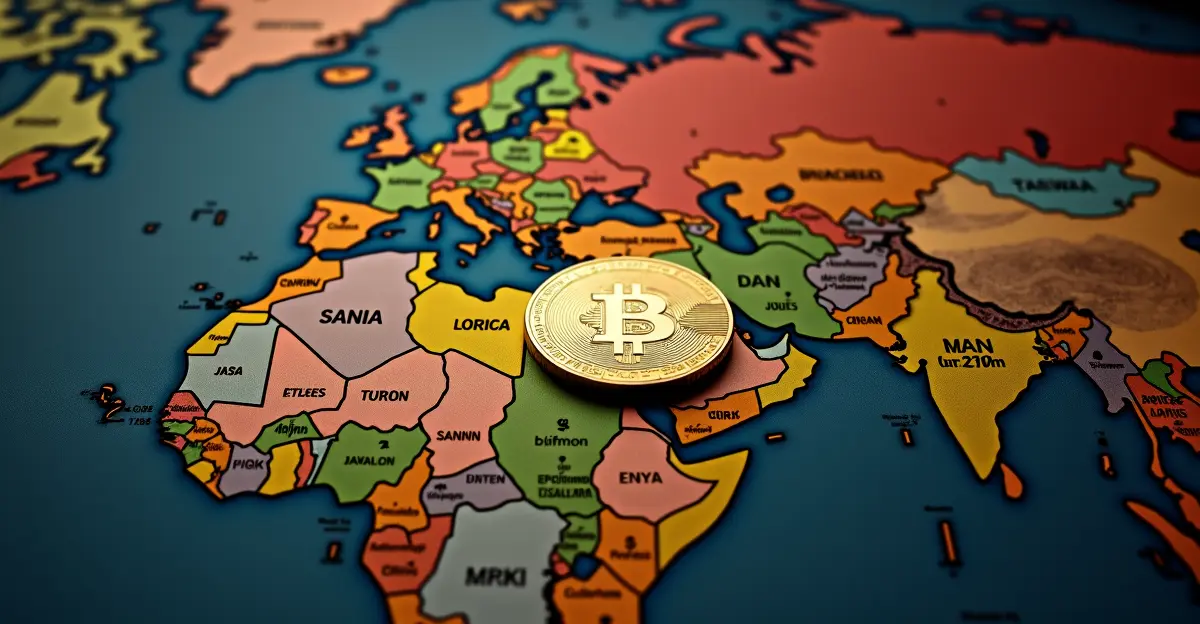
In 2026, the BRICS+ alliance has moved beyond rhetoric with the operational launch of BRICS Pay, a cross-border settlement platform designed to bypass SWIFT and reduce dollar dependency. Integrating national payment systems such as China's CIPS, India's UPI, Brazil's Pix, and Russia's SPFS, the system enables local-currency trade settlement among members now representing 45% of the global population. With intra-bloc local currency trade surpassing 67% and full deployment targeted at the 2026 India summit, BRICS Pay represents the most concrete challenge to dollar hegemony in decades.
What is BRICS Pay?
BRICS Pay is a decentralized, independent payment messaging mechanism developed by the BRICS intergovernmental organization. First proposed in 2018 by the BRICS Business Council, the system allows member states to receive and make payments in their own local currencies, bypassing the US dollar and the SWIFT network. The platform integrates existing national payment infrastructures into a unified cross-border settlement layer, enabling seamless transactions between Brazil, Russia, India, China, South Africa, Egypt, Ethiopia, Indonesia, Iran, Saudi Arabia, and the UAE — the 11 current member states.
According to the official BRICS Pay strategic vision document, the system aims to create an independent, decentralized financial messaging and payment settlement mechanism that reduces reliance on Western-dominated financial systems. The BRICS de-dollarization push has accelerated significantly since the 2024 Kazan Summit, where leaders endorsed cross-border payment instruments to minimize trade barriers.
Technical Architecture: How BRICS Pay Works
Integration of National Payment Systems
Rather than building entirely new infrastructure, BRICS Pay connects existing national payment rails through a decentralized network. The four cornerstone systems are:
- China's CIPS (Cross-Border Interbank Payment System) — Launched in 2015, CIPS processed RMB 175.49 trillion ($24.47 trillion) in 2024, with 176 direct and 1,514 indirect participants across 121 countries. It serves as the backbone for renminbi-denominated trade settlement.
- India's UPI (Unified Payments Interface) — The world's most successful real-time payment system, UPI processed over 100 billion transactions in 2024, with monthly volumes exceeding 15 billion. Its QR-code-based architecture provides a proven model for retail and wholesale payments.
- Brazil's Pix — Launched in 2020, Pix is approaching 8 billion monthly transactions as of late 2025, with annual volume estimated at $6.7 trillion. Over 170 million Brazilians (93% of the adult population) use Pix, making it the fastest-growing instant payment system globally.
- Russia's SPFS (System for Transfer of Financial Messages) — Developed after 2014 sanctions, SPFS now connects 177 financial institutions from 24 countries. It operates 24/7/365 and costs less than $0.02 per message, offering a sanctions-resistant messaging channel.
Decentralized Cross-Border Messaging System (DCMS)
At the heart of BRICS Pay lies the DCMS, developed by scientists at Saint Petersburg State University. Unlike SWIFT's centralized hub-and-spoke model, DCMS operates transparently without any central owner. Participants manage their own nodes, making the system resistant to external abuse, control, or interference. The system automatically builds transaction routes between participants, ensuring reliable communication even when direct transmission is unavailable. With recommended settings, DCMS claims to reach 20,000 messages per second while imposing minimal hardware requirements. The system is planned to become open-source after the piloting phase.
The Unit: Gold-Backed Digital Settlement Token
A key innovation within the BRICS Pay ecosystem is 'The Unit,' a gold-backed digital settlement token launched in pilot form in late 2025. Structured with 40% physical gold backing and 60% a currency basket equally split among the Brazilian Real, Chinese Yuan, Indian Rupee, Russian Ruble, and South African Rand, The Unit operates on a permissioned Cardano-based blockchain. The Reserve Bank of India has proposed a 'CBDC Bridge' allowing the Indian E-Rupee to swap directly into The Unit for wholesale energy settlements, bypassing correspondent banks and reducing fees. Settlements occur in under 60 seconds at minimal cost, positioning The Unit as a wholesale interbank instrument rather than a retail cryptocurrency.
The BRICS Unit gold-backed token represents a structural shift toward financial multi-polarity, offering a stable, asset-backed alternative for cross-border settlements that does not rely on any single national currency.
Strategic Implications for Global Finance
De-dollarization in Numbers
The launch of BRICS Pay coincides with accelerating de-dollarization trends. The U.S. dollar's global reserve share has fallen below 57% for the first time in 30 years, while central banks purchased a record 1,237 tonnes of gold in 2025 — the third consecutive year above 1,000 tonnes. Intra-bloc local currency settlements among BRICS+ nations have surpassed 67%, driven by three key factors: the weaponization of financial sanctions (notably the freezing of $300 billion in Russian reserves), rising U.S. sovereign debt exceeding $36 trillion, and the fracturing of the petrodollar system after Saudi Arabia ended its 50-year oil exclusivity deal in 2024.
Sanctions Resilience
For Russia and Iran — both under comprehensive Western sanctions — BRICS Pay offers a critical lifeline. Russia has been the strongest proponent of the system, viewing it as essential to bypass SWIFT and continue international trade. The DCMS architecture, with its decentralized node structure, makes it extremely difficult for any single country or coalition to block transactions. As one BRICS diplomat noted, 'The multipolar order we aim for is reflected in the international financial system.'
The BRICS sanctions resilience strategy has attracted interest from other nations seeking to reduce exposure to financial coercion, including several ASEAN and African countries that joined as partner nations in 2025.
Impact on the Dollar's Reserve Status
While the dollar still dominates forex turnover at 88%, its reserve share decline from over 70% in 2000 to below 57% in 2026 represents a significant erosion. BRICS Pay does not aim to immediately replace the dollar-centered framework but rather to build parallel payment rails that gradually reduce dependency. The system's integration of CBDCs — including China's digital yuan, India's digital rupee, and Russia's digital ruble — creates a comprehensive alternative infrastructure that could eventually challenge the dollar's role in trade invoicing and settlement.
India's Pivotal Role and the 2026 Summit
India chairs BRICS in 2026 under the theme 'Building for Resilience, Innovation, Cooperation and Sustainability.' The Reserve Bank of India leads technical coordination for BRICS Pay, drawing on India's successful UPI digital payments model. Full operational deployment is targeted for the BRICS summit in New Delhi later this year. India's presidency emphasizes digital public infrastructure, fintech innovation, and placing the concerns of the Global South at the forefront — priorities that align closely with the BRICS Pay vision.
Challenges and Limitations
Despite its ambitious architecture, BRICS Pay faces significant hurdles. Regional technological disparities remain pronounced, with some member states still heavily reliant on cash-based economies. The system's effectiveness depends on widespread adoption by banks, corporations, and governments — a process that will take years. Additionally, the dollar's deep liquidity, established legal frameworks, and network effects mean that BRICS Pay will likely coexist with, rather than replace, the existing system for the foreseeable future.
Experts caution that the transition toward a multipolar reserve system will be gradual. As one analyst noted, 'We are witnessing the construction of an alternative, not the demolition of the existing order.'
Frequently Asked Questions
What is BRICS Pay?
BRICS Pay is a decentralized cross-border payment and messaging system developed by BRICS nations to facilitate local-currency trade settlements, bypassing SWIFT and reducing dependence on the US dollar.
When did BRICS Pay launch?
BRICS Pay began operational deployment in 2026, with full implementation targeted for the BRICS summit in New Delhi, India, later this year.
Which payment systems does BRICS Pay integrate?
BRICS Pay integrates China's CIPS, India's UPI, Brazil's Pix, and Russia's SPFS, along with CBDCs such as the digital yuan, digital rupee, and digital ruble.
What is 'The Unit' in BRICS Pay?
The Unit is a gold-backed digital settlement token, 40% backed by physical gold and 60% by a basket of BRICS currencies, operating on a Cardano blockchain for wholesale interbank settlements.
Will BRICS Pay replace the US dollar?
BRICS Pay is not designed to immediately replace the dollar but to create parallel payment infrastructure that reduces dependency. The dollar's reserve share has fallen below 57%, but it still dominates forex turnover at 88%.
Conclusion: A New Financial Architecture Emerges
The operational launch of BRICS Pay marks a watershed moment in the evolution of the global financial system. By integrating national payment systems, leveraging CBDC interoperability, and introducing gold-backed settlement tokens, the BRICS+ alliance has built a comprehensive alternative to the dollar-centric order. While the path to full adoption is long and fraught with challenges, the direction is clear: the world is moving toward a multipolar financial architecture where no single currency dominates. For businesses, investors, and policymakers, understanding the BRICS Pay infrastructure is no longer optional — it is essential for navigating the new landscape of global trade and finance.




Follow Discussion