
 Deutsch
 English
 Español
 Français
 Nederlands
 Português






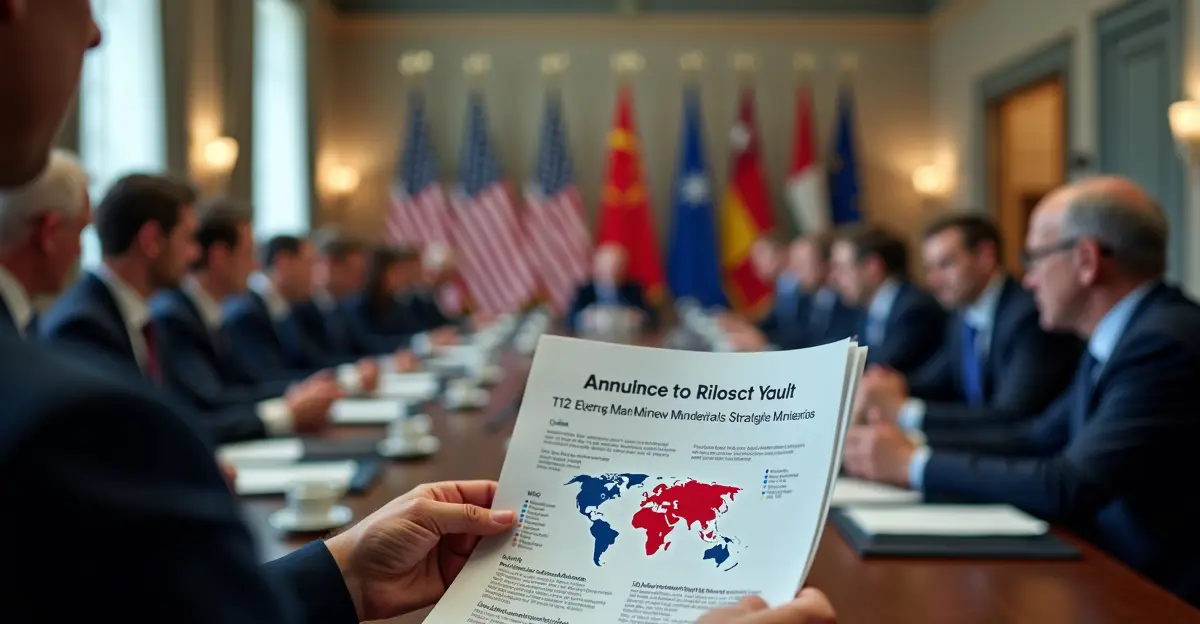
In a decisive escalation of the global contest over critical mineral supply chains, the United States launched Project Vault and the Forum on Resource Geostrategic Engagement (FORGE) at the February 2026 Critical Minerals Ministerial. These initiatives represent the most aggressive Western effort yet to break China's stranglehold on rare earth and battery mineral supply chains, mobilizing over $30 billion in financing and signing 11 new bilateral agreements in a single day.
What Are Project Vault and FORGE?
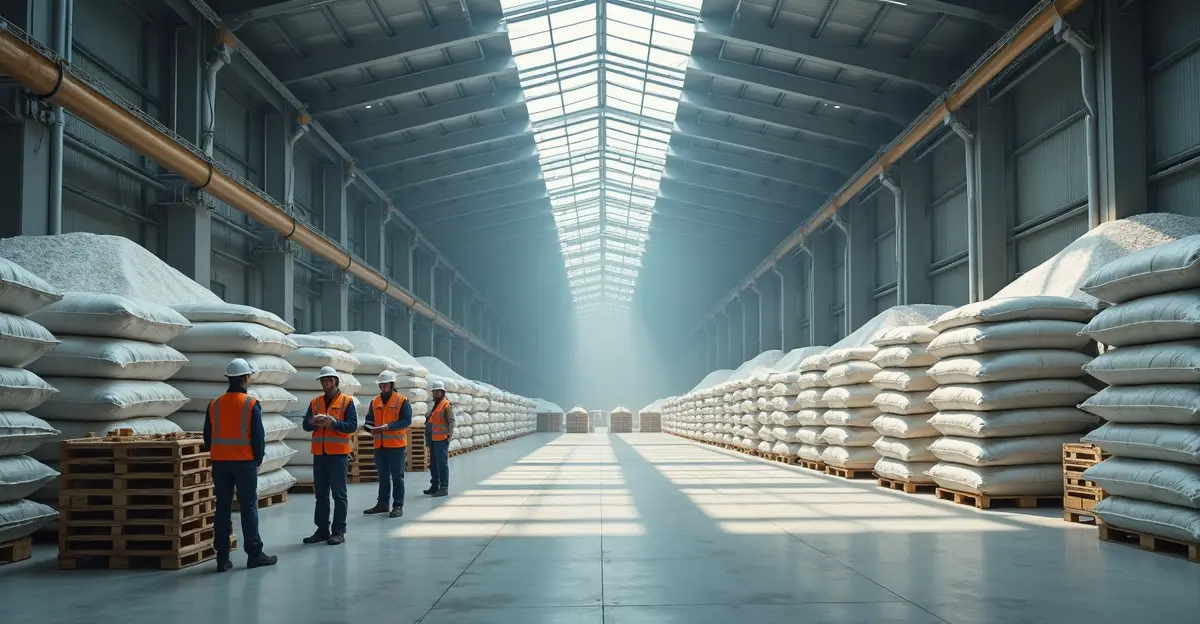
Project Vault is a $10 billion strategic reserve for critical minerals, backed by a loan from the Export-Import Bank of the United States (EXIM) and nearly $2 billion in private capital. It establishes the U.S. Strategic Critical Minerals Reserve, an independently governed public-private partnership that will store essential raw materials in secure facilities across the United States. The reserve covers all 60 minerals on the USGS Critical Minerals List, with emphasis on rare earth elements, cobalt, and copper.
FORGE—the Forum on Resource Geostrategic Engagement—replaces the Biden-era Minerals Security Partnership (MSP). Chaired by the Republic of Korea, FORGE aims to create a U.S.-led preferential trade zone with coordinated price floors to counter adversarial market manipulation. The Minerals Security Partnership had struggled to attract investment and enforce commitments; FORGE seeks to link bilateral deals into a functioning system covering two-thirds of the global economy.
China's Dominance and the 15th Five-Year Plan
China controls approximately 90% of global rare earth processing, 80% of tungsten, and 60% of antimony. Its share of permanent magnet production has risen to 94%. In 2025–2026, Beijing imposed sweeping export controls on rare earth elements, triggering price spikes of up to sixfold and reducing licensing approval rates for European firms below 25%. Over 80% of European companies depend on Chinese supply chains for materials essential to defense, electric vehicles, and renewable energy.
China's 15th Five-Year Plan (2026–2030) prioritizes energy and resource security, with Premier Li Qiang setting a target for comprehensive energy production capacity to reach 5.8 billion tons of standard coal by 2030. The plan emphasizes upgrading traditional industries, strengthening supply chain autonomy, and advancing high-value processing of rare earths and strategic minerals. The China rare earth export controls are expected to tighten further, with production quotas now consolidated under just two state-owned enterprises, enabling tighter control and coordination.
The $30 Billion Mobilization and Bilateral Deals
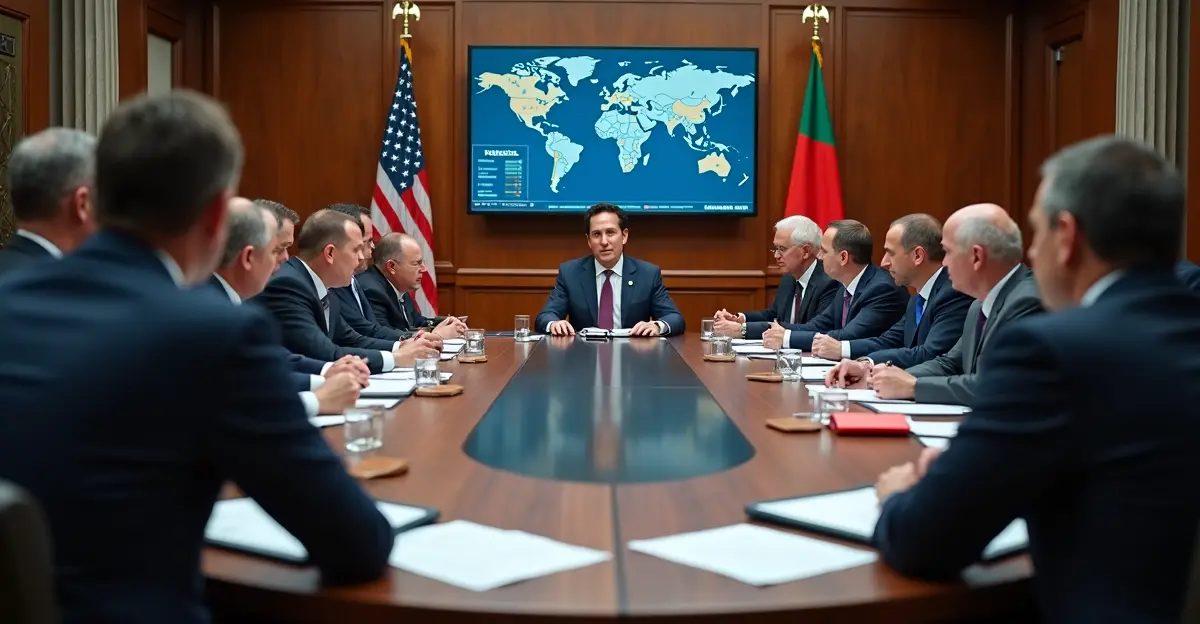
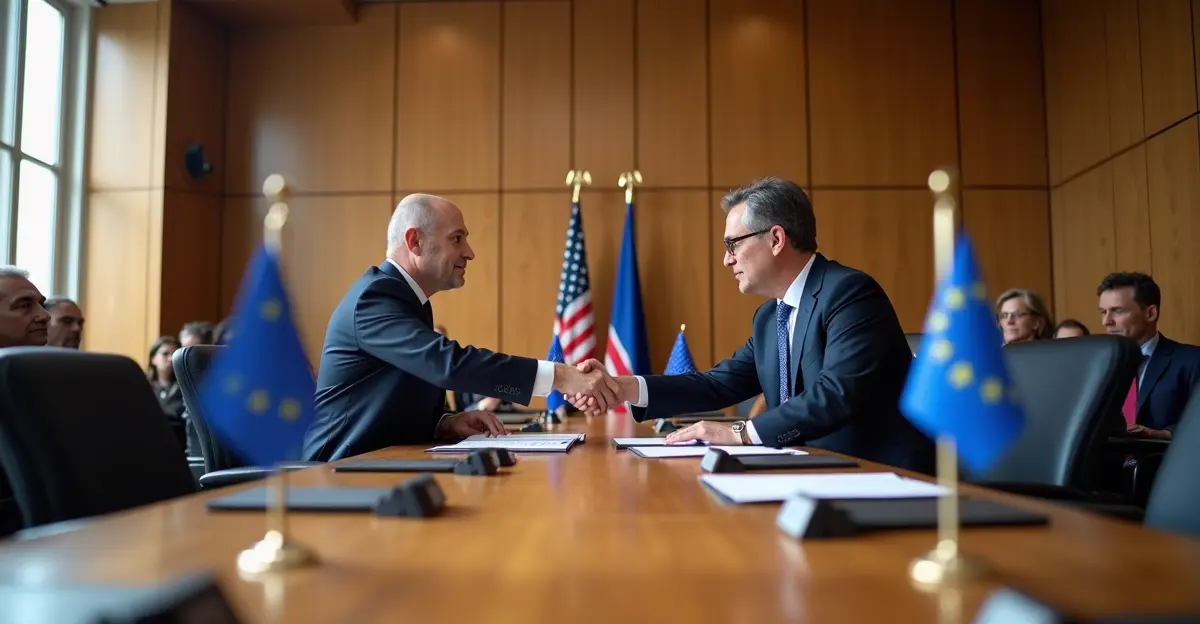
At the February 4 Ministerial, hosted by Secretary of State Marco Rubio and Vice President JD Vance with representatives from 54 countries, the U.S. signed 11 new bilateral critical minerals frameworks or MOUs with Argentina, the Cook Islands, Ecuador, Guinea, Morocco, Paraguay, Peru, the Philippines, the UAE, the UK, and Uzbekistan. This brought the total to 21 deals in five months, with 17 more countries completing negotiations.
The U.S. government has mobilized over $30 billion in letters of interest, investments, and loans over the past six months to support critical mineral supply chain projects. This includes EXIM's Project Vault, which alone deploys $12 billion ($10 billion EXIM financing plus $2 billion private capital) to establish the domestic strategic reserve. The US critical minerals strategy now encompasses stockpiling, processing, and diplomatic engagement at an unprecedented scale.
Can These Initiatives Reduce Strategic Dependencies?
Analysts remain divided on whether Project Vault and FORGE can realistically reduce Western dependence on Chinese supply chains. A multi-institutional analysis warns that rebuilding independent alternatives would take 20–30 years, far exceeding the current geopolitical window. The report gives Western nations a 12–18 month window to act decisively before long-term vulnerability sets in.
The Council on Foreign Relations argues that the U.S. cannot out-mine or out-process China and should instead pursue a leapfrog strategy centered on innovation, recovery, and recycling. Recommendations include developing rare-earth-free magnets, scaling waste-based recovery from mine tailings and coal ash, and closing the scale-up financing gap for frontier mineral technologies.
However, FORGE's emphasis on plurilateral cooperation and price floors represents a novel approach. The critical minerals supply chain resilience debate now centers on whether market-based mechanisms can compete with China's state-directed industrial policy.
Implications for Energy Transition and Defense
The stakes extend far beyond trade. Critical minerals are essential for AI, robotics, batteries, autonomous technologies, and virtually every modern defense system. The IEA projects global demand for critical minerals will nearly triple by 2030 versus 2023. Without secure supply chains, the energy transition and defense modernization timelines face serious disruption.
China's October 2025 export controls expanded to include "parts, components and assemblies" containing Chinese-sourced rare earth materials—even those manufactured internationally. This threatens strategic sectors including energy, automotive, defense, semiconductors, aerospace, industrial motors, and AI data centers. The energy transition minerals geopolitics landscape has shifted from competition to confrontation.
Expert Perspectives
"Project Vault is a transformative approach to securing American industrial resilience and economic competitiveness," said EXIM Chairman Jovanovic, who promoted the initiative on CNBC, Bloomberg, and at a CSIS fireside chat. The initiative received praise from GE Vernova, Mercuria, Traxys, Hartree, Clarios, and Boeing.
Secretary Rubio emphasized at the Ministerial that FORGE represents a shift toward plurilateral cooperation, stating the need to "build secure, diversified, and resilient end-to-end critical mineral supply chains." The Atlantic Council described FORGE as an attempt to "practice statecraft through markets," prioritizing internationalized price supports and bilateral dealmaking over unilateral tariffs.
FAQ
What is Project Vault?
Project Vault is a $10 billion EXIM-backed initiative to establish the U.S. Strategic Critical Minerals Reserve, a public-private partnership storing essential raw materials in secure domestic facilities to protect against supply disruptions.
What is FORGE?
FORGE (Forum on Resource Geostrategic Engagement) is the successor to the Minerals Security Partnership, a U.S.-led multilateral framework aimed at creating a preferential trade zone with coordinated price floors for critical minerals.
How does China dominate critical mineral supply chains?
China controls approximately 90% of global rare earth processing, 80% of tungsten, and 94% of permanent magnet production, giving it near-total leverage over downstream supply chains essential for defense, EVs, and renewable energy.
Can the U.S. and allies realistically reduce dependence on China?
Analysts estimate rebuilding independent supply chains would take 20–30 years. The current 12–18 month window for decisive action is narrow, and experts recommend a hybrid strategy combining stockpiling, innovation, recycling, and plurilateral cooperation.
What are the implications for the energy transition?
Without secure critical mineral supply chains, timelines for electric vehicles, wind turbines, solar panels, and battery storage face significant delays. The IEA projects demand for critical minerals will nearly triple by 2030, making supply chain security a core energy transition challenge.
Conclusion
The February 2026 Critical Minerals Ministerial marks a decisive escalation in the global contest over critical mineral supply chains. Project Vault and FORGE represent the most ambitious Western response yet to China's dominance, but the gap between ambition and execution remains vast. With China's 15th Five-Year Plan reinforcing its processing monopoly and export controls tightening, the next 12–18 months will determine whether the West can build resilient alternatives or faces prolonged strategic vulnerability. The implications for energy security, defense, and the pace of decarbonization will define the geopolitical landscape for the rest of the decade.
Sources
- U.S. Department of State - 2026 Critical Minerals Ministerial
- EXIM - Week in Review: Project Vault
- Rare Earth Exchanges - China's 2026 Export Controls
- Atlantic Council - US Critical Minerals Policy Goes Collaborative with FORGE
- CFR - Leapfrogging China's Critical Minerals Dominance
- IEA - With New Export Controls on Critical Minerals, Supply Concentration Risks Become Reality
Follow Discussion