


 Deutsch
 English
 Español
 Français
 Nederlands
 Português


 Share
Share




The exponential growth of artificial intelligence workloads is driving data center electricity demand to levels that aging grid infrastructure can no longer support, forcing a strategic pivot from energy efficiency to power independence. With interconnection delays exceeding three years and electricity now accounting for 20-30% of operating expenses, hyperscalers like Microsoft and Google are striking multi-gigawatt behind-the-meter deals with independent power producers, deploying on-site fuel cells, and co-investing in grid upgrades. This collision between AI ambition and grid capacity is reshaping national energy priorities, accelerating clean energy deployment while simultaneously reviving natural gas with carbon capture as a bridging solution, creating new geopolitical fault lines around energy access and industrial competitiveness.
The Scale of the Challenge
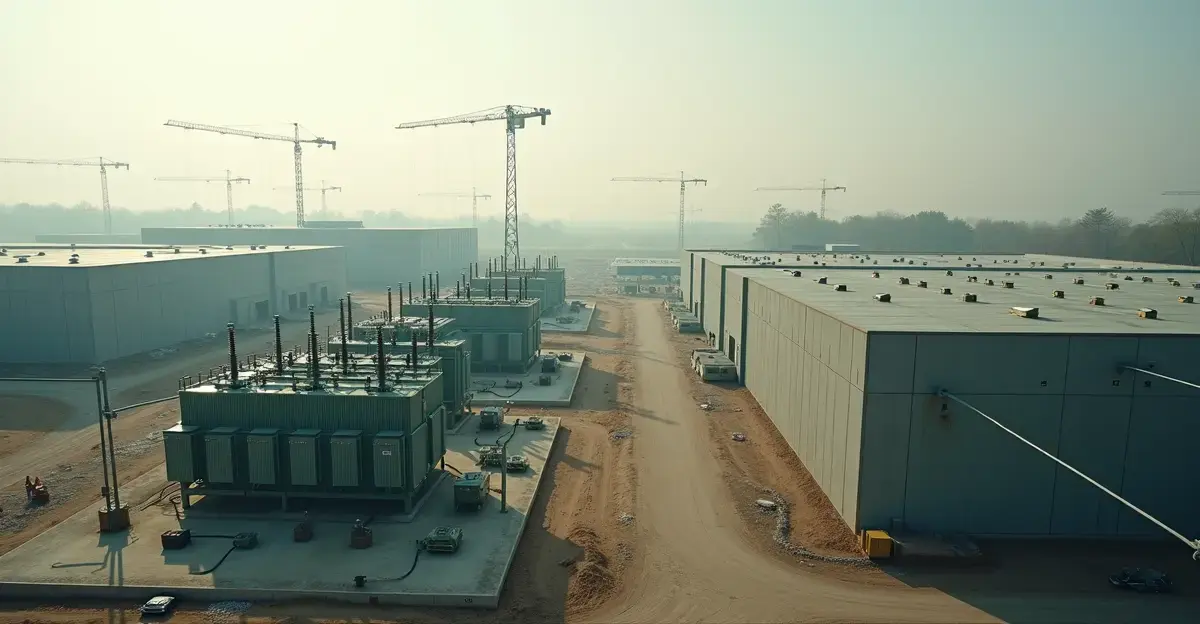
McKinsey projects that nearly $6.7 trillion in global data center infrastructure investment will be needed by 2030 to meet AI demand, with $5.2 trillion specifically for AI-related capacity. Global data center capacity could triple by 2030, with 70% of demand coming from AI workloads. The IMF's January 2026 World Economic Outlook highlights technology investment as a key driver of global growth, projecting 3.3% expansion in 2026, with the AI infrastructure boom as a primary catalyst. However, the physical reality of power delivery is proving to be the bottleneck. According to industry reports, of 16 GW of new data center capacity targeted for 2026, only 5 GW entered active construction, with 30-50% of the remaining 11 GW projected to slip to 2027 or beyond due to grid delays. Transformer lead times now average 128 weeks, and generator step-up units require 144 weeks. The ERCOT large-load interconnection queue surged from 63 GW to 226 GW in a single year, illustrating the systemic strain.
From Efficiency to Independence
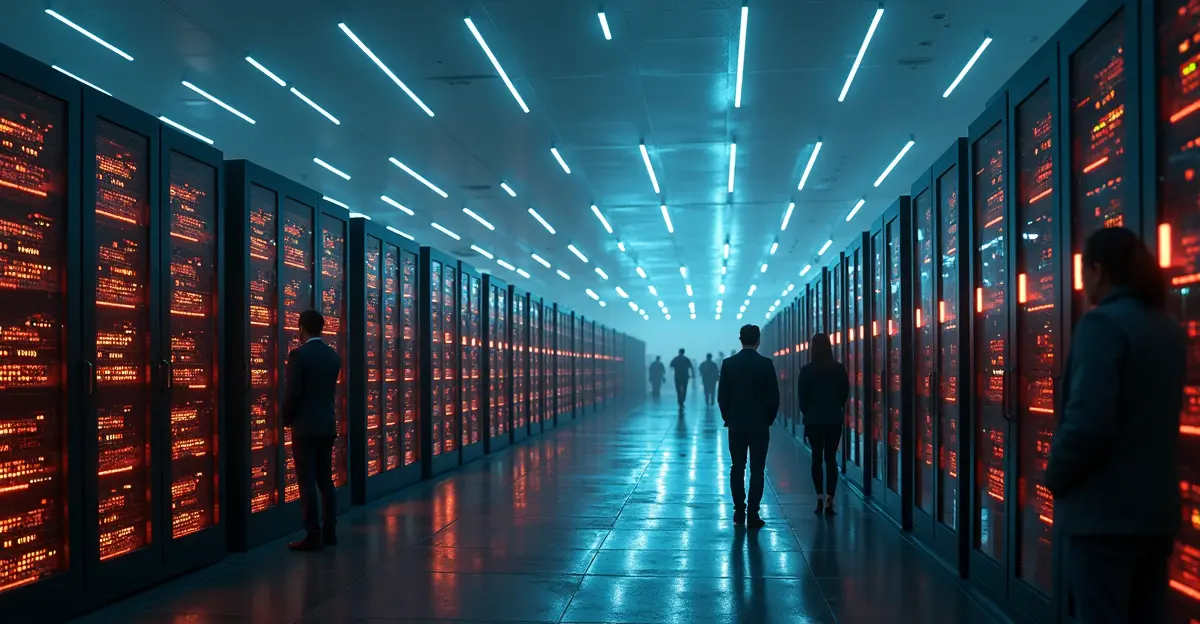
For decades, data center energy strategy focused on Power Usage Effectiveness (PUE) — squeezing more compute out of every watt. That era is ending. AI-optimized server racks now demand 100+ kW compared to 5-15 kW for traditional servers, with NVIDIA GB200 racks drawing 132 kW and Cerebras systems reaching 180 kW. At these densities, incremental efficiency gains cannot keep pace with absolute demand growth. Electricity costs have surged to 20-30% of operating expenses, up from 10-15% just three years ago, making power procurement a board-level strategic concern.
Behind-the-Meter Deals
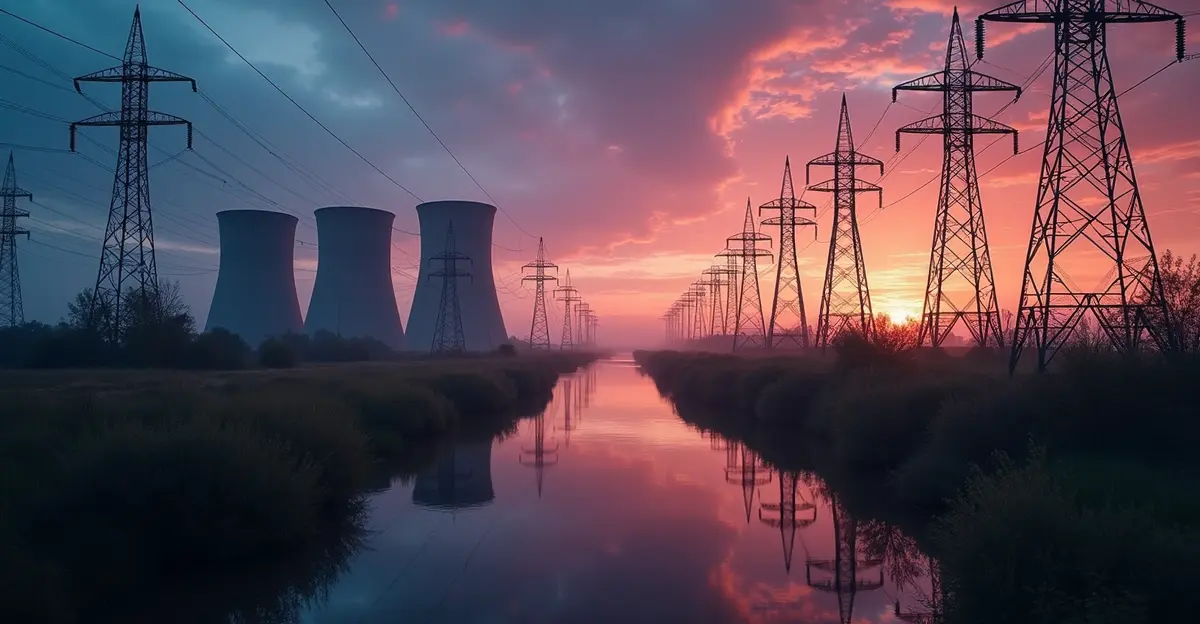
Hyperscalers are bypassing public grids through direct power purchase agreements (PPAs) with independent power producers. Microsoft signed a landmark $16 billion, 20-year PPA to restart Three Mile Island Unit 1 (835 MW nuclear), targeting 2027 operations. Google committed 500 MW from Kairos Power's small modular reactors, while Amazon invested $700 million in X-energy for up to 12 Xe-100 SMRs (960 MW) plus a $20 billion+ Susquehanna AI campus. Meta has the largest overall commitment at up to 6.6 GW across TerraPower Natrium, Oklo Aurora, Vistra, and Constellation. These nuclear data center deals represent a fundamental shift: hyperscalers are becoming energy developers, not just consumers.
On-Site Fuel Cells
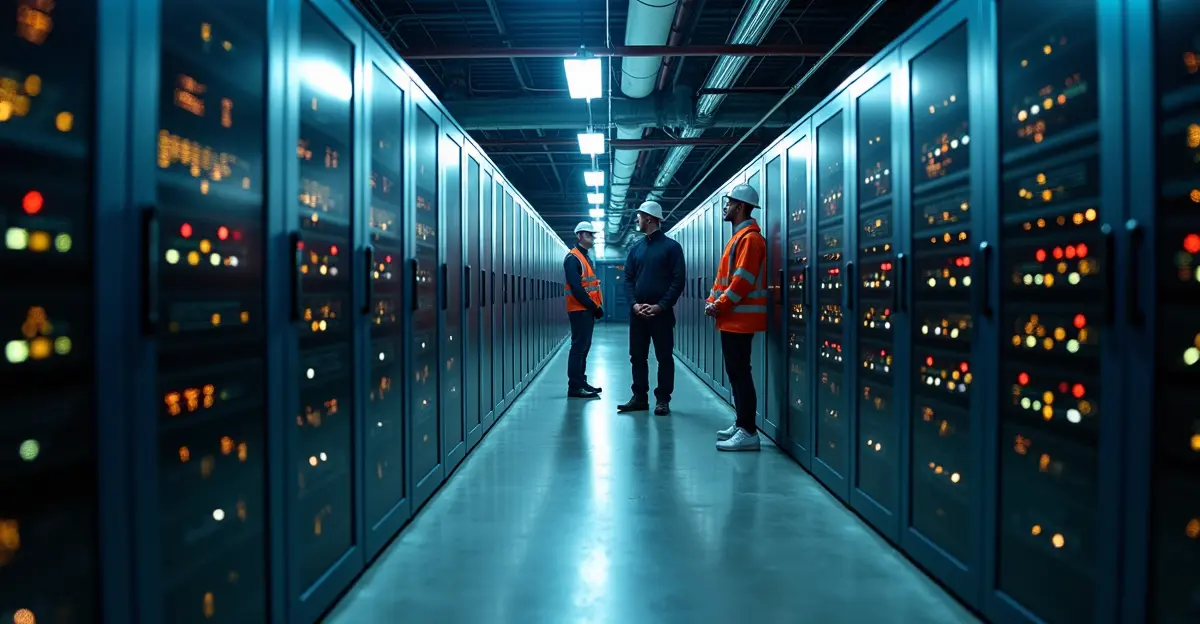
Bloom Energy has emerged as a critical player, capturing $7.65 billion in data center fuel cell contracts. Its solid oxide fuel cells can be deployed in approximately 90 days versus 18-24 months for traditional grid hookups, with modular systems scaling from 20 MW to over 500 MW while achieving 99.999% uptime. Nearly one in three U.S. data centers now aim to go fully off-grid by 2030 using on-site generation, according to Bloom's 2026 Data Center Power Report. Texas is projected to capture 30% of the U.S. data center market by 2028, up from 12% in 2023, driven by its deregulated grid and rapid permitting.
Natural Gas with Carbon Capture: The Bridging Solution
While nuclear and renewables are long-term goals, the immediate power gap is being filled by natural gas. NextEra Energy and ExxonMobil have partnered on a first-of-its-kind 1.2 GW natural gas-powered data center with carbon capture and storage (CCS). Caterpillar, in partnership with OnePWR and Vero3, is developing a 500 MW natural gas and CCS system for data centers, with the first project expected in 2026. Analysis from Carbon Direct suggests that retrofitting 61 existing U.S. natural gas plants with CCS could supply approximately 63% of future data center power demand while reducing emissions by 70-80%, leveraging existing transmission infrastructure and the federal 45Q tax credit ($85/tonne CO2). This natural gas carbon capture data center approach is controversial among climate advocates but increasingly seen as a pragmatic bridge by policymakers and industry leaders.
Grid Modernization and Co-Investment
Hyperscalers are also directly funding grid upgrades. Google partnered with CTC Global for advanced grid conductors that can double transmission capacity on existing rights-of-way. Microsoft is working with MISO and PJM on AI-driven grid management tools. The PJM capacity auction prices hit a record $329.17/MW-day in 2026, reflecting the scarcity value of firm power. Private equity has mobilized heavily, with KKR and Energy Capital Partners targeting $50 billion in data center and power investments. These data center grid modernization efforts are essential: without them, even behind-the-meter generation cannot connect to the broader network for backup and load balancing.
Geopolitical Implications
The intersection of AI, energy, and geopolitics is creating new strategic fault lines. The World Economic Forum, in a March 2026 article, described a 'triple transition' where AI advances, energy system restructuring, and geopolitical realignment are converging. Semiconductor supply chains and cloud infrastructure have acquired geopolitical significance akin to energy pipelines. Governments are pursuing technological self-reliance through export controls and sovereign cloud frameworks. By 2030, AI-related data centers could consume as much electricity as a medium-sized industrial economy, creating a sustainability paradox where the technology marketed as an efficiency driver imposes serious carbon and grid reliability costs. The geopolitics of AI energy demand is becoming a central concern for national security planners.
Expert Perspectives
"The bottleneck has shifted from GPU shortages to power infrastructure," notes a May 2026 industry analysis. "Despite these constraints, Alphabet, Amazon, Meta, and Microsoft remain on track to spend over $650 billion on AI infrastructure in 2026, creating the widest gap on record between announced capex and energized megawatts." The IMF has flagged risks of financial market correction if promised productivity gains fail to materialize, while community opposition to new transmission lines and power plants is mounting across the U.S. and Europe.
FAQ
Why is AI driving such high data center power demand?
AI training and inference workloads require massive parallel computation using GPUs that consume 100-180 kW per rack, compared to 5-15 kW for traditional servers. A single ChatGPT query uses 0.3-0.34 watt-hours versus 0.0003 kWh for a standard Google search — a 1,000x increase.
How are hyperscalers bypassing grid constraints?
They are signing behind-the-meter PPAs with independent power producers, deploying on-site fuel cells and natural gas generators, co-investing in grid upgrades, and securing nuclear power through SMR deals and plant restarts.
What is the role of natural gas with carbon capture?
Natural gas with CCS serves as a bridging solution to meet immediate power needs while reducing emissions by 70-80%. It leverages existing infrastructure and federal tax credits, but remains controversial among climate advocates.
How much investment is needed for AI data center infrastructure?
McKinsey projects nearly $7 trillion in global data center infrastructure investment through 2030, with $5.2 trillion specifically for AI-related capacity, including $1.3 trillion for energy providers.
What are the geopolitical risks of AI energy demand?
AI infrastructure is creating new dependencies on energy access, semiconductor supply chains, and cloud sovereignty. Governments are pursuing self-reliance through export controls and sovereign frameworks, while the carbon footprint of AI could undermine climate goals.
Conclusion
The collision between AI's insatiable appetite for power and the physical limits of global grid infrastructure is defining the strategic landscape of 2026. Hyperscalers are transforming from technology companies into energy developers, deploying nuclear, fuel cells, natural gas with CCS, and direct grid investments at unprecedented scale. The outcome of this race will determine not only the trajectory of AI development but also the shape of global energy systems, carbon emissions, and geopolitical alignments for decades to come. As McKinsey's data shows, the investment is massive — but so are the stakes.


Follow Discussion