


 Deutsch
 English
 Español
 Français
 Nederlands
 Português


 Share
Share




Royal Navy Crisis Explained: Why Britain's Fleet 'Looks Like a Construction Site'
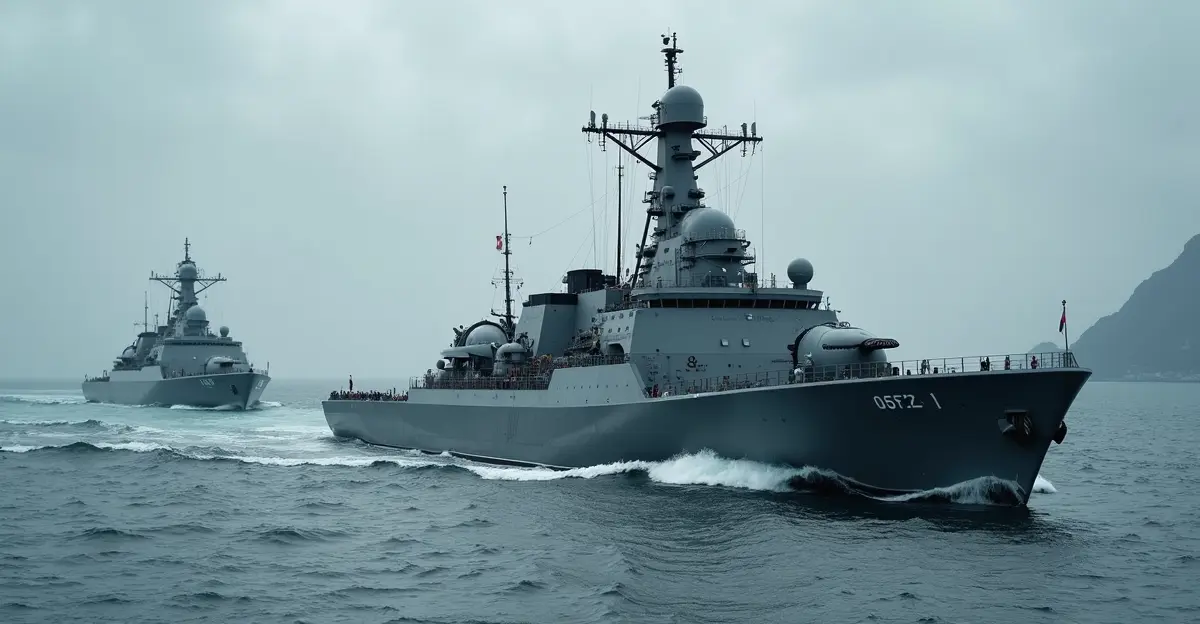
The Royal Navy, once the world's most powerful naval force, is facing what security expert James Fennell calls a 'national embarrassment' with its current state resembling a construction site rather than a fighting fleet. The crisis became painfully evident in March 2026 when Britain couldn't immediately deploy an advanced destroyer to defend Cyprus after a drone attack on RAF Akrotiri, while a French fleet of 11 ships was already heading to the Mediterranean.
What is the Royal Navy Crisis?
The Royal Navy crisis refers to the severe deterioration of Britain's naval capabilities, where only about 4 of 13 destroyers and frigates are currently operational at sea, and just 1 of 5 attack submarines is ready for service. According to Fennell's report for the Center for European Policy Analysis (CEPA), the entire fleet is in various states of retirement, repair, construction, training, or awaiting crew and funding. This represents a dramatic decline for a navy that once ruled the waves and maintained global dominance.
The Cyprus Embarrassment: A Case Study
On March 2, 2026, an Iranian-made drone struck the British RAF Akrotiri base in Cyprus, causing limited damage to the runway. While France immediately dispatched a fleet of 11 ships, the Royal Navy took eight days to deploy HMS Dragon, a Type 45 air-defense destroyer. 'A national scandal. The Royal Navy looks like a construction site,' wrote Fennell, highlighting how Britain's delayed response contrasted sharply with France's rapid deployment.
Current Operational Statistics
- Destroyers and Frigates: 4 of 13 operational at sea
- Attack Submarines: 1 of 5 operational
- Personnel: 20,000 sailors vs. 50,000 Ministry of Defence civil servants
- Total Commissioned Ships: 63 (including submarines)
- Defense Spending: 2.3% of GDP (considered 'completely inadequate' by experts)
Historical Roots of the Decline
The current crisis has deep historical roots dating back to 1964 when the Admiralty was merged into the civilian-run Ministry of Defence. This marked a shift where organizational structure began taking precedence over combat capability. The post-Cold War era saw further deterioration as defense priorities shifted from high-end warfighting to humanitarian missions and counter-terrorism operations.
Similar to the US Navy shipbuilding challenges, Britain's maritime defense industry began focusing on international clients rather than domestic needs, eroding the industrial base necessary for fleet regeneration. The European defense spending debates have highlighted how Britain's 2.3% GDP allocation falls short of maintaining credible naval power.
Strategic Consequences and Global Implications
The Royal Navy's diminished capabilities have serious strategic implications. According to Fennell, the navy can now only provide enough ships for nuclear deterrence and occasional carrier strike groups supporting American foreign policy objectives. For other missions, it's limited to small-scale police operations, counter-terrorism patrols, and coastal protection around UK territories.
'The consequences have been catastrophic for the Royal Navy's ability to generate meaningful conventional power,' Fennell writes. The situation leaves Britain vulnerable in multiple theaters, particularly in the Mediterranean and Persian Gulf where maritime security remains critical for global energy supplies.
Path Forward: Can the Royal Navy Recover?
The new First Sea Lord aims to regenerate NATO capabilities by 2029, but this involves cutting global operations, potentially leaving the navy exposed in future crises. The planned improvements for the mid-2030s offer some hope, but the current situation represents what naval experts call a 'perfect storm' of underfunding and poor strategic decisions.
The UK defense budget allocation debate has intensified following the Cyprus incident, with calls for increased spending to restore naval credibility. However, recent governments have shown reluctance to prepare the public for the necessary financial sacrifices required for meaningful naval regeneration.
Frequently Asked Questions (FAQ)
How many Royal Navy ships are currently operational?
Only about 4 of 13 destroyers and frigates are at sea, and just 1 of 5 attack submarines is operational. Many newer ships remain docked, awaiting crew and funding.
What caused the Royal Navy's decline?
The decline stems from long-term strategic shifts dating back to 1964, post-Cold War defense cuts prioritizing soft power over warfighting, and erosion of Britain's shipbuilding industrial base.
How does Britain's defense spending compare to needs?
At 2.3% of GDP, Britain's defense spending is considered 'completely inadequate' by experts like James Fennell for maintaining credible naval power in today's security environment.
What was the Cyprus incident that exposed the crisis?
In March 2026, Britain took eight days to deploy HMS Dragon after a drone attack on Cyprus, while France immediately sent 11 ships, highlighting Britain's diminished response capabilities.
Can the Royal Navy recover its former strength?
Recovery is possible but requires significant investment, strategic focus on warfighting capabilities, and rebuilding of Britain's maritime industrial base over the next decade.



Follow Discussion