


 Deutsch
 English
 Español
 Français
 Nederlands
 Português


 Share
Share




Breaking: Iran's Supreme Leader Khamenei Killed in US-Israel Military Operation
Iranian Supreme Leader Ayatollah Ali Khamenei has been confirmed dead following massive US-Israeli airstrikes on Iran on February 28, 2026, marking a seismic shift in Middle Eastern geopolitics. The 86-year-old leader, who ruled Iran for 36 years, was reportedly killed when his secure compound in Tehran was targeted in the opening salvos of what US officials have dubbed 'Operation Epic Fury.' Iranian state media confirmed Khamenei's death, with President Masoud Pezeshkian declaring him a martyr and initiating 40 days of national mourning. The attack has plunged the region into its most dangerous crisis in decades, with Iran retaliating by closing the strategic Strait of Hormuz and launching missile attacks on Israel and US bases across the Middle East.
What Happened: The Timeline of Escalation
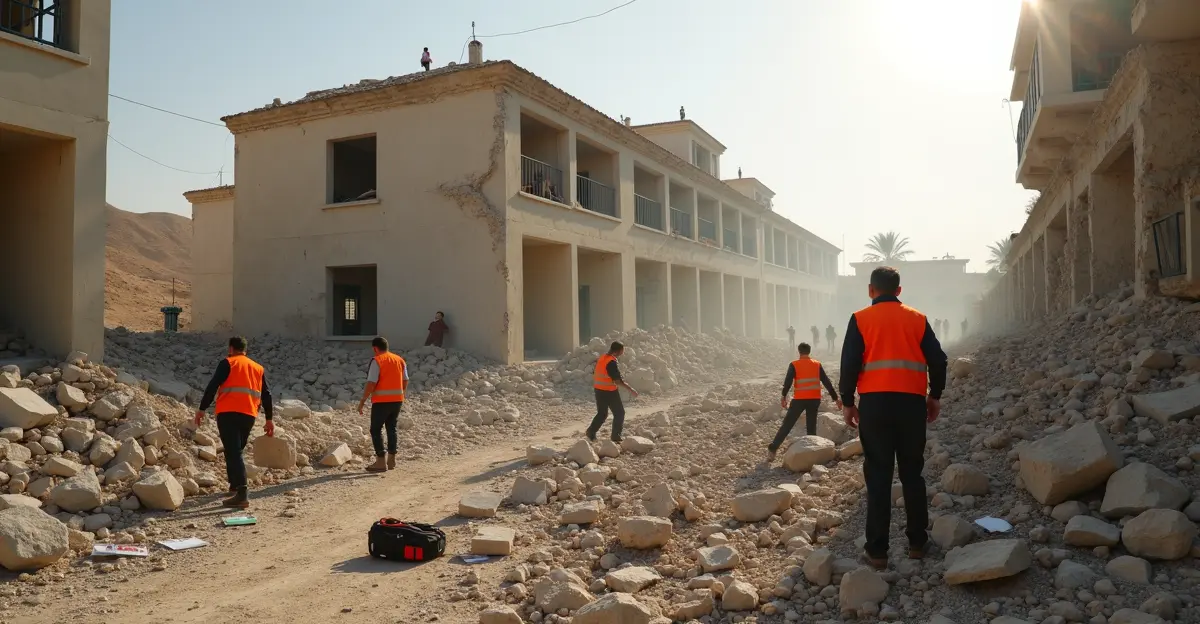
The military operation began in the predawn hours of February 28, 2026, with coordinated US and Israeli strikes targeting multiple Iranian facilities. According to Israeli Defense Minister Israel Katz, Khamenei was killed in Israel's opening strike as part of an operation called 'Roar of the Lion.' Satellite imagery shows extensive damage to Khamenei's heavily fortified compound in Tehran, where he reportedly died alongside several family members including his daughter, son-in-law, and granddaughter.
The Iranian Red Crescent has reported over 200 deaths and 700 injuries from the initial strikes, which also killed top Iranian military officials including Revolutionary Guards chief Gen. Mohammad Pakpour and Defense Minister Amir Nasirzadeh. The attack followed months of escalating tensions over Iran's nuclear program and its support for proxy groups throughout the region, similar to the 2025 Middle East escalation that saw increased hostilities.
Iran's Immediate Response: Strait of Hormuz Closure
In a dramatic escalation, Iran's Revolutionary Guards have effectively closed the Strait of Hormuz, the world's most critical oil chokepoint that handles 20% of global oil supplies. The narrow 50km-wide waterway, through which 20 million barrels of oil pass daily, has seen shipping traffic grind to a halt as Iran warns tankers against passage. This move represents Iran's most significant retaliation and has immediate global economic implications.
'The Strait of Hormuz is now a war zone,' declared Revolutionary Guard naval commander Rear Admiral Alireza Tangsiri in a statement broadcast on Iranian state television. 'Any vessel attempting to pass will be considered a legitimate military target.' This development has sent shockwaves through global energy markets, with experts predicting oil prices could surge from $67 to over $100 per barrel if the closure persists.
Who Was Ayatollah Khamenei?
Ali Hosseini Khamenei (1939-2026) served as Iran's Supreme Leader since 1989, making him the longest-serving head of state in the Middle East at the time of his death. He succeeded Ayatollah Ruhollah Khomeini after serving as Iran's president from 1981-1989 during the Iran-Iraq War. Khamenei was known for his conservative Islamist ideology and his role in developing Iran's nuclear program while maintaining a fatwa against nuclear weapons.
Throughout his 36-year rule, Khamenei transformed Iran into a regional power through what he called the 'Axis of Resistance,' supporting proxy groups including Hezbollah in Lebanon, Houthi rebels in Yemen, Hamas in Gaza, and the Assad regime in Syria. His foreign policy was characterized by staunch opposition to Israel and the United States, with frequent calls for Israel's destruction. Domestically, he oversaw a system of religious governance that suppressed political dissent and maintained strict Islamic social codes, similar to the authoritarian regimes in the Middle East that have faced international scrutiny.
Global Impact and Economic Consequences
The killing of Khamenei and the subsequent Strait of Hormuz closure have created a perfect storm for global markets and geopolitics. Here are the key impacts:
- Oil Prices: Immediate price spikes of $20-30 per barrel expected, with potential to reach triple digits if closure persists
- Shipping Disruption: Major oil companies have suspended shipments through the strait, affecting 20 million barrels daily
- Regional Escalation: Iran has launched missile attacks on Israel and US bases in Bahrain, Kuwait, and Qatar
- Air Travel: Thousands of Middle Eastern flights suspended, airports in Dubai and Abu Dhabi damaged
- Internet Blackout: Near-total internet shutdown in Iran as government restricts communications
President Donald Trump confirmed Khamenei's death on Truth Social, calling him 'one of the most evil people in History' while stating that bombing operations would continue to achieve peace objectives. 'We have eliminated a grave threat to world peace,' Trump stated. 'Now Iran has a choice: continue down the path of violence or embrace a new future.'
What Happens Next: Succession and Regional Stability
The immediate question facing Iran is who will succeed Khamenei as Supreme Leader. The Assembly of Experts, an 88-member body of Islamic clerics, is constitutionally responsible for selecting the next leader. Potential candidates include hardline clerics aligned with the Revolutionary Guards, though the process could take weeks or months, creating a power vacuum during a critical period.
Regional analysts warn that Iran's retaliation could trigger a broader Middle Eastern conflict. 'This isn't just another skirmish,' said Middle East security analyst Dr. Leila Ahmed. 'The killing of a sitting Supreme Leader is unprecedented in modern Iranian history. We're looking at potential regime collapse or a massive regional war that could draw in multiple countries.' The situation has prompted emergency UN Security Council meetings and international calls for de-escalation.
The economic implications extend beyond oil prices. Global supply chains, already strained by recent geopolitical tensions, face new disruptions. Insurance premiums for shipping through the region have skyrocketed, and energy-dependent economies worldwide are bracing for inflationary impacts. This crisis follows patterns seen in previous global energy market disruptions but with potentially more severe consequences.
Frequently Asked Questions
How was Ayatollah Khamenei killed?
Khamenei was killed in a targeted airstrike on his secure compound in Tehran during the opening hours of a joint US-Israeli military operation on February 28, 2026. Satellite imagery confirms extensive damage to the facility.
Why did the US and Israel attack Iran?
The operation followed Iran's refusal to scale back its nuclear program and ongoing support for proxy groups targeting US and Israeli interests. Officials cited intelligence about imminent threats as justification for preemptive action.
How long will the Strait of Hormuz remain closed?
Unknown. Iran has warned ships against passage but hasn't formally announced a duration. Experts predict closure could last days to weeks depending on diplomatic developments and military calculations.
What happens to Iran's nuclear program now?
The strikes reportedly targeted nuclear facilities, but the program's status remains unclear. The death of Khamenei, a key supporter of nuclear development, could significantly alter Iran's nuclear policy direction.
Will this trigger World War III?
While regional war is likely, global conflict isn't inevitable. Most experts predict contained regional escalation rather than worldwide war, though the situation remains extremely volatile.




Follow Discussion