


 Deutsch
 English
 Español
 Français
 Nederlands
 Português


 Share
Share




In a controversial land grab that has ignited debate across Spain, the regional government of Aragón has expropriated 16.5 hectares of private land for a Microsoft data center, compensating the Garza family just €2 per square meter. The family had previously rejected an offer of €25–€30/m² from the tech giant, deeming it far below the land's true value. The case raises urgent questions about the balance between foreign investment and property rights in Spain's race to become a digital hub.
Spain’s Data Center Gold Rush
Spain is positioning itself as Southern Europe's premier data center destination. With abundant renewable energy, strategic undersea cable connections, and competitive costs, the country is projected to attract €66.9 billion in data center investments by 2030, according to a 2025 report by Spain DC. Madrid, Barcelona, and Zaragoza have become the focal points of this boom, with Aragon alone expecting a tenfold increase in capacity. The regional government, led by the PP and Vox coalition, has welcomed tech giants like Microsoft and Amazon with open arms, often declaring their projects to be of “public interest”—a designation that fast-tracks permits and allows land expropriation for big tech projects like never before.
How the Garza Family Land Was Valued at Just €2/m²
Rejected Offers and Accelerated Expropriation
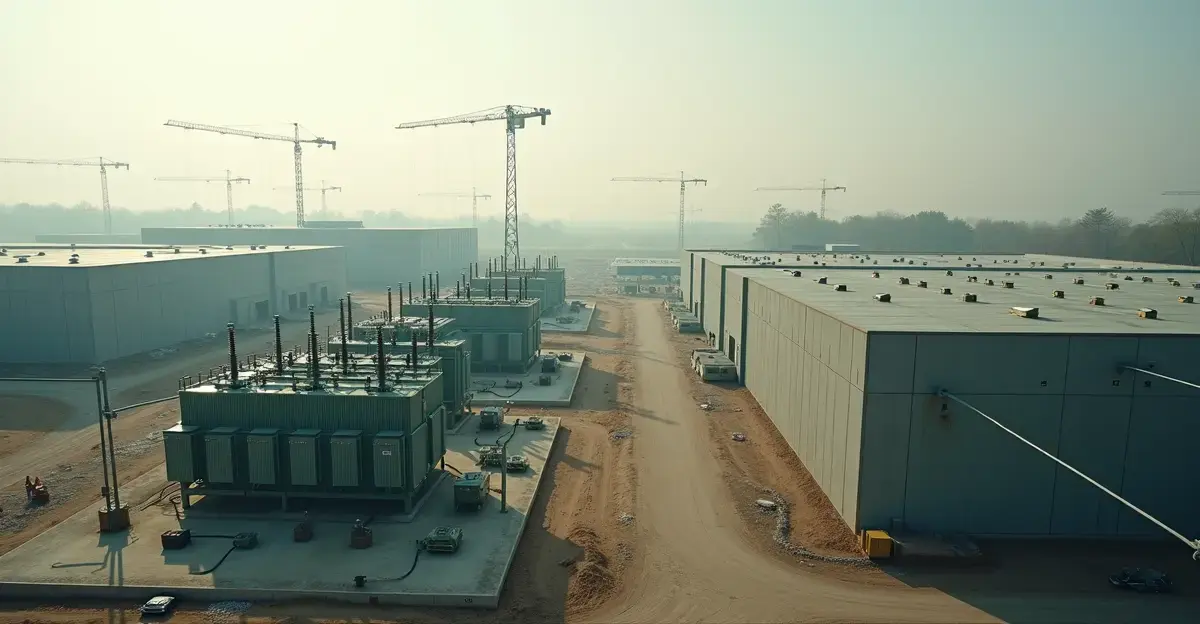
The trouble began two years ago when Microsoft approached the Garza family to purchase their land near the Puerto Venecia shopping center in Zaragoza. The site is part of a planned 2.9-billion-euro campus of three data centers. The family turned down an initial offer of €25–€30/m², arguing that the prime location—adjacent to a retail hub and a rapidly expanding residential area—was worth far more. When negotiations resumed in 2025, Microsoft warned that refusal would lead to expropriation. The family held firm. In September 2025, the Aragonese government declared the project a priority of general interest, triggering the forced acquisition.
A Stark Price Gap: €2 vs. €57 Elsewhere
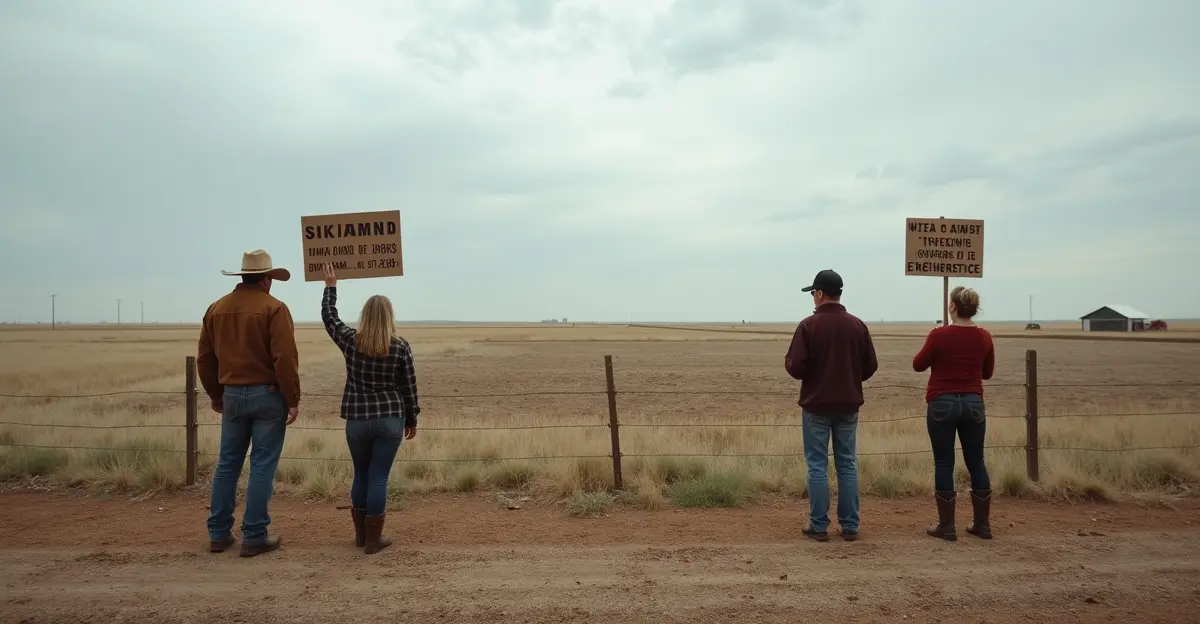
The expropriation appraisal, based on a valuation commissioned by Microsoft itself, set compensation at just €2–€5/m². By contrast, in the nearby town of La Muela, Microsoft had paid €57/m² just a year earlier for land that was voluntarily sold. “They speak of a priority project for Aragón, but in the end the priority was a foreign company,” said Ana Garza, one of the landowners. The family has filed complaints with the Aragon Environmental Institute (INAGA) and the public prosecutor’s office, alleging procedural irregularities. Meanwhile, the regional government maintains the offered amount is “appropriate” and that the case is still in the valuation-exchange phase. If no agreement is reached, the provincial expropriation committee will decide—a process that could drag on for months.
Environmental Backlash and Community Resistance
The Energy Elephant in the Room
The planned data center campus would draw up to 1,846 MW of power and consume an estimated 16,170 GWh annually—making Microsoft the region's second-largest energy consumer after Amazon Web Services. Critics, including the platform Salvemos los Pinares de Venecia, warn that this level of consumption will strain an already saturated grid, drive up electricity bills, and require vast new solar and wind farms that could occupy 12 times more land than the data centers themselves. A University of Zaragoza study projects that all planned data centers in the region could multiply electricity demand by a factor of 5 to 15, with up to 37% of agricultural land needed for renewable energy installations.
Legal Challenges Mount
Opposition groups have also challenged the environmental impact assessment, noting that the public comment period was opened in mid‑August—the height of Spain’s holiday season—effectively limiting citizen participation. A coalition of dozens of environmental, neighborhood, and regional organizations has filed formal objections against all three Microsoft data centers in Aragón (Zaragoza, La Muela, and Villamayor de Gállego). They argue that the tax exemption worth an estimated €140 million is disproportionate to the modest employment gains: Microsoft promises 300 jobs per center, but critics say the real figure is closer to 60. A Microsoft-funded report itself shows that the company’s investments generate more jobs and tax revenue in seven other Spanish regions—without data centers—than in Aragón itself, casting doubt on the “tech hub” narrative.
What This Means for Spain’s Digital Ambitions
The Garza family case is not an isolated incident. As Spain races to capture a slice of the global data center market, similar tensions are surfacing in other regions. The Amazon Web Services land dispute in Spain underscores the growing friction between hyperscalers and local communities. Experts caution that without transparent valuation processes and genuine community engagement, the backlash could jeopardize Spain’s attractiveness as an investment destination. “The speed with which these projects are being pushed through, often bypassing proper public scrutiny, risks creating a legacy of mistrust,” said one legal analyst. The Aragón high court is now reviewing appeals challenging the expropriation’s legality, and the provincial prosecutor is investigating possible environmental crimes related to asbestos removal on the site. For the Garza family, the fight is about more than money. “We just want a fair price for our land,” Ana Garza said. “But more than that, we want our voices to be heard.”
FAQ
Why was the Garza family’s land expropriated for a Microsoft data center?
The regional government of Aragón declared the Microsoft data center project a “priority of general interest,” which allowed them to forcibly acquire private land after the family refused to sell at the offered price.
How much compensation did the family receive?
The expropriation compensation was set at €2–€5 per square meter, based on a valuation commissioned by Microsoft. The family had previously turned down offers of €25–€30/m².
What is the total investment Microsoft is making in Aragón?
Microsoft is investing €2.9 billion to build three data center campuses in the Zaragoza area, part of a broader €5.356 billion commitment to the region.
Why are environmental groups opposing the data centers?
Opponents say the data centers will consume enormous amounts of electricity, strain the grid, and require massive renewable energy farms, while offering few local jobs and receiving large tax breaks.
Are there other similar expropriation cases in Spain?
Yes, similar land-acquisition disputes have arisen with Amazon Web Services in Spain, reflecting a broader tension between big tech data center expansion and local land rights.




Follow Discussion