


 Deutsch
 English
 Español
 Français
 Nederlands
 Português


 Share
Share




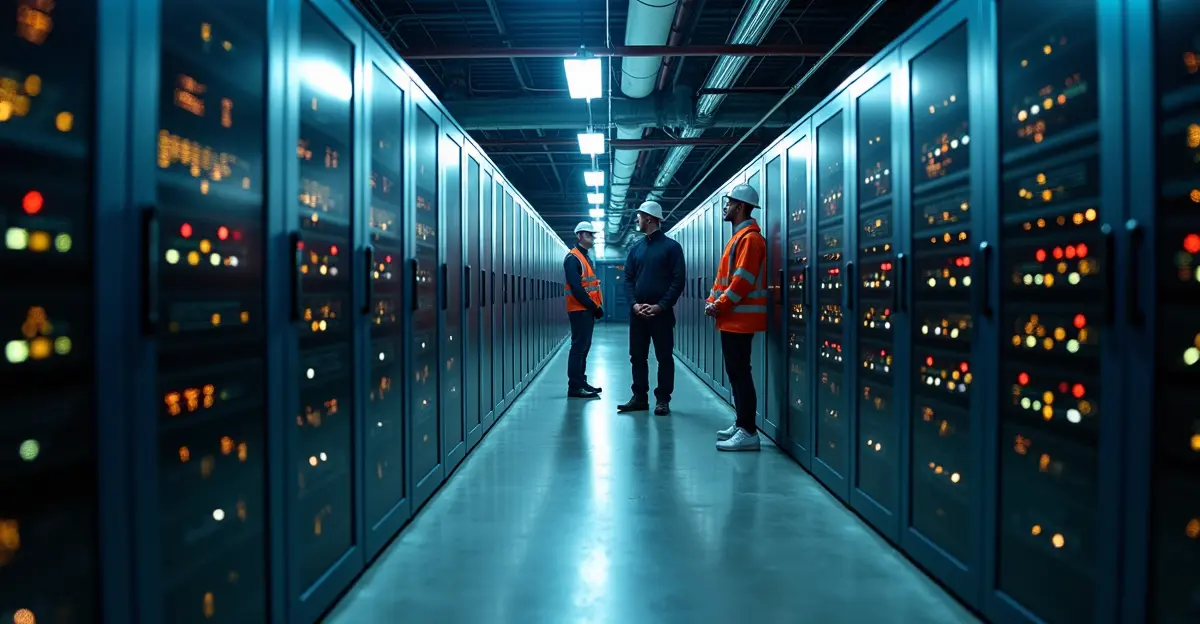
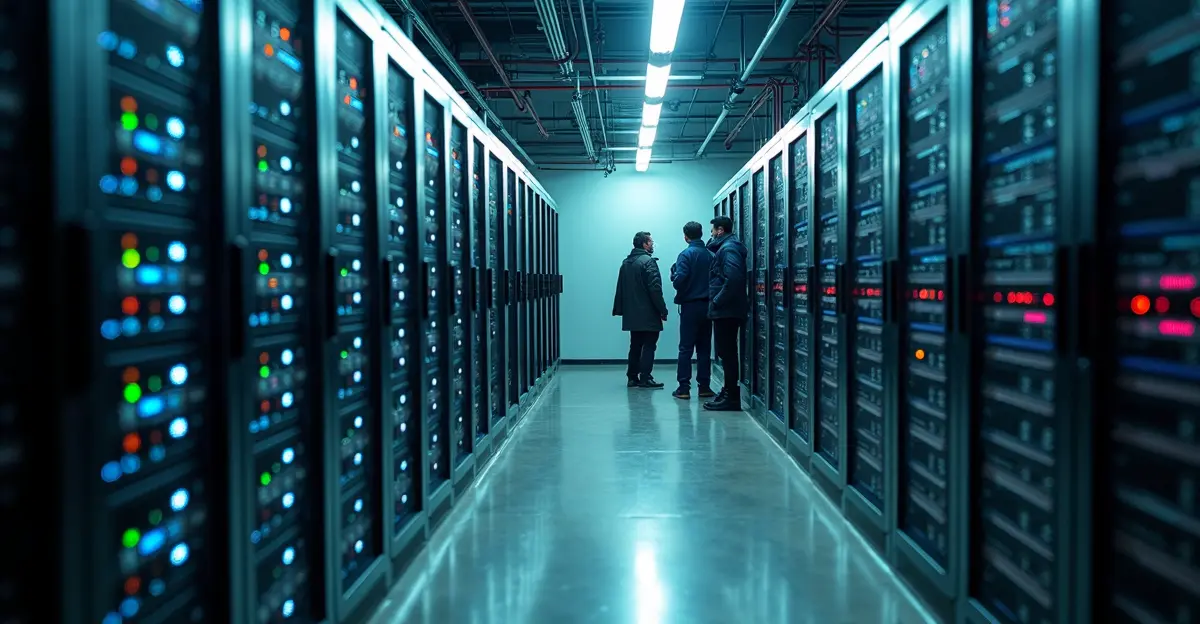
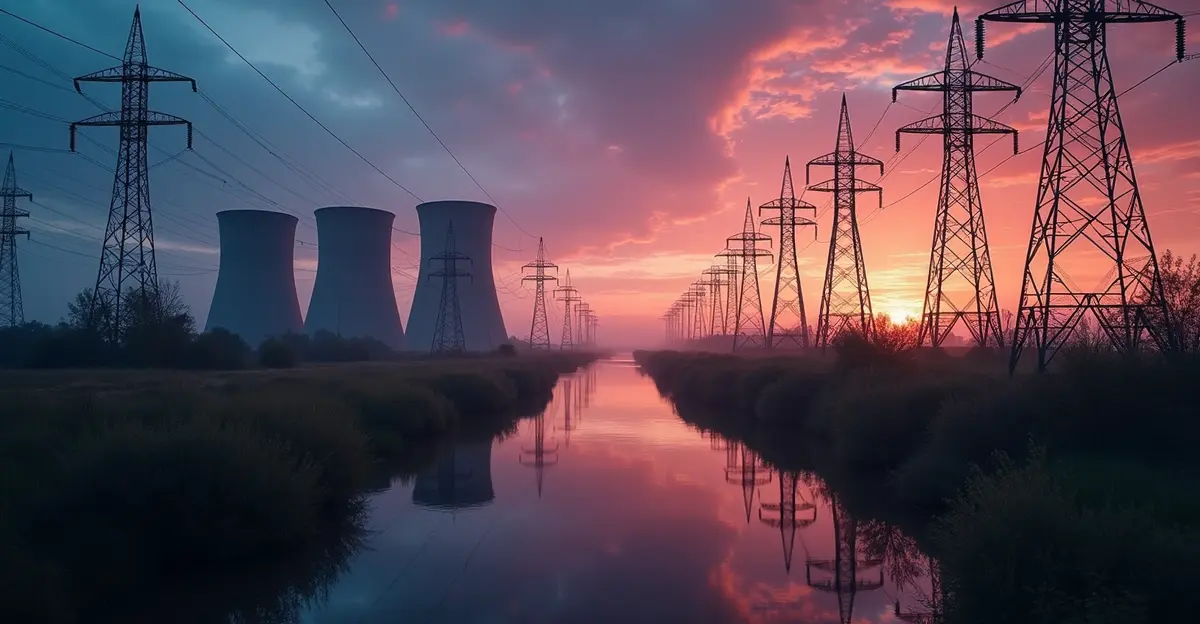
In 2026, the power bottleneck has replaced GPU supply as the binding constraint on AI growth. Global data center electricity consumption is projected to nearly double from 415 TWh in 2024 to 945 TWh by 2030, according to the International Energy Agency. As utilities from Ohio to Dublin impose moratoriums and capacity prices spike, the collision between AI's insatiable power demand and aging grid infrastructure is reshaping hyperscaler location strategy and forcing a strategic reckoning between energy policy and technological ambition.
The Scale of the Crisis
The IEA's latest Energy and AI report shows data centers consumed about 415 TWh of electricity in 2024, roughly 1.5% of global demand, and are on track to reach 945 TWh by 2030 — an increase of more than 128% in six years. The global data center energy consumption trajectory is growing at about 15% annually, more than four times faster than total electricity consumption. The United States and China will drive nearly 80% of that growth, with U.S. data center use rising from about 183 TWh in 2024 to as much as 580 TWh by 2028, according to Lawrence Berkeley National Laboratory.
Regional Flashpoints: Ohio, Dublin, PJM
The abstract crisis is now an operational one. In Ohio, AEP Ohio halted new data center connections before the Public Utilities Commission of Ohio approved a dedicated AEP Ohio data center tariff on July 9, 2025. Under the plan, large data center customers must pay for at least 85% of their subscribed energy even if they use less, prove financial viability, and accept exit fees for canceled projects over a 12-year commitment.
In Ireland, a de facto moratorium on new Dublin-area data center connections — in place since 2021 — was lifted in December 2025, but only under strict conditions. According to the Commission for Regulation of Utilities, new facilities must install on-site generation or battery systems capable of meeting their full electricity demand and source at least 80% of annual power from new renewables. The Dublin data center moratorium left data centers consuming nearly a quarter of Ireland's electricity.
The most dramatic signal came from the PJM Interconnection, the largest U.S. grid operator. Capacity prices in the 2026/27 auction cleared at $329.17 per megawatt-day, an 11-fold jump from $28.92 in 2024/25. The Institute for Energy Economics and Financial Analysis found data centers caused 63% of the increase, adding about $9.3 billion in ratepayer costs. The PJM capacity market prices spike has pushed monthly bills up by $16 to $21 across the region.
Hyperscaler Strategy: Nuclear Restarts and Location Shifts
Faced with grid limits, hyperscalers are pursuing two parallel strategies. First, a wave of nuclear deals: SMR Intel's 2026 tracker counts 13 agreements totaling over 9.8 GW across seven buyers. Microsoft leads timing with an 835 MW, $16 billion 20-year power purchase agreement to restart Three Mile Island Unit 1, targeting 2027. Meta holds the largest commitment at up to 6.6 GW, while Amazon invested $700 million in X-energy for up to 12 small modular reactors and Google committed to 500 MW from Kairos Power. The hyperscaler nuclear power deals address 2028–2039 timelines but do little for the immediate 2026 crunch.
Second, site selection is becoming a power strategy. Synergy Research Group found that Texas and Midwestern states now host 33% of operational U.S. hyperscale capacity, with the future pipeline expected to deliver 53% of new capacity. Enerdatics CEO Mohit Kaul put it bluntly: site selection is fundamentally a power strategy. Northern Virginia remains the largest concentration, but interconnection queues stretch beyond eight years, pushing developers toward Texas data center expansion and secondary markets in Wisconsin, Indiana, Michigan and Missouri.
Impact and Implications
The bottleneck is no longer a future risk; it is determining the pace of global AI deployment. Virginia data centers now consume roughly one in five kilowatt-hours produced in the state. PJM's 2027/28 capacity auction fell 6,623 MW short of its 20% reserve margin requirement — the first system-wide reliability shortfall in the grid operator's history. The interconnection backlog, transformer shortages, and transmission constraints mean up to 20% of planned data center projects could face delays, the IEA warns.
The collision is also forcing a policy reckoning. Natural gas is emerging as the practical bridge fuel, exemplified by legal challenges such as the NAACP's lawsuit over xAI's unpermitted gas turbines in Memphis. As residential ratepayers absorb higher bills and regulators demand hourly carbon-free data, the question is no longer whether AI can scale, but whether the grid can scale with it.
FAQ: AI Growth and the Electricity Grid Bottleneck
Why is the electricity grid now the main bottleneck for AI growth?
Grid capacity, interconnection queues, and transmission constraints now limit data center expansion more than GPU supply or software advances. Utilities in multiple regions have paused or conditioned new connections because demand is growing faster than infrastructure can be built.
How much electricity do data centers use?
Global data centers consumed about 415 TWh in 2024 and are projected to reach 945 TWh by 2030, according to the IEA — roughly the annual electricity use of Japan.
Which regions have imposed moratoriums on data centers?
AEP Ohio halted new connections in Central Ohio before adopting a new tariff in July 2025. Ireland maintained a de facto Dublin moratorium from 2021 until December 2025, when it was lifted with strict renewable and on-site generation requirements.
What are hyperscalers doing about power constraints?
They are signing nuclear restart and small modular reactor deals (over 9.8 GW committed through 2026) and shifting new capacity to power-rich regions such as Texas and the Midwest rather than constrained hubs like Northern Virginia.
How does this affect electricity bills?
In the PJM region, data center-driven capacity price increases are adding an estimated $16 to $21 per month to residential bills, with $9.3 billion in total ratepayer costs from the latest auction.
Conclusion: The Grid Is the New Compute
For years, AI's limiting factors were chips, memory, and cooling. In 2026, the binding constraint is the global electricity grid. Resolving it will require transmission investment, faster interconnection, diversified nuclear and gas supply, and a policy framework that balances technological ambition with ratepayer protection. The companies and regions that solve the power bottleneck first will set the pace for the next phase of AI growth.



Follow Discussion