


 Deutsch
 English
 Español
 Français
 Nederlands
 Português


 Share
Share




The global electricity system is entering an unprecedented squeeze in 2026 as AI-driven data center power demand races toward 1,000 terawatt-hours (TWh) — double 2024 levels and equal to Japan's entire annual consumption. The International Energy Agency (IEA) projects that data centers will consume about 1,000 TWh this year, while PJM Interconnection's December 2025 capacity auction failure exposed how far generation additions lag behind load growth.
What Is Driving the AI Power Crunch?
Data center electricity demand has doubled in two years because large language model training and inference require enormous, always-on compute. AI loads are concentrated in Northern Virginia, Texas, Ireland and Singapore, where utilities are already warning of shortfalls. The bottleneck is physical: the grid interconnection queue now averages five years in major US markets, and power transformer lead times stretch beyond three years, with some step-up units waiting 144 weeks. According to DC Atlas supply-chain data, transformer imports cover 80% of US demand and face a projected 30% deficit, while nearly half of planned US AI data center capacity is delayed into 2027 or later.
The PJM Capacity Auction Failure: A Structural Warning
On December 17, 2025, PJM Interconnection cleared its 2027/2028 capacity auction at the FERC-approved price cap of $333.44 per megawatt-day, but procured only 134,479 MW — short of its reliability target. It was the third consecutive record auction and the first time a major US grid operator failed to secure enough committed capacity. Capacity prices have surged ninefold from about $30/MW-day in 2023, according to Newsweek. PJM says data centers account for 97% of load growth, but only a fraction of new generation has cleared interconnection, creating a grid reliability crisis.
Hyperscalers Go Nuclear and Behind-the-Meter
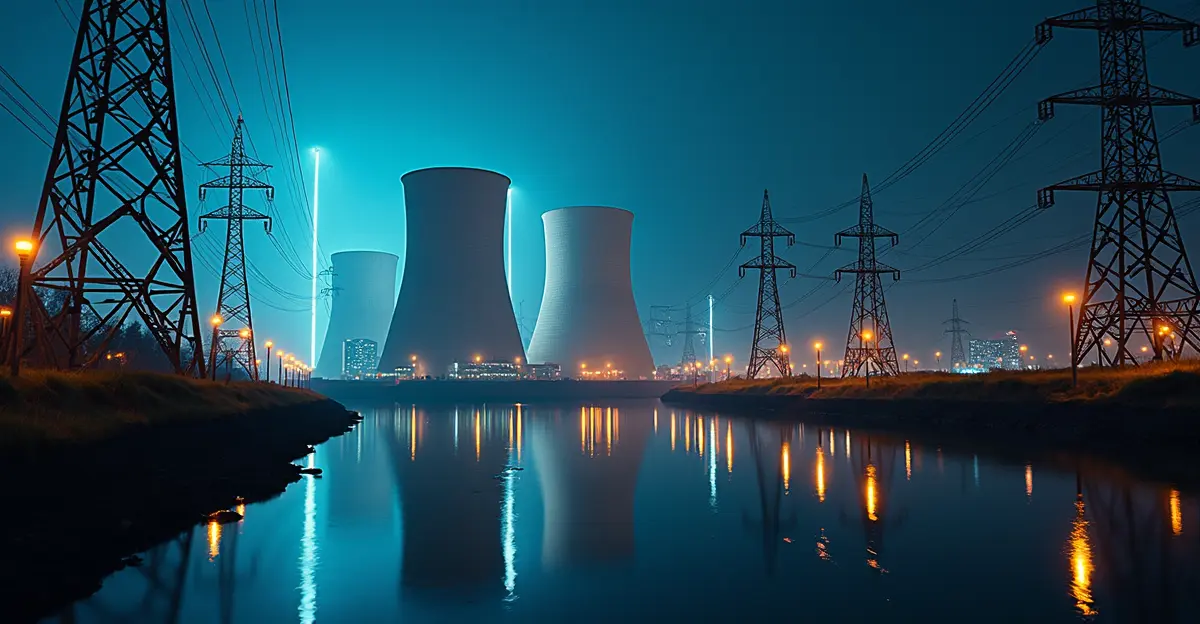
Faced with five-year grid queues, hyperscalers are bypassing the traditional utility model. Microsoft, Google, Amazon and Meta have committed more than $100 billion to 13 nuclear projects totaling 9.8 GW, according to SMR Intelligence. Microsoft's Three Mile Island nuclear restart (835 MW) is expected to deliver power by late 2027, while Amazon invested $700 million in X-energy and Google signed for 500 MW of Kairos Power reactors. Utilities are also building behind-the-meter gas, fuel cell and solar-plus-storage generation to energize data centers before permanent grid connections are ready.
Impact on Consumers, Utilities and Policy
The financial shock is spreading. Utilities requested a record $31 billion in rate increases in 2025, and PJM capacity costs are expected to add double-digit percentage points to residential bills. The tension between AI leadership and grid reliability is now a cabinet-level issue in Washington, Brussels and Tokyo. For utilities, the failed auction signals that capacity market reforms may be needed, including reliability backstops, faster interconnection and direct procurement for large loads.
What Experts Are Saying
IEA analysts frame the moment as a turning point: 'The age of electricity is accelerating.' Industry observers add: 'Electricity, not GPU supply, has become AI's binding constraint.' The shared message is that power access — not compute, land or capital — is now the scarcest resource in the AI race.
Frequently Asked Questions
What is driving data center electricity demand to 1,000 TWh in 2026?
AI model training and inference are doubling data center power use from about 500 TWh in 2024 to roughly 1,000 TWh in 2026, equal to Japan's annual consumption.
Why did the PJM capacity auction fail in December 2025?
PJM cleared at the $333.44/MW-day price cap but still fell short of its reliability target because generation and interconnection cannot keep pace with data center load growth.
How are hyperscalers securing power for AI data centers?
They are signing direct nuclear deals, investing in small modular reactors, and building behind-the-meter gas, fuel cell and solar-plus-storage generation to bypass grid queues.
What does the ninefold capacity price surge mean for electricity bills?
Capacity costs flow through to rates, contributing to a record $31 billion in US utility rate hike requests in 2025 and double-digit percentage increases in some regions.
Conclusion
The 2026 grid squeeze is not a short-term blip. With data center demand hitting 1,000 TWh and interconnection queues stretching five years, energy access has become the defining strategic asset of the AI era. Policymakers, utilities and hyperscalers must choose between accelerating clean firm power, redesigning capacity markets and accepting slower AI deployment — or risk turning the AI revolution into a reliability crisis.

Follow Discussion