


 Deutsch
 English
 Español
 Français
 Nederlands
 Português


 Share
Share




Global data center electricity consumption is on track to surpass 1,000 terawatt-hours (TWh) by 2026, driven overwhelmingly by artificial intelligence workloads. Yet even as AI power demand soars, up to 50% of planned data center projects face delays because of grid capacity shortages and transformer lead times that now stretch to three to five years. The result is a strategic crisis that is forcing Big Tech to pursue nuclear power deals, behind-the-meter generation, and a resurgence of natural gas as a bridge fuel—reshaping national competitiveness, grid reliability, and the pace of AI deployment itself.
According to the International Energy Agency (IEA), data centers consumed 460 TWh in 2022 and could reach between 650 TWh and 1,050 TWh by 2026. Goldman Sachs forecasts U.S. data center power demand climbing from 31 GW in 2025 to 41 GW in 2026 and 66 GW in 2027, with data centers' share of peak summer demand rising from 4.1% to 8.5%. Those numbers make one thing clear: in 2026, grid capacity—not chip availability—has become the binding constraint on AI infrastructure growth.
Why the Grid Is the Binding Constraint on AI Growth
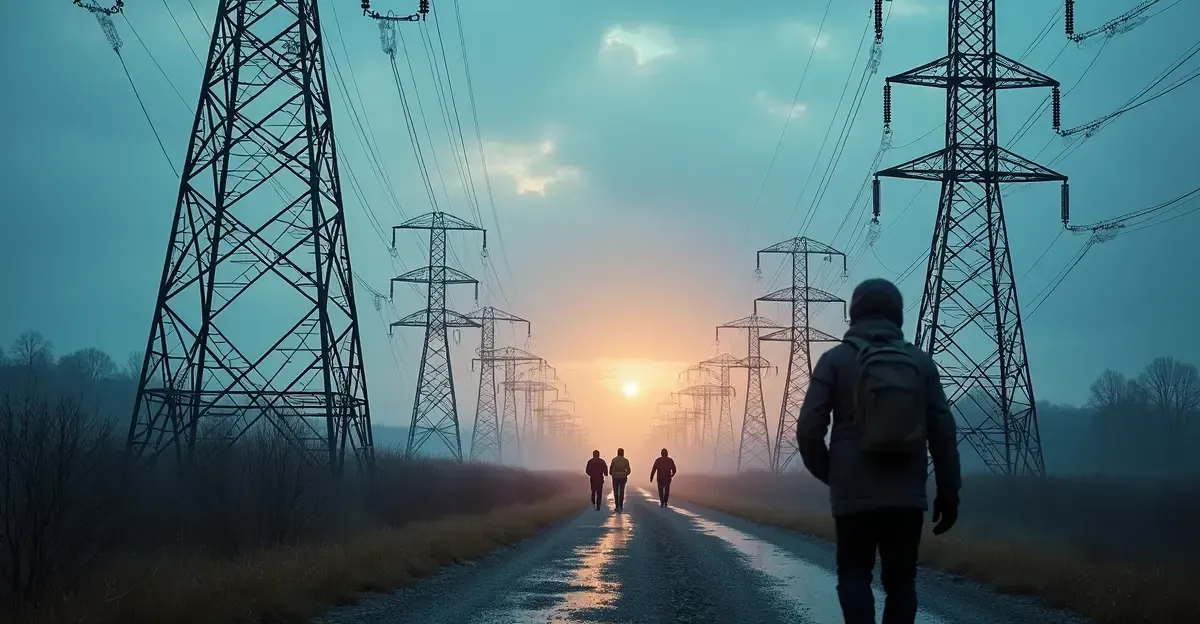
The bottleneck is not a single failure but a convergence of aging infrastructure and equipment supply chain shortages. Transformer supply chains have been stretched for years, with lead times for large power transformers now reaching 128 weeks in some markets. Grid interconnection queues are even worse: in the United States, new projects routinely wait four to seven years just to connect to the transmission network. For data center developers racing to deploy Nvidia Blackwell racks that consume 120–130 kW per rack—up from 40 kW only a generation ago—those timelines are simply unacceptable.
Goldman Sachs analysts caution that historically only 72% of scheduled data center projects come online on time. After accounting for supply-chain and labor shortages, they expect just '~60% of next-year capacity to materialize, falling to ~50% in two years'. That shortfall is already visible in stalled projects: hyperscalers have reported more than 36 projects worth $162 billion delayed or paused due to grid interconnection and transformer bottlenecks.
Big Tech's Response: Nuclear, Behind-the-Meter, and Gas
Faced with a grid that cannot keep up, hyperscalers are going off-grid. Nuclear power deals have accelerated dramatically: Microsoft signed a $16 billion agreement to restart Three Mile Island's 835 MW reactor by 2027; Google committed to Kairos Power's small modular reactor fleet; and Amazon invested $700 million in X-energy's advanced nuclear designs. In total, Big Tech has committed roughly 9.8 GW of nuclear capacity across 13 projects.
But nuclear timelines remain long, so behind-the-meter generation has emerged as the near-term workhorse. Bloom Energy has secured $7.65 billion in fuel-cell contracts deployable in 55–90 days, while midstream gas companies like Williams and Energy Transfer are building on-site gas plants that bypass the public grid in as little as 18 months. A landmark FERC ruling in late 2024 rejected Amazon's plan to run a data center directly off the Susquehanna nuclear plant, forcing developers to restructure behind-the-meter deals as grid-connected retail—yet the model persists, with direct midstream-hyperscaler alliances now dominating in Ohio, Texas, and Virginia.
Impact on Grid Reliability and National Competitiveness
The strain is not evenly distributed. Goldman Sachs identifies the Mid-Atlantic, Mid-Continent, and Northwest U.S. markets as facing elevated grid reliability risks, while Texas and Georgia are comparatively stable due to planned new generation. The December 2025 PJM capacity auction cleared at the $333.44 per MW-day price cap, adding roughly $21 billion in capacity costs that will ultimately flow to ratepayers. That means households and businesses in constrained regions may pay higher electricity bills to subsidize the AI buildout—a political flashpoint already emerging in states like Virginia, where data centers could consume 32% of national power by 2026.
For national competitiveness, the stakes are clear: AI infrastructure growth increasingly depends on a country's ability to deliver electricity, not just semiconductors. Countries with faster grid permitting and domestic transformer manufacturing—such as China and parts of the Middle East—may gain an edge as U.S. projects stall. The race for AI supremacy is becoming, in effect, a race for electrons.
What Comes Next for AI Infrastructure
2026 will be the year power, not chips, determines the pace of AI deployment. Expect more behind-the-meter gas and fuel cells, accelerated small modular reactor licensing, and serious investment in grid-enhancing technologies like advanced conductors and dynamic line ratings. Efficiency will also play a role: liquid cooling and heat reuse can moderate demand growth, but they cannot eliminate the need for new generation. The defining energy-security story of the year is no longer about oil or gas supply—it is about whether the grid can deliver enough power to keep the AI revolution running.
Frequently Asked Questions
How much electricity will data centers use in 2026?
Global data center electricity consumption is projected to reach between 650 TWh and 1,050 TWh in 2026, up from 460 TWh in 2022, according to the IEA.
Why are transformer lead times so long?
Large power transformers face shortages of grain-oriented electrical steel, skilled labor, and manufacturing capacity. Lead times now stretch to 128 weeks or more in many markets.
What is behind-the-meter generation for data centers?
Behind-the-meter generation refers to on-site power plants—often gas turbines or fuel cells—that supply a data center directly, bypassing the public transmission grid and avoiding interconnection delays.
Which U.S. regions face the highest grid reliability risks?
Goldman Sachs identifies the Mid-Atlantic, Mid-Continent, and Northwest as facing elevated risks, while Texas and Georgia are relatively stable due to new generation capacity.
Are nuclear power deals enough to solve the grid bottleneck?
Nuclear deals provide long-term clean power but most reactors won't come online until 2030 or later. Near-term relief depends on gas, fuel cells, and grid efficiency improvements.
Follow Discussion