


 Deutsch
 English
 Español
 Français
 Nederlands
 Português


 Share
Share




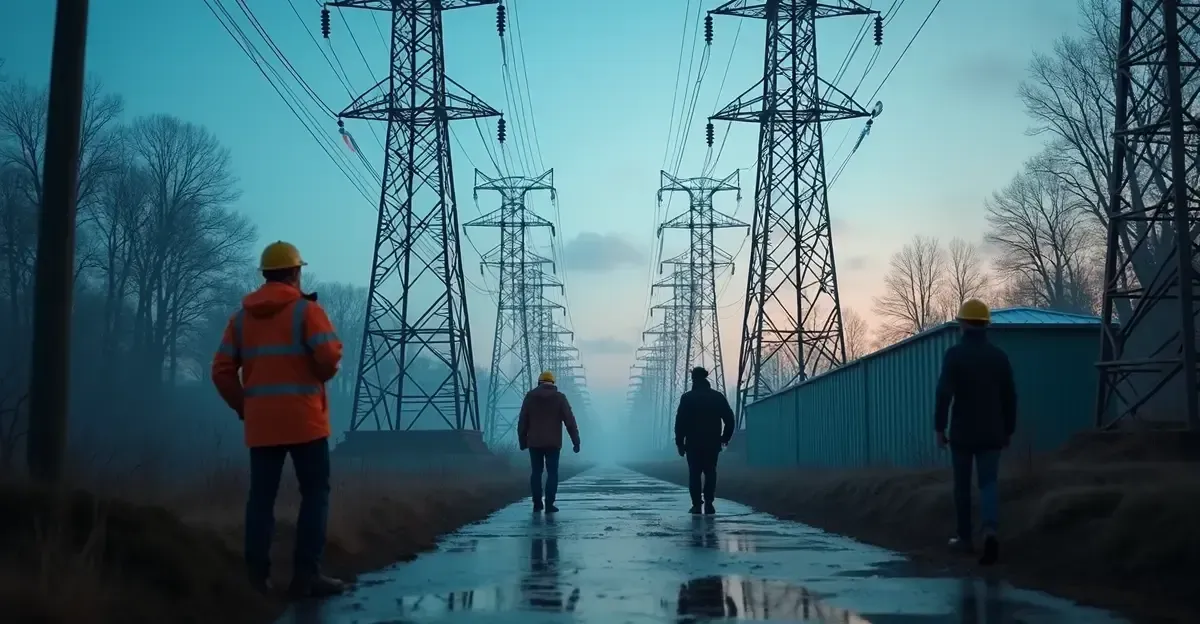
As grid interconnection queues in the United States surpass 2,600 GW and wait times stretch to seven years, 2026 has become the year Big Tech formally bypasses public grids through behind-the-meter power. Hyperscalers are pivoting from shared transmission networks to on-site gas turbines, fuel cells, and direct nuclear power purchase agreements, creating a parallel energy economy that is already reshaping pricing, infrastructure investment, and global competitiveness.
What Is Behind-the-Meter Power?
Behind-the-meter (BTM) generation is produced on the customer side of the utility meter and never flows onto the public grid. Proposed BTM capacity for AI data centers surged from under 2 GW in late 2024 to about 48 GW by early 2026, with natural gas fueling 72% of projects, according to ComputeLaw analysis. The grid interconnection queue remains the primary bottleneck: roughly 4 in 5 queued projects never get built, and the average wait now exceeds five years.
The On-Site Generation Stack
Gas Turbines as the Workhorse
Gas turbines are the fastest path to power for AI data centers, deployable in 12–30 months versus 4–7 years for grid interconnection. They deliver Tier IV reliability and avoid 30–50% transmission charges, with combined-cycle efficiency above 62%. Microsoft is the most aggressive adopter, deploying hydrogen-ready turbines, while Amazon is acquiring generation assets, per SAVRN's field guide. Williams Companies alone committed $5.1 billion to a power innovation portfolio, including $3.1 billion for two data center projects in late 2025, as detailed by EnkiAI.
Direct Nuclear PPAs and Fuel Cells
Beyond gas, hyperscalers are underwriting nuclear power through direct PPAs. Microsoft's landmark 20-year, 837 MW agreement with Constellation Energy to restart Three Mile Island's Unit 1 set the model, while Amazon expanded its Talen Energy PPA to 1,920 MW through 2042, according to SMR Intel's tracker. Direct nuclear power purchase agreements now total over 22 GW in commitments for 2025–2026. Fuel cells remain a smaller but growing niche, offering clean baseload without gas pipeline dependencies.
How On-Site Power Fractures Energy Markets
When hyperscalers leave the grid, they stop contributing to fixed transmission and distribution costs, shifting those expenses onto remaining customers. PJM projects a $6.3 billion rise in consumer electricity costs over three years tied to data center demand, and Virginia residential prices are already up over 13%, according to Fortune. Historically, data centers lowered retail prices through economies of scale, but the parallel behind-the-meter economy reverses that dynamic. The consumer electricity price trends now diverge sharply between regions with and without AI infrastructure.
The AI Energy Bubble and Systemic Risk
If projected AI demand fails to materialize, the fixed costs of overbuilt on-site generation and stranded grid assets will fall on a smaller base of users. Bank of America reports more than 7.5 GW of data center projects with on-site generation are already under construction, with another 60 GW-plus in pre-construction. This concentration creates a AI energy bubble risk: gas turbines and nuclear PPAs are long-lived assets with 20–40 year lifespans, but AI workload forecasts can shift within quarters. A deflation scenario would leave ratepayers and investors holding billions in underutilized capacity.
Global Ripple Effects and Policy
Regions that can attract behind-the-meter AI infrastructure—Texas, Ohio, West Virginia, and Northern Virginia—are racing ahead, while those with stricter interconnection rules or higher gas costs risk losing hyperscaler investment. The December 2025 FERC order requiring PJM to rewrite behind-the-meter rules, including a proposed 50 MW netting-eligibility threshold, shows regulators scrambling to keep up, as noted by ComputeLaw. This policy fragmentation is creating a global AI energy competitiveness divide that will shape economic geography for a decade.
Frequently Asked Questions
What is behind-the-meter power?
Behind-the-meter power is electricity generated on the customer side of the utility meter, such as on-site gas turbines or solar panels at a data center, and is never delivered to the public grid.
Why are hyperscalers switching to on-site generation?
Grid interconnection queues exceed 2,600 GW and average five years, while behind-the-meter projects can deliver power in 6–30 months, allowing AI data centers to scale faster.
How does behind-the-meter power affect consumer electricity prices?
When large data centers bypass the grid, they stop paying fixed transmission and distribution charges, so those costs shift to remaining customers. PJM projects a $6.3 billion increase over three years.
What happens if the AI energy bubble deflates?
Overbuilt gas turbines, fuel cells, and nuclear PPAs would become stranded assets, and their fixed costs would spread among fewer users, raising rates and stressing utility balance sheets.
Which regions are leading behind-the-meter AI power?
Texas, Ohio, West Virginia, and Northern Virginia are attracting the most on-site generation projects due to gas availability, regulatory flexibility, and proximity to data center corridors.
Future Outlook
Behind-the-meter power is no longer an edge case; it is the default strategy for hyperscalers in 2026. The parallel energy economy it creates will demand new market rules, grid cost-allocation reforms, and transparent risk disclosure. Whether it delivers cheaper, more reliable AI infrastructure or triggers a consumer price shock depends on whether regulators and investors can price the hidden systemic risk before the bubble is tested.
Follow Discussion