


 Deutsch
 English
 Español
 Français
 Nederlands
 Português


 Share
Share




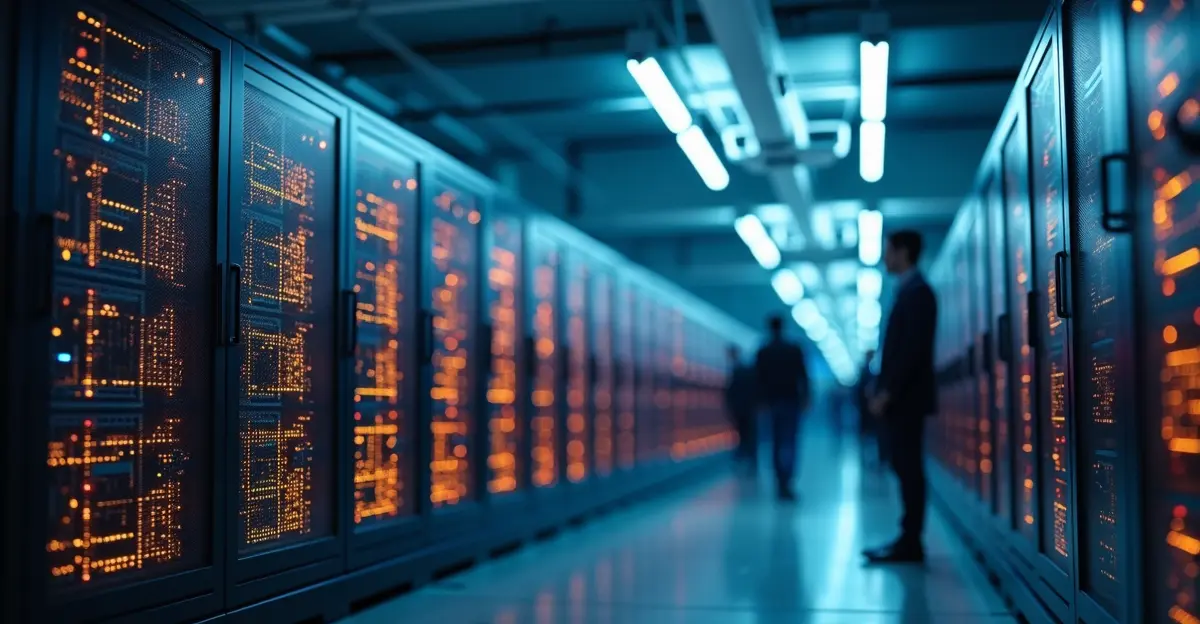
The artificial intelligence boom is colliding head-on with the world's decarbonization goals, creating what energy analysts call the defining geopolitical tension of 2026. AI data centers are projected to consume nearly 1,000 terawatt-hours (TWh) of electricity annually by 2026 — more than double the 460 TWh consumed in 2022, according to the International Energy Agency (IEA). This surge is driving a 165% increase in global data center power demand by 2030, as forecast by Goldman Sachs, while grid interconnection timelines of four to five years cannot keep pace with data center build-out schedules measured in mere months.
The Scale of the Crisis
Global data center electricity consumption could reach between 650 TWh and 1,050 TWh by 2026, the IEA reports, equivalent to adding the power consumption of Sweden to Germany. In the United States — home to 33% of the world's data centers — consumption could rise to 260 TWh, representing 6% of total US power use. Goldman Sachs projects US data center power demand will more than double from 31 GW in 2025 to 66 GW by 2027, with AI workloads claiming over a quarter of that capacity. A single ChatGPT query consumes 2.9 watt-hours, nearly ten times that of a standard Google search, illustrating why the AI energy intensity problem is accelerating so rapidly.
The numbers are staggering: the top five US hyperscale companies are set to invest $736 billion in 2025–2026 alone. Yet nearly half of all planned US data center capacity for 2026 faces delays or cancellations, according to Sightline Climate, with only about 5 GW of the 12 GW announced actually under active construction. The bottleneck has shifted from GPU shortages to physical power infrastructure — transformers, switchgear, and grid connectivity — with lead times stretching to five years.
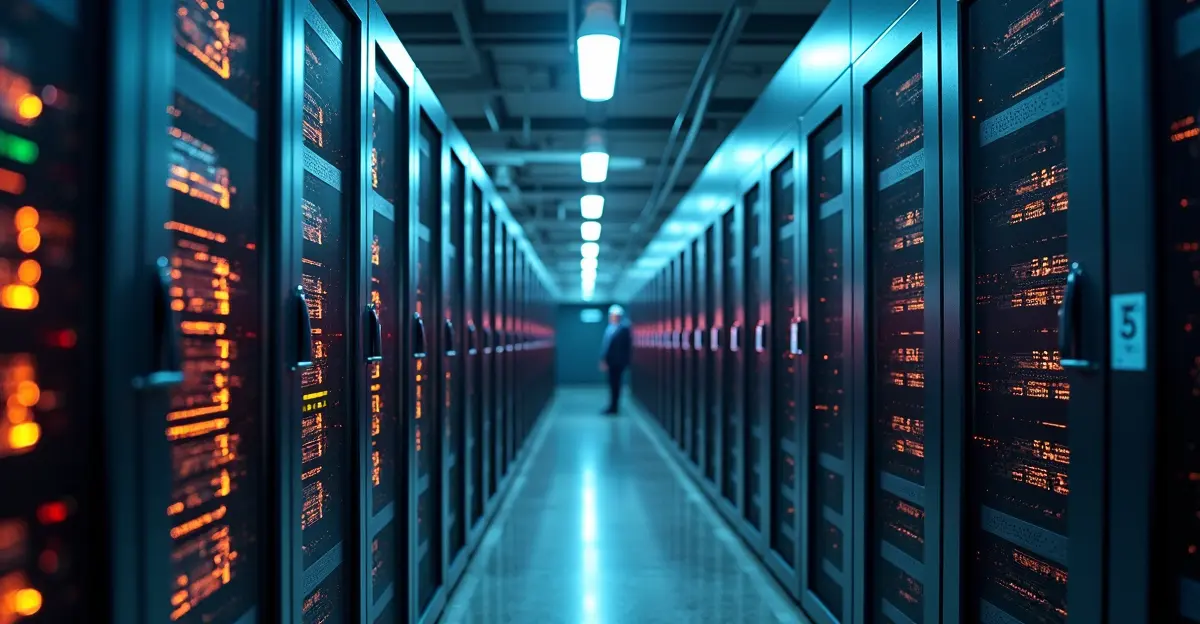
Grid Interconnection: The Four-Year Chasm
Utility interconnection timelines of three to five years are fundamentally incompatible with AI developers' need for power within 12 to 24 months. This mismatch is forcing a dramatic shift: according to a May 2026 report from POWER Magazine, 27% of US data centers are expected to rely entirely on onsite generation by 2030, up from roughly 1% today. This represents 35 GW of self-generated capacity out of a projected 134.4 GW total US data center demand by 2030.
The grid interconnection backlog crisis is particularly acute in regions like the Mid-Atlantic, Midwest, and Northwest, where PJM Interconnection's capacity prices have skyrocketed. PJM's 2025–2026 capacity auction cleared at a record $329.17 per MW-day — a tenfold increase from $28.92 per MW-day in 2024–2025. Data centers caused 63% of that price increase, adding $9.3 billion in capacity costs that all ratepayers must absorb. Consumer bills are expected to rise 1.5% to 5% depending on location, with the NRDC warning typical households could see $70 per month in extra costs.
Behind-the-Meter Gas: The Fast-Track Solution
With grid connections years away, tech companies are increasingly building their own power plants on-site. Proposals for new US natural gas facilities tripled in 2025, with over 250 GW planned, according to Global Energy Monitor. Natural gas turbines can be deployed much faster than utility-scale renewables or nuclear, though even turbine lead times are now stretching to five to seven years. Developers are getting creative: mounting gas engines on semi-trucks, repurposing jet and warship turbines, and deploying mobile gas turbine units — as xAI did at its Colossus data center.
Key behind-the-meter projects include Wartsila's 282 MW Ohio facility, Bloom Energy's 1.2 GW fuel cell deployment at Oracle, Caterpillar gas engines at the Monarch Compute Campus (2 GW) and Joule Capital Partners (4 GW). However, regulators in Texas, Virginia, and Wyoming have yet to finalize rules for large-load co-located generation, introducing permitting risks that could delay projects.
Nuclear Renaissance or Pipe Dream?
Technology giants are also turning to nuclear power as a long-term solution. Microsoft is restarting Three Mile Island Unit 1 ($1.6 billion investment), while Amazon, Google, Meta, and Oracle have collectively committed over $10 billion to small modular reactor (SMR) partnerships, with 22 GW of projects in development globally. Amazon invested $500 million in X-energy targeting 5 GW; Google signed a first-of-its-kind corporate SMR power purchase agreement with Kairos Power for 500 MW; and Meta partnered with Oklo on a 1.2 GW Ohio campus featuring 16 Aurora reactors.
Yet the small modular reactor commercialization timeline remains a major hurdle. First commercial SMR-powered data centers are not expected online until 2030 at the earliest, and challenges include limited HALEU fuel supply, a thin nuclear engineering talent pool, and unresolved regulatory frameworks. The SMR market, valued at $6.9 billion in 2025, is projected to reach $13.8 billion by 2032 — but that may be too slow for AI's immediate needs.
Fossil Fuel Retirements Delayed
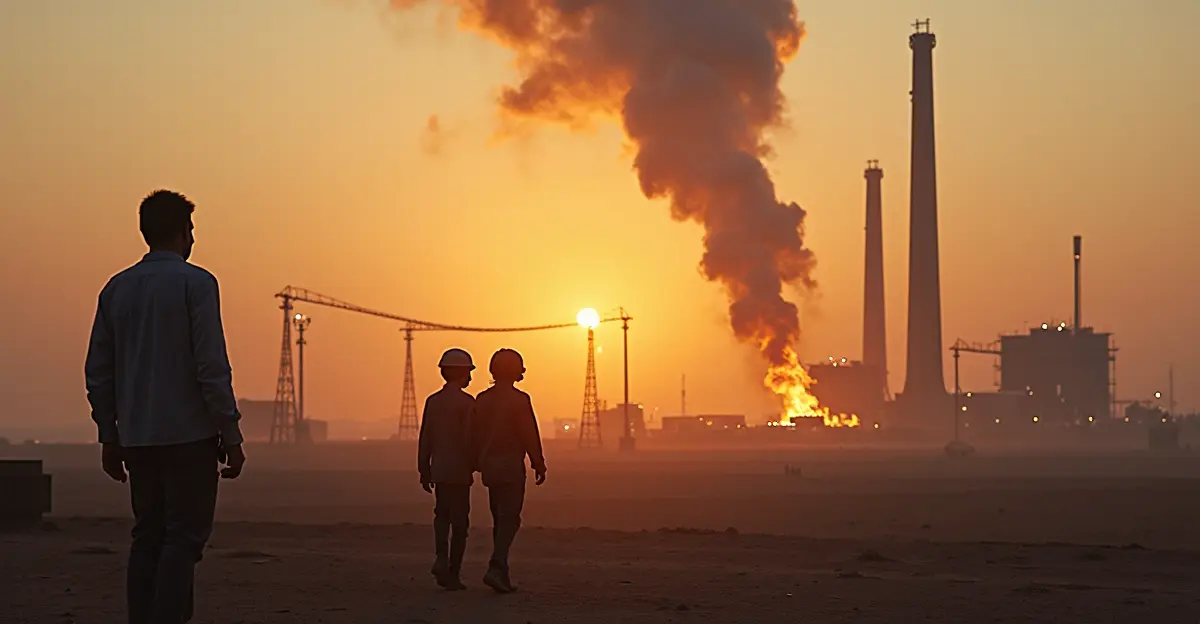
The AI power surge is directly undermining decarbonization efforts. At least 15 US coal plants have had planned retirements pushed back or delayed indefinitely since early 2025, according to a DeSmog analysis, with utilities and grid operators explicitly citing data center demand as the reason. Delayed fossil fuel retirements are most common in the Mid-Atlantic, Midwest, Southeast, and Mountain West regions. Even if data centers later transition to clean energy, the surplus natural gas capacity built today will likely remain in use for decades, locking in significant greenhouse gas emissions.
Renewable energy is projected to supply 40% of new capacity for data centers, but hybrid setups blending renewables with battery storage and natural gas backup are favored for the continuous, 24/7 power that AI workloads require. The renewable energy storage challenge for AI remains acute: intermittent wind and solar cannot alone power hyperscale data centers operating around the clock.
Expert Perspectives
"We are witnessing the largest synchronization challenge between energy supply and demand in modern history," said Dr. Fatih Birol, IEA Executive Director, in the agency's Electricity 2026 report. "The 'Age of Electricity' is accelerating faster than our infrastructure can adapt, and AI data centers are the most visible symptom of this tension."
Goldman Sachs Commodities Research warns that only 50–60% of planned data center capacity is expected to come online on time due to delays, cancellations, supply chain issues, and labor shortages. Historically, only about 72% of scheduled data centers activate on schedule. The investment bank projects that utilities will need to spend $720 billion globally to keep pace with data center power demand through 2030.
FAQ
How much electricity will AI data centers consume by 2026?
AI data centers are projected to consume between 650 TWh and 1,050 TWh annually by 2026, according to the IEA, with Goldman Sachs forecasting nearly 1,000 TWh under high-growth scenarios. This is roughly double the 460 TWh consumed in 2022.
Why are grid interconnections taking so long?
Utility interconnection timelines of 3–5 years are standard due to transmission upgrades, permitting, and equipment lead times. Transformers alone can take 2–4 years to deliver. AI data centers need power in 12–24 months, creating a fundamental mismatch.
Are data centers causing electricity prices to rise?
Yes. In the PJM region covering 13 US states, capacity prices surged tenfold from $28.92/MW-day to $329.17/MW-day, with data centers responsible for 63% of the increase. Consumer bills are expected to rise 1.5% to 5%, with some households facing $70/month in additional costs.
What are behind-the-meter gas plants?
These are natural gas power plants built on-site at data centers, bypassing the grid interconnection queue. They can be deployed faster than utility-scale generation, but turbine lead times are now stretching to 5–7 years, and they risk locking in fossil fuel emissions for decades.
Can small modular reactors solve the AI power problem?
SMRs offer 95%+ capacity factors and 24/7 carbon-free power, but first commercial deployments are not expected until 2030 at the earliest. Tech companies have committed over $10 billion to SMR projects, but fuel supply, regulatory, and talent shortages remain significant barriers.
Conclusion: A Policy Reset Needed
The AI power paradox — where the technology designed to accelerate human progress is simultaneously straining the planet's energy systems — demands urgent policy intervention. Without streamlined interconnection processes, accelerated clean energy deployment, and clear rules for behind-the-meter generation, the gap between AI ambition and grid reality will only widen. The IEA's Electricity 2026 report calls for a five-year outlook on power system flexibility, demand response, and utility-scale batteries to navigate this new era. Whether policymakers can match the pace of AI innovation remains the defining question for the energy transition in 2026 and beyond.


Follow Discussion