


 English
 Nederlands
 Deutsch
 Français
 Español
 Português

Daily News Summary – 2026-03-19 – en

On March 19, 2026, global news highlighted diverse developments across technology, geopolitics, and society. The Iranian women's football team's asylum saga concluded with their return home, while AI concerns rose over cognitive homogenization. Quantum computing threats prompted urgent encryption overhauls, and geopolitical tensions flared with the Larijani assassination in Iran. Climate finance saw a $300 billion deal at COP29, and critical minerals supply chains faced bottlenecks. Bitcoin showed resilience post-Fed decision, and a mysterious Farsi radio station revived Cold War spycraft. This day underscored the intricate links between innovation, security, and global cooperation.
Top Stories
Iranian Women's Football Team Returns Home Amid Asylum Controversy

The Iranian women's national football team returned home after seven members sought asylum in Australia during the Asian Cup, with two players granted asylum and the majority crossing the Turkish border amid safety concerns and political pressure.
What is the Quantum Computing Threat to National Security?

The Pentagon faces a 2030 deadline to upgrade encryption as quantum computing advances threaten to break current standards, with China investing heavily and 'harvest now, decrypt later' risks looming for national security.
Larijani Assassination: Complete Guide to Iran's Power Vacuum & Hydra Effect Explained

The assassination of Ali Larijani in Tehran by Israeli airstrike creates a power vacuum in Iran, illustrating the 'Hydra effect' where networked organizations regenerate leadership, potentially leading to regional instability and radicalization.
AI Homogenization Explained: How ChatGPT Creates Cognitive Uniformity

A 2026 study warns that AI tools like ChatGPT are causing cognitive homogenization, standardizing human thought and expression for over 1 billion users, eroding personal style and amplifying cultural biases.
Federal Reserve Holds Rates Steady: Bitcoin's Surprising Recovery Explained

The Federal Reserve kept interest rates unchanged, and Bitcoin recovered from a pre-announcement drop, showing resilience due to institutional accumulation and geopolitical hedge narratives amid Middle East tensions.
Also Notable
Crime
Funcaps Trial: 5 Years Prison Sought for Dutch Fake Pill Operators in Belgium

Belgian prosecutors seek five years imprisonment for Dutch operators of Funcaps, an illegal online pharmacy linked to 58 deaths in Europe, revealing chilling indifference in WhatsApp messages.
Geopolitics
What is the Mysterious Farsi Radio Station?

A mysterious shortwave radio station broadcasting coded messages in Farsi has emerged, reviving Cold War spycraft techniques amid Iran-US-Israel tensions, using unbreakable one-time pad encryption.
The Strategic Calculus Behind Recent Semiconductor Export Control Tightening
The US and allies tightened semiconductor export controls in late 2025, targeting specific chip architectures to slow China's military modernization while minimizing global innovation disruption.
AI
AI's Strategic Reshaping of Global Defense: How Artificial Intelligence is Redefining Military Power Balances

AI is transforming global defense, with the US, China, and Russia pursuing divergent approaches, creating strategic asymmetries in intelligence, autonomous weapons, and decision-making processes.
OpenAI Strategic Shift Explained: Focus on Business Users & Codex | 2026 Update

OpenAI is pivoting to focus on enterprise users and its Codex coding assistant, deprioritizing other projects amid competition from Anthropic, with Codex users quadrupling since January 2026.
The Strategic Calculus Behind US AI Chip Export Controls: Balancing Security and Technology Diffusion
The US implemented a tiered export control regime for AI chips in 2025, restricting 140 Chinese entities while allowing access to 18 allies, aiming to create a chokepoint against China's military AI development.
The AI Energy Paradox: How Data Center Demand Is Reshaping Global Power Markets and Geopolitics

AI data centers consume 415 TWh annually, projected to double by 2030, creating an 'electron gap' that strains grids, raises energy prices, and intensifies US-China competition for power resources.
The Strategic Recalibration: How New U.S. Export Controls Reshape Global Tech Competition
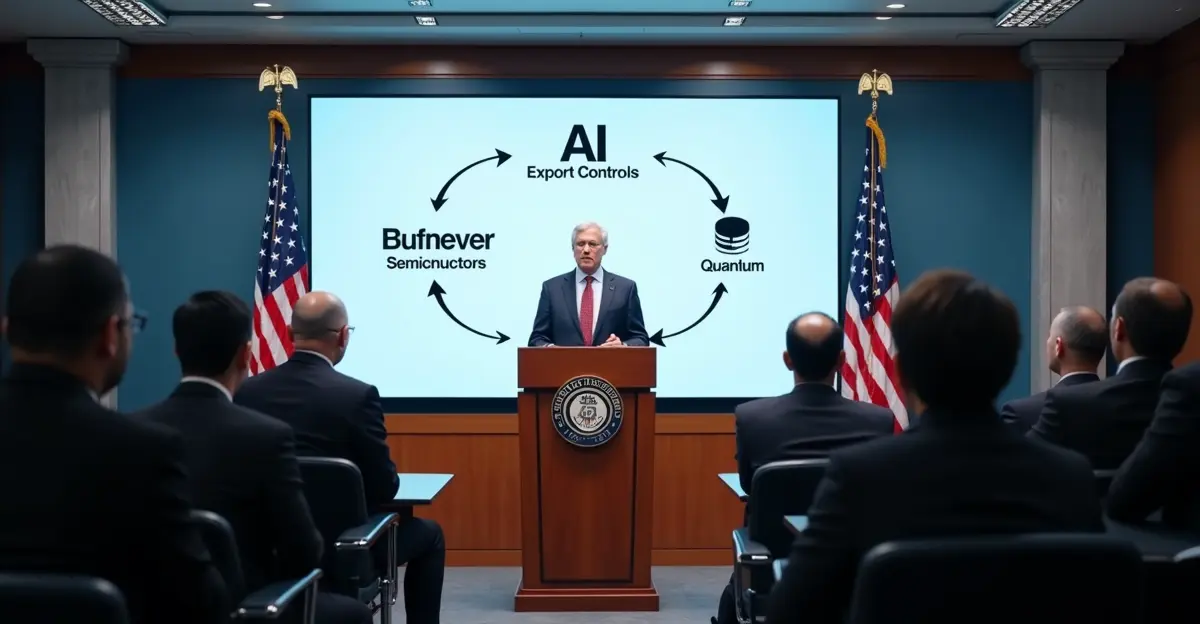
In May 2025, the US rescinded global AI chip licensing rules, focusing on targeted China controls, easing restrictions for allies while maintaining pressure on Beijing's technological ambitions.
AI Chip Export Controls: Why the U.S. Withdrew Global Licensing Rules
The US withdrew proposed global AI chip export licensing requirements in March 2026, shifting to China-focused controls to maintain technological leadership and reduce regulatory burden on companies like Nvidia.
Science
What is the Xi-cc Particle? CERN's Latest Physics Breakthrough
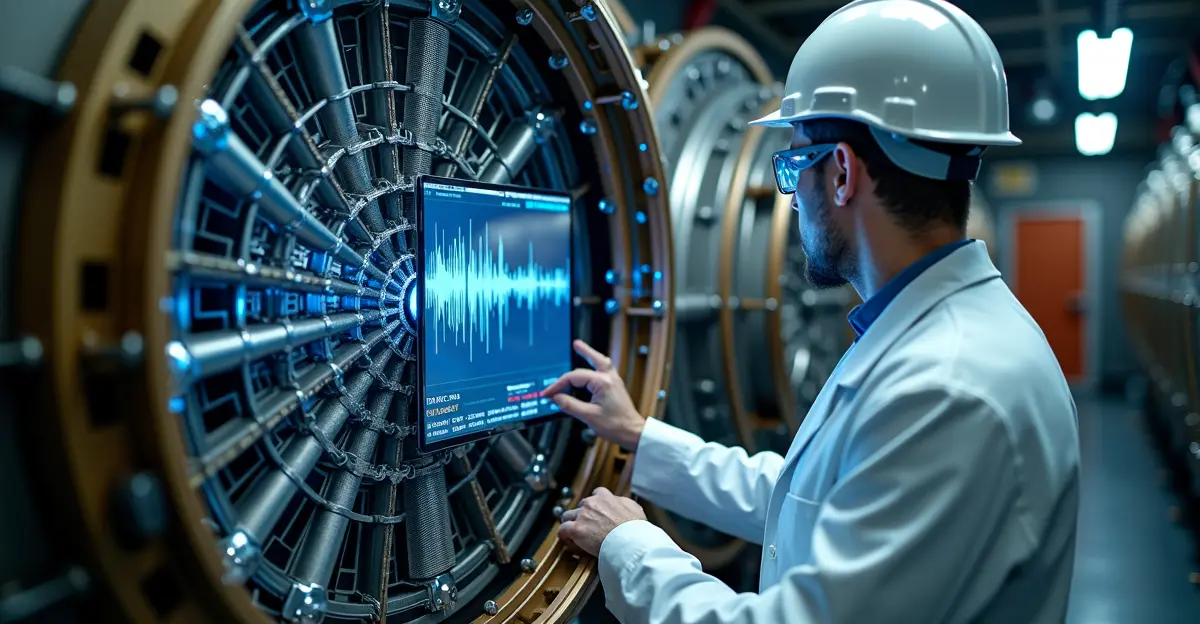
CERN discovered the Xi-cc-plus particle, a heavier relative of the proton with two charm quarks, marking the 80th particle found by the Large Hadron Collider and solving a 20-year scientific mystery.
Environment
COP29's $300 Billion Climate Finance Deal: Strategic Implications for Global Energy Transition
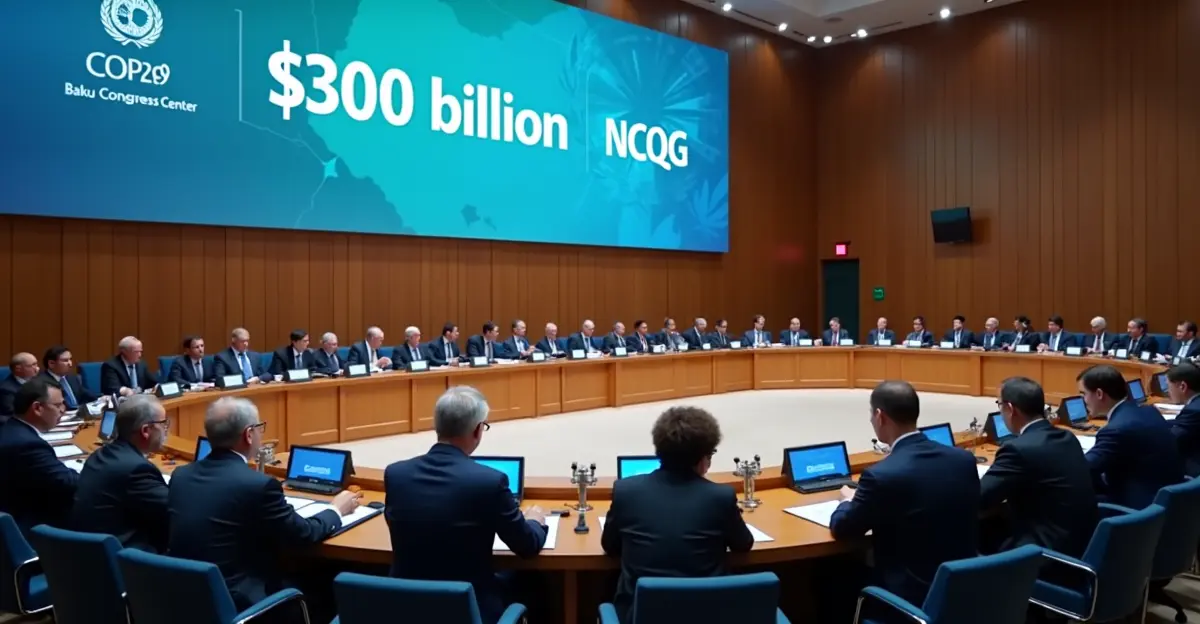
COP29 secured a $300 billion annual climate finance deal by 2035, tripling previous commitments but falling short of developing nations' $1.3 trillion demand, reshaping global energy transition investments.
COP29's $300 Billion Climate Finance Deal: Strategic Implications for Global Energy Transition
The COP29 agreement establishes a new climate finance framework with $300 billion annually by 2035, addressing gaps in energy transition funding while highlighting geopolitical tensions between developed and developing nations.
Energy
The Critical Minerals Bottleneck: How Geopolitical Supply Chain Vulnerabilities Threaten Global Energy Transition

Critical minerals supply chains are dangerously concentrated, with China refining 70% of strategic minerals, threatening the clean energy transition and prompting Western diversification efforts through investments and partnerships.
AI Data Centers and the Global Energy Grid: The Coming Infrastructure Crisis

AI data centers are projected to consume 945 TWh by 2030, causing grid instability, interconnection bottlenecks, and energy market disruptions, necessitating urgent policy and infrastructure solutions.
Technology
The Quantum Computing Arms Race: How National Security and Global Encryption Standards Are Being Redefined

Quantum computing advances are accelerating an arms race, with IBM's 1121-qubit processor and improved fidelity raising immediate national security concerns over encryption breaches and 'harvest now, decrypt later' threats.
 Share this article



