


 Deutsch
 English
 Español
 Français
 Nederlands
 Português


 Share
Share




COP29's $300 Billion Climate Finance Deal: Strategic Implications for Global Energy Transition
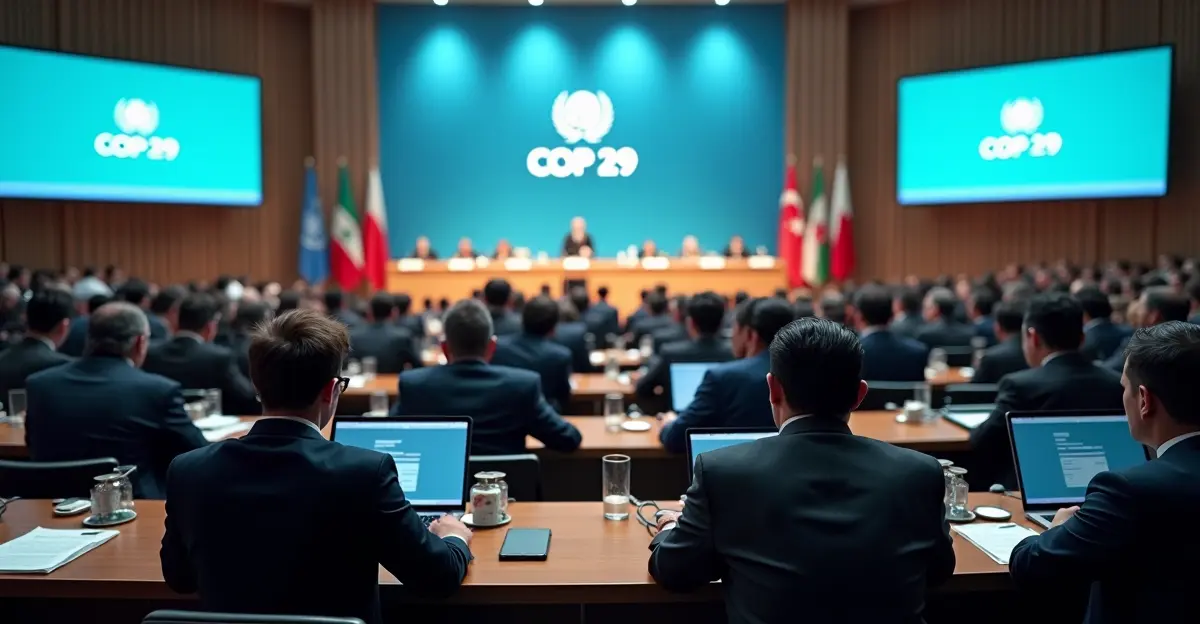
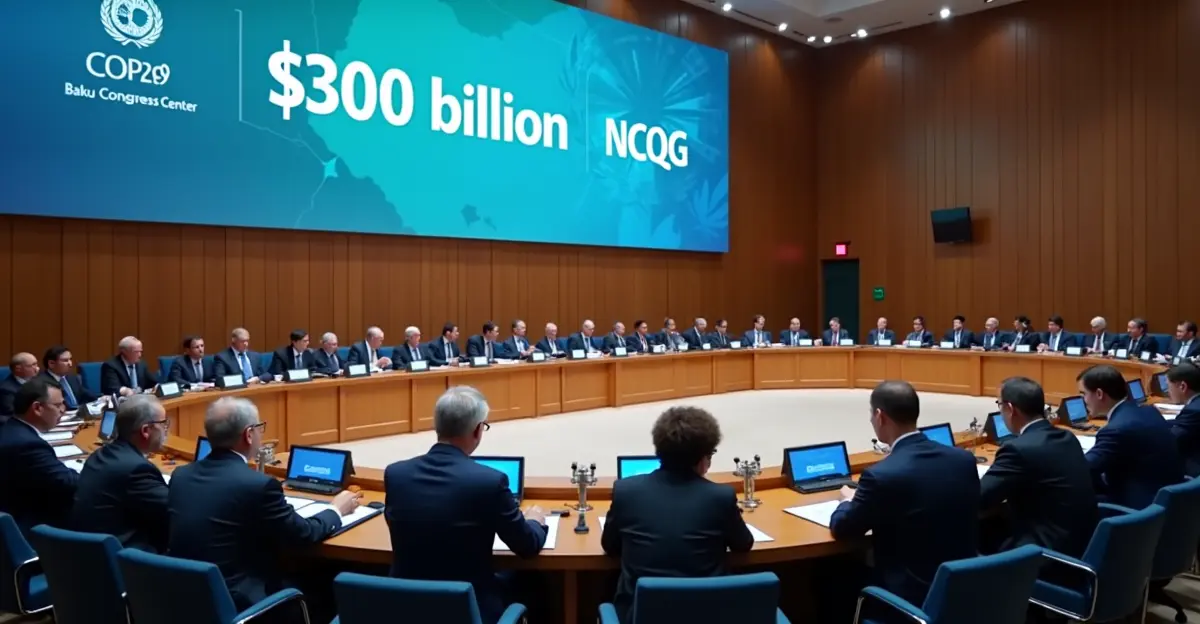
The COP29 climate conference in Baku, Azerbaijan concluded in November 2024 with a landmark agreement where developed nations pledged to provide at least $300 billion annually in climate finance by 2035, establishing a New Collective Quantified Goal (NCQG) that triples previous commitments. This historic deal represents a significant step forward in global climate cooperation but reveals deep geopolitical tensions and strategic gaps that will shape the global energy transition for the next decade.
What is the COP29 Climate Finance Agreement?
The COP29 agreement establishes a new climate finance framework where developed countries commit to channeling $300 billion annually to developing nations by 2035, replacing the previous $100 billion target that expires in 2025. According to UN reports, this represents a tripling of climate finance commitments, though it falls significantly short of the $1.3 trillion that developing countries had demanded. The agreement also fully operationalized Article 6 of the Paris Agreement, establishing comprehensive rules for international carbon markets.
North-South Climate Diplomacy: Trust Dynamics Reshaped
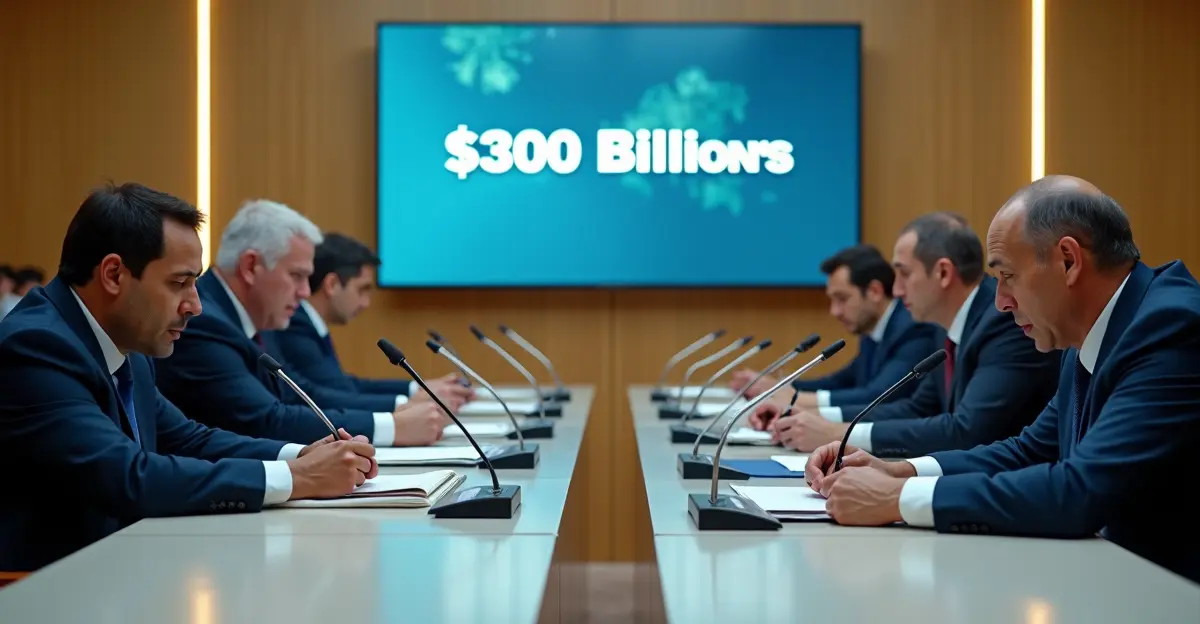
The $300 billion agreement represents a strategic compromise that has fundamentally reshaped North-South climate relations. While UN Secretary-General António Guterres called the deal "a base to build on," many developing nations criticized it as "insultingly low" compared to their actual needs. The gap between the $300 billion commitment and the $1.3 trillion demand reveals persistent equity concerns in global climate governance.
Developing countries expressed particular frustration over the reliance on private finance rather than grants, with many vulnerable nations lacking the fiscal space to leverage such investments. This tension reflects broader geopolitical shifts, where traditional climate diplomacy frameworks are being tested by competing national priorities and rising geopolitical tensions.
The $1.3 Trillion Gap: Strategic Implications
The $1 trillion gap between developing countries' demands and the agreed amount creates significant strategic implications:
- Implementation Challenges: Many climate adaptation projects in vulnerable nations require grant-based financing rather than loans
- Energy Transition Delays: Insufficient funding could slow renewable energy deployment in developing economies
- Geopolitical Tensions: The gap may exacerbate existing North-South divisions in future climate negotiations
- Private Sector Limitations: Market-based mechanisms alone cannot address adaptation needs in least developed countries
Intersection with Green Industrial Policies
The COP29 finance deal intersects significantly with major green industrial policies like the US Inflation Reduction Act (IRA) and the EU Carbon Border Adjustment Mechanism (CBAM). While developed nations invest heavily in domestic clean energy industries through policies like the IRA's $369 billion in climate investments, the COP29 agreement represents their international climate finance commitments.
This creates a complex dynamic where developed countries are simultaneously:
- Investing in domestic green industrial competitiveness
- Providing climate finance to developing nations
- Implementing trade measures like CBAM that affect developing economies
The EU's CBAM, which enters its definitive stage on January 1, 2026, will charge costs based on emissions intensity of imported goods, potentially affecting developing country exports. This creates tension between climate finance commitments and trade policies that may disadvantage the same nations receiving climate funding.
Energy Security and Fossil Fuel Transition Timelines
The $300 billion finance agreement has significant implications for global energy security and fossil fuel transition timelines. While the funding aims to accelerate clean energy deployment in developing countries, it represents only a fraction of the estimated $2-3 trillion annually needed for global energy transition investments.
Key energy security implications include:
- Renewable Energy Deployment: Funding could accelerate solar and wind projects in energy-poor regions
- Grid Infrastructure: Modernization of electricity grids in developing nations
- Fossil Fuel Dependence: Continued reliance on traditional energy sources without sufficient transition funding
- Energy Access: Potential to expand electricity access to 675 million people currently without power
New Financial Architecture: Private Investment and MDB Reforms
The COP29 agreement's reliance on private investment and multilateral development banks (MDBs) creates a new financial architecture for climate action. MDBs achieved a record $137 billion in climate finance in 2024, with $85.1 billion directed to low- and middle-income economies. However, current blended finance approaches only generate about $0.50 of private investment per public dollar.
The agreement establishes a "Baku to Belém Roadmap" to bridge the financing gap and mobilize the full $1.3 trillion by 2035 through five priority action areas. This roadmap emphasizes that while the financial resources exist, achieving climate finance targets requires significant effort from traditional sources and development of innovative financial mechanisms.
Multilateral Development Bank Reforms
MDB reforms are critical to the new climate finance architecture:
- Balance Sheet Expansion: Increasing lending capacity through capital adequacy reforms
- Catalytic Instruments: Using guarantees and risk-sharing mechanisms to mobilize private capital
- Climate Portfolio Alignment: Ensuring investments support Paris Agreement goals
- Access Improvements: Simplifying procedures for vulnerable countries
Meaningful Progress or Insufficient Ambition?
The COP29 agreement represents both meaningful progress and insufficient ambition. While tripling climate finance commitments marks a significant step forward, the gap between pledged amounts and actual needs remains substantial. The agreement establishes important frameworks for carbon markets and MDB engagement but falls short on addressing adaptation funding gaps and ensuring equitable access for vulnerable nations.
UN Climate Change Executive Secretary Simon Stiell described the finance goal as "an insurance policy for humanity," emphasizing that commitments must quickly translate into actual funding. The success of the agreement will depend on implementation, with the Baku to Belém Roadmap providing a critical pathway to bridge financing gaps ahead of COP30 in Brazil.
Expert Perspectives on COP29 Outcomes
Climate finance experts have mixed reactions to the COP29 agreement. While acknowledging the progress represented by the $300 billion commitment, many emphasize the implementation challenges ahead. The reliance on private investment raises concerns about accessibility for least developed countries, while the gap between pledged amounts and actual needs suggests continued tensions in future climate negotiations.
Frequently Asked Questions
What is the COP29 climate finance agreement?
The COP29 agreement commits developed nations to provide at least $300 billion annually in climate finance to developing countries by 2035, tripling previous commitments and establishing a New Collective Quantified Goal.
How does the $300 billion compare to developing countries' needs?
Developing countries had demanded $1.3 trillion annually, creating a $1 trillion gap that reveals significant financing shortfalls for climate adaptation and energy transition projects.
What is the Baku to Belém Roadmap?
The Baku to Belém Roadmap is a comprehensive blueprint to mobilize at least $1.3 trillion annually in climate finance by 2035 through five priority action areas, connecting COP29 outcomes with COP30 objectives.
How does private investment factor into the agreement?
The agreement relies heavily on private investment and multilateral development banks to mobilize additional climate finance, though current mechanisms only generate about $0.50 of private investment per public dollar.
What are the implications for energy transition timelines?
While the funding could accelerate renewable energy deployment, the gap between pledged amounts and actual needs may delay fossil fuel transition timelines in developing economies.
Future Outlook and COP30 Implications
The COP29 agreement establishes a critical foundation for climate finance architecture but leaves significant implementation challenges for COP30 in Belém, Brazil. The Baku to Belém Roadmap provides a strategic pathway, but success will depend on concrete actions, MDB reforms, and addressing persistent equity concerns in global climate governance.


Follow Discussion