


 Deutsch
 English
 Español
 Français
 Nederlands
 Português


 Share
Share




COP29's $300 Billion Climate Finance Deal: Strategic Implications for Global Energy Transition
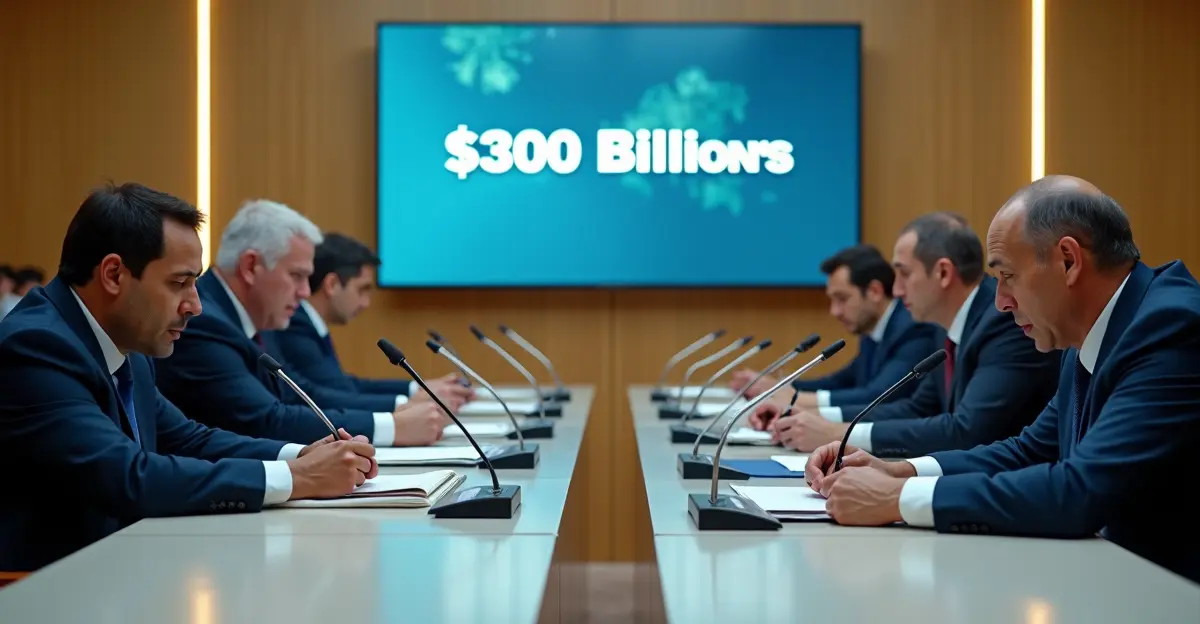
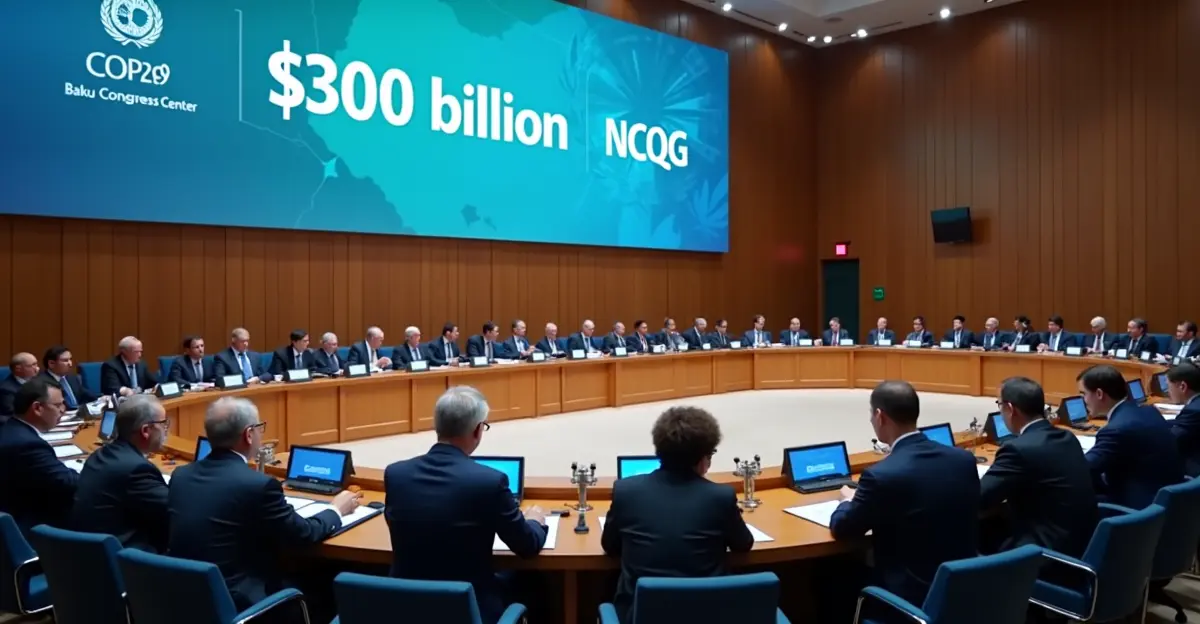
The COP29 UN Climate Conference in Baku, Azerbaijan concluded in November 2024 with a landmark agreement establishing a new $300 billion annual climate finance target by 2035, fundamentally reshaping global climate action and energy transition strategies. This historic deal, which triples the previous $100 billion goal expiring in 2025, represents a critical step in mobilizing resources for developing nations to address climate change while transitioning to sustainable energy systems. The agreement establishes a broader $1.3 trillion target from all sources by 2035, though developing countries had sought over $1 trillion in public finance alone, highlighting persistent gaps between commitments and actual needs.
What is the COP29 Climate Finance Agreement?
The COP29 agreement establishes the New Collective Quantified Goal (NCQG) with two primary targets: $300 billion annually from developed countries by 2035, and a broader $1.3 trillion target from all actors including private investment. This framework replaces the previous $100 billion goal that expires in 2025 and represents the first major climate finance commitment since the Paris Agreement 2015 established foundational principles. The agreement covers both public finance and publicly-leveraged private finance, with recognition of multilateral development bank contributions and establishment of a "Baku to Belém Roadmap" to secure additional funding through 2035.
Geopolitical Dynamics and Negotiation Challenges
The COP29 negotiations revealed deep divisions between wealthy and vulnerable nations, with some developing country representatives walking out in protest over what they called an "insultingly low" commitment. The summit, dubbed the 'climate finance COP,' saw contentious negotiations overshadowed by Azerbaijan's fossil fuel-dependent presidency and concerns about greenwashing given the country's status as a major oil and gas producer. According to UN reports, while UN Secretary-General António Guterres called the deal "a base to build on," many developing nations criticized it as insufficient to address the climate crisis.
Strategic Positioning of Major Economies
The agreement reflects complex geopolitical calculations, with developed nations balancing domestic political constraints against international pressure for greater climate leadership. The $300 billion target represents a compromise between what developed countries were willing to commit and what developing nations deemed necessary for meaningful climate action. This strategic positioning occurs against the backdrop of increasing geopolitical tensions affecting global cooperation on climate issues, with major economies navigating competing priorities of energy security, economic growth, and climate responsibility.
Impact on Global Energy Transition Dynamics
The $300 billion climate finance framework will significantly reshape global energy transition dynamics, particularly in developing economies where investment gaps remain substantial. According to World Resources Institute analysis, while the agreement represents an important step, it falls short of developing countries' actual needs for low-carbon development and climate adaptation. The finance is essential for accelerating renewable energy deployment, grid modernization, and clean technology adoption in emerging markets that face the dual challenge of energy access expansion and decarbonization.
Renewable Energy Deployment in Emerging Markets
The agreement's success will be measured by its ability to catalyze renewable energy deployment in emerging markets, where investment barriers include high capital costs, perceived risks, and limited institutional capacity. The $300 billion annual target, if effectively deployed, could help address these barriers through concessional finance, risk mitigation instruments, and technical assistance. However, current trends suggest significant gaps remain, with the UNEP Adaptation Gap Report 2025 revealing that developing countries need US$310-365 billion annually by 2035 for climate adaptation alone, creating a 12-14 times funding gap.
Adaptation vs. Mitigation Funding Balance
A critical aspect of the COP29 agreement is its impact on the balance between adaptation and mitigation funding. Historically, climate finance has disproportionately favored mitigation projects (reducing emissions) over adaptation (building resilience to climate impacts). The agreement maintains this imbalance, with current multilateral development bank allocations showing 69% for mitigation versus 31% for adaptation in low- and middle-income countries. However, the agreement includes recognition of the need for increased adaptation finance, setting the stage for future negotiations at COP30 in Belém, Brazil where countries have agreed to triple adaptation finance to $120 billion by 2035.
Implementation Challenges and Monitoring Mechanisms
The COP29 agreement faces significant implementation challenges, including questions about funding sources, delivery mechanisms, and accountability frameworks. Key implementation considerations include:
- Funding Sources: The $300 billion must come from developed country governments, multilateral development banks, and publicly-leveraged private investment
- Delivery Mechanisms: Funds will flow through existing channels including multilateral development banks, climate funds, and bilateral arrangements
- Accountability: Progress tracking occurs through existing Paris Agreement frameworks with a 2028 progress report and 2030 revision
- Private Sector Mobilization: Achieving the broader $1.3 trillion target requires massive private investment alongside public funds
Multilateral development banks (MDBs) achieved a record $137 billion in climate finance in 2024, representing a 10% increase from the previous year, according to EIB data. MDBs have committed to providing $120 billion annually for low- and middle-income countries by 2030, including $42 billion for adaptation, but significant scaling is needed to meet the new targets.
Expert Perspectives on Sufficiency and Impact
Climate finance experts express mixed views on whether the $300 billion target is sufficient to meet actual needs. "While the COP29 agreement represents important progress, it falls far short of the trillions needed for meaningful climate action in developing countries," notes a climate policy analyst familiar with the negotiations. "The $300 billion target must be seen as a floor, not a ceiling, with the real test being how effectively these funds are deployed and leveraged to mobilize additional private investment." The agreement's success will depend on implementation quality, accessibility for vulnerable nations, and alignment with national climate priorities.
Future Outlook and COP30 Implications
The COP29 agreement establishes a foundation for future climate finance negotiations, with attention already shifting to COP30 in Belém, Brazil in 2025. Key issues deferred from Baku include implementation of last year's global stocktake outcomes and the fossil fuel transition pledge, creating an ambitious agenda for the next conference. The agreement's monitoring framework, with progress reports in 2028 and revision in 2030, provides opportunities for course correction based on implementation experience and evolving climate science. As the world grapples with accelerating climate impacts, the effectiveness of the COP29 finance architecture will be tested against rising adaptation needs and decarbonization timelines.
Frequently Asked Questions
What is the COP29 climate finance agreement?
The COP29 agreement establishes a new $300 billion annual climate finance target from developed countries by 2035, replacing the previous $100 billion goal. It also sets a broader $1.3 trillion target from all sources including private investment.
Is $300 billion sufficient for climate needs?
No, according to UNEP estimates, developing countries need $310-365 billion annually for adaptation alone by 2035, creating a significant funding gap. The $300 billion represents a minimum commitment that must be supplemented by additional resources.
How will the funds be distributed?
Funds will flow through existing channels including multilateral development banks, climate funds, and bilateral arrangements, with tracking through Paris Agreement frameworks and progress reports in 2028 and 2030.
What role do multilateral development banks play?
MDBs achieved $137 billion in climate finance in 2024 and have committed to $120 billion annually for low- and middle-income countries by 2030, representing crucial delivery mechanisms for the COP29 targets.
How does this affect energy transition in developing countries?
The finance is essential for accelerating renewable energy deployment, grid modernization, and clean technology adoption in emerging markets facing energy access and decarbonization challenges.



Follow Discussion