


 Deutsch
 English
 Español
 Français
 Nederlands
 Português


 Share
Share




What is COP29's $300 Billion Climate Finance Agreement?
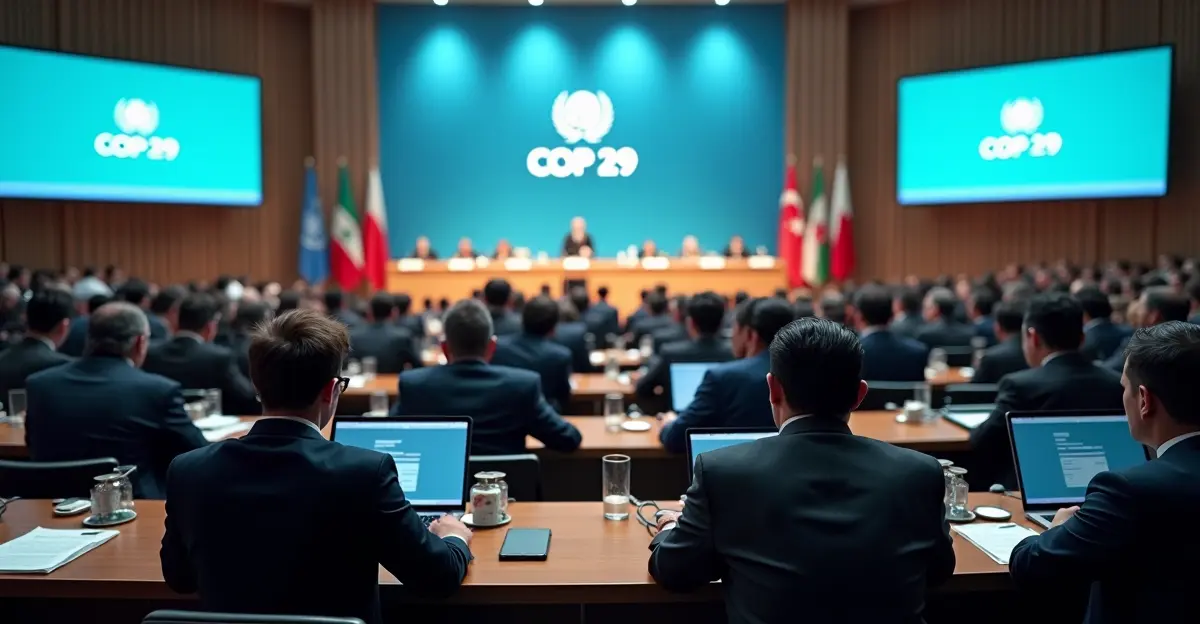
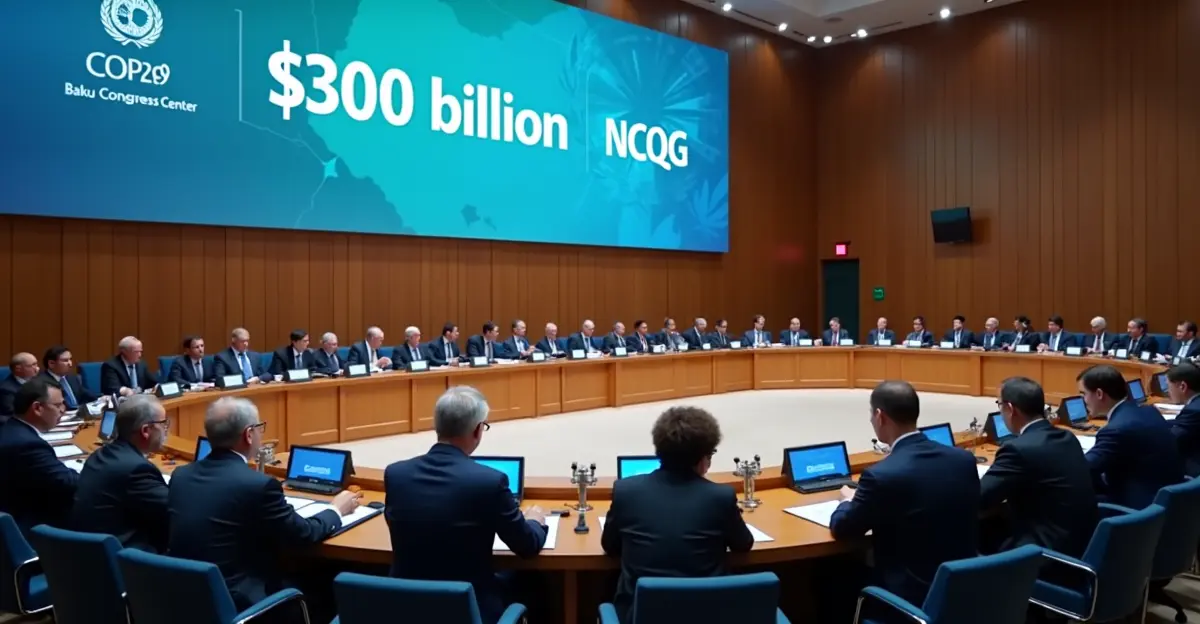
The COP29 climate conference in Baku, Azerbaijan concluded in November 2024 with a landmark agreement establishing a New Collective Quantified Goal (NCQG) requiring developed nations to provide at least $300 billion annually to developing countries by 2035. This historic commitment, representing a tripling of previous climate finance targets, aims to accelerate the global energy transition while addressing the disproportionate climate impacts faced by vulnerable nations. As countries prepare to submit updated Paris Agreement commitments by early 2025, this financial framework emerges as a critical inflection point in international climate negotiations, with profound implications for energy markets, technology transfer, and geopolitical alignments between developed and developing nations.
Geopolitical Tensions and Negotiation Dynamics
The COP29 negotiations exposed deep-seated geopolitical tensions between developed and developing nations, with the final $300 billion figure falling significantly short of the $1.3 trillion annually that developing countries had demanded. The conference, dubbed the first 'Finance COP,' became a battleground over climate justice and historical responsibility, with many developing nations expressing frustration over insufficient funding and lack of concrete plans for fossil fuel transition. The choice of Azerbaijan—a major oil and gas producer with an authoritarian government—as host country added further controversy, with critics accusing the COP29 presidency of pushing through the deal without proper consent from vulnerable nations. These tensions reflect broader geopolitical realignments in the global climate governance landscape, where traditional North-South divisions are being reshaped by emerging economic powers and shifting energy dependencies.
Strategic Implications for Global Energy Transition
The $300 billion annual commitment will fundamentally reshape global energy transition dynamics by creating long-term demand signals for clean energy industries while potentially accelerating or complicating the shift away from fossil fuels. According to analysis from the World Resources Institute, the agreement calls for enabling $1.3 trillion in total finance for developing countries by 2035 through the 'Baku to Belém Roadmap,' though the binding $300 billion target represents only 0.46% of developed countries' GDP compared to fossil fuel subsidies that accounted for 3.6% in 2022. This funding architecture will impact energy markets through several key mechanisms:
1. Clean Energy Infrastructure Development
The funds will primarily support resilient, low-emissions energy infrastructure development in developing nations, creating investment opportunities in solar, wind, and grid modernization projects. This represents a strategic shift in global energy investment patterns, potentially redirecting capital flows toward emerging economies that have historically received limited clean energy financing.
2. Technology Transfer and Capacity Building
The agreement includes provisions for technology transfer and capacity building, addressing longstanding barriers to clean energy adoption in developing nations. This could accelerate the global diffusion of renewable energy technologies while creating new geopolitical dependencies around intellectual property and technical expertise.
3. Adaptation and Resilience Financing
A significant portion of the funding is earmarked for climate adaptation measures, recognizing the urgent needs of vulnerable nations facing escalating climate impacts. This represents a strategic rebalancing of climate finance priorities, moving beyond mitigation-focused approaches to address the immediate threats posed by climate change.
Adequacy of Funding Relative to Scientific Needs
While the $300 billion annual target represents the largest climate finance commitment ever made, experts question its adequacy relative to scientific assessments of actual needs. UNCTAD estimates that developing countries require closer to $900 billion annually from 2025, reaching $1.46 trillion by 2030—far exceeding the agreed-upon targets. The gap between pledged funding and actual requirements raises concerns about the effectiveness of the agreement in achieving the Paris Agreement's temperature goals. The Intergovernmental Panel on Climate Change has consistently emphasized that current climate finance flows remain insufficient to limit global warming to 1.5°C, creating potential implementation challenges as nations prepare their 2025 climate pledges.
Impact on Climate Adaptation Strategies
The COP29 agreement will significantly influence global climate adaptation strategies by establishing clearer funding pathways for vulnerable nations. However, the agreement lacks specific commitments on grants versus loans, subgoals for mitigation versus adaptation, and minimum support targets for the most vulnerable nations. This ambiguity creates implementation challenges that could affect the quality and accessibility of adaptation finance. The 'Baku to Belém Roadmap' aims to address these gaps by outlining five priority action areas (5Rs): replenishing grants and concessional finance, rebalancing fiscal space and debt sustainability, rechanneling transformative private finance, revamping capacity for scaled climate portfolios, and reshaping systems for equitable capital flows.
Expert Perspectives on Implementation Challenges
Climate finance experts express cautious optimism about the agreement while highlighting significant implementation challenges. 'The $300 billion target represents important progress, but achieving the full $1.3 trillion needed will require unprecedented coordination between public and private sectors,' notes a senior analyst at the World Resources Institute. The agreement's reliance on voluntary contributions from multilateral development banks—which have committed to providing $120 billion in climate finance by 2030—represents 40% of the $300 billion goal, creating potential dependency on institutional capacity and political will. Meanwhile, developing country representatives emphasize that the success of the agreement will depend on improving finance quality, accessibility, and alignment with national priorities, particularly for nations facing climate-induced debt crises.
Future Outlook and COP30 Implications
As the international community looks toward COP30 in Belém, Brazil in 2025, the implementation of the COP29 finance agreement will face its first major test when countries submit updated climate plans in February 2025. The 'Baku to Belém Roadmap' provides a framework for scaling up climate finance to the $1.3 trillion annual target, but significant political and technical hurdles remain. Key challenges include defining monitoring and verification mechanisms, ensuring equitable distribution of funds, and addressing the persistent gap between pledged and delivered finance. The outcome will likely influence broader geopolitical dynamics, potentially reshaping alliances in the global climate negotiations arena as nations navigate the complex interplay between climate action, economic development, and energy security.
Frequently Asked Questions
What is the $300 billion climate finance agreement from COP29?
The agreement establishes a New Collective Quantified Goal requiring developed nations to provide at least $300 billion annually to developing countries by 2035, tripling previous climate finance targets.
How does the $300 billion compare to actual climate finance needs?
While historic, the $300 billion falls short of developing countries' $1.3 trillion demand and UNCTAD's estimate of $900 billion needed from 2025, reaching $1.46 trillion by 2030.
What are the geopolitical implications of the COP29 agreement?
The agreement exposes tensions between developed and developing nations over climate justice, historical responsibility, and funding adequacy, potentially reshaping global climate governance alliances.
How will the funding impact global energy transition?
The finance will support clean energy infrastructure, technology transfer, and adaptation measures in developing nations, creating new investment patterns and potentially accelerating renewable energy adoption.
What happens next after COP29?
Implementation begins with countries submitting updated climate plans in February 2025, while the 'Baku to Belém Roadmap' outlines pathways to scale finance to $1.3 trillion annually by 2035 ahead of COP30.
Follow Discussion