


 Deutsch
 English
 Español
 Français
 Nederlands
 Português


 Share
Share




Gold Fever Grips Suriname as Prices Hit New Highs
A wave of gold fever is sweeping through Suriname, driven by record-breaking global gold prices that have surged past €140 per gram in 2025 and remain elevated in 2026. The surging prices have transformed small-scale mining into a lucrative venture, drawing thousands of workers into the jungle and fueling a modern-day gold rush in the South American nation. The global gold price surge has been fueled by geopolitical tensions, central bank buying, and a weakening US dollar.
According to the World Bank, gold prices rose approximately 42% in 2025 — the strongest annual gain since the late 1970s — and surpassed $5,000 per ounce in January 2026. In Suriname, the impact is palpable: small-scale miners, known locally as porknokkers, are working around the clock to extract the precious metal from the country's rich alluvial deposits.
The Boom in Brokopondo
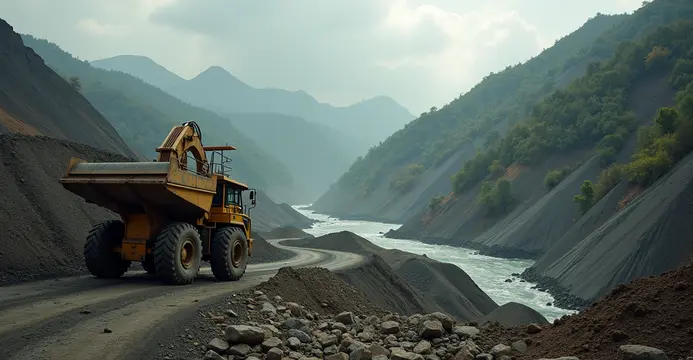
In the district of Brokopondo, about an hour's drive from the capital Paramaribo, gold miner Denilson Saaki has been working the same concession for weeks. "When I started 16 years ago, the price was much lower. Now, with gold at these levels, it's worth the hard work," he told NOS. Saaki and his team operate heavy machinery — excavators and sluice boxes — to wash sediment and separate gold particles. The operation is costly, but the payoff has never been better.
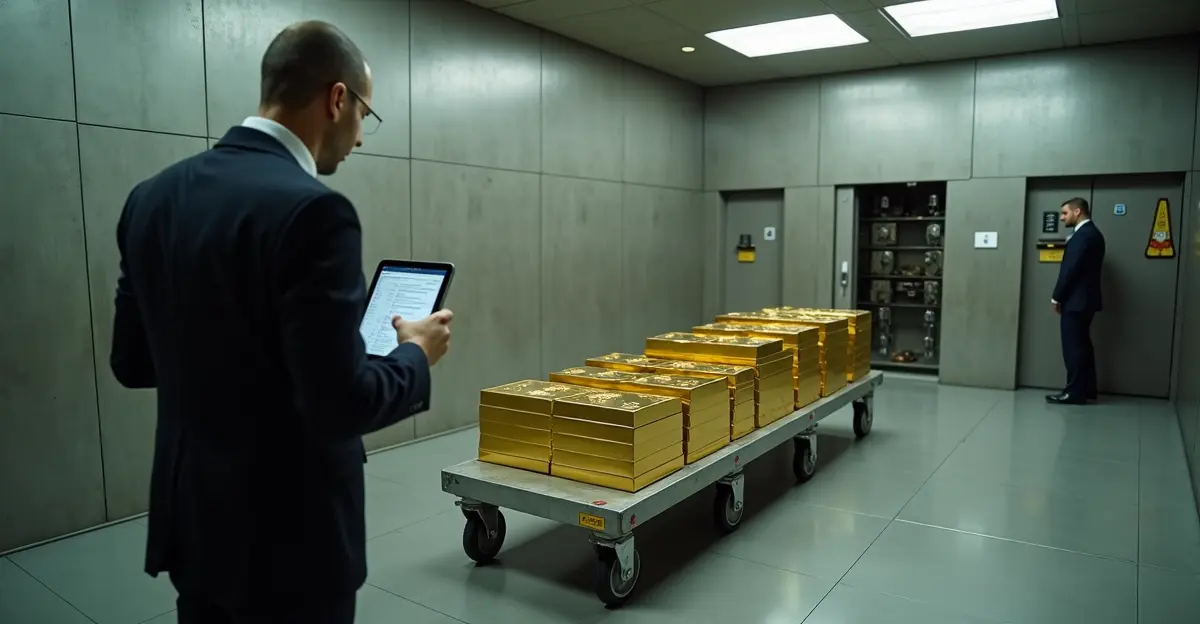
Saaki works on a concession owned by a Paramaribo-based investor, who receives a percentage of the gold found. "How much we keep depends on the purity after smelting," he explains. The raw gold is taken to smelters in Paramaribo, where it is melted into gleaming bars of 999.9 purity.
Rise of Gold Smelters
Abmael Silva Sousa, owner of Carioca Metals — one of the first gold-buying shops in Paramaribo — says the number of smelters has exploded. "In the last few years, we've seen 40 to 50 new buying shops open. It's all because of the good gold price," he says. His shop melts nuggets into standard bars for export. "The global unrest drives the price. When war broke out involving Iran, we saw an immediate $4 per ounce jump," he adds.
Central banks have been accumulating gold at a record pace. China has extended its buying streak to 14 months, accumulating 2,303 tonnes. Global gold ETF inflows reached $89 billion in 2025, pushing physical holdings to a historic 4,025 tonnes. Central bank gold buying trends show no signs of slowing down in 2026.
Environmental Toll of the Gold Rush
The gold boom comes at a steep environmental cost. According to the Amazon Conservation Association's MAAP program, gold mining has deforested approximately 92,000 hectares in Suriname over the past 24 years — an area larger than New York City. Nearly 10% of the Brownsberg Nature Park has been affected, and the Brinckheuvel Nature Reserve is now facing a mining invasion.
Saaki acknowledges the damage: "Unfortunately, we have to deforest to find gold. The forest doesn't recover quickly here." His team typically spends a few weeks at each site before moving deeper into the jungle. The use of mercury — though officially banned in Suriname — remains widespread in illegal mining, contaminating rivers and affecting Indigenous communities. The environmental impact of illegal mining has drawn international concern, with Interpol launching operations to crack down on illicit operations in the Amazon basin.
Government Response and Regulation
The Surinamese government established the Commission for the Ordering of the Gold Mining Sector (OGS) in 2010 to promote sustainable practices. A School of Mining was launched to train small-scale miners in mercury-free methods. However, enforcement remains weak. Only 115 of an estimated 20,000 small-scale operators were registered as of 2009, and illegal mining continues to expand.
In response to the latest deforestation data, the government has announced plans to tighten enforcement in protected areas through inter-agency cooperation. The Minamata Convention on mercury, adopted by the UN in 2013, calls for a global ban on mercury use in mining, but implementation in Suriname remains a challenge.
Economic Significance
Mining accounts for about 85% of Suriname's exports and 25% of government revenues. Gold and petroleum together contributed nearly 67% of total exports in 2017. The current gold price rally is providing a much-needed economic boost, but experts warn that the social and environmental costs could undermine long-term prosperity.
With forecasts from J.P. Morgan projecting gold to average $5,055 per ounce by Q4 2026 and potentially reach $6,000 in the long term, the gold rush in Suriname shows no signs of abating. The challenge for policymakers lies in balancing the economic windfall with the urgent need to protect the Amazon rainforest and the health of its people.
Frequently Asked Questions
What is driving the gold price surge in 2026?
The gold price surge is driven by geopolitical tensions, record central bank buying (especially by China), a weakening US dollar, and strong investor demand through ETFs. Gold surpassed $5,000 per ounce in January 2026.
How much gold has been mined in Suriname?
Small-scale gold mining in Suriname has deforested approximately 92,000 hectares over 24 years. The country has one large-scale mine (Rosebel) and an estimated 20,000 small-scale operators.
What are the environmental impacts of gold mining in Suriname?
Gold mining causes deforestation, mercury contamination of rivers, and loss of biodiversity. Protected areas like Brownsberg Nature Park and Brinckheuvel Nature Reserve have been heavily affected.
Is mercury use banned in Suriname?
Yes, mercury imports for mining have been illegal since the 1990s, and Suriname is a signatory to the Minamata Convention. However, smuggling makes mercury widely available, and enforcement is limited.
What is the economic importance of gold for Suriname?
Mining accounts for about 85% of exports and 25% of government revenues. Gold and petroleum together make up nearly 67% of total exports.



Follow Discussion