


 Deutsch
 English
 Español
 Français
 Nederlands
 Português


 Share
Share




The Strategic Calculus Behind US AI Chip Export Controls: Balancing Security and Technology Diffusion
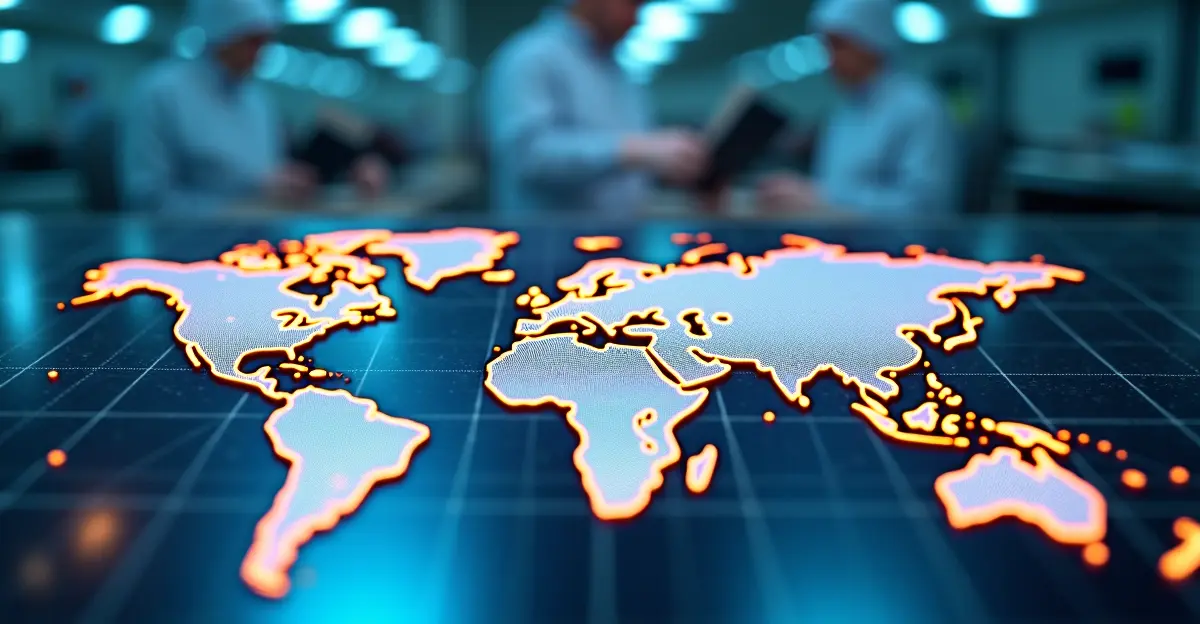
The United States has implemented a sophisticated tiered export control regime for advanced semiconductors and AI chips, with December 2024 rules and January 2025 Interim Final Rule establishing a strategic framework for technology diffusion. This comprehensive approach represents Washington's attempt to create a 'chokepoint' strategy against China's military AI development while maintaining technological leadership through selective sharing with key allies. The new regulations restrict 140 Chinese entities from accessing advanced semiconductor technology while allowing unrestricted chip sales to 18 trusted allies, creating a bifurcated global technology landscape that could reshape the global semiconductor supply chain for years to come.
What is the US AI Chip Export Control Framework?
The Framework for Artificial Intelligence Diffusion, published by the Bureau of Industry and Security on January 15, 2025, establishes comprehensive export controls for advanced AI technologies. This rule addresses national security risks associated with AI diffusion by implementing new worldwide license requirements for advanced computing integrated circuits (ECCNs 3A090, 4A090) and AI model weights. The framework introduces several license exceptions including Artificial Intelligence Authorization (AIA), Advanced Compute Manufacturing (ACM), and Low Processing Performance (LPP). It also establishes Data Center Validated End-User programs with universal and national categories, requiring enhanced security protocols and compliance measures.
According to the Department of Commerce's Bureau of Industry and Security (BIS), the regulations aim to balance AI innovation with national security concerns by controlling the international transfer of sensitive AI technologies while maintaining U.S. technological leadership. 'These measures build on previous export controls established since 2022 to protect U.S. national security interests related to advanced computing and AI capabilities,' stated a BIS spokesperson in January 2025.
The Tiered Licensing Framework: Allies vs. Adversaries
The 2025 regulations create a three-tiered licensing framework that fundamentally reshapes global technology access:
Restricted Tier: 140 Chinese Entities
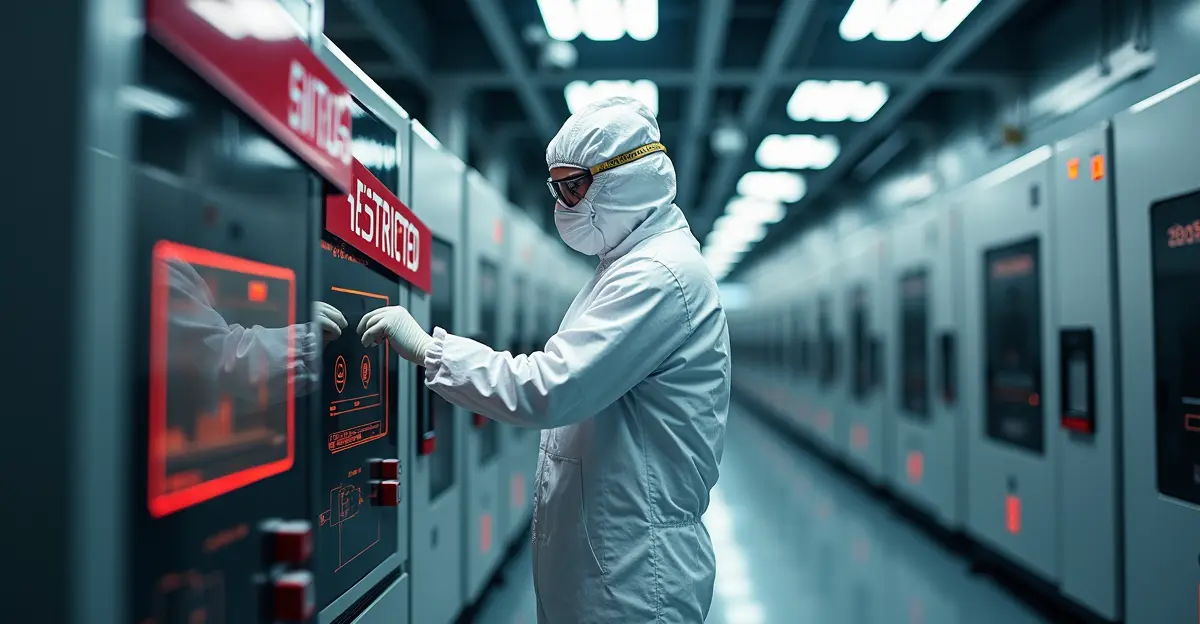
The most stringent controls apply to 140 Chinese entities, including major technology firms, research institutions, and military-linked organizations. These entities face a 'presumption of denial' for license applications, effectively cutting them off from advanced semiconductor technologies. The restrictions specifically target technologies that enable the production of high-end chips critical for military systems, including those used in weapons development, surveillance, and cyber capabilities.
Trusted Partner Tier: 18 Allied Nations
Eighteen trusted allies, including NATO members, Japan, South Korea, Australia, and Israel, receive preferential access under the Artificial Intelligence Authorization (AIA) exception. This tier allows for relatively unrestricted technology sharing while maintaining security protocols. The strategic rationale behind this selective sharing is to maintain technological cohesion among democratic allies while isolating potential adversaries.
Global Tier: Case-by-Case Evaluation
For nations outside these two categories, the framework establishes a case-by-case evaluation process with enhanced due diligence requirements. This middle ground allows for controlled technology diffusion while preventing strategic dependencies from developing in potentially problematic regions.
Geopolitical Coordination Challenges
The success of the US strategy depends heavily on coordination with key semiconductor equipment producers, particularly the Netherlands and Japan. In March 2023, both countries announced new export controls on advanced semiconductor manufacturing equipment following a U.S.-led initiative. The Netherlands will control Deep Ultraviolet (DUV) lithography systems using EU regulations that allow restrictions for public security and human rights considerations. Japan implemented controls on 23 types of advanced semiconductor equipment starting July 2023, including lithography, etching, and deposition equipment.
However, coordination remains challenging. The Netherlands announced in January 2025 that it will tighten export controls on advanced semiconductor manufacturing equipment starting April 1, 2025. Minister for Foreign Trade and Development Reinette Klever stated that more types of technology, including specific measuring and inspection equipment used in advanced semiconductor production, will require national export authorization. This marks the second amendment to the national export control measure since its introduction in September 2023.
South Korea presents a particularly complex case, as its semiconductor industry has significant production bases in China. Experts suggest these protectionist measures may present opportunities for South Korea rather than harm its semiconductor industry. As the U.S. rebuilds its de-China supply chain, South Korea could strengthen its position within the supply chain structure, potentially benefiting from reduced dependence on Taiwan in advanced semiconductor processes.
Economic Implications and Supply Chain Restructuring
The economic implications of restricting 140 Chinese entities from advanced semiconductor access are profound. According to the Congressional Research Service report R48642, U.S. restrictions aim to prevent China from acquiring cutting-edge semiconductor technology that could enhance military capabilities. The report covers the evolution of export control policies, specific technologies targeted (such as AI chips and advanced manufacturing equipment), and the impact on global semiconductor supply chains.
The restrictions are accelerating global semiconductor supply chain restructuring. Companies are diversifying manufacturing locations away from China, with Vietnam, India, and Mexico emerging as alternative production hubs. This restructuring represents a fundamental shift in global technological competition, with parallel supply chains developing along geopolitical lines.
China's response has been to accelerate its semiconductor self-sufficiency drive. According to industry reports, China is making significant progress, achieving breakthroughs in mature and moderately advanced chip technologies despite international restrictions. Key developments include SMIC producing 7nm chips using DUV lithography with multi-patterning techniques, Huawei expanding Ascend AI accelerator production with ambitious roadmaps, and CXMT advancing in memory technology including HBM development. The domestic semiconductor equipment industry is growing with a 13.6% self-sufficiency rate.
Long-Term Strategic Assessment
The tiered approach represents a sophisticated attempt at technology containment, but its long-term sustainability remains uncertain. The strategy faces several critical challenges:
- Accelerated Chinese Self-Sufficiency: Restrictions may be accelerating China's drive for semiconductor independence rather than containing it.
- Alliance Strain: Maintaining coordination among allies with diverse economic interests presents ongoing diplomatic challenges.
- Technological Evolution: Rapid advances in semiconductor technology could create new vulnerabilities or opportunities that bypass current controls.
- Economic Costs: The restrictions impose significant costs on U.S. semiconductor companies, potentially undermining long-term competitiveness.
The framework creates a bifurcated AI landscape where Chinese companies like Tencent and Alibaba are adopting domestic chips, while international players like Nvidia face challenges from export controls and competition. This effort represents a fundamental shift in global technological competition, with China building parallel AI ecosystems from hardware to software frameworks like MindSpore.
Expert Perspectives on Technology Containment
Industry analysts are divided on whether the approach represents sustainable technology containment or risks accelerating China's self-sufficiency efforts. Some experts argue that the restrictions create a 'chokepoint' that will significantly slow China's military AI development, while others warn that they may spur faster innovation in China's domestic semiconductor industry.
'The U.S. strategy represents a calculated risk,' notes technology policy analyst Dr. Elena Rodriguez. 'By creating a tiered system, Washington aims to maintain technological leadership among democratic allies while slowing adversary advancement. However, history shows that technology controls often accelerate indigenous innovation in targeted countries.'
The success of the strategy may ultimately depend on maintaining the technological gap between the U.S.-led alliance and China. If China achieves significant breakthroughs in next-generation semiconductor technologies, the entire containment strategy could unravel.
FAQ: US AI Chip Export Controls
What are the key dates for the new export controls?
The AI Diffusion Interim Final Rule became effective January 13, 2025, with compliance deadlines extending to May 2025 and January 2026 for certain provisions.
How many Chinese entities are restricted under the new rules?
The framework restricts 140 Chinese entities from accessing advanced semiconductor technology, with a 'presumption of denial' for license applications.
Which countries are considered trusted allies?
Eighteen nations, including NATO members, Japan, South Korea, Australia, and Israel, receive preferential access under the Artificial Intelligence Authorization exception.
What technologies are specifically targeted?
The controls target advanced computing integrated circuits (ECCNs 3A090, 4A090), AI model weights, and semiconductor manufacturing equipment including lithography systems.
How is the Netherlands cooperating with US controls?
The Netherlands announced tightened export controls on advanced semiconductor manufacturing equipment starting April 1, 2025, expanding controls to 27 items including advanced DUV lithography equipment.
Future Outlook and Implications
The US semiconductor export control regime represents a strategic shift in technology containment policy just as global AI competition intensifies. The tiered approach attempts to balance security concerns with economic realities, but its long-term effectiveness remains uncertain. As China accelerates its semiconductor self-sufficiency drive and global supply chains continue to restructure, the geopolitical technology competition will likely intensify in coming years.
The framework's success will depend on several factors: maintaining technological leadership, sustaining alliance coordination, and adapting to rapid technological change. As the global semiconductor industry navigates these complex dynamics, the 2025 export control regime will serve as a critical test case for technology containment strategies in the 21st century.



Follow Discussion