


 Deutsch
 English
 Español
 Français
 Nederlands
 Português


 Share
Share




AI's Strategic Reshaping of Global Defense: How Artificial Intelligence is Redefining Military Power Balances
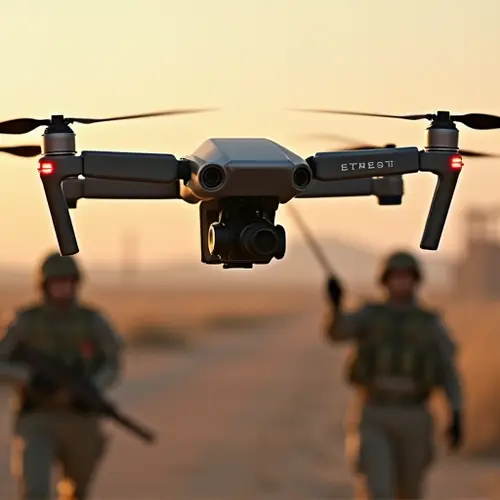
Artificial intelligence is fundamentally transforming global defense systems, creating unprecedented strategic asymmetries between nations as the United States, China, and Russia pursue divergent approaches to military AI integration. Recent reports indicate the US Department of Defense's AI contracts could reach $4.3 billion, with 81% of aerospace and defense organizations already using or planning to use AI technologies, creating urgent implications for global power balances. This technological revolution is reshaping intelligence analysis, autonomous weapons systems, and decision-making processes, offering both strategic advantages and new vulnerabilities in the global security architecture.
What is Military AI and Why Does It Matter?
Military artificial intelligence encompasses computational systems that perform tasks typically associated with human intelligence—learning, reasoning, problem-solving, perception, and decision-making—within defense applications. The geopolitical implications of AI extend beyond traditional warfare, creating what experts call a "digital Cold War" where data centers have become strategic assets equivalent to power plants or ports. According to a Belfer Center report, global military spending on AI doubled from $4.6 billion to $9.2 billion between 2022-2023 and is projected to reach $38.8 billion by 2028, indicating the scale of this transformation.
Divergent National Approaches to Military AI
United States: Commercial Integration and Rapid Acquisition
The US approach emphasizes collaboration with commercial tech firms, with the top five defense AI contracts in FY 2025 totaling over $33.8 billion. The largest was the $20 billion PROTECTS cybersecurity BPA awarded by the Treasury Department to 10 companies including 1CyberForce and Delviom. Second was Palantir's potential $10 billion enterprise agreement with the US Army for data integration, analytics, and AI services. The Pentagon has been using Anthropic's Claude AI system for intelligence analysis, though a recent $200 million contract was canceled amid disputes over usage restrictions. This commercial integration strategy reflects the Department of War's focus on faster acquisition cycles and collaboration across firms to enhance national security through AI technologies.
China: Military-Civil Fusion and Strategic Dominance
China pursues a military-civil fusion strategy, integrating commercial AI advancements with defense applications. According to the 2025 Annual Report to Congress on Military and Security Developments Involving China, Beijing is making significant technological advancements in areas like hypersonic weapons and artificial intelligence. The Chinese military modernization strategy emphasizes AI development as a path to global dominance, with President Xi Jinping declaring that "AI leadership equals global dominance." China's approach focuses on developing domestic AI capabilities while participating in international dialogues about regulating AI technologies in warfare, creating a complex position in global ethical debates.
Russia: Asymmetric Warfare and Autonomous Systems
Russia employs AI primarily for asymmetric warfare advantages, focusing on autonomous systems and electronic warfare capabilities. While less transparent about its AI investments than the US or China, Russia has declared AI leadership as essential for global dominance. The Russian approach emphasizes developing AI systems that can operate in contested environments with limited connectivity, reflecting lessons from recent conflicts. This strategy creates different vulnerabilities and opportunities compared to Western approaches focused on data-intensive systems.
Three Transformative Applications of Military AI
Intelligence Analysis and Target Identification
AI systems now process vast amounts of data to identify targets and plan strikes, with modern systems capable of analyzing about a thousand potential targets daily and reducing strike planning from days to hours while maintaining human oversight. The US military primarily uses AI for data processing—sifting through intelligence reports, summarizing findings, and contextualizing battlefield information from cameras, smartphones, and other sources. This capability creates significant advantages in modern warfare intelligence but also raises concerns about information overload and algorithmic bias.
Autonomous Weapons Systems and Ethical Challenges
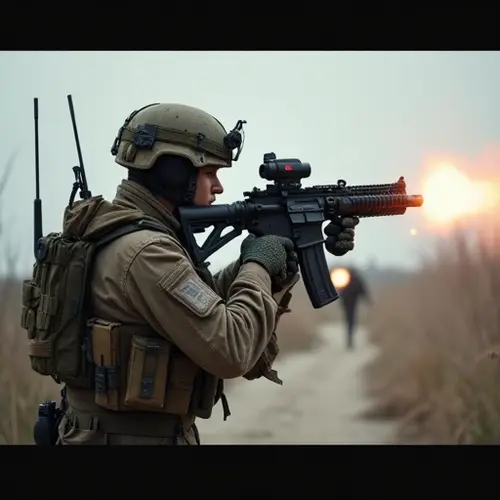
Autonomous weapons systems represent the most controversial application of military AI, raising profound ethical questions about human control in lethal decision-making. According to the International Committee of the Red Cross, AWS must adhere to fundamental International Humanitarian Law principles including distinction between combatants and civilians, proportionality, and precautions in attack. The ethical debate centers on whether autonomous weapons can meet international humanitarian law requirements and ethical standards, particularly regarding accountability, discrimination, and human control.
Decision-Making Processes and Command Systems
AI is transforming military decision-making through enhanced situational awareness and predictive analytics. Foundation models lower entry barriers for smaller states to access military AI capabilities, potentially democratizing advanced defense technologies. However, this also creates new vulnerabilities, as AI systems can become single points of failure in command structures. The CNAS report 'Averting AI Armageddon' highlights how the bipolar nuclear order between the US and Russia has evolved into a more volatile tripolar system with China's nuclear buildup, coinciding with rapid AI advancements for military applications.
Geopolitical Implications and Strategic Vulnerabilities
The race to integrate AI into military capabilities is creating new strategic asymmetries between nations, with the US hosting roughly 51% of global data centers—transforming these facilities from back-end infrastructure into strategic assets. This concentration has prompted other nations to build domestic capacity to ensure data sovereignty and digital resilience. The US-China rivalry has led to tech decoupling, with export controls on advanced AI chips and growing talk of a "digital Cold War." Data itself has become politicized, with governments implementing laws to keep sensitive data within their borders, fragmenting the once-borderless cloud.
Ethical Governance Frameworks and International Regulation
The international community faces significant challenges in establishing ethical governance frameworks for military AI. While ethical concerns initially prompted discussions about regulating autonomous weapon systems, progress has been limited due to the lack of historical precedent for ethics in arms control discussions and the dominance of legal arguments. The concept of 'meaningful human control' initially served as a proxy for ethical discussions but has lost salience in recent debates. According to academic research, for progress to occur, there must be clarification of ethics' role in regulation, as AWS pose profound questions about human involvement in use-of-force decisions that legal arguments alone cannot answer.
Expert Perspectives on Military AI's Future
Defense analysts warn that the world stands at a crossroads between further technological fragmentation and potential cooperation on AI safety norms. "Data centers are poised to become either targets of conflict or backbones of a connected global economy," notes a World Economic Forum analysis. Military strategists emphasize that while AI promises improved targeting accuracy and reduced civilian harm, it also raises serious ethical and legal concerns about autonomous weapons, accountability, and potential escalation risks in military conflicts. The integration of commercial tech companies into defense sectors creates new governance challenges, as these firms now have significant influence in areas traditionally dominated by government agencies.
Frequently Asked Questions About Military AI
What percentage of defense organizations are using AI?
81% of aerospace and defense organizations are already using or planning to use artificial intelligence technologies, according to recent industry reports.
How much is the US Department of Defense spending on AI contracts?
The US Department of Defense's AI contracts could reach $4.3 billion, with the top five defense AI contracts in FY 2025 totaling over $33.8 billion.
What are the main ethical concerns with autonomous weapons?
The main ethical concerns include accountability for lethal decisions, discrimination between combatants and civilians, proportionality in attacks, and maintaining meaningful human control over use-of-force decisions.
How is China approaching military AI differently from the US?
China pursues a military-civil fusion strategy integrating commercial AI with defense applications, while the US emphasizes collaboration with commercial tech firms through contracts and partnerships.
What are the projected global military AI spending trends?
Global military spending on AI is projected to reach $38.8 billion by 2028, having doubled from $4.6 billion to $9.2 billion between 2022-2023.
Conclusion: Navigating the AI Defense Landscape
The strategic reshaping of global defense through artificial intelligence represents one of the most significant transformations in military history. As nations race to integrate AI capabilities, they must balance strategic advantages against ethical responsibilities and international stability concerns. The divergent approaches of the US, China, and Russia create complex power dynamics that will shape global security for decades. Successful navigation of this landscape will require robust ethical frameworks, international cooperation, and careful consideration of how emerging technologies transform the fundamental nature of warfare and geopolitical competition.




Follow Discussion