


 Deutsch
 English
 Español
 Français
 Nederlands
 Português


 Share
Share




AI as the New Global Operating System: How Geopolitical Competition is Reshaping International Relations
Artificial intelligence is fundamentally transforming global power dynamics, creating what JPMorgan Chase's Center for Geopolitics describes as a 'new global operating system' for international relations. According to their comprehensive 2025 report, AI has become as geopolitically significant as nuclear technology, forcing governments worldwide to play catch-up with private sector-driven development while creating new fault lines in international relations. This analysis examines the seven strategic axes of competition identified in the report, coinciding with escalating US-China semiconductor export controls and intensifying global competition for AI supremacy.
What is the AI Global Operating System?
The concept of AI as a 'global operating system' refers to how artificial intelligence is becoming the foundational layer upon which economic competitiveness, national security, and geopolitical influence are built. Much like how operating systems manage computer hardware and software resources, AI is increasingly managing and optimizing national resources, strategic decision-making, and international positioning. The JPMorgan report warns that nations failing to adapt to this new reality risk becoming technologically dependent and strategically marginalized in the coming decades.
The Seven Strategic Axes of AI Competition
JPMorgan's analysis identifies seven critical dimensions shaping global AI competition, each representing a distinct geopolitical front in the battle for technological supremacy.
1. China's Pursuit of AI Supremacy
China has invested over $150 billion in AI development since 2017, with President Xi Jinping declaring AI leadership critical to China's global military and economic power. The country's 2030 AI Development Plan aims to make China the world leader in artificial intelligence, leveraging massive data sets, state-directed investment, and a coordinated national strategy. This approach has created what experts call an AI Cold War dynamic with the United States, reminiscent of nuclear arms race tensions.
2. US Efforts to Maintain Technological Dominance
The United States is repositioning its strategy to counterbalance China's rise, implementing sweeping semiconductor export controls and investing $280 billion through the CHIPS and Science Act. According to recent Congressional Research Service reports, these measures aim to limit China's military modernization while protecting US economic and security interests. The Pentagon's recent clash with Anthropic AI highlights the emerging reality that private firms now control frontier capabilities, creating new dependencies for national security.
3. European Tech Sovereignty Initiatives
The European Union is striving to reduce foreign tech dependence through ambitious initiatives like the AI Act and Digital Markets Act. With €10 billion allocated to AI research through Horizon Europe and plans to double cloud capacity by 2027, Europe seeks to establish 'technological sovereignty' while balancing innovation with its strong regulatory tradition. This approach creates a third pole in the global AI landscape, distinct from both US and Chinese models.
4. Middle East Ambitions to Become AI Hubs
Middle Eastern sovereign wealth funds are leveraging energy abundance to build AI infrastructure, with Saudi Arabia's $40 billion AI fund and UAE's National Strategy for Artificial Intelligence 2031 positioning the region as emerging AI hubs. These nations are using petrodollars to attract talent and build data centers, creating what analysts call 'energy-to-AI' transformation strategies that could reshape global technology geography.
5. Populist Labor Concerns About Automation
AI's impact on work is fueling populist movements worldwide, with projections suggesting 300 million jobs could be affected by automation. This creates political pressure for protectionist policies and retraining programs, complicating international cooperation on AI governance. The tension between technological advancement and employment stability represents a critical domestic political challenge for democratic governments.
6. The Energy-Infrastructure Nexus
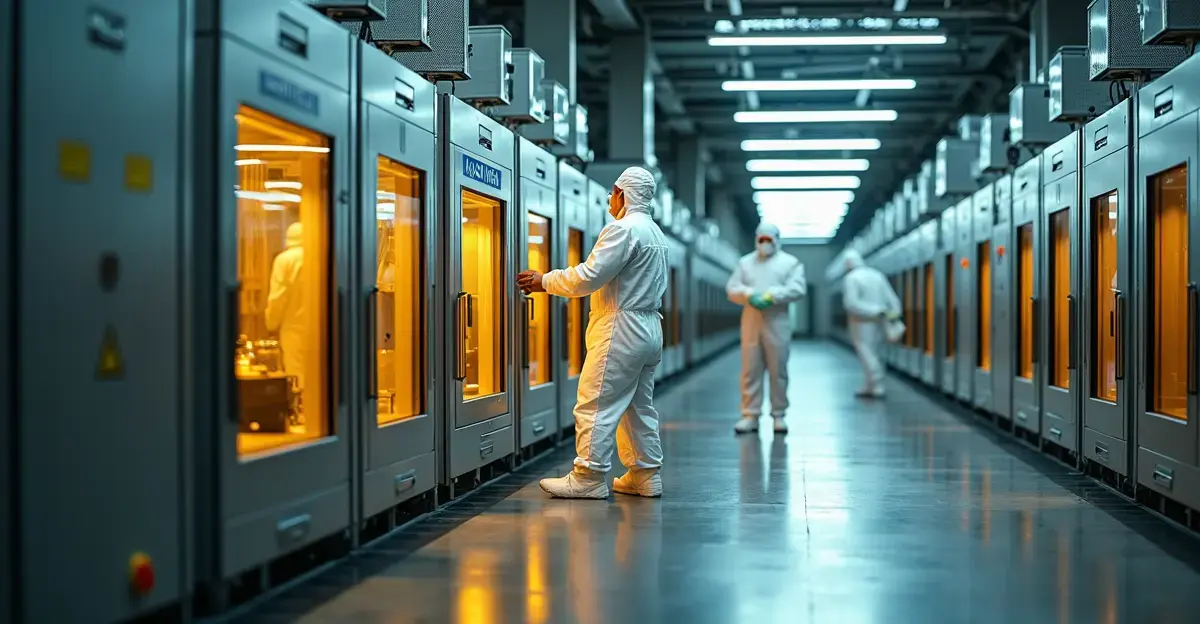
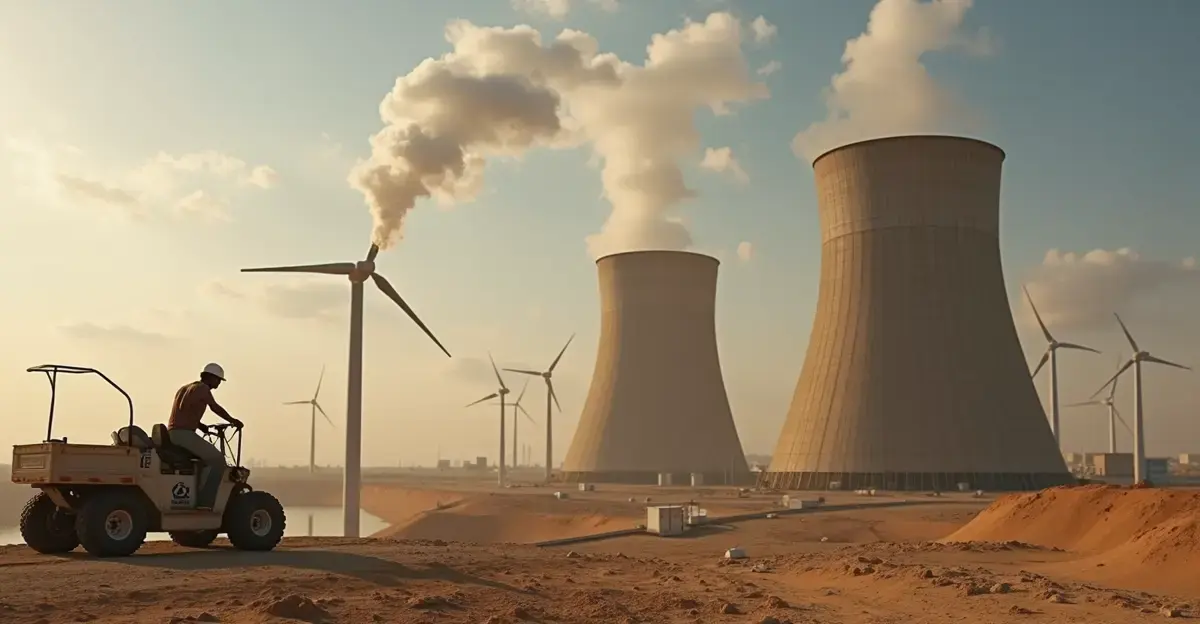
Semiconductors, critical minerals, and electricity capacity have become new chokepoints determining who can scale AI. Data centers now consume approximately 4% of global electricity, projected to reach 8% by 2030. Control over these physical resources – from Taiwanese semiconductor manufacturing to African rare earth minerals – has become as strategically important as the algorithms themselves, creating new dependencies and vulnerabilities.
7. AI's Military Revolution
Global military AI spending doubled from $4.6 billion to $9.2 billion between 2022-2023 and is projected to reach $38.8 billion by 2028. Autonomous weapons systems, precision targeting, and AI-enhanced decision-making are creating what defense experts call a 'revolution in military affairs' comparable to the introduction of gunpowder or nuclear weapons. The autonomous weapons regulation debate at the UN highlights the urgent need for international norms before widespread deployment.
Geopolitical Implications and International Relations
The convergence of these seven axes is creating a fragmented global tech ecosystem, with competing standards, supply chains, and governance models. The US-China rivalry has led to what some analysts describe as a 'digital iron curtain' separating US-led and China-led tech spheres. This fragmentation threatens to undermine the global interoperability that has driven technological progress for decades, potentially creating parallel internets and incompatible AI systems.
According to the World Economic Forum, data centers have evolved from back-end facilities to critical strategic assets, with the US hosting roughly 51% of the world's data centers. This concentration has prompted other nations to build domestic capacity for digital sovereignty and resilience, accelerating the trend toward technological nationalism. The semiconductor supply chain disruptions of recent years have demonstrated the vulnerability of globalized production networks to geopolitical tensions.
Expert Perspectives on the AI Transformation
'AI is rapidly evolving from a technological tool into what is described as the operating system of geopolitics,' notes the JPMorgan report, emphasizing that this transformation affects economic power, national security, capital flows, and global competitiveness. The Atlantic Council warns that rapid AI integration threatens to inject unpredictability into an already fragmented global order, with technological breakthroughs from both superpowers ratcheting up competition for AI dominance.
Private sector leaders are increasingly vocal about the geopolitical implications of their work. The recent Pentagon-Anthropic standoff, where the defense department designated the AI company a 'supply chain risk' after it refused to loosen safeguards for military use, highlights the emerging power dynamics between governments and tech firms. This represents a fundamental shift from decades where governments defined technological frontiers.
Future Outlook and Policy Recommendations
The coming years will determine whether policymakers can balance collaboration with competition to prevent complete technological fragmentation. International dialogues at the UN and through forums like the Global Partnership on Artificial Intelligence (GPAI) offer pathways for establishing common safety norms and guardrails. However, these efforts face significant challenges from geopolitical tensions and competing national interests.
Nations that effectively harness AI's potential while managing its risks are poised to gain decisive economic, political, and security advantages in coming decades. The EU digital sovereignty initiatives demonstrate one approach to navigating these challenges, while China's state-directed model represents another. The United States' public-private partnership approach, though currently dominant, faces challenges from both domestic political divisions and international competition.
Frequently Asked Questions
What does 'AI as a global operating system' mean?
This concept refers to how artificial intelligence is becoming the foundational layer for economic competitiveness, national security, and geopolitical influence, similar to how operating systems manage computer resources. AI increasingly optimizes national resources and strategic decision-making at a global scale.
Why are semiconductors so important in AI competition?
Advanced semiconductors are the physical foundation of AI systems, with control over their production representing strategic leverage. Taiwan produces approximately 70% of the world's most advanced chips, making semiconductor supply chains critical geopolitical assets in the AI race.
How is AI changing military capabilities?
AI enables autonomous weapons systems, enhanced targeting precision, predictive logistics, and accelerated decision-making. Global military AI spending is projected to reach $38.8 billion by 2028, representing what experts call a 'revolution in military affairs' with profound implications for international security.
What are the main differences between US and Chinese AI approaches?
The US relies on private sector innovation with government support, while China employs state-directed investment and coordinated national strategies. China's model emphasizes data access and scale, while the US focuses on cutting-edge innovation and talent attraction.
Can international AI governance succeed amid geopolitical competition?
While challenging, establishing common norms for AI safety, testing, and deployment remains possible through multilateral forums. Success will require balancing national security concerns with the global benefits of interoperability and shared safety standards.



Follow Discussion