


 Deutsch
 English
 Español
 Français
 Nederlands
 Português


 Share
Share




The AI Chip Cold War: How Geopolitical Tensions Are Reshaping Global Semiconductor Markets
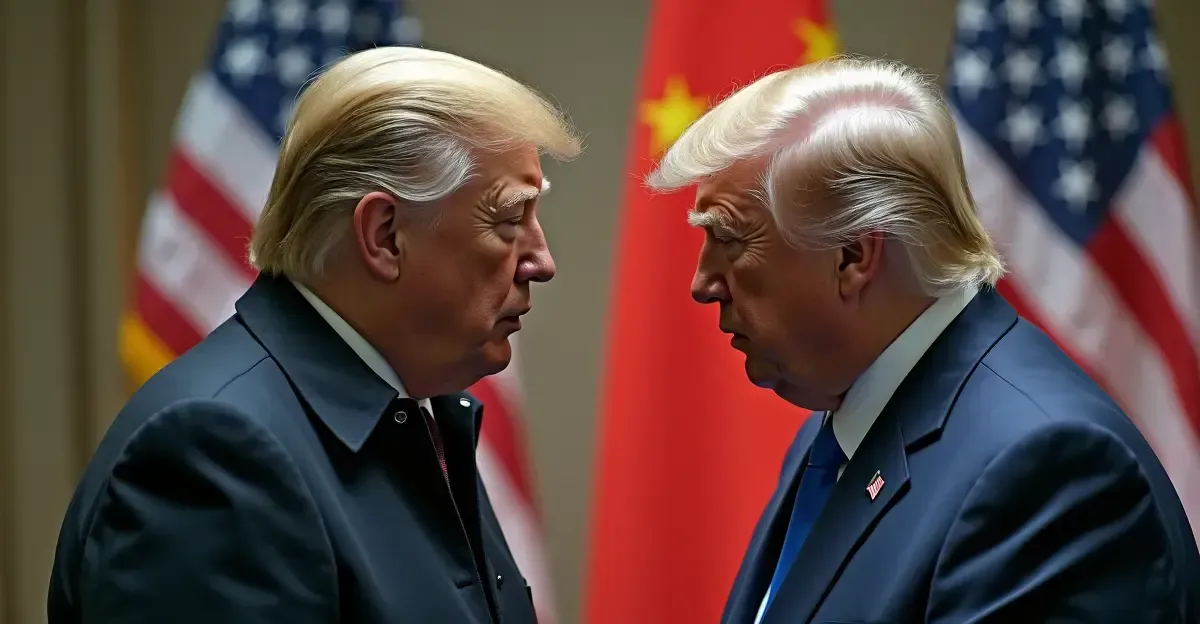
The global semiconductor industry is undergoing a profound transformation as the intensifying U.S.-China technological competition reaches its peak in the $150 billion AI chip market. This strategic battleground has evolved into what analysts term an "AI Chip Cold War," where geopolitical tensions are fracturing global supply chains and forcing a fundamental shift from efficiency-first globalization to resilience-focused regionalization. Recent developments show the AI chip market reaching unprecedented scale while contradictory U.S. policy signals on export controls create unprecedented uncertainty for semiconductor companies navigating this complex geopolitical landscape.
What is the AI Chip Cold War?
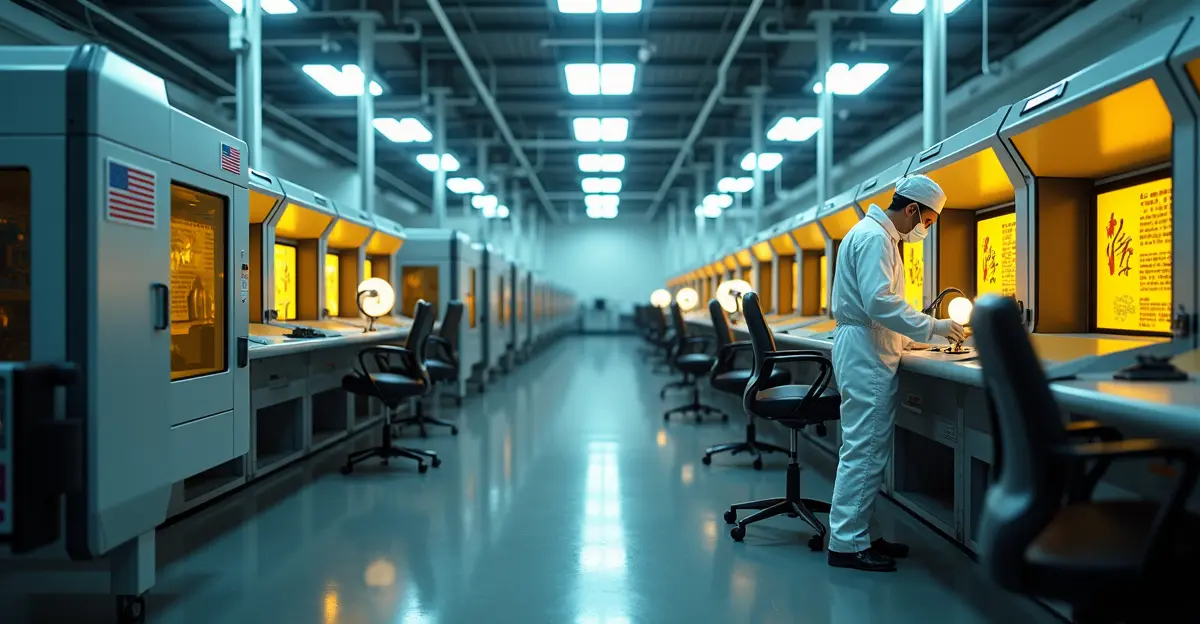
The AI Chip Cold War represents the strategic competition between the United States and China for dominance in artificial intelligence semiconductor technology. This conflict centers on advanced computing chips essential for AI training and inference, with both nations recognizing that semiconductor supremacy translates directly into technological, economic, and military advantage. The global semiconductor supply chain has become the primary theater for this competition, with Taiwan's TSMC controlling approximately 90% of advanced chip manufacturing and Dutch company ASML holding a monopoly on extreme ultraviolet lithography equipment essential for producing cutting-edge semiconductors.
The $150 Billion Paradox: Export Controls and Revenue Sharing
The AI chip market presents a striking paradox: while U.S. export controls aim to restrict China's access to advanced semiconductor technology, American companies like NVIDIA have developed creative workarounds to maintain market access. According to recent market analysis, the AI accelerator segment alone is projected to grow from $120 billion in 2025 to over $150 billion in 2026, representing about 50% of total semiconductor revenue despite comprising less than 0.2% of total unit volume.
This growth masks a fundamental contradiction in U.S. policy. While the Commerce Department tightens export controls, American semiconductor firms have negotiated revenue-sharing deals with Chinese clients, creating what industry analysts call "controlled access" arrangements. These deals allow U.S. companies to maintain market presence while technically complying with export restrictions, though they face increasing scrutiny from policymakers concerned about technology leakage.
Smuggling and Enforcement Challenges
A Congressional Research Service report reveals that smuggling supplied China with up to 140,000 advanced AI chips in 2024, undermining U.S. controls through tactics like mislabeling shipments. Commerce Department official Jeffrey Kessler testified that while Huawei's 2025 AI chip production is estimated at 200,000 units, China is "catching up quickly" with massive investments in domestic capabilities. This enforcement challenge highlights the difficulty of maintaining technological barriers in a globally interconnected industry.
Diverging National Strategies: CHIPS Act vs. Made in China 2025
The United States and China have adopted fundamentally different approaches to semiconductor self-sufficiency, reflecting their distinct economic systems and strategic priorities.
U.S. CHIPS and Science Act
The cornerstone of American strategy is the CHIPS and Science Act of 2022, allocating $280 billion with $52.7 billion in direct incentives to revitalize domestic chip production. This has spurred over $450 billion in private investment commitments from companies like Intel, TSMC, and Samsung for new fabrication plants across 28 states. The policy aims to reduce reliance on Asian supply chains and enhance national security, though proposed tariffs on imported semiconductors (potentially 25-300%) create tension with reshoring objectives.
China's 50% Self-Sufficiency Goal
China pursues a different path through its "Made in China 2025" initiative, aiming for 50% domestic chip equipment production and higher coverage in mature process nodes. Rather than pursuing direct confrontation with global leaders, China seeks "asymmetric" advantages through targeted breakthroughs in key areas while leveraging its vast domestic market. The strategy focuses on the entire supply chain, with particular emphasis on upstream challenges including EDA software, semiconductor materials, and core equipment.
Strategic Vulnerabilities: Taiwan and Critical Equipment
The global semiconductor industry faces profound vulnerabilities concentrated in two critical nodes: Taiwan's manufacturing dominance and European equipment suppliers.
Taiwan's TSMC: The Linchpin
Taiwan Semiconductor Manufacturing Company (TSMC) controls approximately 90% of advanced chip manufacturing, producing chips for customers including NVIDIA, Apple, and AMD. Taiwan's exports of integrated circuits amounted to $184 billion in 2022, nearly 25 percent of Taiwan's GDP, with TSMC constituting about 30 percent of the Taiwan Stock Exchange's main index. This concentration creates what analysts term the "Taiwan Strait risk," where geopolitical tensions could disrupt global technology supply chains.
ASML's Lithography Monopoly
Dutch company ASML holds a near-monopoly on extreme ultraviolet (EUV) lithography equipment essential for producing cutting-edge semiconductors below 7-nanometer nodes. Without access to ASML's technology, neither the United States nor China can produce the most advanced chips independently. This dependency creates strategic leverage for European allies in the global technology competition while complicating U.S. efforts to contain China's semiconductor advancement.
Global Impact: Reshaping Trade Alliances and Investment Patterns
The AI Chip Cold War is fundamentally reshaping global economic relationships, creating what analysts call "friend-shoring" and "technological decoupling."
Bifurcated Markets and Parallel Ecosystems
The competition risks creating two incompatible technology ecosystems with different technical standards, supply chains, and innovation pathways. NVIDIA's China market share has plummeted from 95% to 50%, potentially costing the company $15 billion in revenue, while Chinese companies like Huawei develop competitive alternatives through their Ascend chip series. This bifurcation extends beyond chips to encompass software ecosystems, development tools, and application markets.
Investment Reallocation and Regionalization
Global semiconductor investment is shifting from efficiency optimization to resilience building, with companies establishing redundant supply chains across different geopolitical blocs. The semiconductor manufacturing renaissance in the United States represents just one facet of this broader trend, with similar developments occurring in Europe, Japan, and Southeast Asia as nations seek to reduce dependency on concentrated production centers.
Expert Perspectives on the Technological Standoff
Industry analysts offer divergent views on the long-term implications of the AI Chip Cold War. "We're witnessing the fragmentation of what was once a truly global industry," notes semiconductor analyst Michael Chen. "The strategic realignment prioritizes national security over economic optimization, with profound implications for innovation, economic growth, and AI development worldwide."
Conversely, some experts argue that competition may accelerate innovation. "Parallel development paths could lead to technological breakthroughs that wouldn't occur in a monopolized market," suggests Dr. Elena Rodriguez of the Technology Policy Institute. "The challenge is managing this competition without triggering broader conflict or stifling the collaborative research that has driven semiconductor advancement for decades."
FAQ: Understanding the AI Chip Cold War
What are AI chips and why are they strategically important?
AI chips are specialized semiconductors designed for artificial intelligence workloads, including training complex neural networks and performing inference tasks. They're strategically important because AI capability directly translates into economic competitiveness, military advantage, and technological leadership across sectors from healthcare to autonomous vehicles.
How do U.S. export controls affect the semiconductor industry?
U.S. export controls restrict China's access to advanced semiconductor technology, creating market bifurcation and forcing companies to develop separate product lines for different markets. While intended to protect national security, these controls also reduce American firms' market access and push China toward semiconductor independence.
Can China achieve semiconductor self-sufficiency by 2025?
China is making significant progress toward its 50% self-sufficiency goal, particularly in mature process nodes and certain equipment categories. However, achieving complete independence in cutting-edge semiconductor technology remains challenging due to dependencies on global equipment suppliers like ASML and the complexity of advanced manufacturing processes.
What is the Taiwan Strait risk for semiconductor supply chains?
The Taiwan Strait risk refers to the vulnerability of global semiconductor supply chains to geopolitical tensions between China and Taiwan. Since TSMC controls approximately 90% of advanced chip manufacturing, any disruption to Taiwan's production would have catastrophic consequences for global technology industries.
How are companies adapting to the bifurcated market?
Semiconductor companies are developing "China-specific" product lines, establishing manufacturing facilities in multiple geopolitical regions, and investing in supply chain resilience through inventory buffers and alternative sourcing strategies. Some are also pursuing revenue-sharing arrangements and technical partnerships that navigate export control restrictions.
Future Outlook: Navigating an Uncertain Landscape
The AI Chip Cold War represents a fundamental restructuring of global technology competition, with implications extending far beyond semiconductor manufacturing. As the market approaches $150 billion in 2026, companies must navigate increasingly complex regulatory environments, supply chain vulnerabilities, and technological divergence. The strategic choices made today will determine not only which nations lead in artificial intelligence but also how technological innovation unfolds in an era of geopolitical competition.
The paradox of the current moment—simultaneous market growth and geopolitical fragmentation—creates both unprecedented risks and opportunities. Companies that successfully navigate this landscape will need to balance compliance with innovation, global reach with regional resilience, and competitive advantage with collaborative necessity. The future of artificial intelligence development worldwide hangs in this delicate balance, making the AI Chip Cold War one of the defining technological competitions of our time.




Follow Discussion