


 Deutsch
 English
 Español
 Français
 Nederlands
 Português


 Share
Share




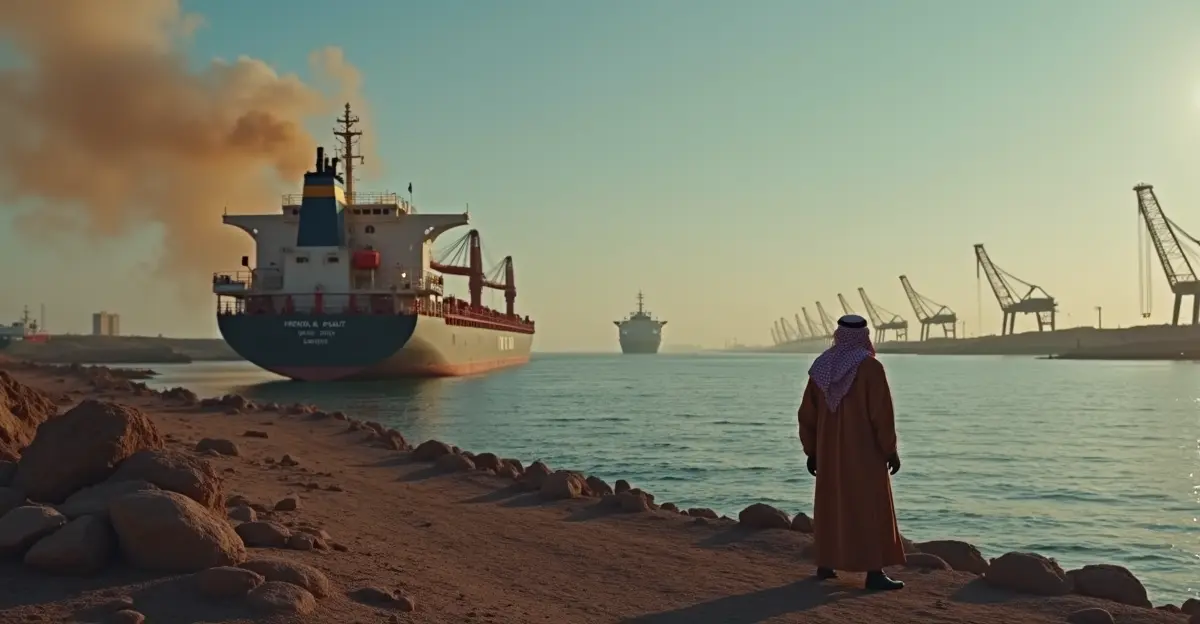
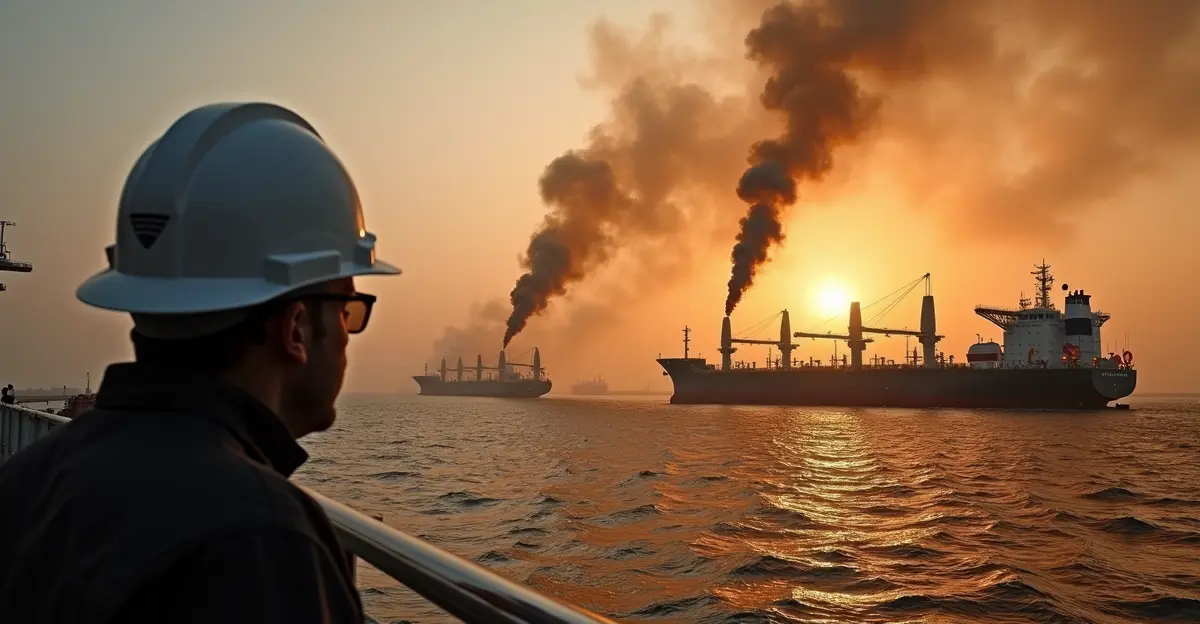
The February 2026 closure of the Strait of Hormuz—the largest oil disruption in modern history—has triggered a seismic reorganization of global critical mineral supply chains, with the U.S.-led FORGE Alliance expanding to 54 nations. The crisis severed 20% of global oil supply and, less visibly, disrupted flows of fertilizers, helium, aluminum and specialty chemicals, exposing a dependency that goes far beyond energy.
What Is the FORGE Alliance?
FORGE, the Forum on Resource Geostrategic Engagement, was formalized in early February 2026 as the successor to the Minerals Security Partnership. Chaired by the Republic of Korea and co-led by U.S. Secretary of State Marco Rubio and Vice President JD Vance, it now includes 54 countries and the European Commission. According to the U.S. State Department, the bloc signed 11 new bilateral critical minerals frameworks with partners from Argentina to Uzbekistan. The initiative builds on the December 2025 Pax Silica semiconductor framework to secure end-to-end supply chains for rare earths, lithium, copper and other inputs essential to AI, robotics and batteries.
How the Hormuz Crisis Exposed Critical Mineral Vulnerabilities
Before February 2026, strategic planners focused on oil when assessing the Strait of Hormuz. The Strait of Hormuz oil disruption proved that assumption dangerously incomplete. The waterway also carries significant volumes of petrochemical feedstocks and refined products used in fertilizer production, while helium and aluminum shipments from Gulf states were abruptly halted. One European trade official told reporters: This is not just about oil. It is about the industrial inputs that keep advanced economies running.
Beyond Oil: Fertilizers, Helium, Aluminum
- Fertilizers: Ammonia and urea exports from Gulf producers fell by an estimated 40% in the first month, threatening global food security.
- Helium: Qatar, a leading helium exporter, diverted limited capacity to domestic priorities, straining medical imaging and semiconductor manufacturing.
- Aluminum: Gulf smelters, responsible for roughly 10% of global primary aluminum, faced shipping delays that rippled through automotive and aerospace supply chains.
FORGE Alliance Response: Price Floors and $30 Billion Financing
In response, FORGE moved rapidly to establish coordinated price floors for critical minerals and rare earths, aiming to make Western-friendly supply chains commercially viable against China's rare earth processing monopoly. The U.S. is mobilizing more than $30 billion in support, including a $10 billion Export-Import Bank Project Vault strategic reserve initiative. A Glencore-Orion memorandum tied to copper and cobalt from the Democratic Republic of Congo underscores the private-sector dimension. The alliance also advanced 21 bilateral agreements and binding critical minerals deals to lock in long-term supply.
A Fragmented World: Geopolitical Blocs and Supply Chain Decoupling
The FORGE expansion signals a permanent fragmentation of global supply chains into competing geopolitical blocs. UNCTAD projects global trade growth will slow to 1.5–2.5% in 2026 as multinationals choose sides. This critical minerals supply chain decoupling is forcing companies to redesign logistics around resource security rather than cost alone, with profound implications for energy security, industrial policy and great-power rivalry through 2027 and beyond.
Expert Perspectives
Analysts warn that the West has a 12–18 month window to build alternatives to China's near-90% control of rare earth processing. The Hormuz shock made resource independence a national security imperative, not an economic preference, said a senior U.S. trade official. The fragile ceasefire in the Strait of Hormuz leaves the strategic environment uncertain, but the structural shift is already underway.
FAQ
What is the FORGE Alliance?
FORGE (Forum on Resource Geostrategic Engagement) is a U.S.-led bloc of 54 nations and the European Commission, launched in February 2026 to secure critical mineral supply chains and counter China's rare earth dominance.
How did the Strait of Hormuz crisis affect critical minerals?
The February 2026 closure disrupted not only 20% of global oil but also fertilizers, helium, aluminum and specialty chemicals, exposing hidden supply chain vulnerabilities.
What is the $30 billion FORGE financing for?
It includes $10 billion for the EXIM Project Vault strategic reserve, coordinated price floors, and binding bilateral deals to make non-Chinese critical mineral supply chains viable.
Which countries joined FORGE?
Fifty-four countries and the European Commission joined, including Argentina, the Cook Islands, Ecuador, Guinea, Morocco, Paraguay, Peru, the Philippines, UAE, UK and Uzbekistan.
Why does FORGE matter for supply chains?
It signals a permanent split into geopolitical blocs, forcing companies to choose between competing resource security systems and reshaping trade through 2027.
Conclusion
The FORGE Alliance and the Hormuz crisis together mark a turning point. Energy security and critical mineral security are now inseparable, and the world's supply chains are being redrawn along geopolitical lines. As the ceasefire remains fragile, the race to lock in resources will define the next phase of great-power rivalry.


Follow Discussion