


 Deutsch
 English
 Español
 Français
 Nederlands
 Português


 Share
Share




The FORGE Alliance has emerged as the defining institutional response to the February 2026 Strait of Hormuz closure, which removed nearly 20% of global oil supply and sent Brent crude to $138 per barrel. The simultaneous energy and critical minerals shocks have forced a permanent realignment of global supply chains, shifting away from pure market efficiency toward a new paradigm of resource geopolitics, alliance-based security, and strategic stockpiling. This article examines how the 54-nation FORGE coalition and its $10 billion Project Vault are reshaping the post-2026 global economic order.
Background: The Strait of Hormuz Closure and the Energy Shock
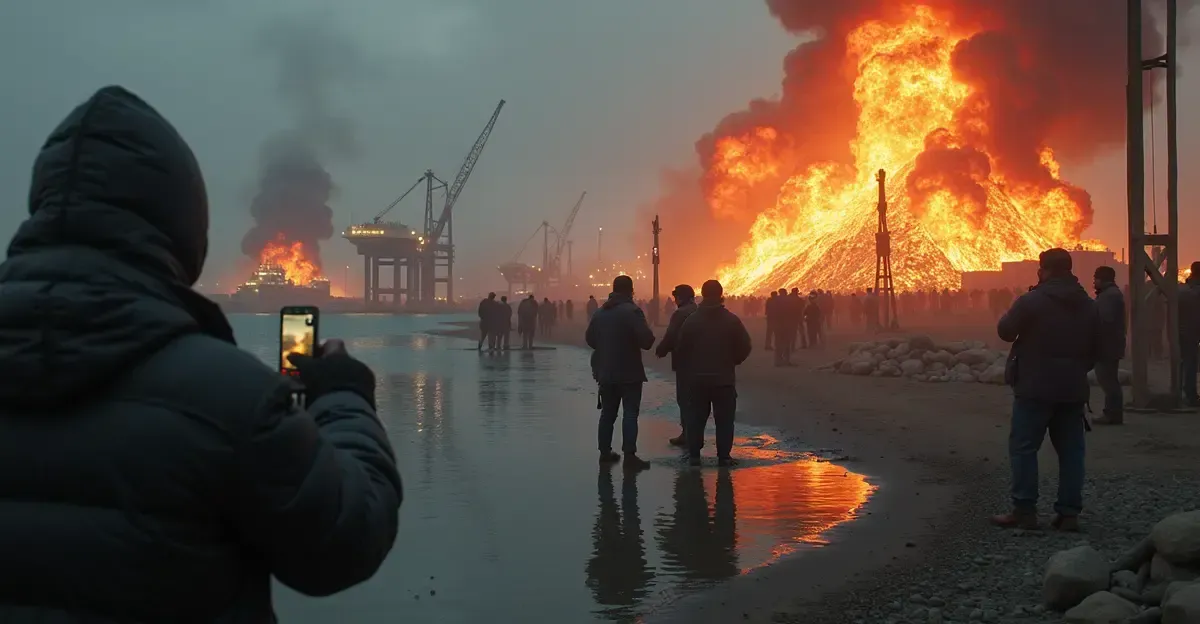
The February 2026 closure of the Strait of Hormuz—triggered by the Iran war and Iranian blockades—constituted the largest oil supply disruption in modern history, severing over 20 million barrels per day of crude and roughly 20% of global LNG supplies. According to the International Energy Agency, the disruption caused Brent crude to surge from around $72 to over $138 per barrel within weeks. The crisis also fractured OPEC: the UAE's exit from the cartel in March 2026 eliminated any pretense of coordinated supply management, leaving Gulf producers to prioritize bilateral security guarantees over collective quotas.
Compounding the energy shock, China's phased export controls on rare earths, tungsten, and antimony—implemented from late 2025 into 2026—triggered sixfold price spikes in rare earths and 300–500% increases for tungsten and antimony. Beijing's control of 90% of global rare earth processing and 80% of tungsten production exposed acute Western vulnerabilities in defense, electric vehicles, and renewable energy.
FORGE: A New Critical Minerals Alliance System
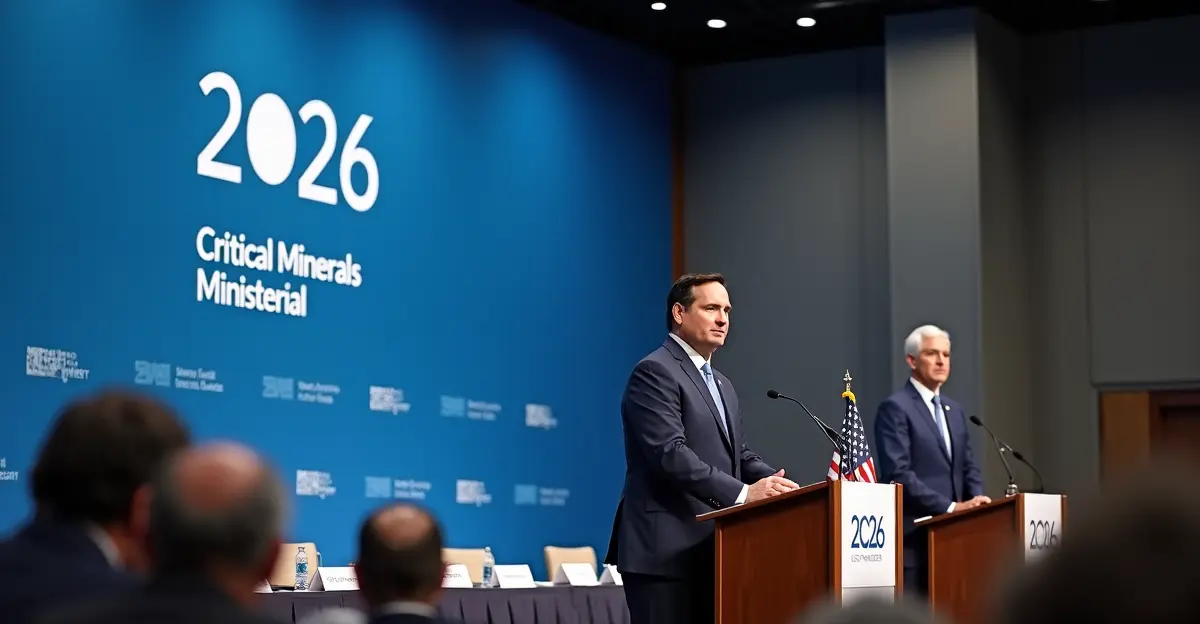
In response, the United States launched FORGE (Forum on Resource Geostrategic Engagement) as a successor to the Minerals Security Partnership, expanding it to 54 nations plus the European Commission. Co-led by Marco Rubio and JD Vance, FORGE established coordinated price floors for critical minerals and mobilized over $30 billion in investments. The alliance's flagship initiative, Project Vault, is a $10 billion strategic minerals reserve operated through the U.S. Export-Import Bank. As reported by Informed Clearly, FORGE has already signed 21 bilateral agreements to counter China's near-90% rare-earth processing control.
Project Vault and Strategic Stockpiling
Project Vault represents a structural shift from just-in-time logistics to just-in-case resilience. The reserve will stockpile critical minerals supply chain inputs—including rare earths, lithium, cobalt, and graphite—for emergency defense and energy transition needs. FORGE's coordinated price floors aim to de-risk private investment in non-Chinese processing capacity, a direct response to the reality that the West has only a 12–18 month window to build alternatives before managed dependence becomes permanent.
Analysts emphasize that the true strategic vulnerability lies not in mining but in processing, where China controls 60–85% of key stages. Rebuilding independent rare earth processing capacity could take 20–30 years, making strategic stockpiles and alliance-based supply security essential interim measures.
Structural Realignment of Global Supply Chains
The 2026 crisis has accelerated a decoupling of global supply chains into competing geopolitical blocs. The previous model—optimizing for cost and efficiency—has given way to resilience, redundancy, and alliance loyalty. UNCTAD projects global trade growth slowing to 1.5–2.5% in 2026, as energy and mineral security become inseparable from national security imperatives. This realignment affects everything from EV battery supply chains to defense manufacturing, with companies now factoring geopolitical risk into sourcing decisions alongside price and quality.
The shift mirrors earlier patterns of energy transition minerals governance, but with a harder security edge. Western policymakers increasingly view critical minerals as the "new oil," requiring the same strategic reserves and alliance frameworks that governed petroleum during the Cold War.
Impact and Implications for the Global Economy
The economic fallout is severe and multifaceted. Brent crude's spike to $138/barrel has reignited inflationary pressures, while LNG supply disruptions have hit Asia hardest. The IEA coordinated a record 400-million-barrel strategic petroleum reserve release across 30+ nations, but it was insufficient to offset losses. Goldman Sachs estimates cumulative lost barrels could exceed 800 million by Q3 2026, keeping balances tight. Meanwhile, the UAE's exit from OPEC has left the cartel unable to enforce production discipline, compounding volatility.
For the critical minerals sector, the FORGE framework and Project Vault signal a permanent shift toward OPEC production cuts-style coordination for non-fuel minerals. The $30 billion mobilized is just the beginning; analysts expect further bilateral and plurilateral agreements in 2026–2027 as the West races to close the processing gap.
Expert Perspectives
"The FORGE Realignment is not a temporary crisis response—it is the institutionalization of resource security as the organizing principle of the global economy," said Dr. Elena Vasquez, a supply chain strategist at the Center for Strategic Resource Studies. "We are witnessing the end of the pure efficiency era. Alliance membership now determines access to critical inputs."
Other analysts caution that FORGE's price floors could distort markets, but acknowledge that the alternative—continued dependence on a single supplier—is no longer politically acceptable.
FAQ: FORGE Alliance and Critical Minerals Realignment
What is the FORGE Alliance?
FORGE (Forum on Resource Geostrategic Engagement) is a 54-nation plurilateral coalition led by the United States to coordinate critical minerals supply, price floors, and strategic stockpiling after the 2026 Strait of Hormuz crisis.
How much is Project Vault worth?
Project Vault is a $10 billion strategic minerals reserve operated through the U.S. Export-Import Bank, part of over $30 billion mobilized by FORGE.
Why did OPEC fracture in 2026?
The UAE exited OPEC in March 2026 after the Hormuz closure exposed divergent security interests, ending coordinated production quotas and increasing oil price volatility.
How dependent is the West on China for critical minerals?
China controls 90% of rare earth processing, 80% of tungsten production, and 60% of antimony, creating acute vulnerabilities that FORGE aims to reduce through stockpiling and alternative processing investment.
What is the timeline for building independent processing capacity?
Analysts estimate rebuilding independent rare earth and critical mineral processing could take 20–30 years, making strategic reserves and alliance-based supply security essential in the interim.
Conclusion: A New Resource Geopolitics
The FORGE Realignment marks a decisive break from the post-Cold War era of globalized efficiency. As energy and mineral security merge into a single national security imperative, the 54-nation coalition and Project Vault are laying the groundwork for a bifurcated global economy. The next 12–18 months will determine whether the West can build viable alternatives—or must accept managed dependence. One thing is certain: the post-2026 world will be shaped by resource alliances, not free markets alone.


Follow Discussion