


 Deutsch
 English
 Español
 Français
 Nederlands
 Português


 Share
Share




The New Geopolitical Chessboard
In 2026, control over critical minerals—lithium, rare earth elements, copper, and uranium—has become the central geopolitical contest of the decade. As the energy transition accelerates, nations are forging new resource alliances in Latin America, Africa, and Central Asia, while the US and EU scramble to counter China's dominant processing and refining capacity. With China's export controls on antimony and germanium tightening, the EU's Critical Raw Materials Act entering enforcement, and major lithium discoveries in Iran and the US, the race has entered a decisive new phase that will shape global trade, security, and energy policy for years to come.
China's Strategic Stranglehold
Beijing controls roughly 90% of global rare earth processing, 80% of tungsten, and 60% of antimony—materials essential for semiconductors, defense, and renewable energy. In 2025, China imposed export controls on elements like samarium, dysprosium, and terbium in retaliation to US tariffs, later suspending some controls under a truce. However, licensing approval rates for European firms have fallen below 25%, while prices outside China have spiked sixfold. Antimony, for instance, rose from roughly $10,000 to $59,750 per tonne. Rather than imposing outright bans, Beijing uses temporary, reversible restrictions to maximize leverage, exemplified by a November 2025 suspension of expanded controls in exchange for US tariff concessions. The China critical minerals export controls strategy is designed to maintain pricing power and extract strategic concessions while discouraging Western alternative investment.
The November 2026 Cliff
China's suspension of export controls on gallium, germanium, antimony, and superhard materials—established via MOFCOM Announcements 70 and 72—expires on November 27, 2026, creating a looming supply cliff. While commercial civilian flows could proceed under license during the reprieve, the military end-use ban remained strictly in force. Defense applications faced sustained sourcing difficulties. Western alternative supply projects remain in permitting, pilot, or construction phases with timelines extending well past the deadline. The core question is whether the 20-month window was used to build credible non-Chinese supply or was consumed by process and politics.
The Western Response: FORGE and Project Vault
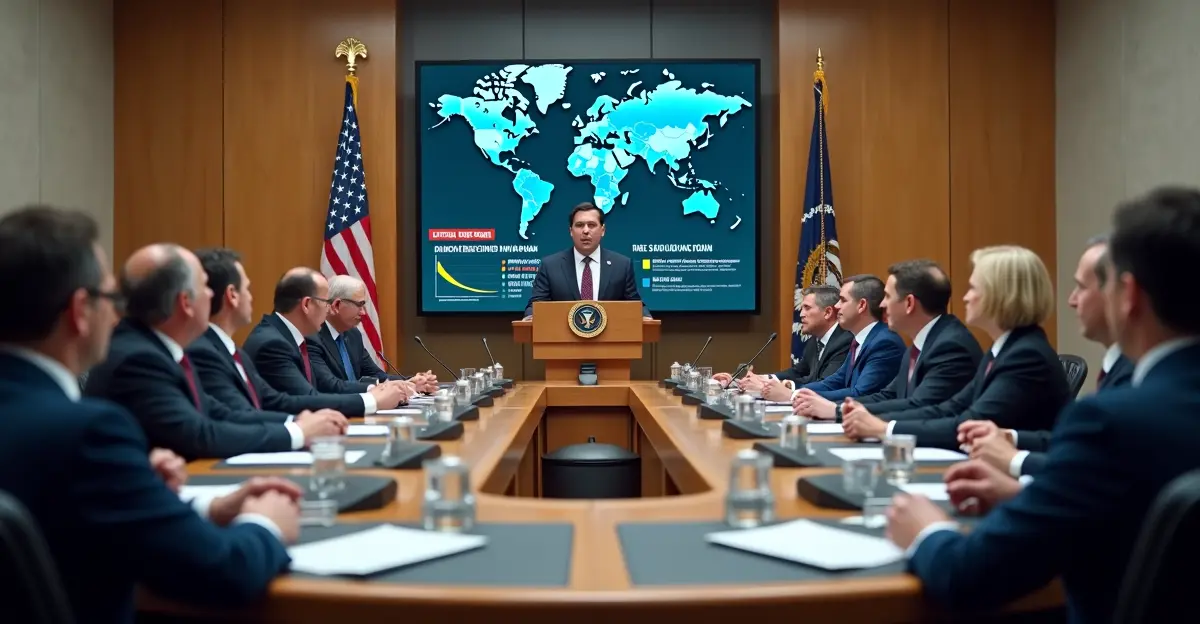
On February 4, 2026, the US Department of State hosted the 2026 Critical Minerals Ministerial, led by Secretary of State Marco Rubio alongside Vice President JD Vance. Representatives from 54 countries and the European Commission attended to reshape the global critical minerals market. The US signed eleven new bilateral frameworks with countries including Argentina, Morocco, Peru, the Philippines, UAE, UK, and Uzbekistan. Secretary Rubio announced the Forum on Resource Geostrategic Engagement (FORGE) as the successor to the Minerals Security Partnership, chaired by the Republic of Korea. The US is mobilizing over $30 billion in support for critical mineral projects, highlighted by the $10 billion Project Vault initiative through EXIM Bank to establish a domestic strategic reserve. The FORGE critical minerals alliance aims to create a preferential trade-and-investment zone with coordinated price floors to counter adversarial market manipulation.
EU Critical Raw Materials Act in Enforcement
The EU Critical Raw Materials Act (CRMA), Regulation (EU) 2024/1252, entered its enforcement phase in 2026, setting 2030 benchmarks: 10% extraction, 40% processing, and 25% recycling capacity of annual EU consumption, while limiting dependence on any single third country to 65%. The regulation distinguishes between strategic raw materials (cobalt, lithium, rare earths for magnets) and critical raw materials (broader list including antimony, beryllium). Key obligations include supply-chain risk assessments for large companies, Strategic Project applications, permanent magnet labeling and traceability, and recycled-content disclosure. The EU is mostly dependent on imports: 100% of its heavy rare earths come from China, 99% of boron from Turkey, and South Africa provides 71% of its platinum needs.
New Lithium Discoveries Reshape Supply
In early 2026, Iran officially confirmed the discovery of lithium reserves in salt brines across three provinces, according to a report from the Ministry of Industry, Mine, and Trade. The year-long scientific project, conducted with Russian experts using advanced ICP-OES technology, sampled 46 stations. Key findings include the highest lithium concentration of 81.4 ppm at Qom Salt Lake, 41.71 ppm at Khur, and 18.25 ppm at Taroud. With global lithium demand projected to reach 2.4 million tons by 2030, Iran possesses advantages including 10 million hectares of salt reserves and 300 days of annual sunlight for cost-effective extraction. The discovery positions Iran as a potential key player in the clean energy supply chain.
Meanwhile, in the United States, Lithium Americas is advancing the Thacker Pass project in Humboldt County, Nevada—one of North America's largest known lithium resources. The sedimentary lithium deposit has total measured and indicated mineral resources of 44.5 million tonnes of lithium carbonate equivalent (LCE) over an 85-year mine life. Phase 1 construction targets mechanical completion in late 2027 and commercial production ramp-up in 2028, with a nominal capacity of 40,000 tonnes/year of battery-quality lithium carbonate. General Motors is a joint venture partner with a 20-year offtake agreement for 100% of Phase 1 production. The Thacker Pass lithium project is a cornerstone of US domestic supply ambitions.
Copper: The New Strategic Commodity
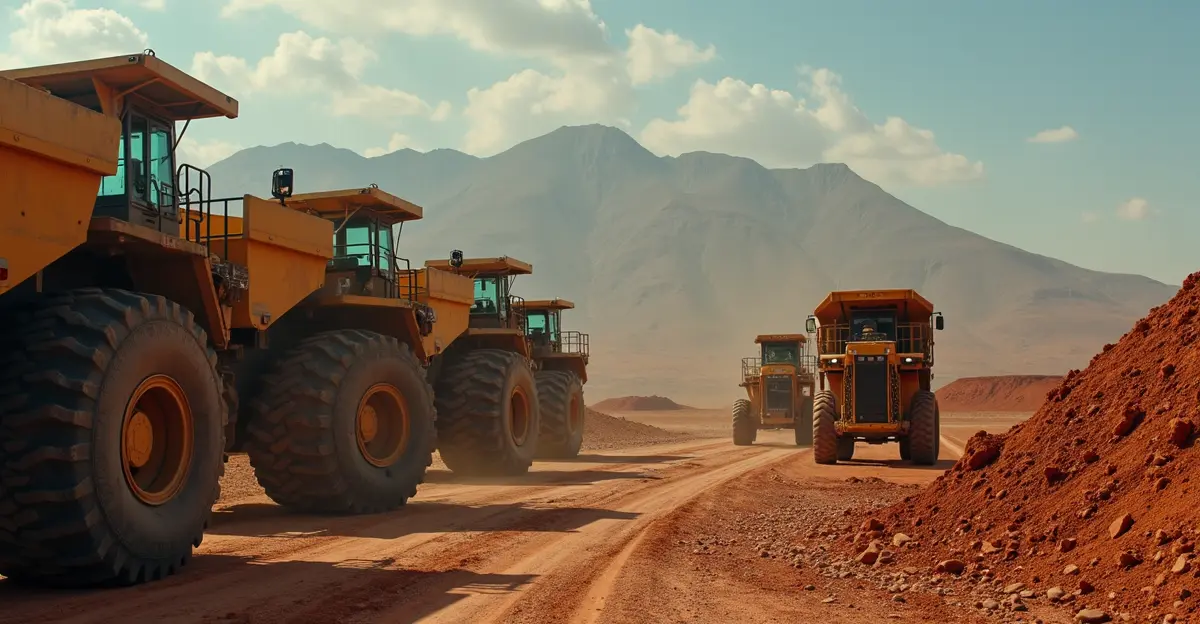
Copper has become increasingly viewed as a strategic rather than merely a commodity resource. China controls roughly 40% of global smelting capacity, and declining ore grades, geopolitical tensions, and climate-related disruptions like drought in Chile are straining markets. On the demand side, electric vehicles, renewable energy, grid expansion, and AI infrastructure are driving rapid consumption growth. Supply disruptions could cascade across automotive, electronics, and energy infrastructure sectors. Industry responses include diversifying supply sources, increasing strategic inventories, and investing in alternative processing capacity, though structural changes will take years to materialize.
Expert Perspectives
"China's dominance in rare earth processing is not accidental, temporary, or easily reversible—it is the product of a long-running, coordinated national strategy that continues to deepen," says Christoph Nedopil of Griffith Asia Institute, lead author of a 2026 policy study on rare earths. "Rebuilding independent supply chains could take 20-30 years, far exceeding the current geopolitical window."
"FORGE represents a strategic shift toward internationalizing price coordination and practicing statecraft through markets," notes an Atlantic Council analysis. "The US has mobilized over $30 billion in investments, but China has deployed over $120 billion in outbound investment since 2023."
FAQ
What are critical minerals?
Critical minerals are non-fuel materials essential to the modern economy—especially energy, defense, and technology—whose supply is at risk due to limited availability or geopolitical factors. They include lithium, rare earth elements, cobalt, copper, and antimony.
Why does China dominate critical mineral processing?
Since the 1980s, Beijing has invested billions in subsidies and strategic planning to dominate the supply chain. China now controls roughly 90% of rare earth refining and 60-80% of processing for many critical minerals, giving it significant geopolitical leverage.
What is FORGE?
The Forum on Resource Geostrategic Engagement (FORGE) is a plurilateral coalition launched in February 2026 as the successor to the Minerals Security Partnership. It aims to create a preferential trade-and-investment zone for critical minerals with coordinated price floors to counter market manipulation.
How will the EU Critical Raw Materials Act affect businesses?
The CRMA sets 2030 benchmarks for extraction, processing, and recycling capacity. Large companies must conduct supply-chain risk assessments, label permanent magnets, disclose recycled content, and obtain CE marking. The regulation aims to reduce dependence on any single third country to below 65%.
What is the November 2026 cliff?
China's suspension of export controls on gallium, germanium, antimony, and superhard materials expires on November 27, 2026. If not renewed, Western industries face renewed supply restrictions, price spikes, and potential shortages in defense and high-tech sectors.
Outlook: A Narrow Window
Experts warn of a narrowing 12-18 month window before China's processing dominance becomes structurally irreversible. A hybrid approach combining targeted investment, international partnerships, and recycling is considered the most realistic path forward. The critical minerals supply chain diversification efforts by Western nations face significant headwinds, but the stakes could not be higher: the pace of decarbonization and global strategic stability hang in the balance.


Follow Discussion