


 Deutsch
 English
 Español
 Français
 Nederlands
 Português


 Share
Share




In early 2026, the global economy is confronting its most consequential supply chain realignment since the 1970s oil crisis. China's 2025-2026 export controls on rare earths and critical minerals have triggered sixfold price spikes outside China, with licensing approval rates for European firms falling below 25%. The crisis directly threatens production of AI chips, electric vehicles, and advanced defense systems—including the F-35 fighter jet, which requires over 400 kilograms of rare earth materials per aircraft. In response, the United States launched FORGE (Forum on Resource Geostrategic Engagement), a 54-nation coalition backed by over $30 billion in financing, aiming to break China's near-total monopoly on rare earth processing. But can the West achieve supply chain autonomy within the critical 12-18 month geopolitical window, or will China's structural advantages prove unassailable for the next decade?
China's Strategic Leverage: The Rare Earth Monopoly
China controls approximately 90% of global rare earth processing and 99% of heavy rare earth refining, according to the International Energy Agency. This dominance extends to tungsten (80%) and antimony (60%). Beijing's export controls, first tightened in April 2025 and expanded through October 2025, now cover 12 of 17 rare earth elements, finished permanent magnets, and processing technologies. The EU carbon border tax has added another layer of complexity for European importers.
The impact has been severe. Outside China, prices for key rare earth oxides have surged sixfold since controls began. Praseodymium-neodymium oxide jumped from RMB 500,000 to RMB 557,500 per ton within days of the November 2025 suspension announcement. A supply-demand gap of 5.8% is projected for 2025, widening to 4.6% in 2026. European firms report that China's licensing approval rate has dropped below 25%, effectively freezing access to materials essential for defense, EVs, and renewable energy.
The FORGE Coalition: A $30 Billion Countermove
In February 2026, the United States convened the inaugural Critical Minerals Ministerial in Washington, D.C., launching FORGE as a plurilateral successor to the Minerals Security Partnership. The coalition includes 54 nations, chaired by South Korea, with Saudi Arabia as a major new entrant. Vice President JD Vance announced a system of "reference prices for critical minerals at each stage of production," maintained through adjustable tariffs—effectively creating a preferential trade-and-investment zone for allied critical mineral supply chains.
The U.S. administration has mobilized over $30 billion in investments and loans, including $10 billion from Project Vault, a strategic stockpile managed by the Export-Import Bank. Eleven new bilateral framework agreements were signed with countries including Argentina, Morocco, Peru, and the United Kingdom. The 2025 economic crisis had already accelerated Western interest in supply chain resilience, but FORGE represents a quantum leap in ambition.
Project Vault and Price Floors
Project Vault is a $12 billion EXIM-backed strategic reserve designed to buffer against supply disruptions. Combined with a $110/kg price floor for rare earth oxides and guaranteed government offtake agreements, the initiative aims to de-risk private investment in Western processing capacity. The U.S. Department of Energy has committed over $7.3 billion across agencies, including a $400 million equity investment in MP Materials, operator of the Mountain Pass mine in California.
G7's 2030 Dependency-Reduction Target
At the June 2026 G7 summit in Evian, France, leaders finalized a Critical Minerals Resilience and Production Alliance, targeting a reduction in dependence on any single non-G7 supplier below 60% by 2030. The alliance will coordinate financing, processing capacity, recycling infrastructure, stockpiling, and early-warning systems. Ministers are tasked with setting specific dependency-reduction targets for individual minerals by year-end.
However, analysts warn that the 2030 timeline may be overly optimistic. The artificial intelligence regulation debate has highlighted how quickly technological dependencies can become geopolitical vulnerabilities. China's 15th Five-Year Plan (2026-2030) explicitly identifies rare earths as providing "competitive advantages," with state-owned Northern Rare Earth Group reporting record 2025 revenues and outlining aggressive capacity expansion. China has invested an estimated $57 billion in rare earth processing infrastructure since 2000, creating a vertically integrated system from mine to magnet that Western projects cannot easily replicate.
Can the West Scale Processing Capacity in Time?
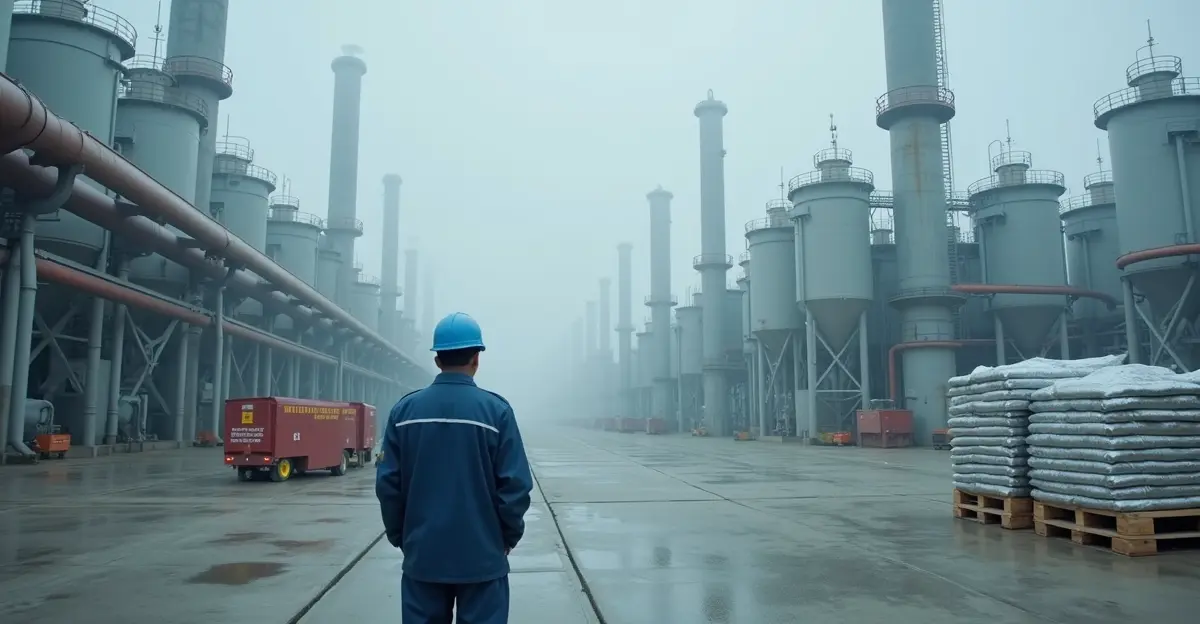
The critical bottleneck is not mining but processing. While the West has significant rare earth mineral reserves—the U.S. and Australia are the second- and third-largest producers—nearly all refining capacity lies in China. Western processing projects face a 5-15 year development timeline, far exceeding the 12-18 month geopolitical window for decisive action.
Promising developments are emerging. In June 2026, a $147.8 million DOE-backed rare earth demonstration facility by Phoenix Tailings and MIT broke ground in Ardmore, Oklahoma, using selective halogenation and AI-enabled controls. A Greenland pilot plant at the Tanbreez heavy rare earth deposit also began construction, and Australian startup Renewable Metals raised an oversubscribed $12 million Series A for battery recycling technology. Yet these projects remain at demonstration scale, and scaling to commercial viability without indefinite subsidy remains unproven.
China's domestic demand is also tightening global supply. The country's EV and wind energy sectors are expected to reduce rare earth exports from 50% to approximately 25% of production by 2030, further constraining availability for Western buyers. China holds 81% of rare-earth-related patents, giving it a formidable intellectual property moat.
Expert Perspectives
"China is weaponizing control rather than scarcity—using temporary, reversible restrictions to maintain pricing power and extract concessions while preventing large-scale Western alternative investment," notes a multi-institutional analysis published by Rare Earth Exchanges. "Rebuilding independent alternatives could take 20-30 years, far exceeding the current geopolitical window."
Gracelin Baskaran and Meredith Schwartz of the Center for Strategic and International Studies (CSIS) conclude that "true supply chain resilience depends not on policy announcements but on sustained output, diversified supply, and private investment." Their analysis of the one-year anniversary of China's April 2025 restrictions found that despite the Trump-Xi truce suspending controls, export flows remain volatile and U.S. imports are still below 2024 levels.
Frequently Asked Questions
What are rare earth elements and why are they critical?
Rare earth elements (REEs) are 17 metallic elements essential for permanent magnets, lasers, electronics, defense systems, and green energy technologies. Despite their name, they are relatively abundant in the Earth's crust but difficult and costly to process to usable purity.
How much rare earth material does an F-35 require?
Each F-35 Lightning II requires approximately 417 kilograms (920 pounds) of rare earth materials for magnets, radar systems, stealth coatings, and missile guidance components. Lockheed Martin is the largest U.S. user of samarium, with about 22.6 kg per aircraft.
What is the FORGE coalition?
FORGE (Forum on Resource Geostrategic Engagement) is a 54-nation coalition launched by the United States in February 2026 to counter China's dominance in critical mineral supply chains. It is backed by over $30 billion in financing and includes coordinated price floors, strategic stockpiling, and bilateral framework agreements.
Can the West reduce dependence on China by 2030?
The G7 has set a target to reduce dependence on any single non-G7 supplier below 60% by 2030. However, analysts warn that rebuilding independent processing capacity could take 5-15 years for mining and 20-30 years for full processing independence, making the 2030 target highly ambitious.
What is China's 15th Five-Year Plan for rare earths?
China's 2026-2030 Five-Year Plan explicitly identifies rare earths as providing "competitive advantages." State-owned Northern Rare Earth Group aims to build a "full-element, full-product" industrial system spanning mining to downstream applications, while expanding processing capacity and maintaining pricing power.
Conclusion: A Narrow Window
China's tactical pause on export restrictions—suspended until November 2026—creates a narrow window for Western action. The FORGE coalition and G7 initiatives represent an unprecedented mobilization of financial and diplomatic resources, but structural challenges remain formidable. The West must decide between managed dependence, costly independence, or a hybrid model balancing resilience with realism. As the 12-18 month geopolitical window closes, the outcome of this critical minerals contest will shape the global balance of power in AI, defense, and clean energy for decades to come.



Follow Discussion