


 Deutsch
 English
 Español
 Français
 Nederlands
 Português


 Share
Share




In 2026, China's tightened export controls on rare earths and critical minerals have triggered price spikes of up to sixfold, with European firms facing licensing approval rates below 25%. As Beijing weaponizes its 90% grip on global rare earth processing, the United States has mobilized 54 nations under the new FORGE initiative and committed over $30 billion to build alternative supply chains. This article analyzes the strategic chess match between China's calibrated coercion and the West's urgent, high-stakes push for supply chain independence — and why the next 12 to 18 months will determine whether diversification succeeds or fails.
China's Dominance and the 2025-2026 Export Controls
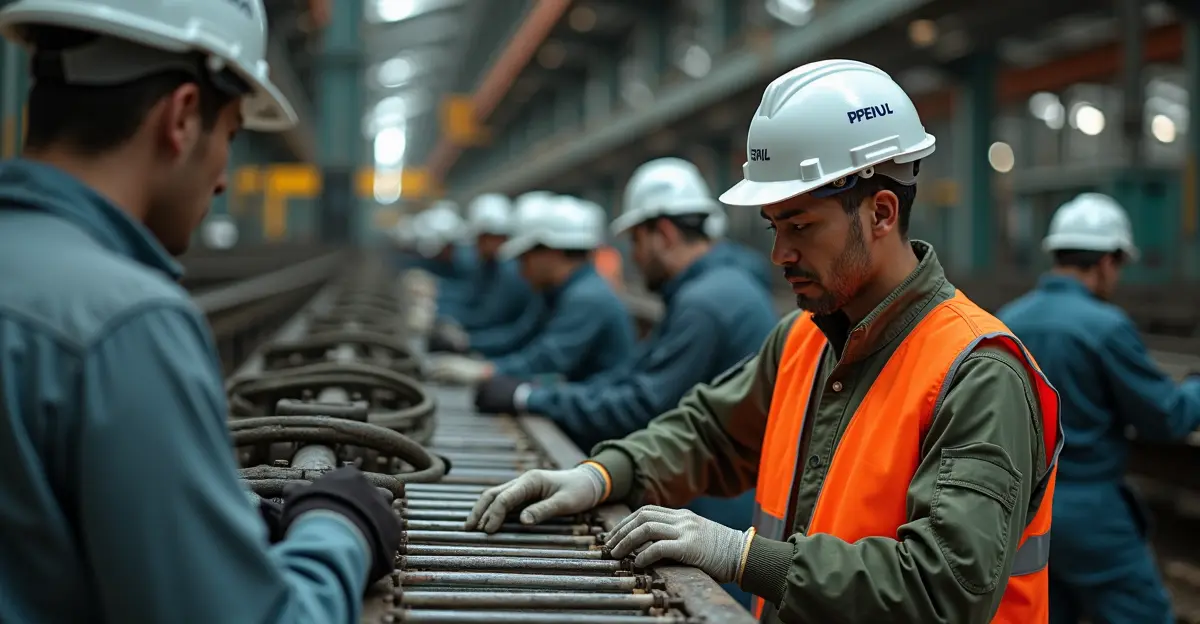
China controls approximately 90% of global rare earth processing, 80% of tungsten refining, and 60% of antimony production — materials essential for defense systems, electric vehicles (EVs), wind turbines, and consumer electronics. According to the International Energy Agency, China accounted for about 91% of global rare earth separation and refining production and 94% of sintered permanent magnet production in 2024.
In April and October 2025, China introduced two waves of export controls on rare earth elements and related technologies, citing national security interests. The second wave was later suspended until November 2026, but the first wave remained in effect, causing immediate disruptions. By early 2026, automated real-time controls and penalties were introduced across China's rare earth industry, further tightening Beijing's grip. The EU carbon border tax has added another layer of complexity for European importers.
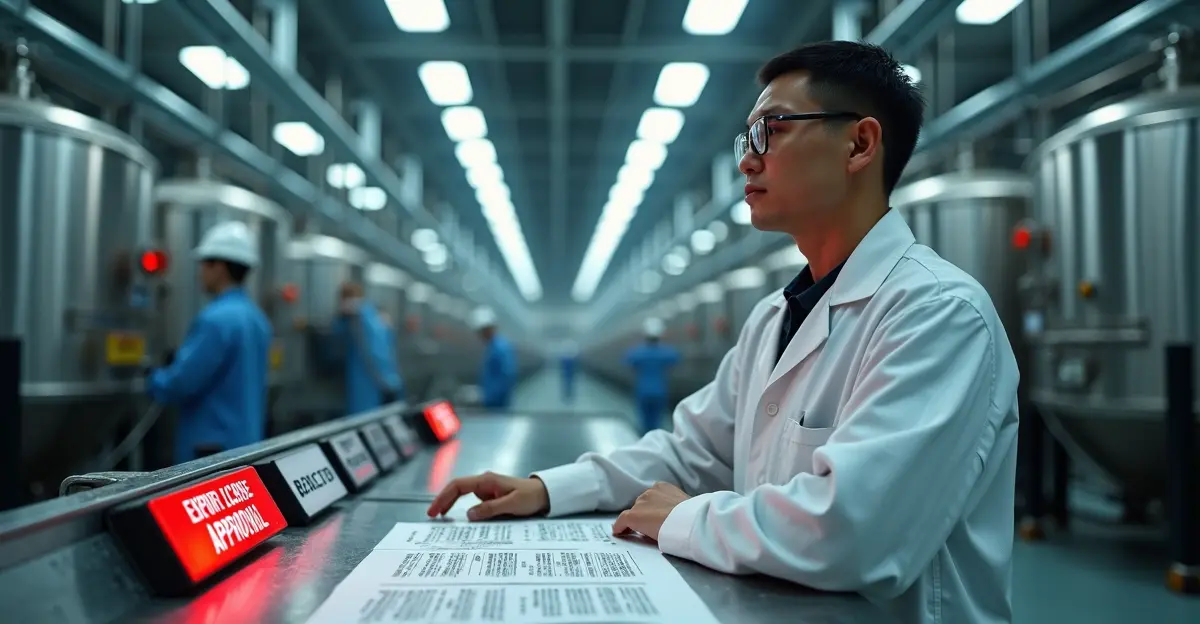
A multi-institutional analysis drawing on data from over 50 organizations — including the European Parliament Research Service, OECD, and CSIS — found that licensing approval rates for European firms seeking rare earth exports from China dropped below 25%. Over 80% of European companies remain dependent on Chinese supply chains for critical minerals. The report argues that China is weaponizing control rather than scarcity, using temporary, reversible restrictions to maintain pricing power and extract geopolitical concessions while discouraging Western investment in alternatives.
The Western Response: FORGE and Project Vault
On February 4, 2026, the United States hosted the inaugural Critical Minerals Ministerial in Washington, D.C., led by Secretary of State Marco Rubio and Vice President JD Vance, with representatives from 54 countries and the European Commission. The centerpiece of the event was the launch of FORGE (Forum on Resource Geostrategic Engagement), a plurilateral coalition designed to create a preferential trade-and-investment zone for critical minerals with coordinated price floors to counter adversarial market manipulation. FORGE succeeds the Minerals Security Partnership (MSP) and is chaired by the Republic of Korea.
Secretary Rubio announced that the U.S. government has mobilized over $30 billion in letters of interest, investments, and loans to support strategic mineral projects over the past six months. A key component is Project Vault — a $10 billion Export-Import Bank initiative (with an additional $2 billion in private funding) to establish a domestic Strategic Critical Minerals Reserve. Companies like GE Vernova, Clarios, Boeing, Hartree Partners, Traxys, and Mercuria have expressed support for the program, which allows firms to secure minerals at fixed prices, protecting against supply disruptions and price volatility.
The ministerial also produced 11 new bilateral critical minerals frameworks or MOUs with countries including Argentina, Morocco, the Philippines, the UAE, and the UK, bringing the total to 21 bilateral deals signed in five months. The US-China trade war 2025 context underscores the urgency of these diplomatic efforts.
Strategic Implications: A Narrow Window
Analysts warn that the next 12 to 18 months will be decisive. Building new rare earth separation facilities outside China requires a minimum of 12-18 months, and achieving meaningful scale takes 5-7 years. Meanwhile, China's export controls are designed to be temporary and reversible, allowing Beijing to maintain maximum leverage while discouraging long-term Western investment in alternatives.
The price spikes have been dramatic. Since the controls took effect, prices for key rare earth elements such as neodymium, praseodymium, and dysprosium have surged up to sixfold outside China. This has directly impacted defense contractors, EV manufacturers, and renewable energy developers who rely on permanent magnets and other rare earth components. The IMF has warned of significant downside risks to global growth from geopolitical fragmentation in critical mineral supply chains.
China's dominance extends beyond processing to patents. A 2026 patent landscape report based on the European Patent Office's DOCDB methodology identified 22,040 global patent families filed between 2014 and 2024 in rare earth-related technologies, with China accounting for 81% of filings. This intellectual property moat further complicates efforts to build independent capacity.
Expert Perspectives
"China is not trying to cut off supply entirely — that would destroy its own industry and trigger an even faster Western response. Instead, it is using calibrated, reversible restrictions to maintain pricing power and extract concessions while making Western investors think twice about building alternatives," said a senior analyst at the Center for Strategic and International Studies (CSIS), who spoke on condition of anonymity.
The Atlantic Council noted that FORGE represents a shift from an 'America First' domestic focus toward international coordination, though it cautioned that a broader coalition introduces governance challenges and varying speeds among partners. The critical minerals recycling technology sector is emerging as a potential game-changer, with several startups developing methods to recover rare earths from end-of-life products.
FAQ: China's Critical Minerals Export Controls
What critical minerals does China control?
China controls approximately 90% of global rare earth processing, 80% of tungsten refining, and 60% of antimony production. These materials are essential for defense systems, EVs, wind turbines, consumer electronics, and advanced manufacturing.
When did China impose export controls?
China introduced two waves of export controls in April and October 2025. The second wave was suspended until November 2026, but the first wave remains in effect. In 2026, automated real-time controls and penalties were added.
What is the FORGE initiative?
FORGE (Forum on Resource Geostrategic Engagement) is a U.S.-led plurilateral coalition launched in February 2026, involving 54 nations. It aims to create a preferential trade-and-investment zone for critical minerals with coordinated price floors to counter China's market power.
How much funding has the US committed?
The U.S. government has mobilized over $30 billion in letters of interest, investments, and loans for critical mineral projects. This includes Project Vault, a $10 billion EXIM initiative to establish a domestic strategic reserve.
Can the West replace Chinese supply chains?
Analysts estimate building new separation facilities takes 12-18 months minimum, with meaningful scale requiring 5-7 years. Rebuilding independent alternatives could take 20-30 years. The next 12-18 months will determine whether diversification efforts succeed.
Conclusion: The Race Against Time
The strategic chess match between China's calibrated coercion and the West's push for supply chain independence is entering a critical phase. The February 2026 Critical Minerals Ministerial and the launch of FORGE represent the most ambitious Western response to date, backed by unprecedented financial commitments. However, China's deep-rooted advantages in processing capacity, patent portfolios, and industrial infrastructure mean that the road to diversification will be long and costly. The next 12 to 18 months will reveal whether the West can translate political will and financial firepower into tangible supply chain resilience — or whether China's stranglehold on critical minerals will define the geopolitical landscape for decades to come.


Follow Discussion