


 Deutsch
 English
 Español
 Français
 Nederlands
 Português


 Share
Share




The New Resource War: How Critical Minerals Are Reshaping Global Alliances in 2026
In 2026, the global scramble for lithium, cobalt, rare earths, and copper has escalated into a defining geopolitical contest. As demand surges for batteries, defense technology, and renewable energy infrastructure, Western nations are racing to secure supply chains outside China's dominant processing infrastructure. The critical minerals race is redrawing trade blocs, accelerating deep-sea mining debates, and forcing military strategies to account for resource dependencies. With the EU's Critical Raw Materials Act targets tightening, the US invoking the Defense Production Act for minerals, and China's export controls on gallium and germanium already disrupting global chip and defense supply chains, 2026 marks a pivotal year in the new resource war.
China's Processing Dominance and Export Leverage
China controls approximately 90% of rare earth processing, 80% of tungsten, and over 60% of lithium and cobalt refining capacity. In December 2024, Beijing imposed sweeping export controls on gallium, germanium, and antimony—minerals essential for semiconductors, fiber optics, defense radar, and infrared optics. While a partial suspension of the ban was announced in November 2025, the underlying control architecture remains intact, with a critical deadline looming on November 27, 2026. Western alternative supply projects remain in permitting or pilot phases, leaving a narrow window for action. The China export controls impact has been profound: price spikes of up to sixfold for some materials and a stark reminder of supply chain vulnerability.
Western Countermeasures: FORGE and Project Vault
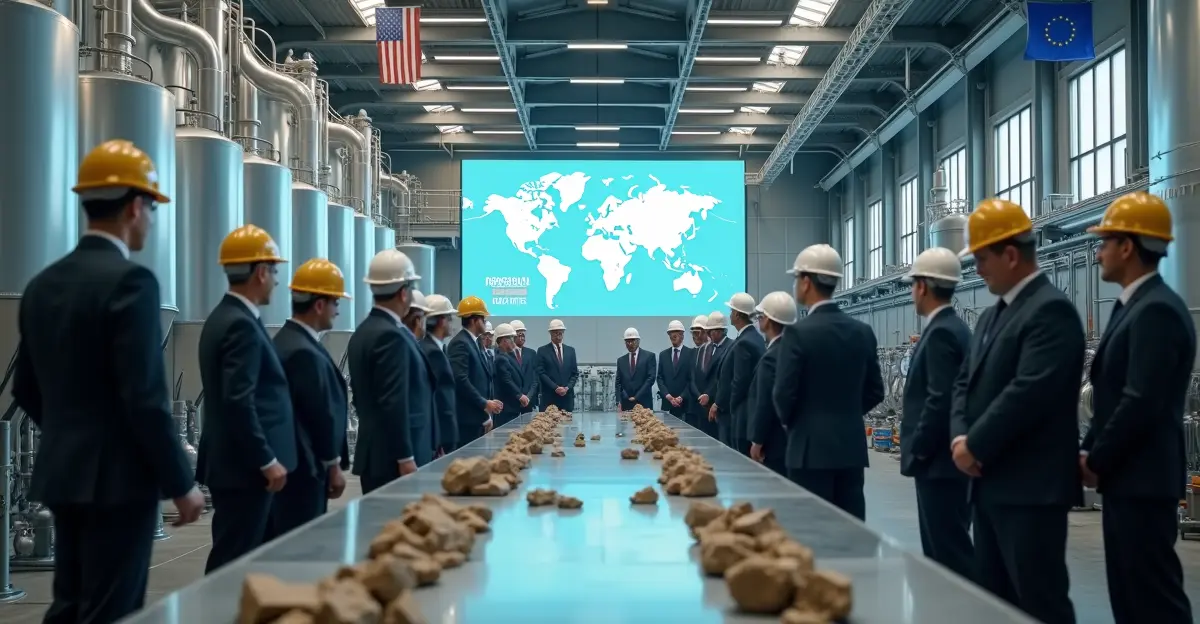
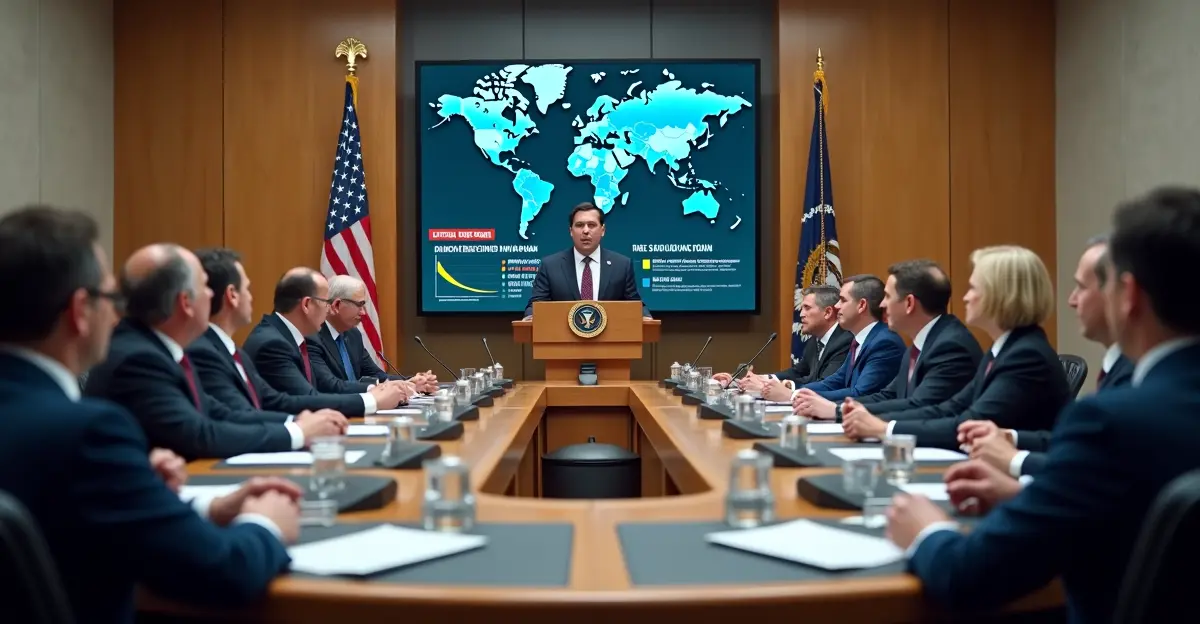
In February 2026, the US State Department launched the Forum on Resource Geostrategic Engagement (FORGE) as the successor to the Minerals Security Partnership. FORGE is a plurilateral coalition aimed at creating a preferential trade-and-investment zone for critical minerals, with coordinated price floors to counter adversarial market manipulation. The inaugural Critical Minerals Ministerial in Washington, DC, drew representatives from 54 countries and produced eleven new bilateral framework agreements—with Argentina, Morocco, Peru, the Philippines, the UAE, the UK, and others—bringing the total to 21 deals in five months. The administration has mobilized over $30 billion in investments and loans. FORGE is chaired by South Korea and aims to link disparate bilateral deals into a functioning system covering two-thirds of the global economy.
Complementing FORGE is Project Vault, a $12 billion public-private partnership creating a strategic minerals stockpile. Funded by a $10 billion EXIM loan and $2 billion in private capital, Project Vault allows companies to lock in fixed prices for minerals, protecting against supply disruptions and price volatility. Participating companies include GE Vernova, Clarios, and Boeing. However, challenges remain, including storage infrastructure needs and potential market destabilization risks.
EU's Critical Raw Materials Act and ReSourceEU
The European Union is advancing 60 Strategic Projects under the Critical Raw Materials Act (CRMA), which came into effect in May 2024. The CRMA sets 2030 benchmarks: 10% extraction, 40% processing, and 25% recycling within the EU, with no more than 65% of any strategic raw material sourced from a single third country. In March 2026, the Council of the EU adopted a position to reinforce supply security and circularity. The ReSourceEU Action Plan, announced by EC President Ursula von der Leyen, allocates up to €3 billion ($3.5 billion) in 2026 to fast-track strategic projects. Two priority projects received immediate support: Vulcan Energy's lithium extraction in Germany (€250 million from the EIB) and Greenland Resources' molybdenum mine. The plan also includes new scrap export restrictions on permanent magnets and aluminum, a ban on waste lithium-ion battery exports to non-OECD nations (September 2026), and the creation of a European Critical Raw Materials Centre modeled on Japan's JOGMEC. The EU aims to deepen partnerships with resource-rich countries, targeting Brazil next.
Africa: The New Battleground
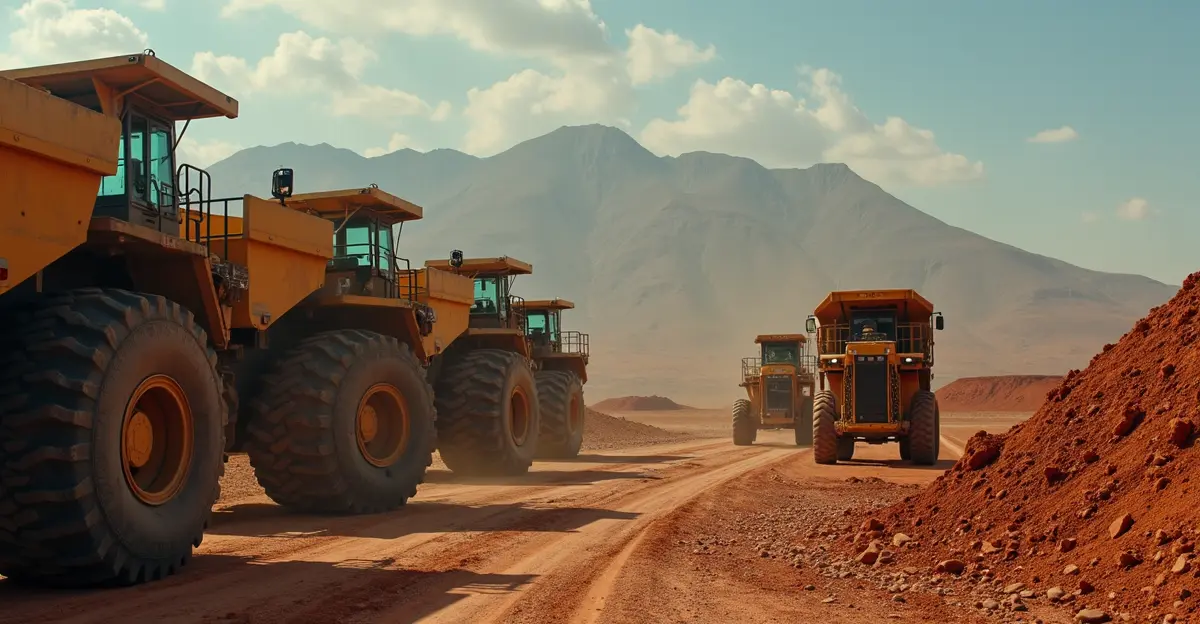
Africa has become a key theater in the critical minerals competition. China has invested $12.1 billion in African mining, while the US-backed Lobito Corridor—a $6-10 billion rail, port, and logistics program connecting the copper and cobalt heartlands of the Democratic Republic of Congo and Zambia to Angola's Atlantic port of Lobito—is now 71% complete. The 1,739-km Benguela Railway, rebuilt by China after Angola's civil war, is operated by a consortium of Trafigura, Mota-Engil, and Vecturis. Cargo volumes already exceed 200,000 tonnes, with a target of 4.6 million metric tonnes annually. The corridor reduces transit times from the Copperbelt to port from 45 days by truck to under 8 days by rail at 30% lower cost. It is a flagship project of the G7's Partnership for Global Infrastructure and Investment, with $753 million in DFC and DBSA financing closed in December 2025. The Lobito Corridor minerals represents a test of whether the West can build a competitive alternative to Chinese logistics.
Deep-Sea Mining: The Next Frontier
The race for critical minerals has also accelerated deep-sea mining debates. Polymetallic nodules on the ocean floor contain cobalt, nickel, manganese, and copper—metals critical for batteries and green technologies. The International Seabed Authority (ISA) is working to finalize mining regulations, but nations and companies are pushing for fast-track permits under the 'two-year rule,' which could allow exploitation to begin as early as 2026 even without finalized rules. The US has pushed ahead with deep-sea mining apart from international rules, while environmental scientists warn that not enough is known about the deep ocean's ecosystems. The deep sea mining 2026 debate pits the urgent demand for minerals against the precautionary principle, with no easy resolution in sight.
Military Strategy and Resource Dependencies
Critical minerals have become integral to national defense. The Fiscal Year 2026 National Defense Authorization Act (NDAA), a $900 billion defense package signed in December 2025, elevates rare earths from industrial commodities to strategic national security assets. The bill expands Defense Production Act financing to accelerate domestic rare earth mining and refining, funding the full 'mine-to-magnet' lifecycle to build a fully domestic supply chain by 2027. Defense applications—F-35 jets, submarines, missiles, and radar systems—rely on rare earth magnets. Global defense spending has surpassed $2.6 trillion, and mineral supply security is now a core component of industrial policy. The defense critical minerals strategy is reshaping how militaries plan for conflict, with resource dependencies becoming a potential vulnerability.
Expert Perspectives
'The window for the West to build alternative supply chains is narrowing to 12-18 months,' warns a senior analyst at the Atlantic Council. 'If we don't act now, we risk accepting prolonged vulnerability to Chinese export controls.' Meanwhile, resource nationalism is on the rise: Indonesia, Chile, and the DRC have imposed export controls and nationalized assets, creating a cartel-like dynamic that further complicates Western efforts. Saudi Arabia, with an estimated $2.5 trillion in mineral reserves, and the UAE are emerging as new players, adding another layer to the multipolar contest.
FAQ
What are critical minerals?
Critical minerals are raw materials essential to modern economies—especially for energy, defense, and technology—whose supply is at risk due to limited availability or geopolitical factors. They include lithium, cobalt, rare earths, gallium, germanium, and others.
Why is China's dominance in critical minerals a concern?
China controls over 80% of rare earth processing and significant shares of lithium, cobalt, and other mineral refining. This concentration gives Beijing leverage to impose export controls, as seen with gallium and germanium in 2024-2025, disrupting global supply chains for semiconductors, defense, and renewable energy.
What is FORGE?
The Forum on Resource Geostrategic Engagement (FORGE) is a US-led plurilateral coalition launched in February 2026 to create a preferential trade-and-investment zone for critical minerals, with coordinated price floors to counter market manipulation. It succeeds the Minerals Security Partnership.
How is the EU responding to critical mineral dependencies?
The EU's Critical Raw Materials Act sets targets for domestic extraction, processing, and recycling, while the ReSourceEU Action Plan allocates €3 billion to fast-track strategic projects. The EU also aims to diversify supply through partnerships with resource-rich countries like Brazil.
What is the Lobito Corridor?
The Lobito Corridor is a Western-backed rail and logistics project connecting the DRC and Zambia's copper and cobalt regions to Angola's Atlantic port. It aims to provide a competitive alternative to Chinese-dominated supply routes, reducing transit times by over 80%.
Conclusion
The critical minerals race of 2026 is not merely an economic competition—it is a fundamental reshaping of global alliances, military strategies, and industrial policy. The West's ability to build resilient, diversified supply chains within the next 12-18 months will determine whether it can secure its technological and defense future. With China's processing dominance, resource nationalism in mineral-rich nations, and the opening of new frontiers like deep-sea mining, the stakes have never been higher. The new resource war is here, and its outcome will define the geopolitical landscape for decades to come.

Follow Discussion