


 Deutsch
 English
 Español
 Français
 Nederlands
 Português


 Share
Share




The New Frontline of US-China Conflict
In early 2026, the global race for rare earth elements and critical minerals has escalated from policy debate into active confrontation. China's fresh export controls on rare earths, imposed in April 2025 in retaliation for US tariffs, have sent shockwaves through global supply chains. With China projected to control over 80% of refined rare earths and battery-grade graphite by 2035, according to the International Energy Agency (IEA), Western governments are scrambling to build sovereign processing capacity. The US-Australia Critical Minerals Framework, signed in October 2025, and the EU's Critical Raw Materials Act (CRMA) with 60 strategic projects represent the most ambitious efforts yet to break China's stranglehold. But the path to diversification is fraught with multi-year timelines, massive capital requirements, and a fragmented investment landscape.
China's Grip on Rare Earth Processing
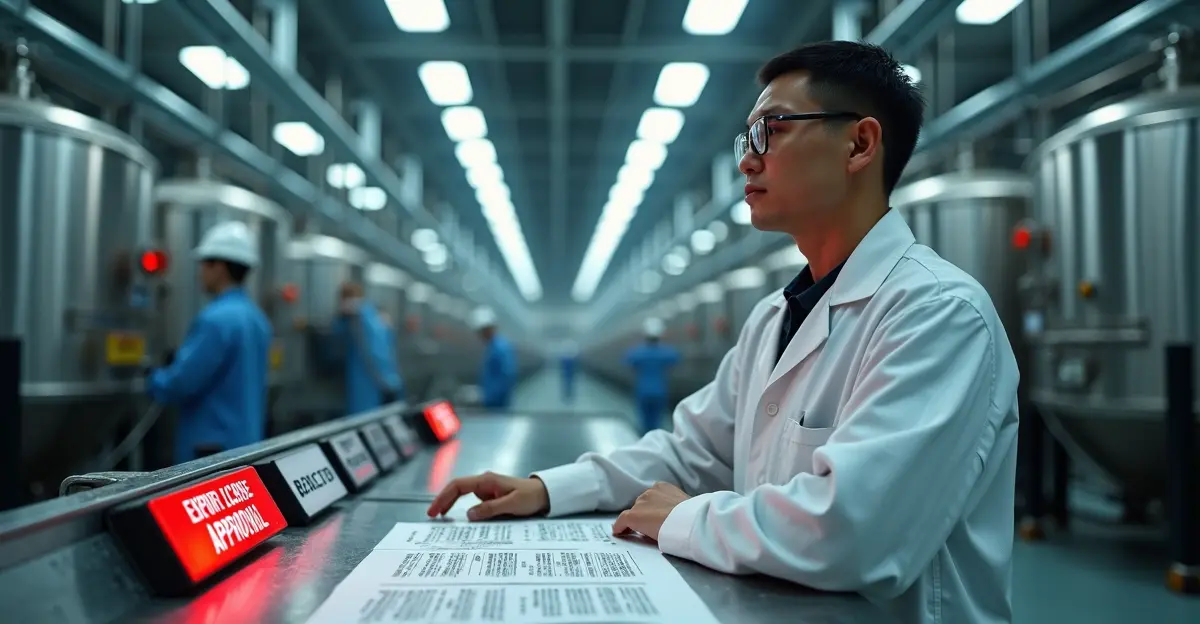
China currently controls approximately 90% of global rare earth refining capacity, a dominance built over decades of strategic investment and policy support. The April 2025 export controls, announced under China's Ministry of Commerce Notice No. 61, introduced new licensing requirements for seven medium and heavy rare earth elements—samarium, gadolinium, terbium, dysprosium, lutetium, scandium, and yttrium—including their oxides, alloys, and compounds. All exports now require a MOFCOM license, with processing taking up to 45 working days. European customers must provide detailed end-use documentation, adding bureaucratic hurdles that have already slowed deliveries.
The timing is no coincidence. As the US-China technology conflict deepens, rare earths have become a strategic weapon. China's dominance is not just in mining—where it holds 69% of global production—but in the complex, capital-intensive refining processes that turn raw ore into usable metals. The IEA warns that without massive public investment, China's share of global refining will remain above 76% through 2035. A separate study by the Chinese Academy of Sciences, however, projects a sharper decline to 28% by 2035, citing new discoveries in Africa, South America, and Australia. The divergence in forecasts underscores the uncertainty facing policymakers.
Western Countermeasures: Frameworks and Funding
The US-Australia Framework
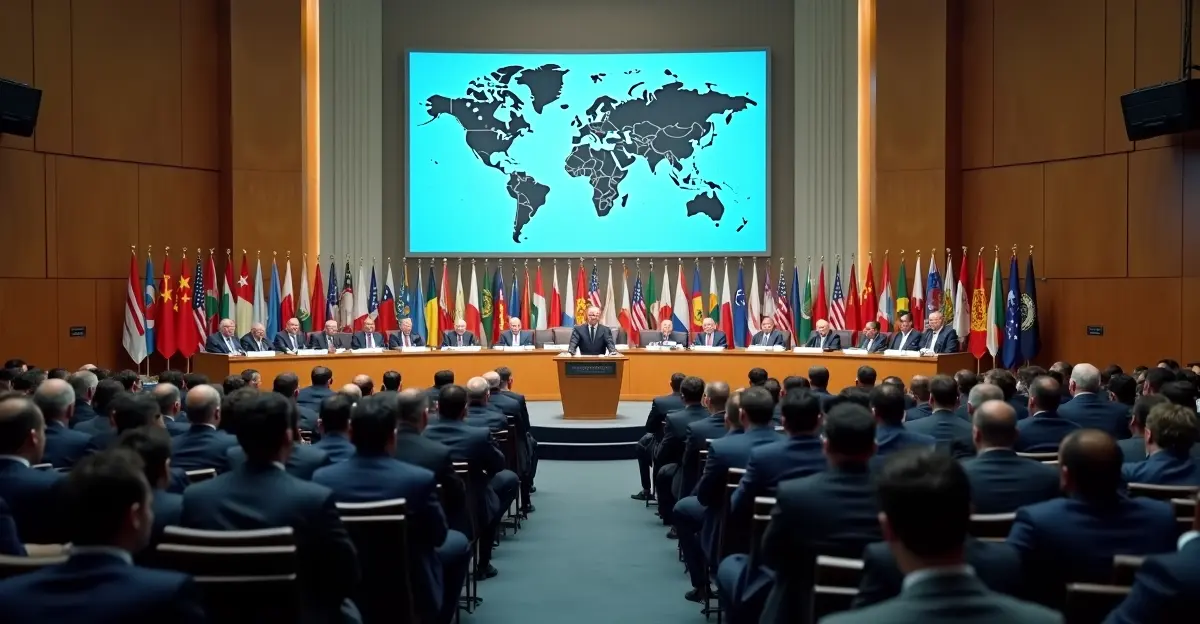
On October 20, 2025, US President Donald Trump and Australian Prime Minister Anthony Albanese signed the United States-Australia Framework for Securing Supply in the Mining and Processing of Critical Minerals and Rare Earths. The non-binding agreement mobilizes at least $1 billion in joint investments, streamlines permitting, establishes price mechanisms to counter unfair trade practices, and creates a Critical Minerals Supply Security Response Group. A Mining, Minerals and Metals Investment Ministerial is to be convened within 180 days. The framework aims to accelerate diversified, secure, and fair markets—but critics note that $1 billion is a fraction of the estimated $10-15 billion needed to build a fully integrated Western rare earth supply chain.
The EU's Critical Raw Materials Act
The European Union has taken a more regulatory approach. The CRMA, adopted in 2024, designates strategic projects to enhance EU capacity in extracting, processing, and recycling strategic raw materials. In March 2025, the European Commission approved 60 strategic projects covering 14 critical raw materials, including rare earth elements, lithium, graphite, and cobalt. The second call for applications closed on January 15, 2026. In parallel, the ReSourceEU Action Plan allocates up to €3 billion ($3.5 billion) in 2026, including €250 million to Vulcan Energy's German lithium project and support for Greenland Resources' molybdenum mine. The EU also plans new export restrictions on scrapped permanent magnets and waste lithium-ion batteries from 2026, and will establish a European Critical Raw Materials Centre modeled on Japan's JOGMEC for joint purchasing and stockpiling.
However, the EU remains highly vulnerable. A European Parliamentary Research Service briefing from January 2025 warns that the bloc's reliance on Chinese imports for rare earths is near-total, and diversification efforts face significant technical and financial hurdles. The EU Critical Raw Materials Act 2025 sets ambitious 2030 benchmarks: 10% of extraction, 40% of processing, and 25% of recycling of strategic raw materials from domestic sources. Achieving these targets will require unprecedented coordination between member states and private industry.
Economic Ripple Effects of Supply Chain Fragmentation
The fragmentation of critical mineral supply chains is already imposing significant costs. A World Economic Forum report from June 2026 estimates that geoeconomic fragmentation is costing the global economy $213–$307 billion annually, adding 0.2-0.3% to global inflation. In a worst-case decoupling scenario, losses could reach $6.9 trillion. Emerging markets face GDP declines of up to 10.7%. China's weaponization of rare earth processing has triggered sixfold price spikes for some elements, while licensing approvals for Western firms have fallen below 25%.
In response, the US has launched the 54-nation FORGE Alliance, backed by over $30 billion in commitments. Analysts outline three strategic paths for Western economies: managed dependence, costly independence (20-30 years, trillions in cost), or hybrid resilience—combining stockpiles, diversified allied sourcing, recycling, and targeted domestic production. The hybrid approach appears most feasible in the near term, but requires sustained political will and private sector engagement.
The global economic impact of rare earth supply chains extends beyond defense and high-tech. Electric vehicle manufacturers, wind turbine producers, and consumer electronics companies all face rising costs and supply uncertainty. The rare earths market itself is projected to grow from $3.55 billion in 2026 to $5.94 billion by 2035, according to Business Research Insights, driven by EV and renewable energy adoption. Neodymium and dysprosium alone account for approximately 45% of REE consumption in permanent magnets.
Expert Perspectives
"China's export controls are a wake-up call for the West," says Dr. Maria Santos, a critical minerals analyst at the Center for Strategic and International Studies. "We have talked about diversification for years, but the investment gap remains enormous. The US-Australia framework and the EU's CRMA are steps in the right direction, but they need to be scaled up by an order of magnitude."
Industry leaders echo the urgency. Lynas Rare Earths, the only non-Chinese producer of separated heavy rare earths, has expanded its Australian processing facilities but still accounts for less than 10% of global capacity. MP Materials, which operates the Mountain Pass mine in California, sends its concentrate to China for processing—a vulnerability the company is working to address with a new US-based refinery expected online by 2027.
FAQ
What are rare earth elements and why are they important?
Rare earth elements are a set of 17 metals essential for permanent magnets, electric vehicle motors, wind turbines, defense systems, and consumer electronics. Despite their name, they are relatively abundant in the Earth's crust but difficult and costly to refine.
Why does China dominate rare earth processing?
China invested heavily in rare earth refining technology and infrastructure over the past three decades, while Western countries allowed their processing capacity to atrophy. Today, China controls about 90% of global refining, giving it significant leverage over supply chains.
What are the US and EU doing to reduce dependence on China?
The US-Australia Critical Minerals Framework (October 2025) mobilizes $1 billion for joint projects, while the EU's Critical Raw Materials Act designates 60 strategic projects and allocates €3 billion in 2026. Both aim to boost domestic mining, processing, and recycling capacity.
How long will it take to build Western rare earth processing capacity?
Analysts estimate 10-20 years and trillions of dollars to achieve full independence. Near-term hybrid strategies—combining stockpiles, allied sourcing, recycling, and targeted domestic production—are more realistic but require sustained political will.
What are the economic consequences of supply chain fragmentation?
A WEF report estimates annual losses of $213–$307 billion from geoeconomic fragmentation, with rare earth price spikes and supply disruptions contributing to inflation and slowing the green energy transition.
Conclusion: A Race Against Time
The rare earths reckoning of 2026 marks a pivotal moment in global geopolitics. China's export controls have transformed critical minerals from a niche industrial concern into a central front of US-China competition. Western governments have responded with frameworks and funding, but the gap between ambition and reality remains wide. The next five years will determine whether the West can build a viable alternative to Chinese dominance—or whether the global economy will remain hostage to Beijing's strategic calculus. As the IEA has warned, market forces alone will not suffice. Targeted public investment, international cooperation, and a willingness to accept higher costs for strategic autonomy are essential. The clock is ticking.


Follow Discussion