


 Deutsch
 English
 Español
 Français
 Nederlands
 Português


 Share
Share




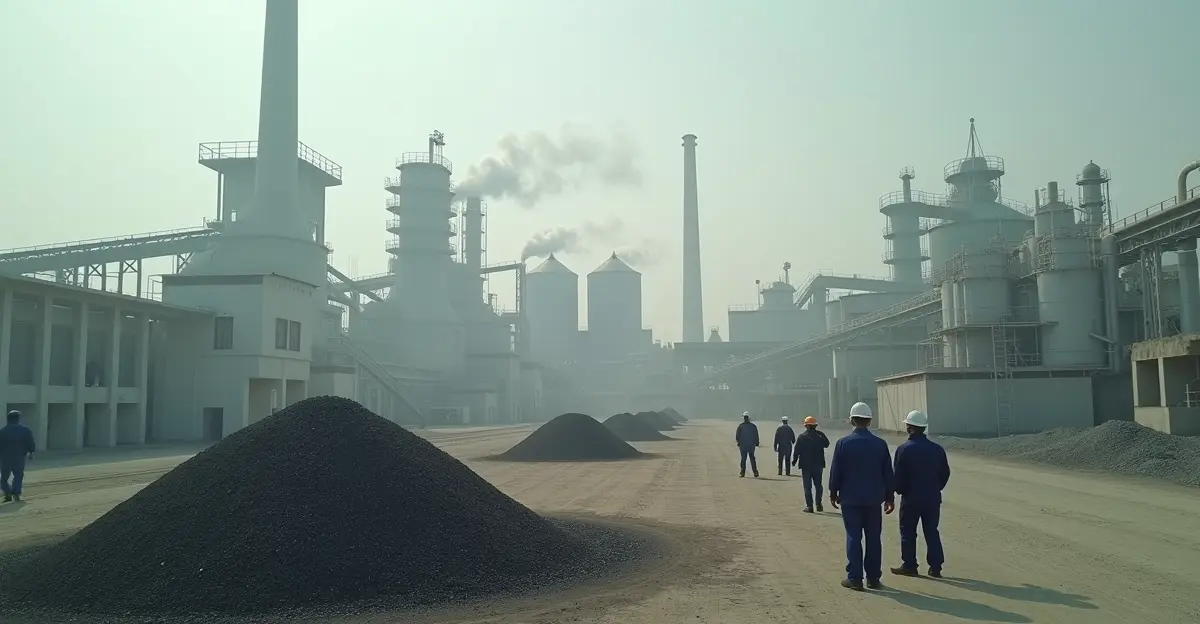
China's stranglehold on global rare earth processing — controlling roughly 90% of refining capacity and 80% of tungsten supply — has transformed into a potent geopolitical weapon in 2026. Since tightening export controls in October 2025, Beijing has triggered sixfold price spikes for key minerals outside its borders, while licensing approval rates for European firms have fallen below 25%. As Western nations confront a narrowing 12-to-18-month window to build alternative supply chains, the strategic weaponization of mineral dependency is reshaping global trade, defense, and green energy markets.
China's Dominance and the 15th Five-Year Plan
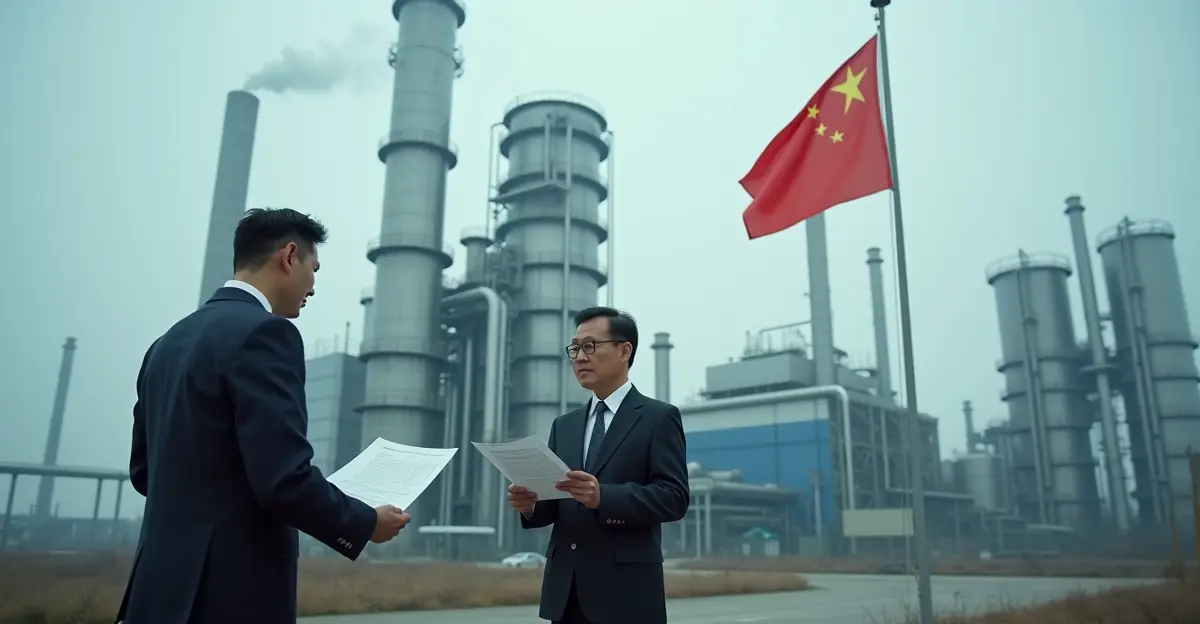
China's 15th Five-Year Plan (2026–2030), unveiled in March 2026, explicitly prioritizes global leadership in rare earth elements. The plan calls for expanded domestic exploration, upgraded processing technology, and tighter integration of mine-to-magnet supply chains. Beijing has invested an estimated $57 billion in critical minerals since 2000, compared to roughly $2 billion combined by the United States and Europe, according to industry analysis. This decades-long investment strategy now pays geopolitical dividends.
The October 2025 export controls cover 12 of 17 rare earth elements, creating a licensing system that differentiates approvals based on political alignment rather than market signals. Neodymium-praseodymium oxide, essential for permanent magnets in electric vehicles and wind turbines, surged from $80 per kilogram in 2024 to over $480 per kilogram in early 2026 — a sixfold increase. Tungsten prices followed a similar trajectory, with ammonium paratungstate rising over 200% in 2025 alone, according to Fastmarkets data. The US critical minerals strategy has scrambled to respond.
The EU's Critical Raw Materials Act and ReSourceEU
The European Union's Critical Raw Materials Act, adopted in 2024, set ambitious targets: 10% of annual consumption from domestic mining, 40% from processing within the EU, and 25% from recycling by 2030. However, implementation has lagged. In December 2025, the European Commission adopted the ReSourceEU Action Plan, allocating €3 billion ($3.5 billion) for 2026 to fast-track strategic projects. The plan includes a new European Critical Raw Materials Centre, modeled on Japan's JOGMEC, to coordinate stockpiling and joint purchasing.
Yet funding shortfalls persist. A Reuters analysis from January 2026 warned that Europe is falling behind in the critical minerals race, with permitting delays, high energy costs, and limited domestic reserves hampering progress. The EU's reliance on Chinese supply chains remains above 80% for many rare earth materials, creating acute vulnerability for defense, EV, and renewable energy sectors. The EU Critical Raw Materials Act progress remains uneven across member states.
US-Australia Partnership and the DRC Agreement
The United States has pursued bilateral partnerships as its primary diversification strategy. In October 2025, Washington and Canberra signed a landmark Framework for Securing Supply Chains in Critical Minerals and Rare Earths, committing at least $1 billion in financing each. By March 2026, the U.S. had provided $2.2 billion and Australia $1.4 billion across projects spanning rare earths, gallium, nickel, graphite, tungsten, and magnesium. A new Critical Minerals Supply Security Response Group now coordinates on priority minerals and supply chain vulnerabilities.
In Africa, the U.S. signed a Strategic Partnership Agreement with the Democratic Republic of the Congo in December 2025, granting American companies preferential access to the DRC's Strategic Asset Reserve. The DRC holds vast deposits of cobalt, lithium, and tantalum, though ongoing conflict in eastern provinces poses security risks. The Sakania-Lobito Corridor infrastructure project aims to connect DRC mines to Atlantic ports. The US-Australia critical minerals framework and the DRC deal represent pillars of Washington's strategy.
Transatlantic Cooperation and Emerging Fractures
In April 2026, the EU and U.S. launched a formal critical minerals partnership through a Memorandum of Understanding and Action Plan. The initiative spans the full value chain — exploration, extraction, processing, recycling, and substitution — targeting batteries, EVs, semiconductors, clean energy, and defense technologies. Key mechanisms include coordinated market-support measures such as reference pricing, price-gap subsidies, and long-term offtake agreements to make non-Chinese projects commercially viable.
However, transatlantic fractures persist. The U.S. Inflation Reduction Act's tax credit eligibility for EU-processed minerals remains unresolved, creating uncertainty for investors. Meanwhile, the Trump administration's January 2026 proclamation adjusting imports of processed critical minerals under Section 232 threatens to impose tariffs on allies if satisfactory supply chain deals are not reached. The transatlantic critical minerals partnership must navigate these tensions to succeed.
The 12-to-18-Month Window
The World Economic Forum's 2026 Global Risks Report identifies geoeconomic confrontation as the top global risk, with critical minerals at the epicenter. Western independent processing projects — including Lynas Rare Earths' Kalgoorlie facility in Australia and MP Materials' Mountain Pass operations in California — are scaling up but will not reach sufficient capacity until at least 2028. China's strategy of operating below commercial break-even for years makes competing purely on price nearly impossible.
For corporate strategists, the structural exposure is embedded in cost models, R&D roadmaps, and ESG commitments across all decarbonization portfolios. Every wind turbine, EV, and fighter jet relies on materials China controls. The 12-to-18-month window to build meaningful alternative supply chains is narrowing rapidly, and early 2026 represents an urgent inflection point.
Expert Perspectives
China is not creating permanent scarcity — it is using reversible restrictions to maintain pricing power and extract strategic concessions, notes a senior analyst at the Center for Strategic and International Studies. The West must match China's long-term investment horizon or accept prolonged vulnerability.
European Commission President Ursula von der Leyen has called the ReSourceEU plan a roadmap to strategic autonomy, but critics argue the €3 billion allocation is insufficient given China's decades-long, $57 billion head start.
FAQ
What are rare earth elements and why are they critical?
Rare earth elements are 17 metals essential for permanent magnets in EVs, wind turbines, defense systems, and electronics. Despite their name, they are relatively abundant but difficult and costly to process.
How much of global rare earth processing does China control?
China controls approximately 90% of global rare earth processing capacity and 99% of heavy rare earth refining, according to industry data.
What triggered the 2025-2026 price spikes?
China's October 2025 export controls covering 12 rare earth elements, combined with reduced mining quotas and a licensing system that limits approvals for Western firms, caused neodymium-praseodymium oxide prices to rise sixfold.
Can the West build alternative supply chains in time?
Analysts estimate a 12-to-18-month window before China's dominance becomes entrenched for another decade. Current projects won't reach scale until 2028-2030, making the window extremely tight.
What is the EU doing to reduce dependency?
The EU's Critical Raw Materials Act and ReSourceEU Action Plan allocate €3 billion for 2026, including a new European Critical Raw Materials Centre for stockpiling and joint purchasing, plus partnerships with resource-rich countries.
Conclusion and Future Outlook
China's 15th Five-Year Plan will further cement its mineral dominance through 2030, while US tariff volatility and EU funding shortfalls create an urgent inflection point in early 2026. The outcome of this window will determine whether the West can achieve any meaningful supply chain diversification — or whether resource leverage becomes a permanent tool of geopolitical influence in the new era of geoeconomic confrontation.




Follow Discussion