


 Deutsch
 English
 Español
 Français
 Nederlands
 Português


 Share
Share




China's calibrated export controls on rare earths and critical minerals, tightened through 2025 and 2026, have triggered price surges of up to sixfold for key elements like dysprosium and terbium, while licensing approval rates for European firms have fallen below 25%. With Beijing controlling 90% of global rare earth processing and over 80% of European companies dependent on its supply chains, the Western response through the U.S. Critical Minerals Ministerial and the EU Critical Raw Materials Act faces a narrowing 12-18 month window to build viable alternatives. This article analyzes the strategic calculus behind Beijing's weaponization of mineral access, the operational impact on defense, EV, and renewable energy sectors, and whether emerging alliances with Australia, Ukraine, and the DRC can meaningfully diversify supply before 2030.
Background: China's Dominance and the 2025-2026 Export Control Regime
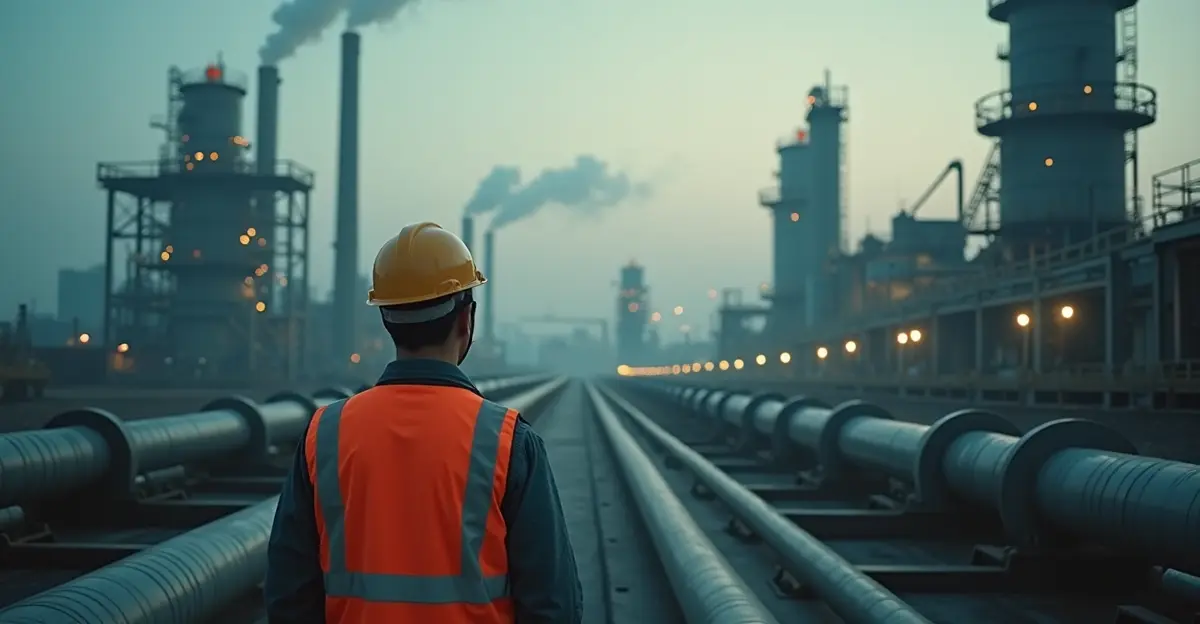
China has long dominated the global rare earth supply chain, accounting for roughly 90% of refined rare earth oxides and a commanding share of tungsten (80%) and antimony (60%). In October 2025, China's Ministry of Commerce (MOFCOM) announced further export controls on rare earth elements and related products, equipment, and technologies, requiring foreign companies to obtain licenses for any parts, components, or assemblies containing Chinese-sourced rare earth materials. The controls explicitly targeted dysprosium and terbium — two heavy rare earth elements indispensable for high-performance permanent magnets used in electric vehicle motors, wind turbine generators, and advanced defense systems like missile guidance and radar.
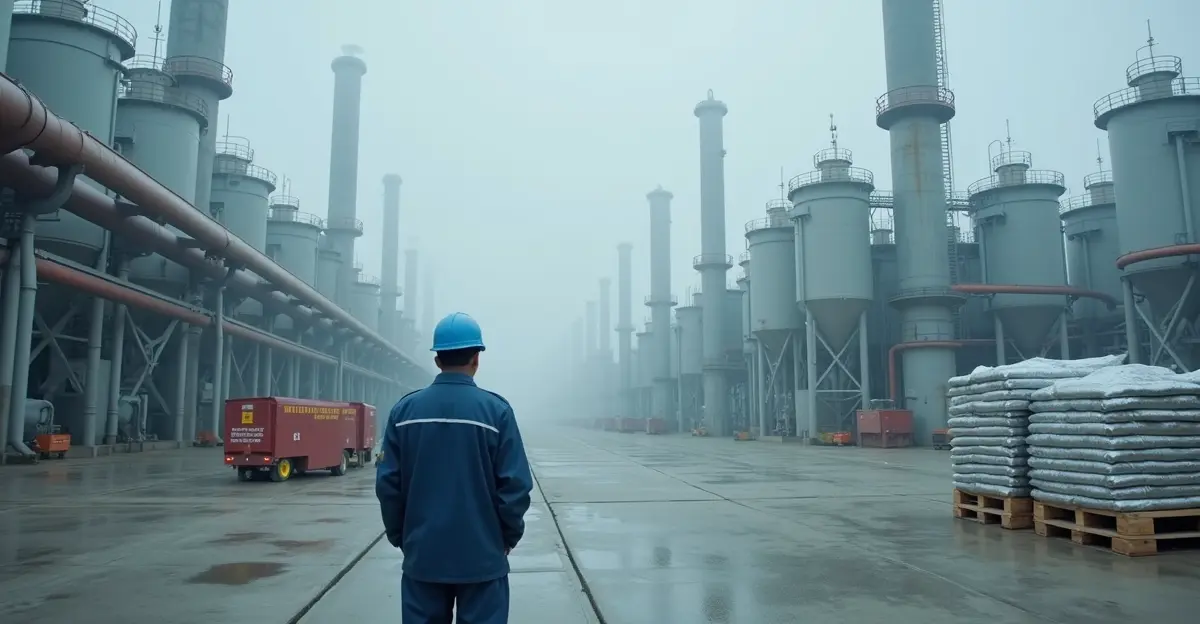
The phased rollout was designed for maximum strategic impact. By early 2026, monthly dysprosium export volumes had collapsed by 80% compared to pre-control levels, falling to just 3.5 tonnes. The EU Critical Raw Materials Act had set ambitious benchmarks for domestic processing capacity, but implementation lagged as European firms faced approval rates below 25% for export licenses from Beijing. The IEA noted that supply concentration risks had become a stark reality, with global markets now acutely vulnerable to administrative discretion rather than production capacity.
Price Surges and Sectoral Impact
Dysprosium and Terbium: Sixfold Price Spikes
By February 2026, prices for dysprosium oxide had surged from approximately $150 per kilogram in early 2025 to over $900 per kilogram — a sixfold increase. Terbium followed a similar trajectory, rising from $800 per kilogram to nearly $5,000. These price shocks reverberated through global supply chains, particularly affecting manufacturers of electric vehicles, wind turbines, and defense equipment who rely on neodymium-iron-boron (NdFeB) magnets containing dysprosium and terbium for high-temperature stability.
Defense, EV, and Renewable Energy Sectors
The operational impact has been severe. Western defense contractors face delays in producing precision-guided munitions, night-vision goggles, and laser systems that require rare earth magnets. The EV industry, already grappling with battery material costs, now confronts motor supply bottlenecks. Wind turbine manufacturers, particularly those producing direct-drive turbines for offshore wind farms, have seen project timelines stretch as magnet supplies tighten. The U.S. Critical Minerals Ministerial 2026 convened in February 2026 to coordinate a multilateral response, with Secretary of State Marco Rubio and Vice President JD Vance leading delegations from 54 countries.
Western Response: FORGE, the EU Critical Raw Materials Act, and Bilateral Deals
The 2026 Critical Minerals Ministerial and FORGE
On February 4, 2026, the U.S. Department of State hosted the 2026 Critical Minerals Ministerial, announcing the launch of FORGE (Forum on Resource Geostrategic Engagement) as the successor to the Minerals Security Partnership (MSP), chaired by the Republic of Korea. The U.S. signed 11 new bilateral critical minerals frameworks or MOUs with countries including Argentina, Morocco, the Philippines, and the UAE, bringing the total to 21 deals in five months. Vice President Vance outlined reference prices maintained through adjustable tariffs to stabilize long-term mining investments. The U.S. government mobilized over $30 billion in financing for critical mineral projects, including the Export-Import Bank's $10 billion Project Vault initiative to establish a domestic strategic reserve.
EU Critical Raw Materials Act and RESourceEU
The European Commission adopted the RESourceEU Action Plan in December 2025, building on the Critical Raw Materials Act. Over the next twelve months, €3 billion in EU funding will be made available for specific projects, aimed at accelerating EU-relevant projects through financial de-risking tools. A European Critical Raw Materials Centre will be established in early 2026 to provide market intelligence, finance strategic projects, and manage supply chains including joint purchasing and stockpiling. The plan includes monitoring, crisis coordination, and defenses against hostile interference, with export restrictions on permanent magnet scrap and potential export duties on aluminium and copper scrap.
Emerging Alternative Supply Chains: Australia, Ukraine, and the DRC
Australia: The Lynas Expansion and US-Australia Framework
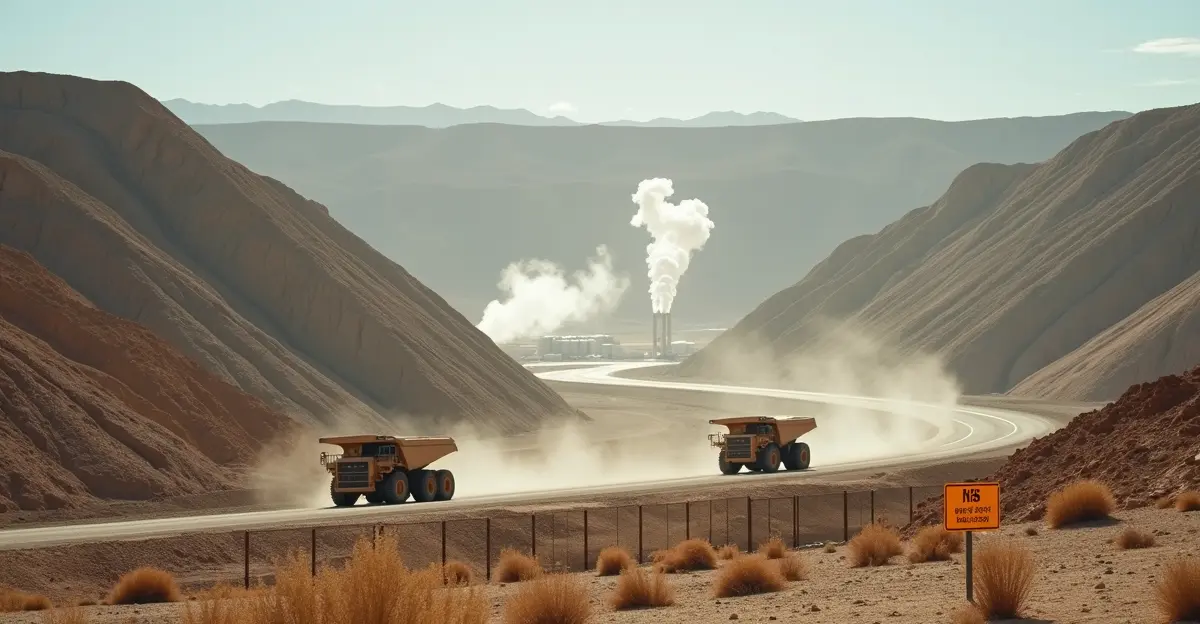
Australia has emerged as the most advanced Western alternative. Lynas Rare Earths operates the only significant non-Chinese rare earth processing facility in Malaysia and is expanding its Kalgoorlie and Mt Weld operations. In October 2025, the U.S. and Australia signed a Framework for Securing of Supply in the Mining and Processing of Critical Minerals and Rare Earths, followed by the inaugural Mining, Minerals and Metals Investment Ministerial in Tokyo on March 14, 2026. However, even with accelerated timelines, new processing capacity is not expected to reach meaningful scale before 2028-2030.
Ukraine: Strategic Potential Hampered by War
Ukraine holds significant deposits of lithium, graphite, manganese, titanium, and rare earths. The Ukraine–United States Mineral Resources Agreement, signed on April 30, 2025, established a jointly-owned Reconstruction Investment Fund capitalized by 50% of royalties from future resource extraction. However, key challenges remain: outdated Soviet-era geological surveys, degraded energy infrastructure, and ongoing Russian occupation of resource-rich eastern regions including two of four lithium reserves. The Ukraine critical minerals deal 2025 depends on lasting peace and stable investment conditions, which remain uncertain.
DRC: Cobalt and the Lobito Corridor
The Democratic Republic of Congo dominates global cobalt production, a critical mineral for EV batteries. In December 2025, the U.S. and DRC signed a critical minerals agreement, followed by a tripartite MOU between Entreprise Générale du Cobalt (EGC), Trafigura, and EVelution Energy to establish a direct U.S.–DRC cobalt supply chain. EVelution's Arizona facility, set to be the first commercial-scale cobalt refinery in the U.S., would produce up to 40% of projected U.S. cobalt demand. Construction is expected to begin in early 2027 with completion by end of 2029 — well beyond the 12-18 month window for near-term relief.
Expert Perspectives
"China's export controls are not a temporary measure but a structural shift in global mineral governance," said Dr. Sarah O'Connor, senior fellow at the Center for Strategic and International Studies. "The 12-18 month window for Western alternatives is extremely tight. Even with FORGE and the EU's RESourceEU plan, we are looking at 2028 at the earliest for meaningful non-Chinese processing capacity."
European Commission Vice President Maroš Šefčovič, speaking at the RESourceEU launch, stated: "We cannot afford to be caught in a dependency trap again. The Critical Raw Materials Act and our partnerships with like-minded countries are our insurance policy against coercion."
FAQ
What are China's 2025-2026 export controls on critical minerals?
China's Ministry of Commerce imposed new export licensing requirements on rare earth elements, including dysprosium and terbium, and related products, equipment, and technologies. Foreign companies must obtain licenses for any items containing Chinese-sourced rare earth materials. Approval rates for European firms have fallen below 25%.
Why did prices for dysprosium and terbium surge sixfold?
China controls 90% of global rare earth processing. The export controls drastically reduced supply availability — dysprosium exports fell 80% month-over-month — while demand from EV, wind turbine, and defense sectors remained strong, causing prices to spike from ~$150/kg to over $900/kg for dysprosium oxide.
What is FORGE and how does it differ from the Minerals Security Partnership?
FORGE (Forum on Resource Geostrategic Engagement) is the successor to the Minerals Security Partnership, launched at the February 2026 Critical Minerals Ministerial. It aims to create a preferential trade-and-investment zone with coordinated price floors to counter market manipulation, chaired by the Republic of Korea.
Can Australia, Ukraine, and the DRC replace China's supply?
Not in the near term. Australia's Lynas expansion and new projects in Ukraine and the DRC face timelines of 2028-2030 for meaningful output. Even combined, they currently lack the processing capacity to replace China's 90% market share. The 12-18 month window for building alternatives is extremely challenging.
What is the EU Critical Raw Materials Act?
Adopted in 2024 and operationalized through the 2025 RESourceEU Action Plan, the Act sets benchmarks for domestic mining, processing, and recycling of critical raw materials. It aims to ensure that by 2030, the EU can extract 10%, process 40%, and recycle 15% of its annual consumption of strategic raw materials.
Conclusion: A Narrowing Window
China's calibrated weaponization of critical mineral access has reshaped global supply chains with surgical precision. The Western response — through FORGE, the EU Critical Raw Materials Act, and bilateral deals with Australia, Ukraine, and the DRC — represents the most coordinated effort in decades to break dependency. Yet the 12-18 month window to build viable alternatives is daunting. Without accelerated investment, streamlined permitting, and technological breakthroughs in recycling and substitution, the world may face a prolonged period of supply chain vulnerability that extends well beyond 2030.


Follow Discussion