


 Deutsch
 English
 Español
 Français
 Nederlands
 Português


 Share
Share




In early 2026, China tightened its grip on the global rare earth market by implementing a new export licensing regime covering seven heavy rare earth elements — samarium, gadolinium, terbium, dysprosium, lutetium, scandium, and yttrium — along with their compounds and neodymium-iron-boron (NdFeB) magnets containing dysprosium or terbium. The move, enforced under MOFCOM Announcement No. 18, requires licenses that take 10 to 16 weeks to process, with approval rates for European firms reportedly falling below 25%. This rare earth checkmate has exposed the West's acute processing bottleneck, as Beijing controls roughly 90% of global rare earth refining and 65% of lithium processing. The U.S. response — 'Project Vault,' a $12 billion strategic stockpile paired with over $30 billion in minerals project financing — and the EU's newly enforced Critical Raw Materials Act represent the opening gambits of a multi-decade strategic competition. This article analyzes why control over mid-stream processing, not just mining rights, is the decisive battleground for energy transition security, and why analysts warn the West has a narrowing 12- to 18-month window to build alternative supply lines before vulnerability becomes structural.
China's 2026 Export Controls: A Strategic Squeeze
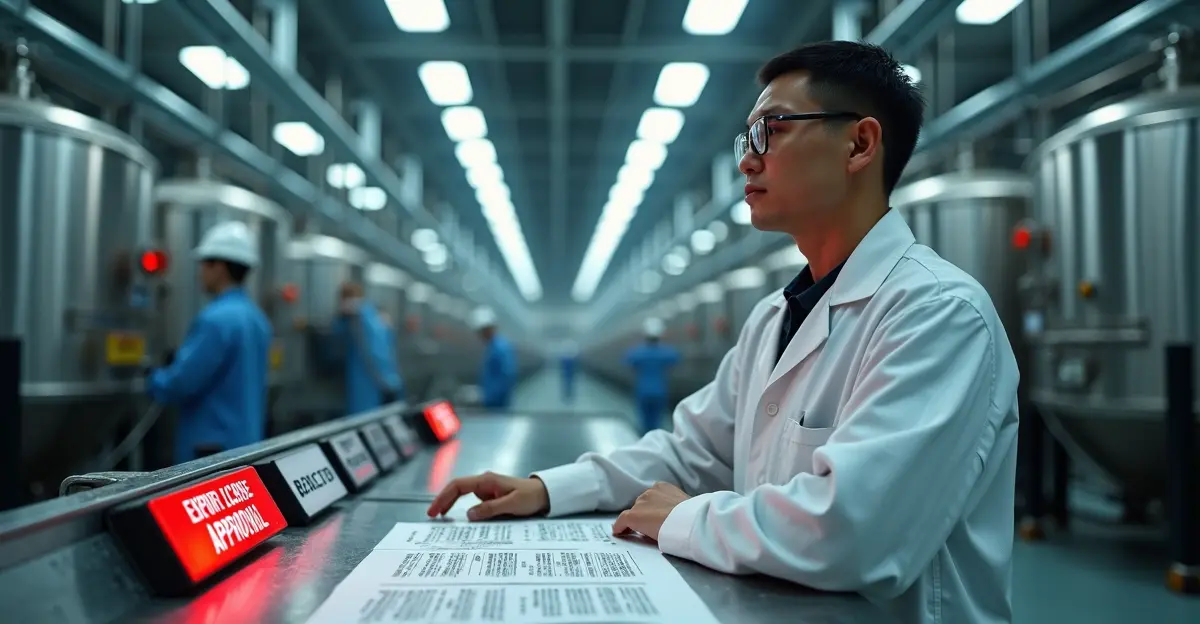
China's updated export licensing catalogue, effective from early 2026, marks a significant escalation in its control over critical minerals. The regulations target seven heavy/medium-heavy rare earths and their compounds, as well as NdFeB magnets — essential components in electric vehicles (EVs), robotics, wind turbines, and defense systems. The licensing process is deliberately cumbersome: a best-case scenario of 10 weeks, extending up to 16 weeks with complications. This creates uncertainty for manufacturers worldwide. According to a multi-institutional analysis published in early 2026, China is weaponizing control rather than scarcity — using temporary, reversible restrictions to maintain pricing power and extract strategic concessions. The impact has been immediate: neodymium-praseodymium (NdPr) prices surged 37% to roughly $126/kg by April 2026, about 2.4 times January levels. Over 80% of European companies depend on Chinese supply chains for materials essential to defense, EVs, and renewable energy. The China rare earth export controls have sent shockwaves through global supply chains, forcing governments and industries to scramble for alternatives.
The Mid-Stream Processing Bottleneck
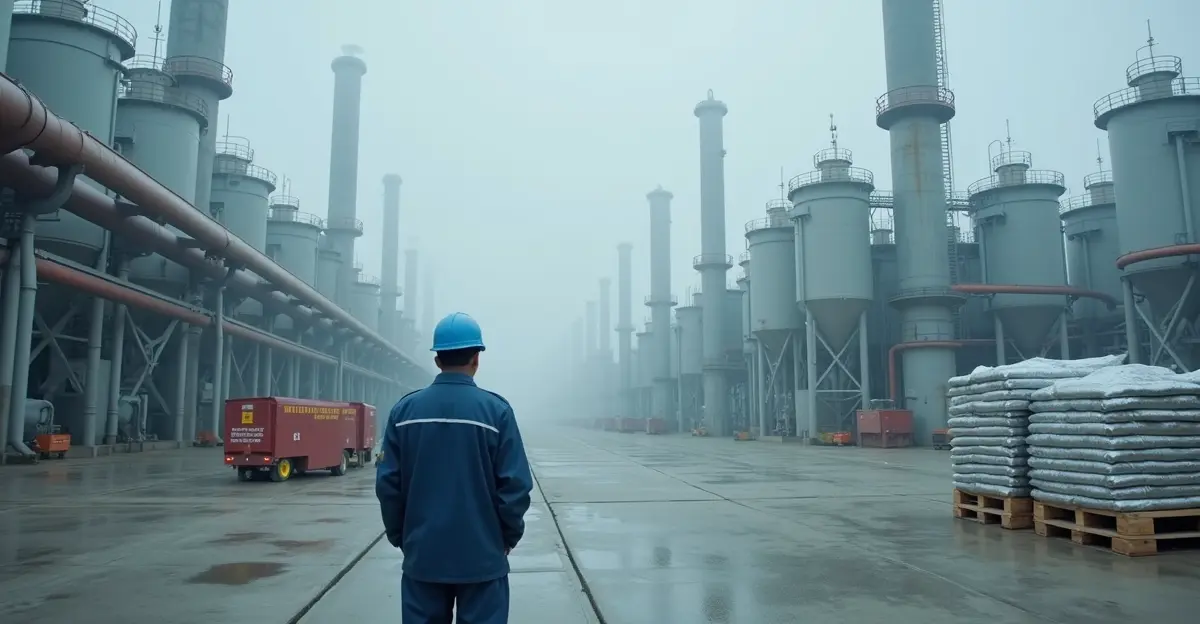
While much attention focuses on mining rights, the real bottleneck lies in mid-stream processing — the complex chemical separation and refining stages that transform raw ore into usable metals and magnets. China dominates this stage, controlling 90% of rare earth processing, 80% of tungsten, and 60% of antimony. Building equivalent capacity elsewhere is not a quick fix. Analysts estimate that establishing independent, full-spectrum processing supply chains would take 20 to 30 years — far exceeding the current geopolitical window. The rare earth processing bottleneck means that even if Western nations secure mining rights, they remain dependent on Chinese refineries. This structural vulnerability is the core of the rare earth checkmate.
Project Vault: America's $12 Billion Answer
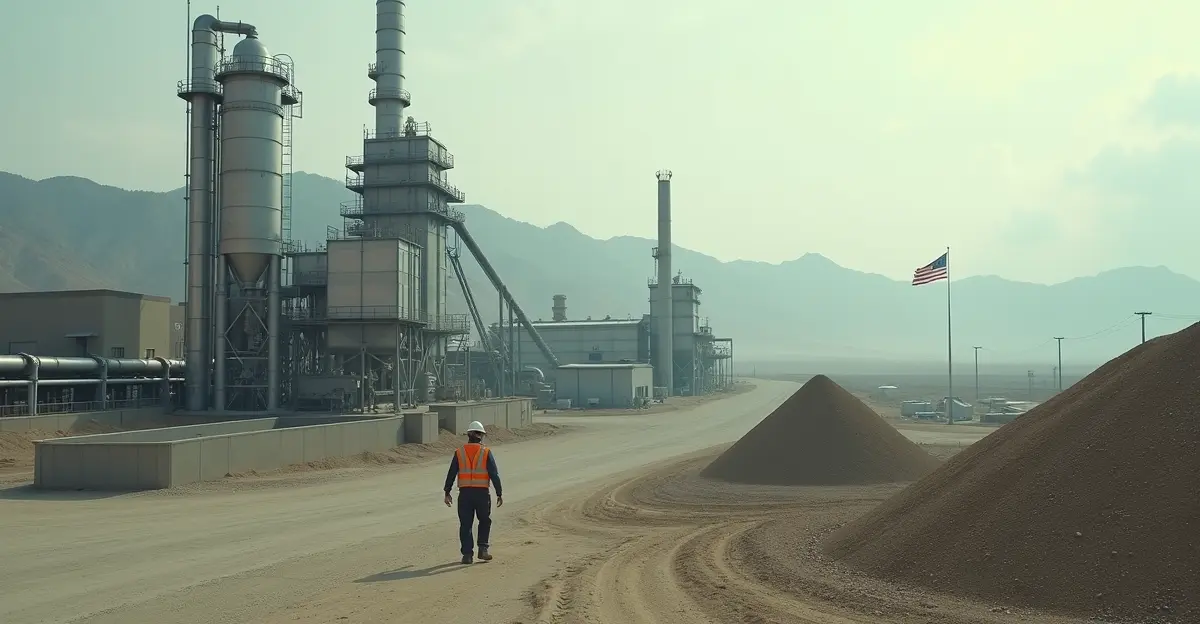
On February 2, 2026, U.S. President Donald Trump announced Project Vault, a $12 billion public-private initiative to stockpile critical minerals. The program combines a $10 billion loan from the U.S. Export-Import Bank with nearly $2 billion in private capital. Unlike the Strategic Petroleum Reserve, Project Vault is designed as insurance against systemwide supply shocks, with private firms paying subscription fees for access during disruptions. The stockpile will cover 60 highly differentiated minerals, including rare earths, lithium, cobalt, and graphite. However, experts caution that storing processed materials — not raw ore — is critical, as raw minerals require further processing that China still dominates. The program also includes over $30 billion in minerals project financing to boost domestic and allied mining and processing capacity. Stocks of U.S. rare earth miners surged on the announcement, with Critical Metals rising 10%, USA Rare Earth 11%, and MP Materials 4%. Yet the Project Vault strategic stockpile faces challenges: voluntary participation may exclude self-insuring large firms and unaware small enterprises, weakening the risk pool. Policy recommendations include mandatory participation with fees scaled to firm size and prioritizing processed materials over raw ore.
EU's Critical Raw Materials Act: Europe's Regulatory Gambit
The European Union's Critical Raw Materials Act (CRMA) entered enforcement in 2026, marking a parallel effort to reduce dependency on Chinese supplies. The CRMA sets benchmarks for domestic processing capacity, recycling rates, and supply diversification. It requires member states to identify strategic projects and streamline permitting for mining and processing facilities. The act also establishes a framework for joint purchasing of critical raw materials, similar to the EU's vaccine procurement model. However, Europe faces steeper challenges than the U.S., with fewer domestic mineral reserves and higher environmental and social standards. The EU Critical Raw Materials Act enforcement aims to ensure that by 2030, the EU can extract 10% of its annual consumption of strategic raw materials, process 40%, and recycle 15%. Yet current data shows the bloc is far from these targets, with over 80% of European companies still reliant on Chinese supply chains. The CRMA's success hinges on rapid investment in processing facilities, which analysts say requires a 12- to 18-month window of decisive action before Chinese dominance becomes irreversible.
The Decisive Battleground: Mid-Stream Processing
The strategic competition over critical minerals is not about who owns the mines — it is about who controls the refineries. China's stranglehold on mid-stream processing means that even if the West secures mining rights in Australia, Africa, or the Americas, the ore must still be shipped to China for refining. This creates a single point of failure that China can exploit at will. The critical mineral supply chains geopolitics are reshaping alliances, with the U.S. and EU forging partnerships with Australia, Canada, and resource-rich developing nations. Yet building processing capacity is capital-intensive and time-consuming. UNCTAD data projects demand for neodymium and praseodymium will rise 300–400% by 2030, driven by EVs, wind turbines, and defense applications. Without alternative processing lines, the West faces structural vulnerability within 12 to 18 months.
Expert Perspectives: A Narrow Window
Industry analysts and policymakers are sounding alarms. "We have a 12- to 18-month window to build alternative supply lines before vulnerability becomes structural," warns a senior analyst at the Institute for Critical Minerals Strategy. "China's controls are not a temporary blip — they are a permanent feature of the geopolitical landscape." The multi-institutional analysis cited earlier concludes that rebuilding independent supply chains would take 20 to 30 years, far exceeding the current geopolitical window. The report urges Western nations to act decisively, investing in processing capacity, stockpiling processed materials, and forging resilient trade agreements. The energy transition security risks are immense: without rare earths, the transition to clean energy and advanced defense systems grinds to a halt.
FAQ: Critical Minerals and Global Power
What are rare earth elements and why are they critical? Rare earth elements (REEs) are 17 metallic elements essential for permanent magnets in EVs, wind turbines, electronics, and defense systems. They are critical because they have few substitutes and are concentrated in a few countries.
How does China control rare earth processing? China controls roughly 90% of global rare earth refining through a combination of state-owned enterprises, advanced processing technology, and lower environmental standards. Its 2026 export licensing regime tightens this control by requiring lengthy approvals for key materials.
What is Project Vault? Project Vault is a $12 billion U.S. public-private initiative launched in February 2026 to stockpile critical minerals, funded by a $10 billion EXIM Bank loan and $2 billion in private capital. It aims to reduce reliance on Chinese supply chains.
What is the EU Critical Raw Materials Act? The CRMA, enforced in 2026, sets targets for domestic extraction, processing, and recycling of critical raw materials. It aims to diversify supply and reduce dependency on China, with benchmarks for 2030.
Why is mid-stream processing more important than mining? Mid-stream processing — the chemical separation and refining of raw ore into usable metals — is the bottleneck. Even if the West mines its own ore, it must be sent to China for processing, creating a single point of failure. Control over processing equals control over supply.
Conclusion: The Race Against Time
The rare earth checkmate of 2026 is a defining moment in global geopolitics. China's export controls have exposed the West's acute vulnerability in mid-stream processing, and the responses — Project Vault and the EU's Critical Raw Materials Act — are bold but insufficient without rapid execution. The 12- to 18-month window to build alternative supply lines is narrowing. Failure to act decisively will lock in structural dependency for decades, undermining energy transition security and defense readiness. The race is on, and the stakes have never been higher.



Follow Discussion