


 Deutsch
 English
 Español
 Français
 Nederlands
 Português


 Share
Share




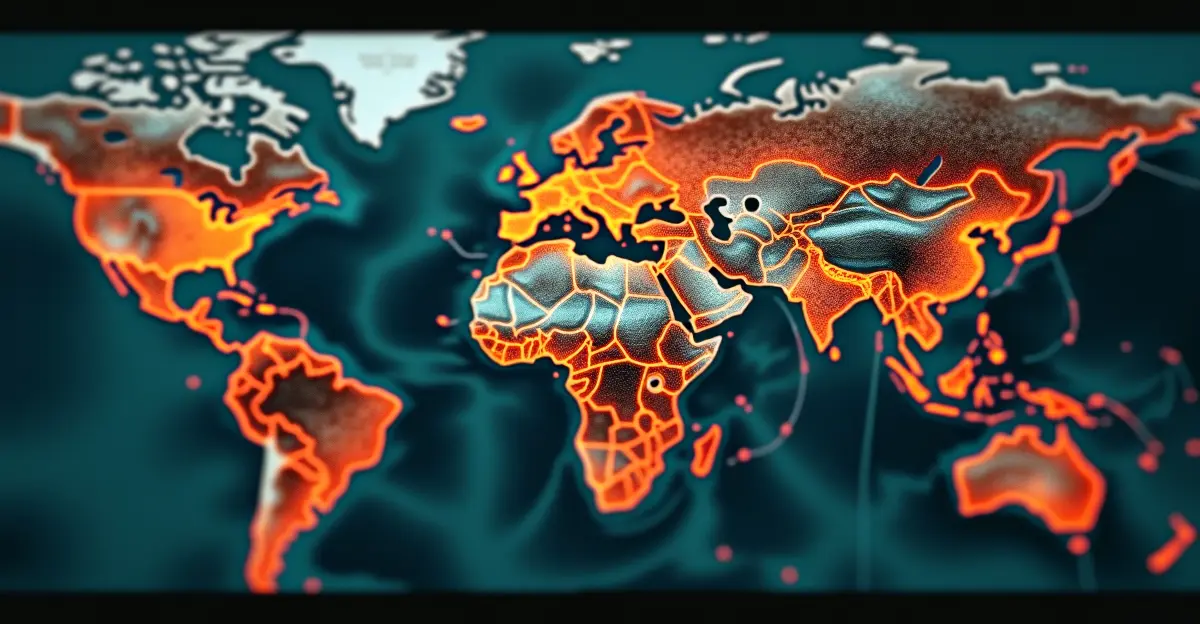
China's tightened export controls on rare earths, tungsten, and antimony, enacted in January 2026, have triggered price spikes of up to sixfold and slashed European licensing approval rates below 25%, creating an urgent strategic crisis for Western defense, technology, and energy transition industries. With Beijing controlling roughly 90% of global rare earth processing, 80% of tungsten refining, and 60% of antimony production, the weaponization of critical mineral supply chains is forcing the United States, European Union, and allied nations to launch emergency initiatives—including the FORGE alliance with over $30 billion committed—to break Chinese dominance before NATO stockpiles run critically low.
What Are China's 2026 Critical Minerals Export Controls?
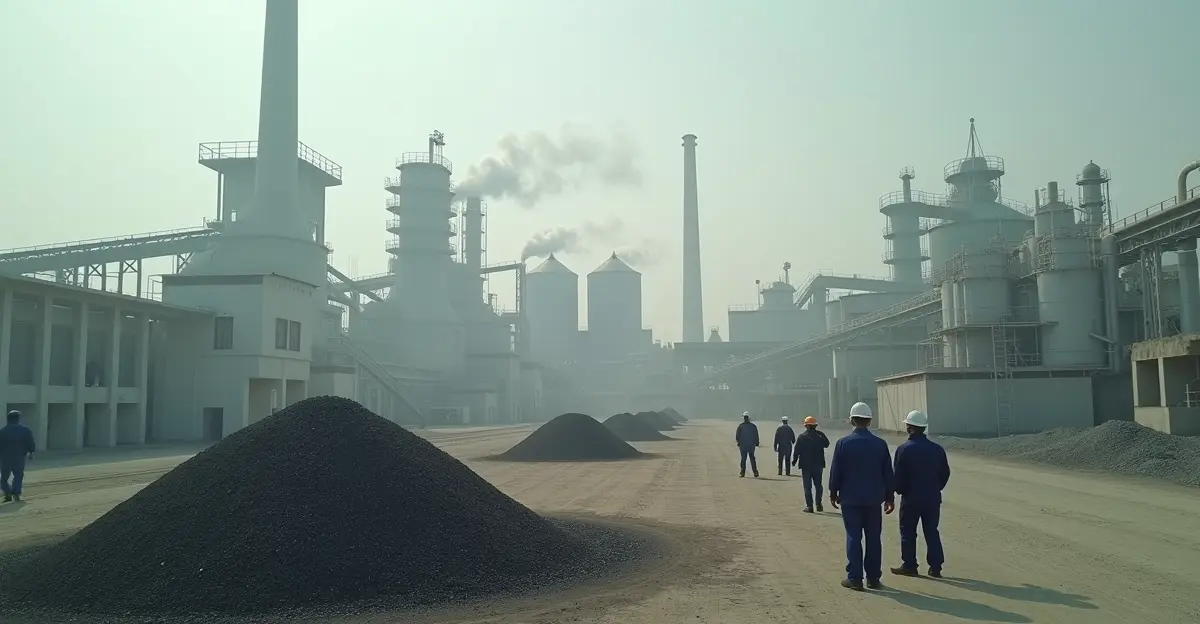
China's export controls, introduced in two waves during 2025 and fully implemented by January 2026, target rare earth elements, tungsten, antimony, and related processing technologies. The measures require exporters to obtain special licenses for shipments of these strategic minerals, with approval rates for European firms reportedly falling below 25% in some sectors. Unlike outright bans, these controls are designed to be temporary and reversible, allowing Beijing to maintain pricing power and extract geopolitical concessions while discouraging Western investment in alternative supply chains.
According to a multi-institutional analysis published in mid-2026 by over 50 organizations including the European Parliament Research Service and the Center for Strategic and International Studies (CSIS), the controls have caused prices for key rare earth oxides to spike as much as sixfold outside China. The global rare earth supply chain remains heavily dependent on Chinese processing infrastructure built over decades of state-directed investment.
Why China's Dominance Matters: Defense, EVs, and Clean Energy at Risk
Defense Vulnerabilities
Critical minerals are essential for modern military systems. Rare earths are used in permanent magnets for F-35 fighter jet engines, missile guidance systems, and precision munitions. Tungsten is critical for armor-piercing rounds and high-speed tooling, while antimony is used in infrared sensors and night-vision equipment. NATO defense stockpiles of these minerals are sufficient for only six to nine months of high-intensity conflict, according to defense analysts cited in the March 2026 National Defense Magazine report on critical mineral stockpiling.
Electric Vehicle and Renewable Energy Impacts
The electric vehicle industry is particularly exposed. Each EV requires approximately 1-2 kilograms of rare earth magnets for its motor, and the 2026 price spikes have added an estimated $500 per vehicle to manufacturing costs. Wind turbine manufacturers, which use rare earth magnets in direct-drive generators, face similar cost pressures. The European EV battery supply chain remains heavily reliant on Chinese-processed materials, with over 80% of European companies depending on Chinese supply chains for these minerals.
Western Response: FORGE Alliance and Project Vault
On February 4, 2026, the U.S. State Department launched FORGE (Forum on Resource Geostrategic Engagement), a plurilateral coalition of 54 nations and the European Commission, chaired by South Korea. FORGE succeeds the Minerals Security Partnership and establishes a preferential trade-and-investment zone with coordinated price floors for critical minerals. The U.S. government has mobilized over $30 billion in support for critical mineral projects over the past six months, including the $10 billion EXIM-backed Project Vault—a domestic strategic reserve for critical minerals modeled after the Strategic Petroleum Reserve.
Secretary of State Marco Rubio, alongside Vice President JD Vance, hosted the 2026 Critical Minerals Ministerial on February 4, announcing 11 new bilateral critical minerals frameworks or MOUs with countries including Argentina (lithium), Morocco (phosphates/cobalt), the Philippines (nickel), the UAE, and the United Kingdom. These agreements aim to build secure, diversified, and resilient end-to-end supply chains for technologies ranging from AI and robotics to batteries and defense systems.
The FORGE alliance critical minerals strategy represents the most ambitious U.S. critical minerals policy package in history, combining a strategic reserve, a new plurilateral trade bloc, and 21 bilateral framework agreements signed in just five months.
Can Western Diversification Break Chinese Dominance?
Analysts remain deeply skeptical. Rebuilding the entire rare earth supply chain outside China—from mining through separation and refining to magnet manufacturing—would take an estimated 20 to 30 years, far exceeding the current geopolitical window. Even with accelerated investment, independent processing capacity is unlikely to come online for five to seven years, at a cost of $30 to $50 billion.
China's 15th Five-Year Plan (2026-2030) explicitly prioritizes strategic minerals competitiveness, calling for greater exploration, development, and stockpiling while moving into high-value downstream technologies. Beijing controls 81% of global rare-earth-related patents filed between 2014 and 2024, according to a 2026 European Patent Office report, and has introduced automatized real-time controls and penalties in the rare-earth industry in 2026.
The Western critical mineral diversification timeline faces structural challenges: permitting delays, lack of skilled labor for rare earth processing, environmental opposition to new mines, and the sheer scale of China's existing infrastructure. The International Energy Agency estimates China accounted for 91% of global rare earth separation and refining production and 94% of sintered permanent magnet production in 2024.
Expert Perspectives
"China is not weaponizing scarcity—it is weaponizing control," said Dr. Emily Chen, a senior fellow at CSIS and co-author of the multi-institutional analysis. "By keeping exports flowing at reduced volumes and unpredictable intervals, Beijing maintains pricing power, discourages Western investment in alternatives, and extracts strategic concessions from dependent industries."
"We face a narrowing 12-to-18-month window to act decisively," warned a senior European Commission official involved in critical minerals policy. "If we fail to build independent processing capacity within that timeframe, China's 2026-2030 Five-Year Plan will deepen its grip, and our vulnerabilities will become entrenched for a generation."
Frequently Asked Questions
What critical minerals does China control?
China controls approximately 90% of global rare earth processing, 80% of tungsten refining, and 60% of antimony production. It also dominates processing of lithium, cobalt, and graphite used in batteries.
How have China's 2026 export controls affected prices?
Prices for key rare earth oxides and critical minerals have spiked up to sixfold outside China since the controls took effect in January 2026, with European licensing approval rates falling below 25%.
What is the FORGE alliance?
FORGE (Forum on Resource Geostrategic Engagement) is a U.S.-led plurilateral coalition of 54 nations and the European Commission, launched February 4, 2026, to create preferential trade zones for critical minerals and coordinate investment in diversified supply chains.
How long will NATO stockpiles last?
NATO defense stockpiles of critical minerals are sufficient for only six to nine months of high-intensity conflict, according to defense analysts, creating an urgent strategic vulnerability.
Can the West achieve critical mineral independence?
Full supply chain independence would take an estimated 20-30 years and $30-50 billion in investment. Independent processing capacity is unlikely before 2031-2033, leaving a critical vulnerability gap.
Conclusion: A Race Against Time
The 2026 critical minerals crisis represents a pivotal moment in great-power competition. China's export controls have exposed the West's strategic dependencies at a time when defense, technology, and energy transition needs are converging. While initiatives like FORGE and Project Vault signal serious intent, the structural advantages Beijing has built over four decades—in infrastructure, patents, skilled labor, and state-directed investment—cannot be replicated quickly.
The 2026 critical minerals geopolitical crisis will define the trajectory of Western technological and military competitiveness for the next decade. Whether the 12-to-18-month window for action is sufficient to prevent entrenched dependency remains the most consequential question in global resource geopolitics today.



Follow Discussion