


 Deutsch
 English
 Español
 Français
 Nederlands
 Português


 Share
Share




Satellite imagery exposes sprawling Chinese nuclear weapons facility in Xinjiang
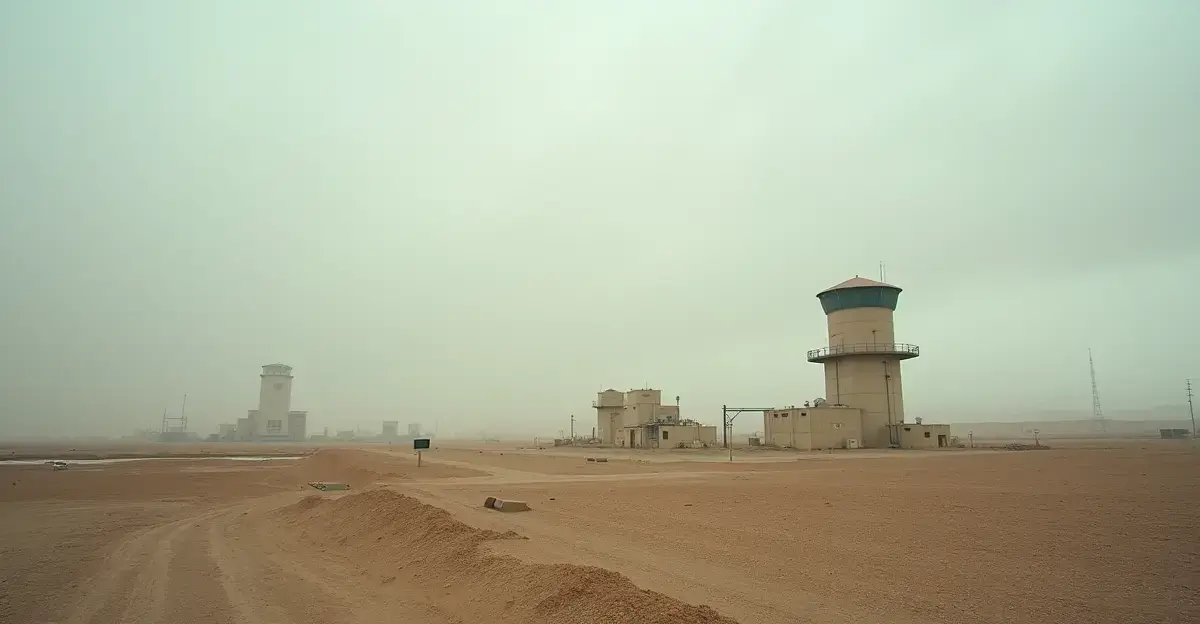
Recent satellite images analyzed by Reuters have revealed a vast military complex in China's northwestern Xinjiang region, built to support the country's rapidly expanding nuclear weapons program. The facility, spanning hundreds of square kilometers near the city of Hami, includes over 80 launch platforms for nuclear missiles and air defense systems, along with an extensive network of support bases, bunkers, storage depots, and airfields. Experts say the scale of the construction marks a significant shift in China's nuclear posture, moving from a minimal deterrence strategy toward a more robust second-strike capability aimed at ensuring national 'survival security.'
What does the new Chinese nuclear complex reveal about Beijing's strategy?
The complex, located in a remote desert area, is part of China's broader effort to modernize and expand its nuclear arsenal. According to satellite imagery, the site features hardened silos, vehicle garrisons, personnel housing, weapons storage facilities, and even a rail network. Intelligence analysts note that the Chinese nuclear arsenal expansion has accelerated dramatically since 2020, with the country now estimated to possess around 600 warheads—nearly triple its stockpile just five years ago.
Second-strike capability and deterrence
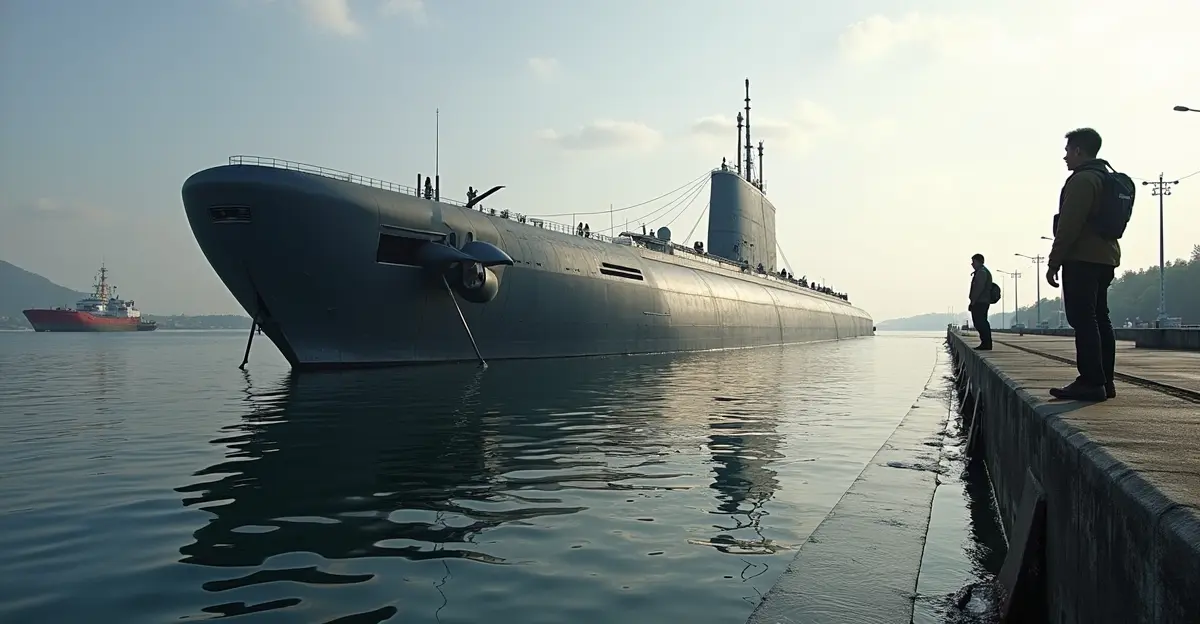
Tim Sweijs of The Hague Centre for Strategic Studies (HCSS) explains that the dispersed layout is designed to ensure survivability. 'If a country like the US wants to target China's missile launch capability, they would have to destroy a gigantic area,' he said. The silos are spread across a region so large that a single nuclear strike cannot eliminate all storage sites. This configuration supports a second-strike capability: the ability to retaliate after an initial attack. Sico van der Meer of the Clingendael Institute adds, 'China is making it harder to take out all nuclear facilities in one blow by dispersing silos and also deploying nuclear weapons on submarines.'
Why is China expanding its nuclear arsenal now?
Beijing has long adhered to a 'no first use' policy, pledging never to be the first to deploy nuclear weapons. However, analysts say the rapid buildup reflects growing security concerns. The China US nuclear tensions have intensified over Taiwan, the South China Sea, and the unpredictability of US policy under President Trump. Additionally, China views Russia as an unreliable partner. 'A Putin in distress can also make erratic moves,' Van der Meer noted.
Comparison of nuclear arsenals: China vs. US and Russia
| Country | Estimated Warheads (2025) | Projected Warheads (2030) | Key Delivery Systems |
|---|---|---|---|
| China | ~600 | 1,000+ | DF-41, DF-5, submarine-launched |
| United States | ~5,000 | ~5,000 | Minuteman III, Trident, bombers |
| Russia | ~5,500 | ~5,500 | Topol-M, Yars, submarine-launched |
China's nuclear posture shift: from minimum deterrence to assured retaliation
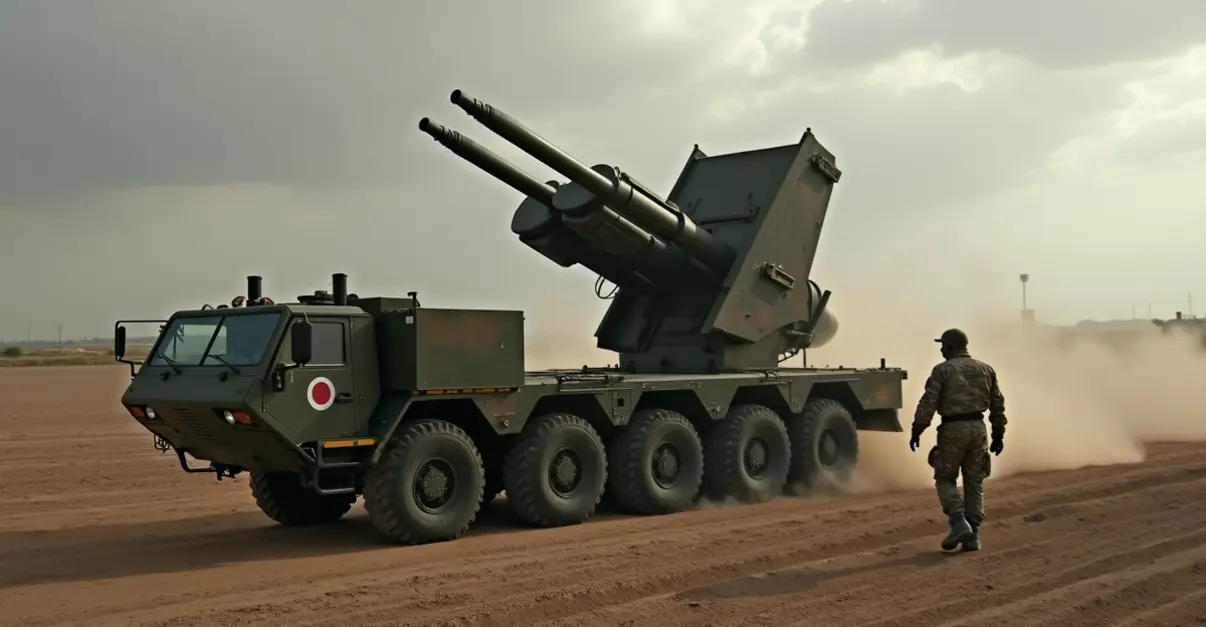
For decades, China maintained a 'minimum deterrence' posture with a small, survivable arsenal. That is changing. The Pentagon now projects China could field over 1,000 operational warheads by 2030, with some estimates reaching 1,500 by 2035. Satellite imagery confirms construction of approximately 320 new solid-fueled ICBM silos across sites in Gansu, Xinjiang, and Inner Mongolia. The China nuclear weapons modernization 2025 program includes the DF-41 missile, which can carry multiple independently targetable reentry vehicles (MIRVs), and advances in submarine-launched ballistic missiles.
Taiwan and regional implications
China's nuclear buildup is closely tied to its ambitions regarding Taiwan. Sweijs argues that by achieving a credible second-strike capability, Beijing creates 'freedom of movement to launch an invasion of Taiwan without the US nuclear threat hanging over it.' China has refused to participate in talks for a new nuclear arms treaty, stating that the US is 'the biggest source of uncertainty for the international nuclear order.'
What do experts say about China's 'survival security' doctrine?
China's official explanation for the expansion is 'survival security'—developing capabilities deemed necessary to safeguard national security, which Beijing sees as increasingly under pressure. Correspondent Gabi Verberg notes that this includes concerns about US precision weapons, missile defense systems, and rising tensions over Taiwan. 'China believes it has made great strides to have a chance against countries like the US, but also against regional adversaries,' Sweijs said.
The complex near Hami is not the first such discovery. In 2021, researchers identified over 100 new silo construction sites near Yumen in the Gobi Desert, followed by an even larger complex in Xinjiang. The pace of construction suggests China is determined to close the gap with the world's top nuclear powers.
Frequently Asked Questions
How many nuclear warheads does China have in 2025?
China is estimated to possess approximately 600 nuclear warheads as of early 2025, nearly triple its stockpile since 2020.
What is China's 'no first use' policy?
China's 'no first use' policy means it pledges never to be the first to use nuclear weapons in a conflict, reserving them only for retaliation.
Where is China's new nuclear missile complex located?
The newly revealed complex is located in the Xinjiang region near the city of Hami, in a remote desert area in northwestern China.
Why is China expanding its nuclear arsenal?
China cites 'survival security' concerns, citing US precision weapons, missile defense systems, tensions over Taiwan, and the need to deter potential adversaries.
How does China's nuclear arsenal compare to the US and Russia?
China's estimated 600 warheads are far fewer than the US (about 5,000) and Russia (about 5,500), but Beijing is rapidly expanding and could reach 1,000+ by 2030.

Follow Discussion