


 Deutsch
 English
 Español
 Français
 Nederlands
 Português


 Share
Share




China Fires Strategic Missile from Submarine in Rare Pacific Test
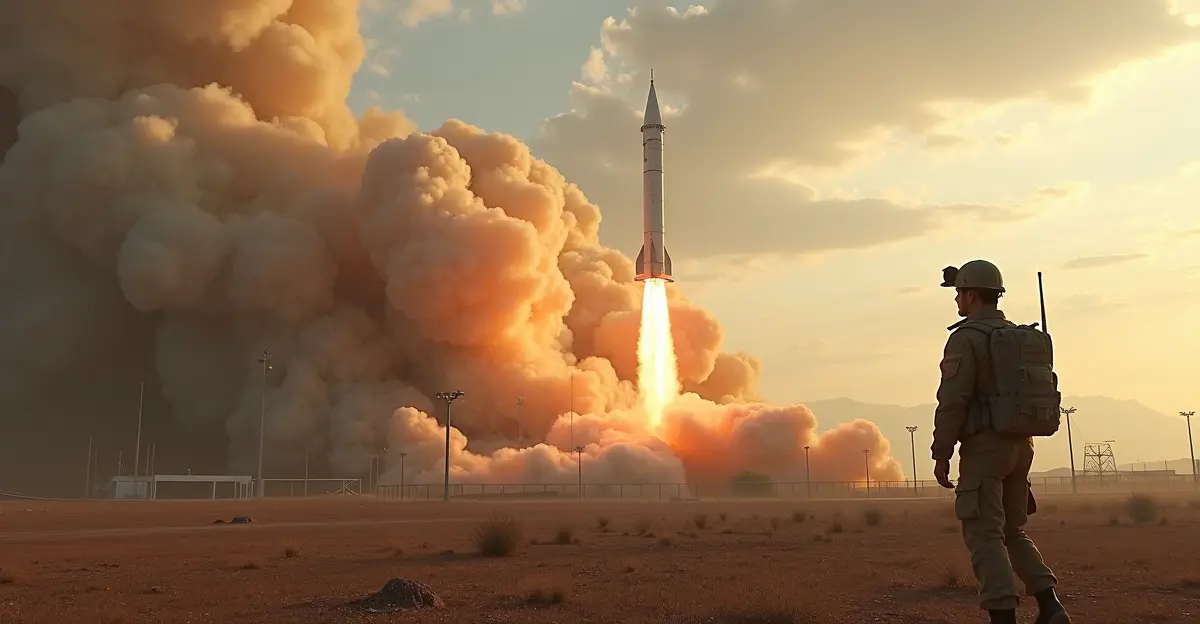
On July 6, 2026, China conducted a rare test launch of a submarine-launched ballistic missile (SLBM) into the Pacific Ocean, drawing sharp criticism from regional neighbors including Australia, New Zealand, and Japan. The Chinese military described the launch as a routine annual training exercise, but Pacific nations called it a 'destabilizing signal' that threatens regional peace and security.
The missile, fired from a Chinese nuclear-powered submarine, carried a dummy warhead and landed in a designated high-seas area of the South Pacific, according to China's state-run Xinhua news agency. While Beijing stated that relevant nations were notified in advance and that the test complied with international law, the timing has raised eyebrows — the launch came on the same day Australia and Fiji signed a historic mutual defense treaty, the Ocean of Peace Alliance.
Background: China's Expanding Nuclear Triad
This test marks the second known Chinese strategic ballistic missile launch over the Pacific in less than two years, following a land-based ICBM test in September 2024 — the first such open-ocean test by China in 44 years. The July 2026 launch specifically validates China's sea-based second-strike capability, a critical component of its nuclear triad.
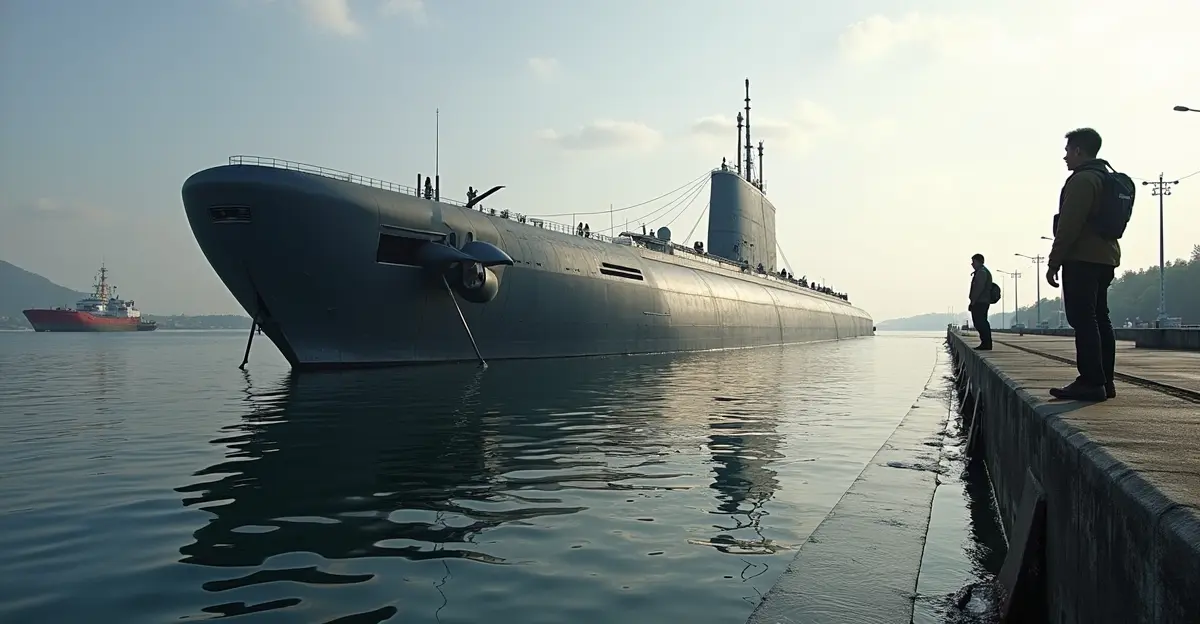
China's sea-based nuclear deterrent currently centers on six Type 094 Jin-class submarines, each capable of carrying 12 JL-2 or JL-3 submarine-launched ballistic missiles. The JL-3 missile, unveiled in September 2025, has an estimated range exceeding 10,000 kilometers (6,200 miles), putting the continental United States within reach from launch points in the South China Sea. The next-generation Type 096 submarine, with improved stealth and missile capacity, is currently under development.
China's nuclear warhead stockpile is estimated at over 600 warheads and is projected to exceed 1,000 by 2030, according to defense analysts. While Beijing maintains a no-first-use policy and describes its arsenal as 'lean and effective', the rapid modernization aims to build a 'world-class' military by 2049.
Regional Reactions: A Diplomatic Storm
The test provoked strong condemnation from Pacific nations. New Zealand's Foreign Minister Winston Peters called the launch 'unwelcome and concerning', noting that the missile was fired into the South Pacific Nuclear Free Zone, a treaty China itself signed protocols to respect. 'The Pacific Ocean is an ocean of peace, and we are deeply concerned that China is testing weapons capable of carrying nuclear warheads,' Peters said.
Australian Foreign Minister Penny Wong was equally blunt: 'Australia has made clear to China that we view this as destabilizing for the region.' Defence Minister Richard Marles expressed concern over actions undermining regional stability, emphasizing that the test was inconsistent with the shared goal of maintaining the Pacific as an ocean of peace.
Japan, which was notified of the test zone only 90 minutes before launch via diplomatic channels — and initially told the test zone was due to 'falling space debris' — formally protested. Tokyo stated it had urged China to reconsider the launch and expressed 'serious concern' over the lack of transparency.
The Australia-Fiji Defense Pact: A Strategic Context
The missile test coincided with the signing of the Ocean of Peace Alliance (Veitacini Treaty) between Australia and Fiji in Suva. This historic mutual defense treaty — Fiji's first and Australia's fourth such alliance — commits both nations to come to each other's aid in times of greatest need. The agreement is widely seen as a strategic move to counter growing Chinese influence in the South Pacific.
Prime Minister Anthony Albanese, who was awarded an Honorary Companion of the Order of Fiji during the signing ceremony, described the treaty as a commitment to 'preserve the Pacific as an ocean of peace, free from coercion and aggression.' The alliance gives practical effect to the Blue Pacific Ocean of Peace Declaration, addressing challenges including transnational crime, climate change, and — implicitly — the militarization of the region.
While some analysts have linked the timing of China's test to the Australia-Fiji pact, a regional source told the Australian Broadcasting Corporation that such a connection is unlikely, as the missile test would have required months of preparation. Nonetheless, the geopolitical tension in the South Pacific has escalated sharply, with the region becoming a new arena for strategic competition between China and Western allies.
Technical Details: What Was Launched?
Chinese state media described the projectile only as a 'strategic missile', without specifying the type of submarine or missile. However, defense analysts widely believe the launch involved a Type 094 (Jin-class) nuclear-powered ballistic missile submarine and the JL-3 (Julang-3) missile. The JL-3 is China's third-generation SLBM, featuring multiple independently targetable reentry vehicle (MIRV) capability, allowing a single missile to strike multiple targets.
Key specifications of the JL-3 missile include:
- Range: 10,000–14,000 km (6,200–8,700 miles)
- Warhead: MIRV-capable, nuclear-armed
- Guidance: Inertial navigation with celestial navigation backup
- Platform: Type 094 submarine (12 missiles per boat) or future Type 096
This test validates China's end-to-end maritime second-strike procedures, underwater ejection mechanics, and long-range strategic command-and-control capabilities under realistic conditions. The Type 094 submarines, while noisier than their American or Russian counterparts — with noise levels comparable to Soviet SSBNs from the late 1970s — still provide a credible sea-based deterrent.
Implications for Regional Security
The missile test underscores China's growing ability to project power across the Pacific and its determination to modernize its nuclear forces. For the United States and its allies, the launch raises questions about the stability of the region and the effectiveness of existing arms control frameworks.
The South Pacific Nuclear Free Zone, established by the Treaty of Rarotonga in 1985, prohibits the testing, stationing, and use of nuclear weapons within the zone. China is a signatory to the treaty's protocols, which commit nuclear-weapon states to respect the zone. Critics argue that launching a nuclear-capable missile through the zone violates the spirit, if not the letter, of the agreement.
China's Foreign Ministry defended the test, stating it was 'a routine annual training exercise not directed at any country and conducted in full compliance with international law.' However, Pacific island nations' security concerns are mounting as Beijing continues its military buildup. The region, once considered a peaceful backwater, is now a focal point of great-power competition.
Frequently Asked Questions
What type of missile did China test?
China tested a submarine-launched ballistic missile (SLBM), likely the JL-3 (Julang-3), with an estimated range of 10,000–14,000 km. It is capable of carrying multiple nuclear warheads (MIRV).
Why are Australia, New Zealand, and Japan concerned?
The missile was fired into the South Pacific Nuclear Free Zone, which China committed to respect. Regional leaders view the test as destabilizing and inconsistent with the goal of maintaining the Pacific as an ocean of peace. The lack of advance transparency also drew criticism.
How does this test relate to the Australia-Fiji defense pact?
The test occurred on the same day Australia and Fiji signed the Ocean of Peace Alliance, a mutual defense treaty. While analysts doubt a direct link — the missile test required months of preparation — the coincidence highlights heightened strategic competition in the region.
Is this the first time China has tested a missile over the Pacific?
No. In September 2024, China conducted its first open-ocean ICBM test in 44 years. The July 2026 test is the second such strategic missile test over the Pacific in less than two years.
What is China's nuclear triad?
China's nuclear triad consists of land-based intercontinental ballistic missiles (ICBMs), submarine-launched ballistic missiles (SLBMs), and strategic bombers. The sea-based leg, centered on Type 094 submarines and JL-3 missiles, provides a survivable second-strike capability.


Follow Discussion