


 Deutsch
 English
 Español
 Français
 Nederlands
 Português


 Share
Share




The Indo-Pacific Strategy: Why It Matters for Europe
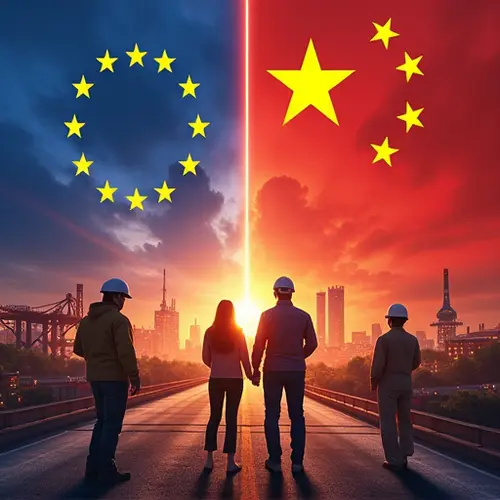
Europe's strategic pivot toward the Indo-Pacific region represents one of the most significant geopolitical realignments of the 21st century, with the European Union Council approving crucial conclusions on October 20, 2025, to implement its comprehensive Indo-Pacific cooperation strategy. This strategic shift reflects Europe's recognition that 60% of global GDP originates in the Indo-Pacific, 40% of EU foreign trade passes through the South China Sea, and the region's stability directly impacts European security and prosperity. As geopolitical tensions reshape global alliances, Europe's engagement with the Indo-Pacific has evolved from economic partnership to strategic necessity, positioning the EU as a crucial third pole between US-China competition.
What is the EU's Indo-Pacific Strategy?
The European Union's Indo-Pacific Strategy, formally launched in September 2021 and reinforced by Council conclusions in October 2025, represents a comprehensive framework for deepening engagement with the world's most economically dynamic region. Unlike traditional foreign policy approaches, this strategy encompasses seven interconnected pillars: prosperity, green transition, ocean governance, digital governance, connectivity, security & defense, and human security. The strategy aims to position Europe as a reliable alternative partner amid intensifying US-China rivalry, offering Indo-Pacific nations a third option that emphasizes multilateral cooperation, rules-based order, and sustainable development rather than great power competition.
Geopolitical Context: Why Europe Must Engage
The Indo-Pacific's geopolitical significance has grown exponentially, with the region accounting for three-fifths of the world's population and becoming the epicenter of global economic growth. Europe's strategic calculus changed dramatically following Russia's invasion of Ukraine, which exposed vulnerabilities in European security architecture and highlighted the interconnectedness of global stability. As "the EU faces the urgent need to strengthen partnerships with industrial middle powers in the region who, like the EU, are seeking to 'double-derisk' from both the US and China," according to recent analysis. This mirrors similar strategic calculations during the 2025 economic crisis that forced nations to reassess global dependencies.
EU trade with the Indo-Pacific reached €848 billion in 2024, making the region Europe's second-largest trading partner after the United States. However, economic interests are increasingly intertwined with security concerns, particularly regarding maritime routes through the South China Sea and Taiwan Strait. The EU's approach differs from traditional great power competition by emphasizing cooperative security, capacity building, and multilateral engagement rather than military containment.
Seven Pillars of European Engagement
The EU's strategy operates through seven interconnected priority areas:
- Prosperity: Pursuing free trade agreements with key partners including Japan, South Korea, Singapore, Vietnam, and New Zealand
- Green Transition: Establishing Green Alliances with Japan, Vietnam, Indonesia, and South Korea
- Ocean Governance: Addressing maritime security and sustainable ocean management
- Digital Governance: Focusing on semiconductors, artificial intelligence, and digital partnerships
- Connectivity: Implementing the Global Gateway infrastructure program
- Security & Defense: Enhancing naval presence through EUNAVFOR Atalanta and Coordinated Maritime Presences
- Human Security: Addressing health, education, and development challenges
Security Challenges and European Response
Europe faces complex security challenges in the Indo-Pacific, including tensions in the South and East China Seas, the Taiwan Strait situation, and increasing maritime assertiveness. Despite these challenges, research reveals that Indo-Pacific countries primarily view the EU as a "civilian power" effective in economic and social policy rather than as a strategic security player. This perception gap presents both challenges and opportunities for European engagement.
The EU has responded with concrete security initiatives including:
- EUNAVFOR Atalanta counter-piracy operations in the Indian Ocean
- Coordinated Maritime Presences to enhance naval visibility
- Capacity building through CRIMARIO II maritime surveillance programs
- Participation in multilateral exercises like RIMPAC
However, experts note that "while European naval deployments demonstrate solidarity with regional partners against Chinese maritime assertiveness, these symbolic missions are insufficient without sustained presence and institutionalized cooperation." This reflects broader debates about artificial intelligence regulation where symbolic gestures often precede substantive frameworks.
Economic Security and Supply Chain Resilience
The Indo-Pacific strategy represents Europe's most ambitious effort to diversify critical supply chains away from excessive dependence on China while maintaining access to the world's fastest-growing markets. The region's importance extends beyond traditional trade metrics, encompassing technological innovation, digital infrastructure, and green energy transition. Europe's approach emphasizes building economic security networks that balance market access with strategic autonomy.
Key economic initiatives include:
| Initiative | Focus Area | Key Partners |
|---|---|---|
| Global Gateway | Infrastructure Development | ASEAN, India, Pacific Islands |
| Digital Partnerships | Semiconductors, AI, Cybersecurity | Japan, South Korea, Singapore |
| Green Alliances | Climate Transition | Vietnam, Indonesia, Australia |
| Trade Agreements | Market Access | Multiple Indo-Pacific Nations |
Regional Perceptions and Strategic Limitations
A comprehensive study across eight Indo-Pacific countries (Australia, China, India, Japan, New Zealand, South Korea, Thailand, and Taiwan) reveals significant challenges in Europe's regional engagement. The research found that while the EU is viewed as important in bilateral relationships, it has failed to establish itself as a credible geopolitical actor in the region. The EU's need for unanimous decision-making among 27 member states limits its effectiveness as a strategic security player, particularly in rapidly evolving crisis situations.
The study's key findings include:
- The EU is primarily perceived as a "civilian power" effective only in "low politics" areas
- Security and defense capabilities are viewed skeptically due to decision-making constraints
- The green transition agenda received the most positive ratings among EU priorities
- The Indo-Pacific's heterogeneity makes a one-size-fits-all strategy ineffective
These findings suggest that Europe must adopt a more tailored, bottom-up approach that acknowledges the diverse priorities and geopolitical dynamics across different countries in the region, similar to approaches needed for effective EU carbon border tax implementation.
Future Outlook and Strategic Recommendations
Looking ahead to 2026 and beyond, Europe's Indo-Pacific engagement faces both opportunities and challenges. The fourth EU-Indo Pacific Ministerial Forum scheduled for November 20-21, 2025, in Brussels will serve as a crucial platform for advancing concrete cooperation. Success will require moving beyond episodic gestures to establish rotational naval deployments, joint patrols, and deeper institutional partnerships.
Strategic recommendations for effective European engagement include:
- Adopt a bottom-up approach: Tailor engagement to specific country needs rather than imposing a unified regional strategy
- Bridge capability gaps: Address perceptions of limited security effectiveness through sustained presence
- Leverage economic strengths: Use market access and regulatory experience as strategic assets
- Build middle power coalitions: Partner with Japan, South Korea, Australia, and India as force multipliers
- Navigate US-China competition: Position Europe as a stabilizing third pole rather than containment extension
The ultimate success of Europe's Indo-Pacific strategy will depend on its ability to translate ambitious policy documents into concrete actions that address regional needs while advancing European interests. As global power dynamics continue to shift, Europe's engagement with the Indo-Pacific will increasingly determine its relevance in the 21st-century geopolitical landscape, much like the strategic importance of Middle East peace negotiations in previous decades.
Frequently Asked Questions
What is the EU's Indo-Pacific Strategy?
The EU's Indo-Pacific Strategy is a comprehensive framework launched in 2021 and reinforced in 2025 that outlines Europe's engagement with the strategically important Indo-Pacific region across seven priority areas including prosperity, security, and green transition.
Why does the Indo-Pacific matter for Europe?
The Indo-Pacific accounts for 60% of global GDP, 40% of EU foreign trade passes through the South China Sea, and regional stability directly impacts European security and economic interests in an interconnected world.
How is Europe implementing its Indo-Pacific Strategy?
Europe is implementing the strategy through trade agreements, security partnerships, green alliances, digital partnerships, infrastructure development via Global Gateway, and enhanced naval presence in the region.
What are the main challenges facing Europe's Indo-Pacific engagement?
Key challenges include perceptions of limited security effectiveness, decision-making constraints among 27 EU members, regional heterogeneity requiring tailored approaches, and balancing relations amid US-China competition.
How does Europe's approach differ from US and Chinese strategies?
Europe emphasizes multilateral cooperation, rules-based order, and sustainable development rather than military containment or economic dominance, positioning itself as a third option between great power competition.



Follow Discussion