


 Deutsch
 English
 Español
 Français
 Nederlands
 Português


 Share
Share




Japan Weapons Export Policy: Complete Guide to Historic Pacifist Shift
Japan has made a historic policy shift by lifting its decades-long ban on lethal weapons exports in April 2026, marking a dramatic departure from the country's post-World War II pacifist constitution. Prime Minister Sanae Takaichi's government has approved sweeping changes that will allow Japan to export fighter jets, warships, missiles, and other advanced military systems to partner countries, fundamentally transforming Japan's role in global defense markets and regional security dynamics.
What is Japan's New Weapons Export Policy?
The new policy represents the most significant revision to Japan's defense export framework since the establishment of the "Three Principles on Transfer of Defense Equipment and Technology" in 1967. Under the previous system, Japan maintained a near-total ban on weapons exports, with only limited exceptions for United Nations peacekeeping missions and non-lethal equipment. The 2026 changes replace restrictive export categories with a case-by-case approval system that allows Japan to compete in global defense markets while maintaining certain safeguards.
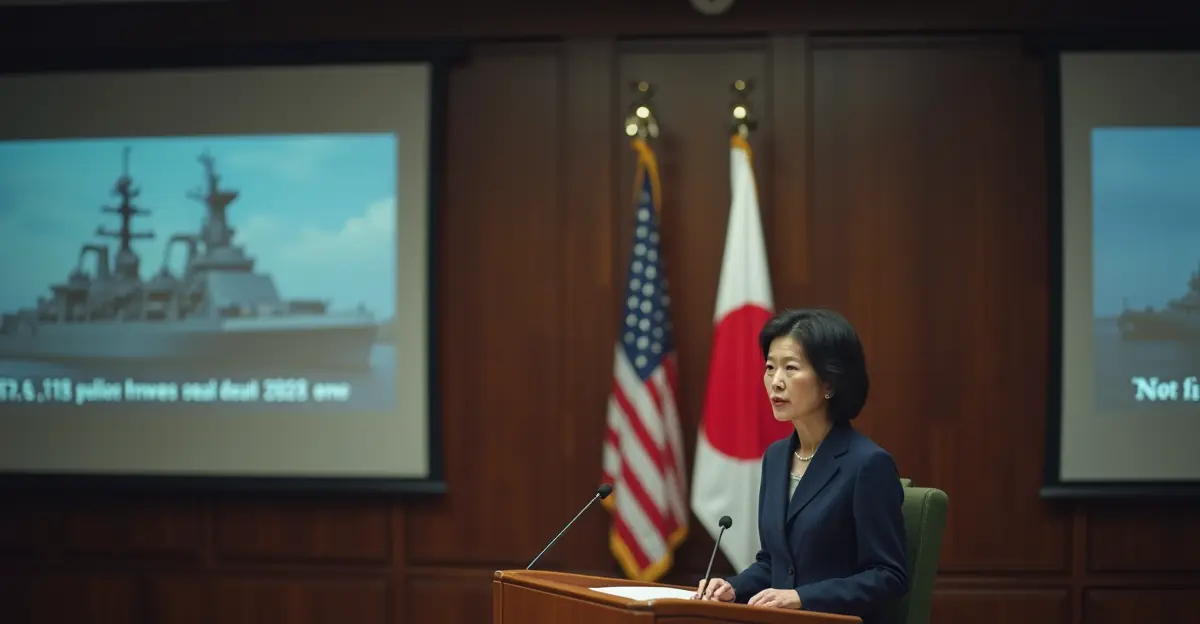
"No single country can now protect its own peace and security alone," Prime Minister Takaichi stated during the announcement, emphasizing the need for partner countries to support each other with defense equipment in an increasingly severe security environment.
Historical Context: From Pacifism to Pragmatism
The Three Principles Era (1967-2014)
Japan's original weapons export policy was established in 1967 under three strict principles that prohibited exports to communist countries, nations under UN arms embargoes, and countries involved in international conflicts. These rules were further tightened in 1978, creating what amounted to a complete export ban that remained largely intact for nearly five decades. This policy framework reflected Japan's commitment to Article 9 of its constitution, which renounces war and prohibits maintaining war potential.
Gradual Reforms Under Shinzo Abe
The first significant changes began in 2014 under Prime Minister Shinzo Abe, who introduced limited exceptions for international peacekeeping and humanitarian missions. Subsequent adjustments allowed Japan to participate in joint development projects with allies like the United States and Australia, and to export radar systems to countries like the Philippines. However, these reforms maintained strict limitations on lethal weapons exports, particularly to conflict zones.
The 2026 Breakthrough
The current policy shift goes far beyond previous reforms, allowing exports of advanced combat systems including the Mogami-class multi-mission frigate, next-generation fighter jets developed with Italy and the United Kingdom, and various missile systems. The policy permits exports to 17 countries with which Japan has defense agreements, including the United States, Australia, the United Kingdom, and the Netherlands. Similar to the EU carbon border tax that reshaped trade policy, Japan's weapons export reform represents a fundamental rethinking of national security strategy.
Key Drivers Behind the Policy Change
Regional Security Concerns
Multiple security challenges have prompted Japan's strategic reassessment. The ongoing war in Ukraine has demonstrated the importance of robust defense industrial capacity, while tensions around Taiwan and in the East China Sea have raised concerns about regional stability. North Korea's continued missile development and China's military expansion have created what Japanese officials describe as "the most severe security environment since World War II."
Economic and Industrial Factors
Japan's defense industry has long operated with limited economies of scale, producing primarily for the Japan Self-Defense Forces as its sole customer. This has driven up research and development costs while limiting innovation. Major defense contractors like Mitsubishi Heavy Industries, Kawasaki Heavy Industries, and IHI Corporation stand to benefit significantly from access to global markets. The recent $7.15 billion deal to build three warships for Australia demonstrates the potential economic impact of the new policy.
Strategic Autonomy and Alliance Dynamics
Japan seeks to reduce its dependence on the United States while strengthening partnerships with other regional allies. The return of Donald Trump to the White House has raised questions about the reliability of American security guarantees, prompting Japan to enhance its own defense capabilities and industrial base. This strategic shift mirrors broader trends in global defense realignment as countries reassess traditional security arrangements.
What Weapons Can Japan Export Now?
The new policy allows exports across multiple categories of advanced military systems:
- Naval Systems: Mogami-class multi-mission frigates, destroyers, and patrol vessels
- Aircraft: Next-generation fighter jets (developed with Italy/UK), combat drones, and surveillance aircraft
- Missile Systems: Air-to-air missiles, surface-to-air missiles, and anti-ship missiles
- Ground Systems: Armored vehicles, artillery systems, and advanced radar equipment
- Dual-Use Technology: Cybersecurity systems, surveillance technology, and command-and-control infrastructure
International Reactions and Implications
Positive Responses from Allies
Western allies have largely welcomed Japan's policy shift. Australia, which recently signed a major warship contract with Japan, views the change as strengthening regional security cooperation. The United States sees potential benefits for interoperability and burden-sharing within the alliance framework. A recent NATO delegation visit to Japan involving 30 of 32 member states highlighted growing defense cooperation between Japan and Western military organizations.
Criticism from China and Domestic Opposition
China has reacted strongly against the policy change, with state media describing it as "reckless new-style militarization" and warning that it could trigger a regional arms race. Chinese officials have vowed to resist what they characterize as Japan's departure from its pacifist principles. Domestically, opposition parties and peace activists have organized protests, with tens of thousands demonstrating to protect Article 9 of Japan's constitution. However, public opinion polls show significant support for the government's security policies, with nearly 70% of Japanese citizens approving the cabinet's approach in a March 2026 survey.
Regional Security Dynamics
The policy shift positions Japan as an alternative defense partner to China in Southeast Asia, with countries like the Philippines, Indonesia, and Vietnam showing interest in Japanese defense equipment. This development represents a significant evolution in Indo-Pacific security architecture as regional powers diversify their defense partnerships beyond traditional alignments.
FAQ: Japan's Weapons Export Policy Explained
What countries can receive Japanese weapons exports?
Japan can export weapons to 17 countries with which it has defense agreements, including the United States, Australia, United Kingdom, Netherlands, Philippines, and several European and Asian partners. Exports to countries actively engaged in conflict remain prohibited, though exceptions can be made for national security reasons.
How does this affect Japan's pacifist constitution?
The policy represents a significant reinterpretation rather than a formal amendment of Article 9. The government maintains that exports contribute to international peace and security, aligning with constitutional principles while adapting to contemporary security challenges.
What economic benefits does Japan expect?
Japan aims to strengthen its defense industry through economies of scale, reduce unit costs through larger production runs, and position Japanese companies as competitive players in global defense markets estimated at hundreds of billions of dollars annually.
Will Japan export weapons to Ukraine?
Current policy prohibits exports to countries actively engaged in conflict, though exceptions can be made. The government has indicated it will consider requests on a case-by-case basis while maintaining its commitment to international law and peacekeeping principles.
How will this affect regional security?
Experts suggest the policy could strengthen deterrence against regional threats while potentially triggering responses from neighboring countries concerned about Japanese military capabilities.

Follow Discussion