


 Deutsch
 English
 Español
 Français
 Nederlands
 Português


 Share
Share




In 2025-2026, China tightened export controls on rare earths, tungsten, and antimony — materials essential for defense systems, electric vehicles, wind turbines, and advanced electronics. With China controlling 90% of global rare earth processing, 80% of tungsten refining, and 60% of antimony production, and European licensing approval rates now below 25%, Western economies face a structural dependency crisis that cannot be resolved quickly. Rebuilding independent processing capacity would take 20-30 years and cost tens of billions of dollars. This strategic analysis reveals that China's approach is not about scarcity but calibrated control — using reversible, temporary restrictions to maintain pricing leverage while preventing large-scale Western investment in alternatives. The next 12-18 months represent a decisive window for action before vulnerability becomes entrenched.
Context: The Critical Minerals Dependency Crisis
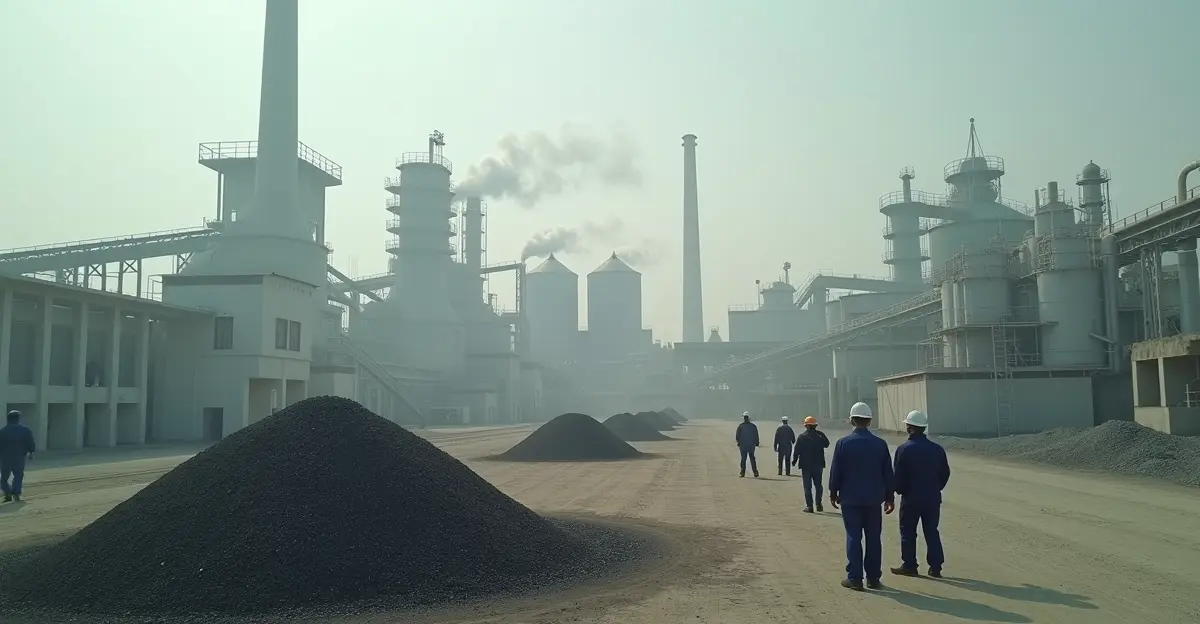
China's dominance in critical minerals is decades in the making. Through state-backed investment, cheap coal-powered refining, and a strategic export rebate system introduced in the 1980s, Beijing built an unassailable position in the midstream processing stages of the supply chain. By 2024, the International Energy Agency estimated China accounted for 91% of global rare earth separation and refining and 94% of sintered permanent magnet production. The rare earth supply chain concentration has only deepened since.
In October 2025, China announced sweeping new export controls covering rare earth production equipment, rare earth elements (including holmium, erbium, europium), rare-earth technologies, lithium-battery items, and synthetic diamond materials. A key measure — Announcement No. 61 — marked China's first extraterritorial export control rule, applying Chinese jurisdiction to foreign-produced items containing Chinese-origin rare earths. Although Beijing suspended these controls in November 2025 following U.S.-China trade negotiations in Kuala Lumpur, the legal framework remains intact and could be reactivated at any time. The suspension expires on November 10, 2026.
Meanwhile, in January 2026, China implemented new export controls on silver, tungsten, and antimony, further tightening the screws. Only 15 pre-approved companies are now authorized to export tungsten, with mining quotas cut by 6.5%. Antimony prices surged from $1,400 per metric ton in July 2024 to a record $59,750 per ton by mid-2025 — a 4,200% increase described as the sharpest price rally ever recorded.
Strategic Analysis: Calibrated Control, Not Scarcity
How China's Export Controls Work
China's strategy is not about cutting off supply entirely but about maintaining precise, reversible leverage. The controls are applied selectively based on geopolitical considerations — Japan has been specifically targeted in tungsten restrictions, while the U.S. faces bans on antimony for military end-users. Licensing approval rates for European firms have fallen below 25%, creating uncertainty that discourages long-term investment in alternative supply chains.
According to a multi-institutional analysis published in early 2026, over 80% of European companies depend on Chinese supply chains for critical minerals essential to defense, EVs, and renewable energy. The European critical minerals dependency is particularly acute given the EU's ReArm Europe plan, which aims to mobilize over €800 billion in defense spending through 2030.
The NATO and EU Defense Spending Paradox
The timing of China's export controls coincides with NATO's historic defense spending surge. In 2025 alone, NATO allies in Europe and Canada invested a total of USD 574 billion in defense — a 20% increase in real terms compared to 2024. The EU's ReArm Europe plan, presented in March 2025, proposes leveraging over €800 billion through national fiscal flexibility, a new €150 billion loan instrument (SAFE) for joint procurement, and expanded European Investment Bank support.
Yet both initiatives depend on access to the same critical minerals that China now controls. F-35 fighter jets require rare earth magnets for their engines and avionics. Missile guidance systems depend on gallium and germanium. Armor-piercing munitions use tungsten. NATO defense stockpiles are sufficient for only six to nine months of high-intensity conflict, according to strategic assessments.
Three Strategic Paths for the West
Western governments face a strategic trilemma with three available paths, each carrying distinct risks and timelines.
Path 1: Managed Dependence
This approach accepts continued reliance on Chinese supply while building diplomatic guardrails. It involves negotiating bilateral agreements, maintaining stockpiles, and hoping Beijing exercises restraint. The advantage is low short-term cost; the disadvantage is strategic vulnerability. With China's legal framework for extraterritorial controls already in place, this path leaves Western defense and green energy sectors exposed to sudden supply disruptions.
Path 2: Costly Independence
Full supply chain independence — from mining through processing to magnet manufacturing — is estimated to take five to seven years and cost $30 to $50 billion for basic separation facilities alone. Rebuilding complete independent supply chains could take 20 to 30 years under normal circumstances. The U.S. has launched the FORGE alliance (54 nations, over $30 billion committed) and Project Vault ($10 billion strategic reserve), but analysts warn that processing capacity remains the critical bottleneck. The Western rare earth processing bottleneck persists because China's decades of experience and cheap coal power are difficult to replicate.
Path 3: Hybrid Resilience Model
This middle path combines targeted domestic processing capacity with diversified international partnerships, strategic stockpiles, and accelerated materials innovation. It aims to achieve 40-50% of current consumption capacity across key materials within the next decade — enough to provide strategic autonomy without the full cost of independence. Industry analysis suggests this is the most realistic option, but it requires immediate, sustained investment and regulatory reform, particularly in permitting timelines that currently stretch up to 29 years in the United States.
Impact and Implications
The consequences of inaction are severe. Atlantic Council stress-testing reveals that Western supply chains would collapse within weeks under a full Chinese export ban, with defense manufacturing potentially shutting down within 45-60 days. EV production costs have already risen by approximately $500 per vehicle due to neodymium-praseodymium oxide price spikes. The critical minerals defense supply chain risk extends to semiconductors, where tungsten's unique hardness and extreme melting point make substitution impossible for key applications.
Bloomberg Intelligence projects a 4.4-fold rise in non-Chinese neodymium-praseodymium production by 2030, but a 36% global deficit remains. Even with accelerated investment, the gap between Western demand and non-Chinese supply will persist for at least a decade.
Expert Perspectives
"China is weaponizing control rather than scarcity — using temporary, reversible restrictions to maintain pricing power and extract strategic concessions while preventing large-scale Western alternative investment," notes a multi-institutional analysis published by Rare Earth Exchanges in 2026.
"Building basic separation facilities requires a minimum of 12 to 18 months, while full supply chain independence is estimated to take five to seven years and cost $30 to $50 billion," according to a strategic assessment from Informed Clearly.
The Atlantic Council's Bart Piasecki wrote in November 2025: "When China announced export controls on several critical minerals — including rare earth elements — and related processing technologies and materials this October, the United States well understood the enormous economic consequences such restrictions could carry."
Frequently Asked Questions
What critical minerals does China control?
China controls approximately 90% of global rare earth processing, 80% of tungsten refining, and 60% of antimony production. It also dominates gallium, germanium, and lithium processing.
Why are critical minerals important for defense?
Rare earths are used in permanent magnets for jet engines, missile guidance systems, and radar. Tungsten is essential for armor-piercing munitions and armor. Antimony is used in ammunition, infrared sensors, and night-vision equipment.
How long would it take the West to build independent processing capacity?
Basic separation facilities require 12-18 months to build, but full supply chain independence — from mining to magnet manufacturing — is estimated to take 5-7 years and cost $30-50 billion. Complete independence could take 20-30 years.
What is the ReArm Europe plan?
The European Commission's ReArm Europe Plan/Readiness 2030, presented in March 2025, proposes leveraging over €800 billion in defense spending through national fiscal flexibility, a €150 billion loan instrument (SAFE) for joint procurement, and expanded European Investment Bank support.
What is the FORGE alliance?
The FORGE alliance is a U.S.-led partnership of 54 nations with over $30 billion committed to building secure critical mineral supply chains outside of China. It includes Project Vault, a $10 billion strategic reserve initiative.
Conclusion: The Decisive Window
The next 12-18 months represent a decisive window for Western action. China's suspension of some export controls expires on November 10, 2026, and the legal framework for extraterritorial enforcement remains intact. Without accelerated investment in domestic processing capacity, diversified international partnerships, and streamlined permitting, Western economies risk entrenched vulnerability that will undermine both defense readiness and the green energy transition for decades.
The choice between managed dependence, costly independence, and a hybrid resilience model is not merely economic — it is a strategic decision that will define the geopolitical balance of power for the remainder of the 21st century.

Follow Discussion