


 Deutsch
 English
 Español
 Français
 Nederlands
 Português


 Share
Share




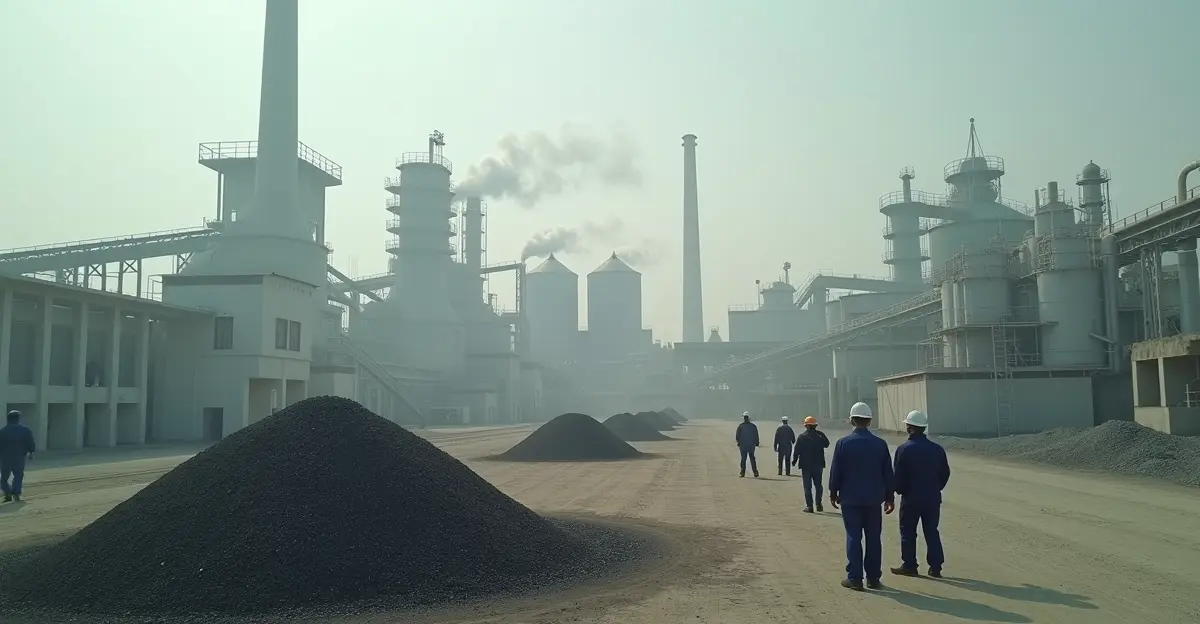
China's 2026 export controls on rare earths and critical minerals have fully taken effect, triggering up to sixfold price spikes outside China and slashing European licensing approval rates below 25%, according to a multi-institutional analysis drawing on over 50 institutions including the European Parliament Research Service, OECD, and CSIS. Beijing now controls roughly 90% of global rare earth processing, 80% of tungsten refining, and 60% of antimony production—materials essential for defense systems, electric vehicles (EVs), and renewable energy technologies. Over 80% of European firms depend on Chinese supply chains, while rebuilding independent Western processing capacity could take 20 to 30 years, leaving a narrowing 12-to-18-month window for decisive action.
How China's Export Controls Work
Unlike conventional tariffs, China's export control regime uses a licensing-based system that creates permanent institutional dependencies. Beginning with indium in February 2025, the controls expanded to seven heavy rare earth elements including yttrium and scandium in April 2025, then escalated in October 2025 to include processing technology, equipment, and technical know-how. By early 2026, the full architecture was in place, with China's Ministry of Commerce (MOFCOM) requiring end-user declarations and case-by-case licensing for all critical mineral exports.
The EU critical raw materials act sets 2030 targets of 10% extraction, 40% processing, and 25% recycling, but the European Court of Auditors warns that the EU remains heavily dependent on imports, with ten materials including lithium and gallium not recycled at all.
Licensing as a Strategic Weapon
Analysts argue that Beijing is weaponizing control rather than scarcity. By maintaining reversible restrictions, China can extract strategic concessions from Western governments while simultaneously discouraging large-scale investment in alternative supply chains. The uncertainty around licensing approvals—which can be tightened or loosened at will—creates a climate of unpredictability that deters capital-intensive processing projects outside China.
According to the analysis, European firms in sectors such as aerospace, semiconductor fabrication, and defense electronics have seen approval rates fall below 25% since late 2025. The US-China trade war 2025 escalation provided the geopolitical backdrop for these measures.
Price Spikes and Supply Chain Disruption
The impact on global markets has been severe. Prices for key rare earth oxides have surged up to sixfold outside China, with neodymium-praseodymium (NdPr) oxide—critical for EV magnets and wind turbines—reaching record levels. Tungsten prices have more than tripled, while antimony—essential for flame retardants and lead-acid batteries—has seen similar spikes.
NATO defense stockpiles are sufficient for only 6 to 9 months of high-intensity conflict, according to informed estimates. EV production costs have risen approximately $500 per vehicle due to higher magnet prices. U.S. aerospace manufacturing has faced disruptions in turbine coating supplies, while semiconductor fabrication lines reliant on gallium and germanium face uncertainty as a temporary suspension of export bans expires in November 2026.
The global rare earth crisis 2026 has forced manufacturers to confront political rather than purely commercial access conditions for these foundational materials.
Western Response: FORGE, Project Vault, and the $30 Billion Gamble
In February 2026, the United States launched the Forum on Resource Geostrategic Engagement (FORGE) as a successor to the Minerals Security Partnership, bringing together 54 countries and the European Commission. Secretary of State Marco Rubio announced over $30 billion in commitments for critical mineral supply chain projects, including Project Vault—a $10 billion Export-Import Bank loan to establish a domestic strategic reserve for critical minerals.
The U.S. has signed 21 bilateral critical minerals frameworks or MOUs with countries including Argentina, Morocco, the Philippines, the UAE, and the UK. On April 24, 2026, the EU and U.S. signed a memorandum of understanding on a strategic partnership for critical minerals, including coordinated trade policies, standards, investments, and crisis responses across the entire value chain.
However, experts caution that these efforts face significant headwinds. A Concordia University study published in January 2026 in Energy Storage Materials confirms that China controls over 90% of global refining capacity, particularly for heavy rare earths (dysprosium, terbium) essential for EV motors, wind turbines, and defense platforms like the F-35 and missile guidance systems. The study warns that fewer than 5% of rare earths are recycled despite over 90% recovery potential.
The Western rare earth processing timeline remains the critical bottleneck, with most new projects still in permitting or construction phases.
Implications for Defense, EVs, and Renewable Energy
The defense sector faces the most immediate risk. Rare earth permanent magnets are essential for precision-guided munitions, radar systems, and electronic warfare suites. Tungsten is critical for armor-piercing munitions and cutting tools, while antimony is used in infrared detectors and night-vision equipment.
In the EV sector, Chinese dominance in permanent magnet production—94% of global sintered magnets—means that Western automakers face a structural dependency that cannot be resolved quickly. The European Critical Raw Materials Act's 2030 targets for domestic processing remain aspirational without massive capital deployment.
Renewable energy supply chains are equally exposed. Wind turbines require significant quantities of neodymium and dysprosium for their generators, while solar panel manufacturing depends on silver and indium—both subject to Chinese export controls.
The EV supply chain disruption 2026 has already forced production adjustments at major European automakers.
Expert Perspectives
China has transformed critical minerals from market commodities into strategically controlled assets under national security frameworks. Unlike tariffs, these licensing-based controls create permanent regulatory structures that outlast any single diplomatic cycle, notes a senior analyst at the Center for Security and Emerging Technology (CSET) at Georgetown University.
The 12-to-18-month window for Western action is real. If we fail to make decisive investments now, the structural dependency on Chinese processing will become irreversible for at least a generation, warns a European Parliament research service official involved in drafting the Critical Raw Materials Act.
The IMF has warned that geopolitical fragmentation from mineral supply chain weaponization poses a significant risk to global growth, with decisive Western investment needed urgently.
FAQ
What are China's 2026 export controls on critical minerals?
China's 2026 export controls are a comprehensive licensing regime covering rare earths, tungsten, antimony, gallium, germanium, and other critical minerals. Exporters must obtain case-by-case approval from MOFCOM, with end-user declarations required. European firms face approval rates below 25%.
Why does China dominate rare earth processing?
China built its refining capacity over three decades through deliberate industrial policy, including low-cost loans, technology transfer requirements, and relaxed environmental standards. It now controls roughly 90% of global rare earth processing and 94% of permanent magnet production.
How long would it take the West to build independent processing capacity?
Independent analysis suggests 20 to 30 years to replicate China's integrated refining ecosystem, though targeted investments could achieve partial capacity in 5 to 7 years. The critical 12-to-18-month window refers to the period before Western vulnerabilities become structurally entrenched.
What is the FORGE alliance?
The Forum on Resource Geostrategic Engagement (FORGE) is a 54-nation coalition launched by the U.S. in February 2026, with over $30 billion in commitments to diversify critical mineral supply chains. It succeeds the Minerals Security Partnership.
When does the temporary export suspension expire?
China's one-year suspension of export bans on gallium, germanium, antimony, and superhard materials expires on November 27, 2026. However, the underlying control architecture and military end-use ban remain in force throughout the suspension period.
Conclusion: A Narrow Window for Action
China's 2026 export controls represent a fundamental shift in global critical mineral supply chains—from market-driven commodity trade to state-controlled strategic leverage. While Western nations have launched ambitious initiatives including FORGE, Project Vault, and the EU-U.S. critical minerals partnership, the gap between political commitments and actual processing capacity remains vast.
The next 12 to 18 months will determine whether the West can break China's stranglehold or faces a generation of strategic dependency. As the IMF has warned, the stakes extend beyond individual industries to the stability of the global economic order itself.

Follow Discussion