


 Deutsch
 English
 Español
 Français
 Nederlands
 Português


 Share
Share




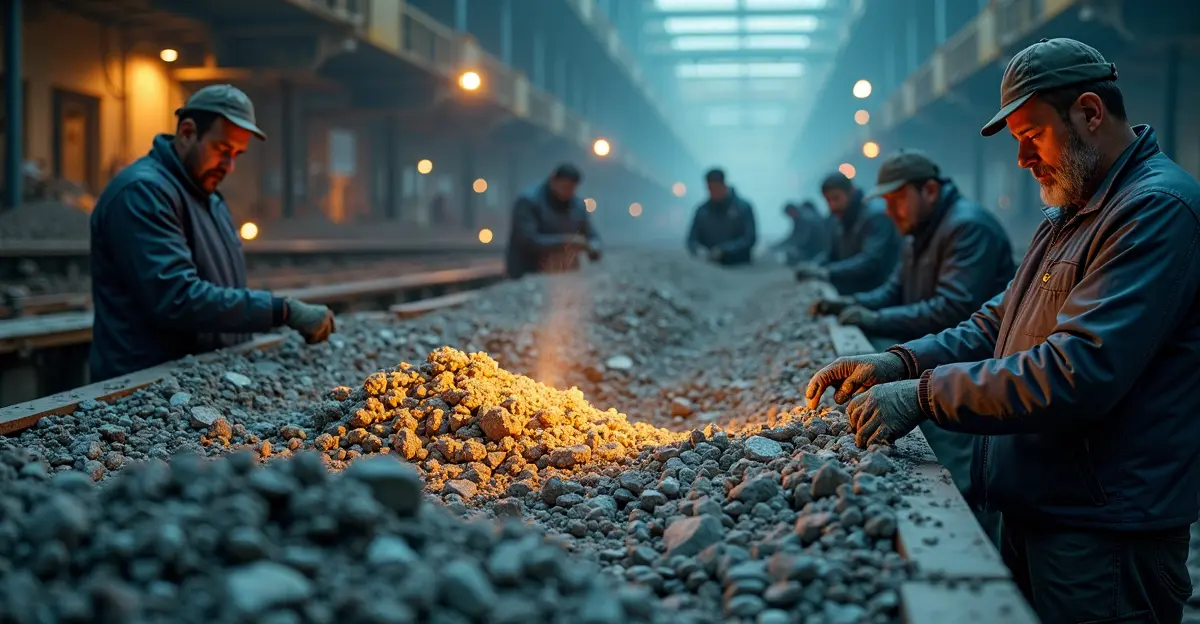
The global critical minerals landscape is undergoing its most dramatic transformation in decades. China's 2025 licensing regime on rare earths, combined with its dominance of over 60% of global critical mineral refining, has forced Western nations into an unprecedented scramble for supply security. With the U.S. securing 21 bilateral framework agreements in five months, the EU selecting 60 Strategic Projects under the Critical Raw Materials Act, and the launch of the FORGE alliance, 2026 marks a structural realignment of global mineral supply chains. This article analyzes whether these Western countermeasures can meaningfully reduce strategic dependence on Beijing, or if the gap between ambitious policy targets and actual processing capacity leaves the U.S. and Europe vulnerable to future coercion.
China's Licensing Regime: The Invisible Wall
In April 2025, China introduced new export licensing requirements for seven rare earth elements — samarium, gadolinium, terbium, dysprosium, lutetium, scandium, and yttrium — under Announcement No. 18. These controls cover their oxides, alloys, compounds, and mixtures, and all exports now require a MOFCOM export license. Processing takes up to 45 working days. The stated rationale is that these materials have strategic dual-use capabilities across defense and advanced manufacturing. The 2026 licensing regime reached full implementation on April 4, 2026, moving mid-to-heavy rare earth elements into a restrictive, case-by-case licensing regime. A suspended "0.1% Rule" that threatens to ensnare foreign-made goods containing Chinese-origin rare earths expires November 10, 2026.
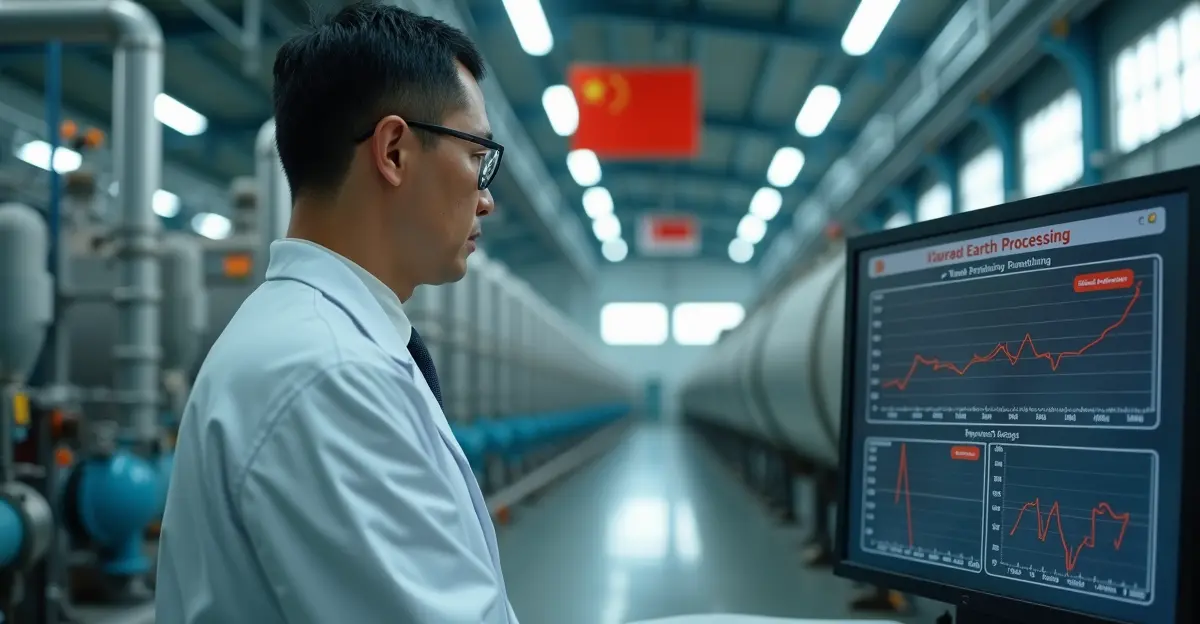
Notably, China introduced extraterritorial export control provisions in October 2025, allowing regulation of downstream use of controlled materials even after they leave Chinese territory, though enforcement has been delayed until November 2026 following diplomatic consultations. These measures significantly impact automotive and life sciences industries, as China accounts for approximately 90% of global rare earth refining capacity. Multi-tier supply chain transparency is now a compliance necessity for manufacturers worldwide.
Western Countermeasures: A Three-Pronged Strategy
The U.S. Approach: Bilateral Deals and FORGE
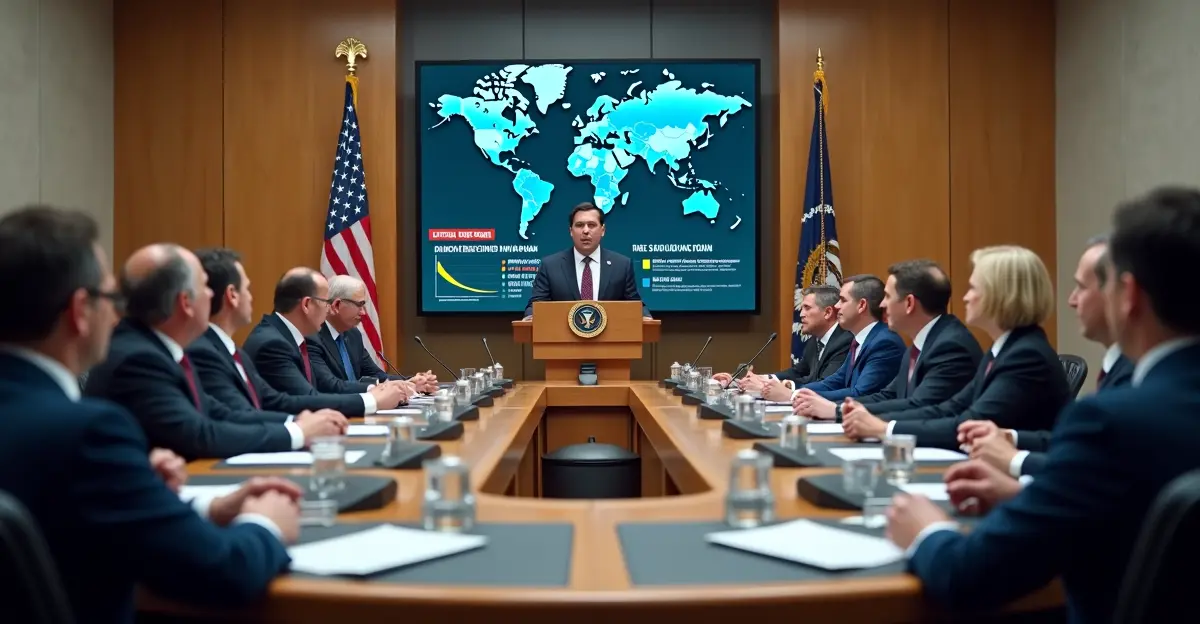
On February 4, 2026, the United States hosted the 2026 Critical Minerals Ministerial, led by Secretary of State Marco Rubio alongside Vice President JD Vance and other cabinet officials. Representatives from 54 countries and the European Commission attended. The event aimed to reshape the global critical minerals and rare earths market, reducing over-concentration that enables political coercion and supply chain disruption. Key outcomes included signing 11 new bilateral critical minerals frameworks or MOUs, bringing the total to 21 deals in five months, with countries including Argentina, Morocco, the Philippines, and the UAE.
The U.S. also launched FORGE (Forum on Resource Geostrategic Engagement) as the successor to the Minerals Security Partnership, chaired by South Korea. FORGE is designed as a plurilateral coalition creating a preferential trade-and-investment zone for critical minerals with coordinated price floors to counter adversarial market manipulation. Vice President JD Vance described reference prices maintained through adjustable tariffs to uphold pricing integrity. The U.S. government has mobilized over $30 billion in financing for critical mineral projects, including EXIM Bank's Project Vault — a $10 billion domestic strategic reserve initiative. The ministerial also advanced private sector partnerships through Pax Silica to secure end-to-end supply chains for advanced technologies including AI, robotics, and batteries.
The EU's Critical Raw Materials Act
The European Critical Raw Materials Act sets clear 2030 benchmarks: 10% of EU annual extraction needs, 40% for processing, and 25% for recycling. No more than 65% of any strategic raw material's annual supply should come from a single third country. The EU has selected 60 Strategic Projects under the Act and announced funding of up to €3 billion ($3.5 billion) for 2026 through the ReSourceEU Action Plan. The EU currently faces heavy import dependencies — 97% of magnesium from China and 63% of cobalt from the DRC — making this Act critical for reducing vulnerabilities. The EU Critical Raw Materials Act also includes regulatory fast-tracking for strategic projects that can rapidly produce critical raw materials.
FORGE and Transatlantic Coordination
The EU and U.S. have forged a critical minerals alliance focusing on strengthening supply chains for rare earth elements and other critical minerals essential for clean energy technologies, defense, and advanced manufacturing. The alliance includes joint investments in mining projects, recycling initiatives, and research into alternative materials. FORGE aims to align trade policy, price signals, and market access across partner economies, elevating cooperation as a strategic asset that could reshape minerals markets. The FORGE alliance critical minerals represents a significant step toward coordinated Western action.
Impact and Implications: Can the Gap Be Closed?
Despite these ambitious initiatives, significant challenges remain. China's dominance in processing — particularly for heavy rare earths — is deeply entrenched. Building new processing capacity takes years and requires massive capital investment. The World Economic Forum's Global Risks Report 2026 identifies geoeconomic confrontation as the top short-term risk, with 68% of respondents expecting a more fragmented multipolar global political environment over the next decade. The WEF Global Risks Report 2026 highlights that these risks are compounding rather than isolated, emphasizing the urgent need for cooperation and resilience.
The gap between Western policy targets and actual processing capacity remains substantial. While the U.S. has secured 21 bilateral agreements and mobilized $30 billion, actual mine-to-magnet supply chains take a decade or more to develop. The EU's 2030 benchmarks for processing (40%) and recycling (25%) are ambitious but face significant implementation hurdles. China's extraterritorial controls and the pending "0.1% Rule" add further uncertainty for global manufacturers.
Expert Perspectives
"The critical minerals challenge is not just about mining — it's about processing, refining, and manufacturing capabilities that China has spent decades building," said a senior analyst at the Atlantic Council. "FORGE and the EU's Critical Raw Materials Act are important steps, but without massive investment in downstream processing capacity, Western nations will remain vulnerable to supply disruptions."
"China's licensing regime is a strategic tool designed to maximize leverage over global supply chains," noted a trade policy expert at the Center for Strategic and International Studies. "The extraterritorial provisions are particularly concerning, as they could allow Beijing to control the use of Chinese-origin materials even in products manufactured outside China."
FAQ
What is China's 2026 rare earth licensing regime?
China's updated Export Licensing Management Goods Catalogue, effective April 4, 2026, requires case-by-case licenses for mid-to-heavy rare earth elements including samarium, gadolinium, terbium, dysprosium, lutetium, scandium, and yttrium. Processing takes up to 45 working days.
What is FORGE?
FORGE (Forum on Resource Geostrategic Engagement) is a U.S.-led plurilateral coalition launched in February 2026 as the successor to the Minerals Security Partnership. It aims to create a preferential trade-and-investment zone for critical minerals with coordinated price floors.
How many bilateral agreements has the U.S. signed?
The U.S. has signed 21 bilateral critical minerals framework agreements in five months, with countries including Argentina, Morocco, the Philippines, and the UAE.
What are the EU's 2030 targets under the Critical Raw Materials Act?
The EU aims to meet 10% of annual extraction needs, 40% of processing needs, and 25% of recycling needs domestically by 2030. No more than 65% of any strategic raw material's annual supply should come from a single third country.
Why is geoeconomic confrontation the top 2026 risk?
The WEF Global Risks Report 2026 ranks geoeconomic confrontation as the top short-term risk due to rising trade tensions, sanctions, tariffs, and strategic economic rivalry among major powers, which are weakening multilateral cooperation and fragmenting global markets.
Conclusion: A Long Road Ahead
2026 marks a critical inflection point in the global critical minerals race. While Western nations have launched ambitious initiatives — from FORGE to the EU's Strategic Projects — the gap between policy ambition and actual processing capacity remains daunting. China's entrenched dominance in refining, combined with its evolving export control regime, means that meaningful reduction in strategic dependence will take years, if not decades. The coming months will test whether the newly forged alliances can translate political commitments into tangible supply chain resilience, or whether the structural advantages Beijing has built will prove insurmountable.


Follow Discussion