


 Deutsch
 English
 Español
 Français
 Nederlands
 Português


 Share
Share




The Geopolitical Calculus of COP31: Navigating Climate Diplomacy Amid Great Power Competition
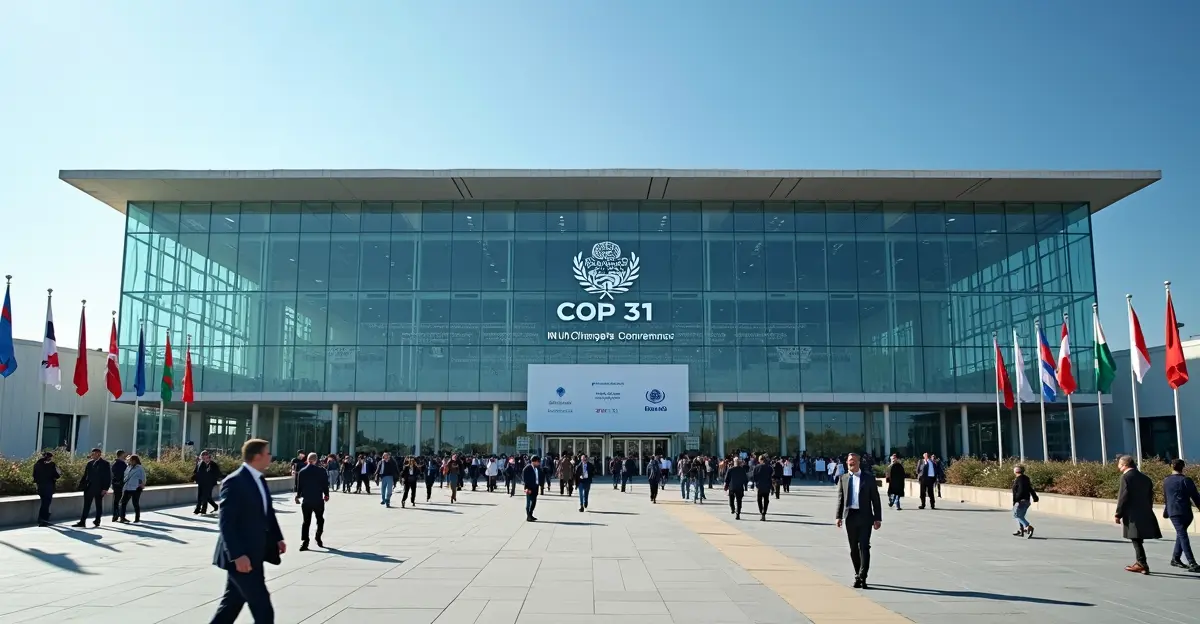
As the world prepares for COP31 in Antalya, Türkiye from November 9-20, 2026, the climate conference represents a critical inflection point where environmental policy intersects with intensifying geopolitical competition. With the United States formally withdrawing from the Paris Agreement in January 2026 and the first Global Stocktake revealing insufficient progress toward climate goals, COP31 emerges as a battleground for global influence where climate technology, critical minerals, and carbon border mechanisms become new arenas for strategic competition.
What is COP31 and Why Does It Matter?
COP31, the 31st United Nations Climate Change Conference, marks a pivotal transition from climate negotiations to implementation following the mixed results of COP30 in Brazil. The conference's unprecedented dual-presidency structure—with Türkiye serving as physical host in Antalya and Australia's Climate Minister Chris Bowen leading negotiations—reflects broader power dynamics in climate governance. This creative partnership emerged after both nations initially sought to host alone, representing a bridge-building approach that leverages Türkiye's geographic position between Europe, the Middle East, and Russia, combined with Australia's deep UNFCCC negotiation experience and Pacific nation relationships.
The US Leadership Vacuum and Climate Finance Realities
The United States' formal withdrawal from the Paris Agreement on January 27, 2026, creates a $1.3 trillion annual climate finance void that fundamentally reshapes COP31 negotiations. According to legal analysis, this withdrawal retracts U.S. climate finance pledges and eliminates American participation in key mechanisms like Nationally Determined Contributions submissions and transparency reports. The implementation of the $1.3 trillion annual commitment secured at COP30 now faces unprecedented challenges, with developing nations demanding accountability for the unmet $100 billion annual pledge that preceded it.
China and EU: Competing for Climate Leadership
In the leadership vacuum created by U.S. withdrawal, China and the European Union are positioning themselves as alternative climate champions through distinct strategic approaches. China leverages its dominance in renewable technology manufacturing and critical mineral processing—projected to supply over 60% of refined lithium and cobalt by 2035—while the EU advances its Carbon Border Adjustment Mechanism (CBAM) as a tool for both climate action and economic competitiveness. The EU carbon border tax has sparked international debate about climate protectionism versus genuine environmental progress.
Critical Minerals: The New Geopolitical Battleground
Critical mineral supply chains have emerged as central arenas for strategic competition at COP31. According to ODI analysis, four key dynamics shape this competition: U.S. domestic production incentives and $7.5 billion in federal financing, EU challenges in scaling investment despite policy frameworks, China's processing dominance, and new actors like the UAE and Saudi Arabia entering the market. These critical mineral geopolitics will influence climate technology transfer negotiations and determine which nations control the energy transition's foundational resources.
Developing Nations' Strategic Leverage
Developing nations are leveraging this multipolar moment to advance their climate finance and adaptation agendas with unprecedented assertiveness. The Group of 77 plus China, representing 134 developing countries, enters COP31 negotiations with strengthened bargaining power, demanding:
- Transparent implementation of the $1.3 trillion annual climate finance commitment
- Enhanced adaptation funding for climate-vulnerable nations
- Technology transfer mechanisms that avoid intellectual property barriers
- Debt-for-climate swaps to address overlapping crises
Small Island Developing States (SIDS), facing existential threats from sea-level rise, have secured dedicated finance sessions and a Pacific Pre-COP meeting, ensuring their vulnerabilities remain central to negotiations.
Climate Technology Transfers as Diplomatic Tools
Climate technology transfers have evolved from technical discussions to strategic diplomatic instruments at COP31. Nations with advanced renewable energy, carbon capture, and green hydrogen technologies are using these assets to build alliances and secure favorable positions in emerging green supply chains. The conference will witness competing technology transfer frameworks: China's bilateral approach through Belt and Road Initiative partnerships versus the EU's multilateral model emphasizing standards and certification systems. These competing visions reflect broader tensions between state-led and market-based approaches to the energy transition.
Expert Perspectives on COP31's Geopolitical Significance
"COP31 represents the full maturation of climate policy as a core component of national security strategy," observes Dr. Elena Rodriguez, Senior Fellow at the Center for Climate and Security. "The days when climate negotiations operated in a separate diplomatic silo are over—today, every carbon border mechanism, every critical mineral agreement, every technology transfer deal carries geopolitical implications that extend far beyond environmental concerns."
Former UNFCCC Executive Secretary Christiana Figueres adds: "The Türkiye-Australia dual presidency model reflects a pragmatic recognition that no single nation can lead the climate agenda in today's fragmented world. This partnership bridges geographical and political divides, but its success depends on whether both nations can maintain neutrality amid intensifying great power competition."
Future Implications and 2026 Outlook
The outcomes of COP31 will establish precedents that shape global climate governance for the remainder of the 2020s. Key areas to watch include:
- Whether the $1.3 trillion climate finance commitment transitions from aspiration to enforceable obligation
- How carbon border mechanisms evolve from unilateral policies to coordinated international frameworks
- Whether critical mineral supply chains become more diversified or consolidate under single-nation dominance
- How developing nations convert their bargaining power into tangible adaptation and loss-and-damage resources
The conference occurs against the backdrop of the first Global Stocktake assessment revealing that current national commitments deliver less than 15% of needed emissions reductions, leaving the world on track for dangerous 2.3-2.8°C warming. This reality adds urgency to COP31's implementation mandate and increases pressure on all parties to move beyond rhetoric to concrete action.
Frequently Asked Questions
What makes COP31 different from previous climate conferences?
COP31 represents the first major climate summit following U.S. withdrawal from the Paris Agreement, creating a leadership vacuum that China and the EU are competing to fill. The conference's dual-presidency structure (Türkiye host, Australia negotiation president) is unprecedented and reflects broader geopolitical realignments in climate governance.
How does the $1.3 trillion climate finance commitment work?
The New Collective Quantified Goal (NCQG) established at COP30 commits developed nations to deliver at least $300 billion annually to developing countries by 2035, with an aspirational target of $1.3 trillion in international climate finance over the same period. This funding is intended to support mitigation, adaptation, and loss-and-damage efforts in vulnerable nations.
Why are critical minerals so important for COP31 negotiations?
Critical minerals like lithium, cobalt, and rare earth elements are essential for renewable energy technologies, electric vehicles, and energy storage systems. Control over these supply chains determines which nations lead the energy transition and influences technology transfer negotiations, making them central to geopolitical competition at COP31.
How are developing nations leveraging the current geopolitical situation?
Developing nations are using the competition between China, the EU, and other powers to advance their climate finance and adaptation agendas. By playing competing offers against each other and forming strategic alliances, they're seeking better terms for technology transfer, increased adaptation funding, and more favorable debt restructuring arrangements.
What happens if COP31 fails to deliver meaningful progress?
Failure at COP31 would further erode trust in multilateral climate governance, accelerate unilateral climate policies like carbon border taxes, and likely push vulnerable nations toward bilateral arrangements that may lack transparency and accountability. It could also undermine the credibility of the Paris Agreement framework ahead of crucial 2028 review cycles.





Follow Discussion