


 Deutsch
 English
 Español
 Français
 Nederlands
 Português


 Share
Share




The $1.3 Trillion Climate Finance Implementation Challenge: How COP31 Will Test Global Governance
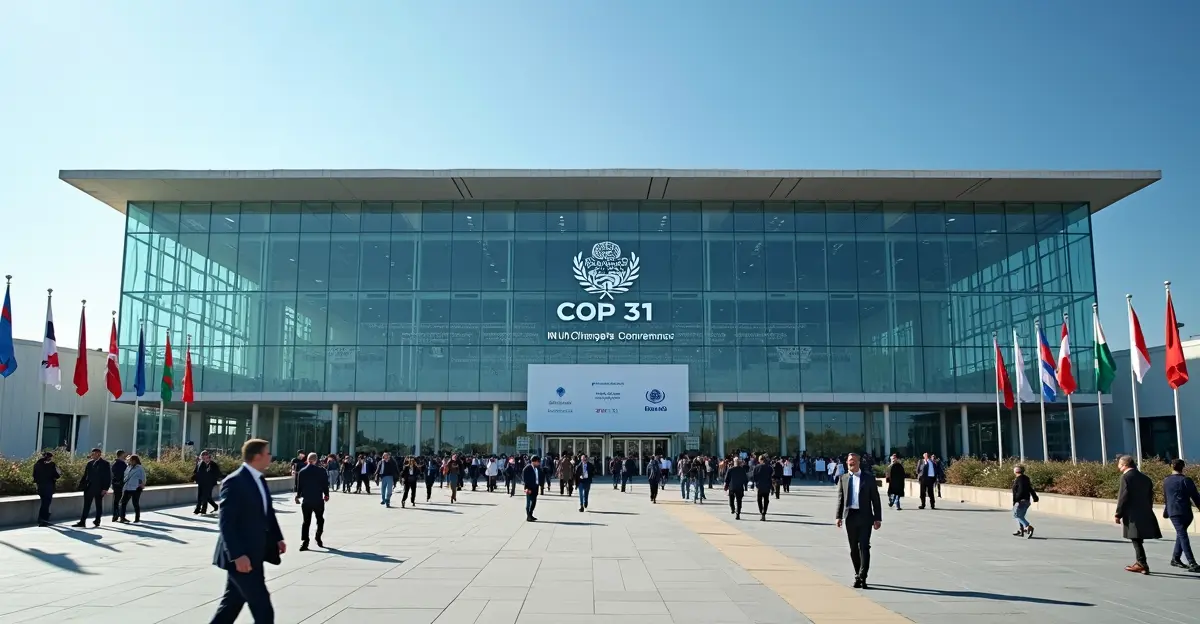
COP31, scheduled for November 9-20, 2026 in Antalya, Türkiye, represents a critical transition from climate negotiation to implementation, focusing on operationalizing the unprecedented $1.3 trillion annual climate finance target established at COP30. This seven-fold increase from current flows of approximately $190 billion annually presents the most significant test of global climate governance since the Paris Agreement, requiring nations to transform political commitments into actionable investment pipelines before the 2035 deadline.
What is the COP31 Climate Finance Implementation Challenge?
The COP31 implementation challenge centers on mobilizing $1.3 trillion annually in climate finance for developing countries by 2035, as established at COP30 in Belém, Brazil. This represents a dramatic escalation from current flows, requiring innovative mechanisms to bridge the gap between political pledges and practical investment. The Independent High-Level Expert Group on Climate Finance (IHLEG) has confirmed that reaching this target is "entirely feasible" but requires fundamental restructuring of global financial systems and governance approaches.
The Dual Presidency Model: Türkiye and Australia's Strategic Partnership
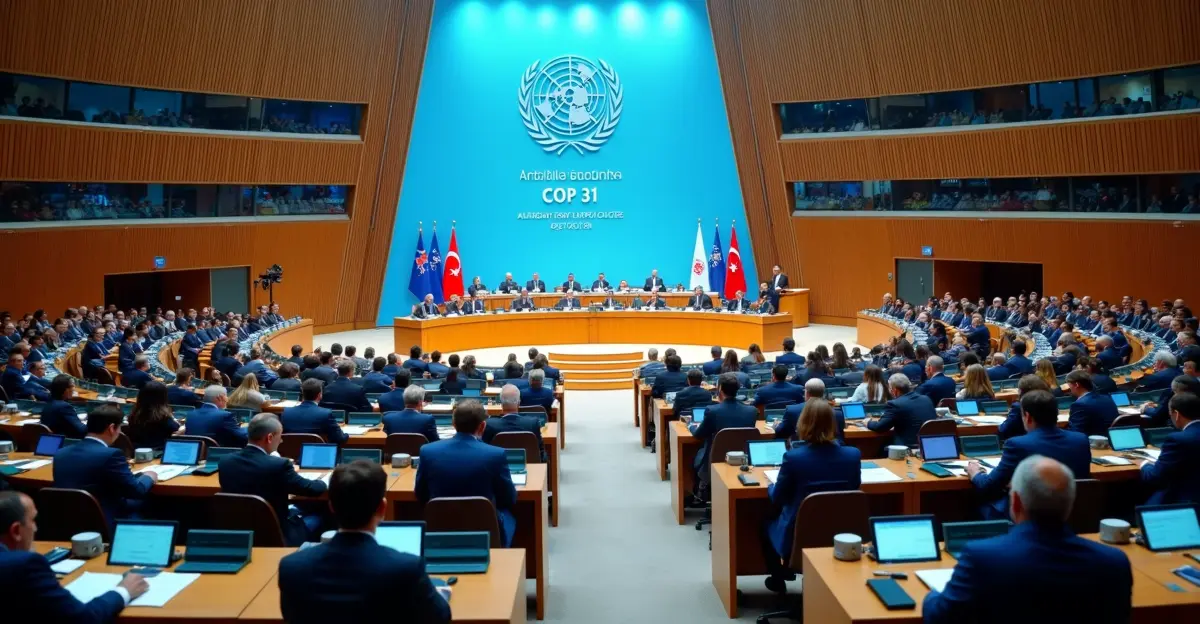
COP31 introduces an unprecedented governance structure with Türkiye hosting as formal COP President while Australia serves as President of Negotiations. This dual presidency model, negotiated during COP30 after both nations refused to withdraw their hosting bids, creates a unique bridge between developed and developing nation perspectives. Murat Kurum, Türkiye's Minister of Environment, Urbanization and Climate Change, will chair the conference, while Australian Minister for Climate Change and Energy Chris Bowen will preside over negotiations with "exclusive authority" from the end of COP30 until COP31 concludes.
This arrangement gives Australia and the Pacific region unprecedented influence in global climate negotiations, with a special pre-COP meeting planned on a Pacific island to bring world leaders face-to-face with climate impacts. The partnership aims to ensure COP31 sets new benchmarks for climate ambition by prioritizing implementation and accelerating real-world action, building on outcomes from the COP30 Brazil conference.
Key Implementation Mechanisms Under Development
Several critical mechanisms are being developed to operationalize the $1.3 trillion target:
- Climate Action Implementation Mechanism: Designed by UNDP, this framework focuses on building bankable investment pipelines in priority sectors, designing blended-finance solutions to attract private capital, and strengthening national implementation systems for transparency.
- NDCs 3.0: Nations are developing third-generation Nationally Determined Contributions that shift from target-setting to creating actionable investment roadmaps with clear financing strategies.
- Country Platforms: Thirteen nations have announced development plans through country platforms that coordinate international support with domestic priorities.
- Innovative Funding Sources: Solidarity levies on aviation and shipping, debt-for-climate swaps, and enhanced carbon markets are being developed to supplement traditional funding.
Geopolitical Tensions and Climate Justice Dynamics
COP31 unfolds amid intensifying geopolitical competition where climate finance mechanisms are becoming tools of strategic influence. The conference must navigate complex North-South dynamics, with developing nations demanding climate justice and developed countries seeking accountability for funds deployed. The $1.3 trillion target includes $300 billion specifically from developed to developing countries, creating pressure for transparent allocation mechanisms that address historical responsibility while ensuring effective deployment.
Pacific Island states, facing existential threats from sea-level rise, will have particular influence through Australia's negotiation presidency. The conference will establish precedents for flexible governance structures that can adapt to shifting geopolitical realities while maintaining momentum toward climate goals. This delicate balance between climate justice and practical implementation represents one of COP31's most significant challenges, particularly as nations grapple with competing energy security policies in a volatile global landscape.
Practical Pathways to $1.3 Trillion: The Implementation Roadmap
The IHLEG roadmap outlines a comprehensive strategy for reaching the $1.3 trillion target through three interconnected pillars:
| Pillar | Key Components | Financial Targets |
|---|---|---|
| Invest and Transform | Clean energy, adaptation, loss and damage, natural capital | $3.2 trillion total annual investment need |
| Build Domestic Foundations | Policy frameworks, institutional capacity, enabling environments | Critical for attracting private capital |
| Scale Up External Finance | MDB lending, private capital, innovative sources | $1.3 trillion annual external finance |
Multilateral development banks are called to triple climate lending to $160-240 billion annually, while private capital must increase fifteenfold to $650 billion yearly. The roadmap emphasizes that fairness, gender inclusion, and social protection must be embedded in climate investments to ensure durable transitions that deliver not only emissions reductions but also jobs, resilience, and prosperity.
Expert Perspectives on COP31's Implementation Imperative
Climate governance experts emphasize that COP31 represents a watershed moment where previous climate frameworks meet practical implementation challenges. "COP31 is where ambition meets accountability," notes a senior UNDP official involved in designing the Climate Action Implementation Mechanism. "The $1.3 trillion target is not just about moving money—it's about transforming economies, building resilience, and restoring trust in multilateral cooperation."
Australian negotiators highlight the Pacific's central role, with Minister Chris Bowen stating that the partnership with Türkiye "demonstrates Australia's restored climate leadership and commitment to addressing the existential threat climate change poses to the Pacific region." Meanwhile, Turkish officials emphasize their country's leadership in zero waste initiatives and circular economy solutions as models for sustainable development.
Impact and Implications for Global Climate Governance
COP31's outcomes will fundamentally reshape global capital flows and determine whether climate finance becomes a driver of equitable development or reinforces existing economic disparities. The conference will test whether flexible governance structures can mobilize capital at the required scale while navigating complex geopolitical realities. Success would establish new precedents for international cooperation on climate implementation, while failure could undermine confidence in the multilateral system's ability to address existential threats.
The conference's focus on implementation rather than negotiation represents a maturation of the Paris Agreement framework, shifting from what needs to be done to how it will be accomplished. This practical orientation is essential for maintaining momentum toward the 2035 deadline and ensuring that climate finance delivers measurable impact rather than remaining abstract commitments.
Frequently Asked Questions About COP31 Climate Finance
What is the $1.3 trillion climate finance target?
The $1.3 trillion annual climate finance target, established at COP30, represents the amount needed by developing countries by 2035 to pursue low-carbon, climate-resilient development, with $300 billion specifically from developed nations.
How does COP31 differ from previous climate conferences?
COP31 marks a critical shift from climate negotiation to implementation, focusing on operationalizing financial commitments through practical mechanisms rather than setting new targets.
What is the dual presidency model at COP31?
COP31 features Türkiye as formal host and COP President while Australia serves as President of Negotiations, creating a unique bridge between developed and developing nation perspectives.
How will the $1.3 trillion be mobilized?
Through a combination of multilateral development bank lending (tripling to $160-240 billion), private capital (increasing fifteenfold to $650 billion), and innovative funding sources like solidarity levies and debt-for-climate swaps.
What are the key challenges for COP31 implementation?
Key challenges include bridging North-South climate justice divides, transforming political pledges into bankable investment pipelines, and navigating geopolitical tensions while mobilizing unprecedented capital flows.
Conclusion: The Implementation Imperative
COP31 represents a pivotal moment in global climate governance, where ambitious financial pledges must translate into concrete implementation mechanisms before the 2035 deadline. The $1.3 trillion target tests whether the international community can operationalize climate finance at the required scale while addressing climate justice concerns and geopolitical realities. As preparations accelerate with strategic meetings between Turkish and UN officials, the world watches to see if COP31 can successfully navigate the complex transition from negotiation to implementation, fundamentally reshaping how climate action is financed and delivered in the critical decade ahead.



Follow Discussion