


 Deutsch
 English
 Español
 Français
 Nederlands
 Português


 Share
Share




COP31 2026: The $1.3 Trillion Climate Finance Implementation Challenge
The 31st United Nations Climate Change Conference (COP31), scheduled for November 9-20, 2026 in Antalya, Türkiye, represents a critical pivot from climate negotiation to implementation, focusing on the monumental challenge of scaling climate finance from $190 billion to $1.3 trillion annually. This seven-fold increase, established at COP30, presents the most significant test of global climate governance since the Paris Agreement, requiring unprecedented mobilization of public and private capital while addressing deep-seated climate justice concerns. As preparations accelerate with pre-conference meetings in Fiji and Tuvalu, COP31 emerges as the decisive moment when ambitious financial commitments must translate into concrete investment pipelines by 2026.
What is COP31 and Why Does It Matter?
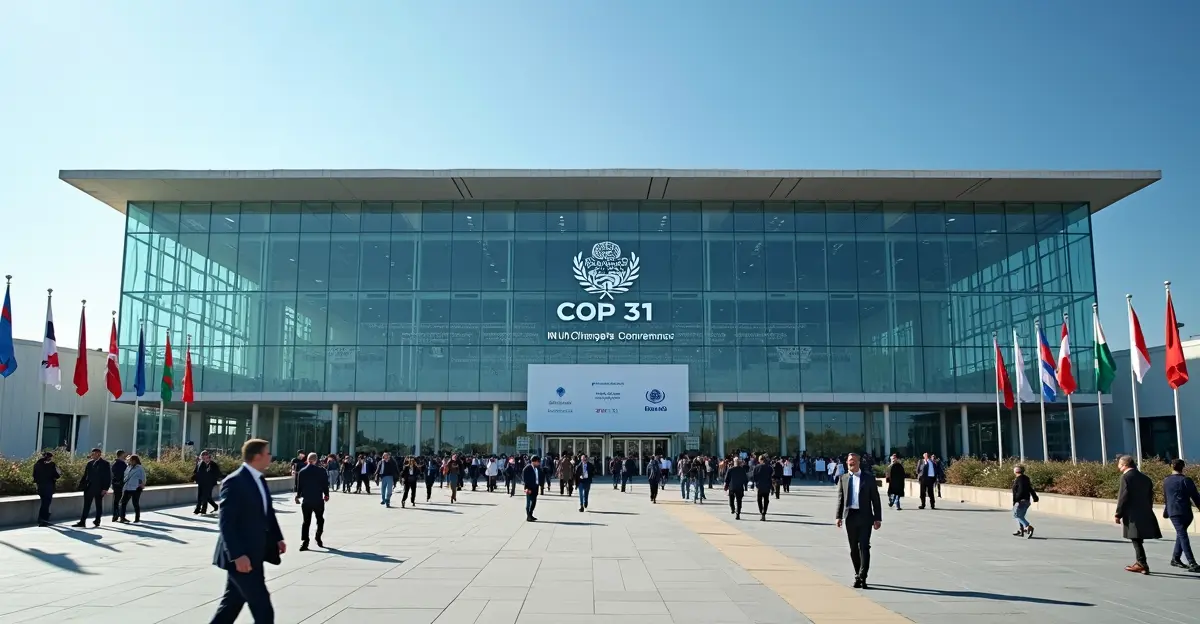
COP31 is the 31st Conference of the Parties to the UNFCCC, bringing together 195 nations at the Antalya Expo Center from November 9-20, 2026. Unlike previous summits focused on setting targets, COP31 marks the transition to implementation, specifically operationalizing the $1.3 trillion annual climate finance goal for developing countries by 2035. The conference features an unprecedented dual presidency model with Türkiye hosting as formal COP President while Australia serves as President of Negotiations, creating a strategic bridge between developed and developing nation perspectives. This arrangement emerged after both countries initially sought to host alone, with Australian Minister for Climate Change and Energy Chris Bowen presiding over negotiations while Türkiye's Minister of Environment, Urbanization and Climate Change Murat Kurum serves as COP President.
The $1.3 Trillion Implementation Challenge
The core challenge facing COP31 is transforming the $1.3 trillion annual climate finance target from political commitment to operational reality. Current climate finance flows stand at approximately $190 billion annually, requiring a seven-fold increase that represents the largest capital mobilization in human history for climate action. The target includes $300 billion specifically from developed to developing countries, creating pressure for transparent allocation mechanisms that address historical responsibility while ensuring effective deployment.
Key Implementation Mechanisms
Several critical mechanisms are being developed to achieve this unprecedented scale-up:
- Climate Action Implementation Mechanism: A framework to translate Nationally Determined Contributions (NDCs 3.0) into actionable investment roadmaps
- Country Platforms: 13 countries have announced plans to develop these investment coordination mechanisms to streamline climate finance deployment
- Innovative Funding Sources: Solidarity levies on aviation and shipping, debt-for-climate swaps, and blended finance instruments
- Private Capital Mobilization: Private investment must increase fifteenfold to $650 billion annually, requiring new risk-sharing mechanisms and regulatory frameworks
Multilateral development banks are called to triple climate lending to $160-240 billion annually, while the global green bond market must expand significantly to meet financing needs. The success of these mechanisms will determine whether climate finance becomes a driver of equitable development or reinforces existing economic disparities.
Geopolitical Context and US Policy Rollbacks
COP31 unfolds against a complex geopolitical backdrop, with significant climate policy rollbacks in the United States creating uncertainty in global climate governance. The Trump administration's reversal of climate commitments threatens to undermine international progress, creating a leadership vacuum that other nations must fill. This geopolitical tension adds urgency to COP31's implementation focus, as the international community seeks to maintain momentum toward Paris Agreement goals despite shifting US priorities.
The dual presidency model gains additional significance in this context, with Australia's deep UNFCCC negotiation experience and Türkiye's geographic position as a bridge between Europe, the Middle East, and Russia creating a stabilizing influence. Both countries bring complementary strengths: Türkiye with 156 TWh of renewable electricity generation experience and Australia with extensive rooftop solar and grid integration expertise. This partnership reduces domestic political risks while allowing focused leadership on implementation challenges.
Pre-Conference Preparations and Pacific Leadership
Preparations for COP31 are already underway with innovative pre-conference meetings scheduled in Fiji (October 5-8, 2026) and Tuvalu, reflecting the increasing role of climate-vulnerable nations in global climate negotiations. Fiji has proposed a three-and-a-half-day Ministerial Talanoa framework, including a 1.5-day Leaders' segment partly hosted in Tuvalu, strategically scheduled after the UN General Assembly session and before World Bank Annual Meetings to maximize ministerial participation.
These Pacific-led preparations emphasize the urgency of climate action for island nations facing existential threats from sea-level rise and extreme weather events. The meetings will focus on priority issues including adaptation funding, loss and damage mechanisms, and ensuring that the climate justice framework remains central to implementation discussions. Strong interest from indigenous groups, civil society, and the private sector indicates broad engagement with COP31's implementation agenda.
Private Capital Mobilization Challenges
The most formidable challenge facing COP31 is mobilizing private capital at the required scale. Current private climate finance stands at approximately $40 billion annually, requiring a fifteenfold increase to reach the $650 billion needed by 2035. Key barriers include:
- Risk Perception: Many climate investments in developing countries are perceived as high-risk, requiring innovative risk-sharing mechanisms
- Regulatory Frameworks: Inconsistent policies and regulatory uncertainty deter private investment
- Project Pipeline Development: Limited bankable climate projects in developing countries
- Currency and Liquidity Risks: Exchange rate volatility and limited exit options for investors
COP31 must address these structural barriers through mechanisms like the Climate Investment Platform, enhanced credit enhancement facilities, and standardized measurement, reporting, and verification (MRV) systems. The conference will also need to balance the need for private capital mobilization with climate justice concerns, ensuring that profit motives don't override equity considerations.
Climate Justice and Equity Considerations
Beyond the sheer scale of financial mobilization, COP31 faces the critical challenge of ensuring climate finance serves justice and equity objectives. The $1.3 trillion target includes specific allocations for adaptation ($300 billion) and loss and damage mechanisms, reflecting recognition that climate impacts disproportionately affect vulnerable communities. However, translating these allocations into effective, locally-led implementation remains a significant challenge.
The conference must address historical responsibility while creating forward-looking investment frameworks that prioritize community needs over donor preferences. This requires innovative approaches to climate governance structures that empower local decision-making while maintaining accountability for results. The success of COP31 will be measured not just by dollars mobilized but by how effectively those resources address the intersecting challenges of climate change, poverty, and inequality.
Expert Perspectives on COP31's Significance
Climate finance experts emphasize the transformative potential of COP31. 'This isn't just another climate conference—it's the moment when rhetoric meets reality,' notes Dr. Fatma Varank, Türkiye's Chief Climate Negotiator. 'We're building the financial architecture for the next decade of climate action, and every decision must balance ambition with implementability.'
Australian climate diplomat Chris Bowen adds: 'The dual presidency model represents a new approach to climate diplomacy. By bridging developed and developing country perspectives, we can create implementation mechanisms that work for everyone, not just the usual suspects.' This collaborative approach reflects growing recognition that traditional climate leadership models must evolve to address implementation challenges.
Future Outlook and COP31 Legacy
As COP31 approaches, the stakes couldn't be higher. The conference outcomes will fundamentally reshape global capital flows and determine whether climate finance becomes a driver of equitable development or reinforces existing economic disparities. Success requires not just financial commitments but operational breakthroughs in how climate finance is structured, deployed, and monitored.
The legacy of COP31 will be measured by its ability to create durable implementation frameworks that survive political cycles and market fluctuations. With the 2027 climate summit in Ethiopia already on the horizon, COP31 must establish momentum that carries through subsequent conferences, creating a virtuous cycle of implementation, learning, and scaling.
Frequently Asked Questions (FAQ)
What is COP31 and when is it happening?
COP31 is the 31st United Nations Climate Change Conference scheduled for November 9-20, 2026 in Antalya, Türkiye, focusing on implementing the $1.3 trillion annual climate finance target.
Why is $1.3 trillion climate finance important?
The $1.3 trillion annual target represents a seven-fold increase from current flows and is essential for developing countries to implement climate action, adapt to impacts, and transition to low-carbon economies by 2035.
What is the dual presidency model at COP31?
COP31 features an innovative dual presidency with Türkiye hosting as formal COP President while Australia serves as President of Negotiations, bridging developed and developing nation perspectives.
How will private capital be mobilized for climate finance?
Private capital must increase fifteenfold to $650 billion annually through risk-sharing mechanisms, regulatory reforms, project pipeline development, and innovative financial instruments.
What are the pre-COP31 meetings in Fiji and Tuvalu?
Pre-conference meetings in Fiji (October 5-8, 2026) and Tuvalu will shape the COP31 agenda, emphasizing Pacific island nations' climate priorities and ensuring vulnerable countries' voices are heard.





Follow Discussion