


 Deutsch
 English
 Español
 Français
 Nederlands
 Português


 Share
Share




The New Resource War: How Critical Minerals Are Redefining Global Defense Strategy
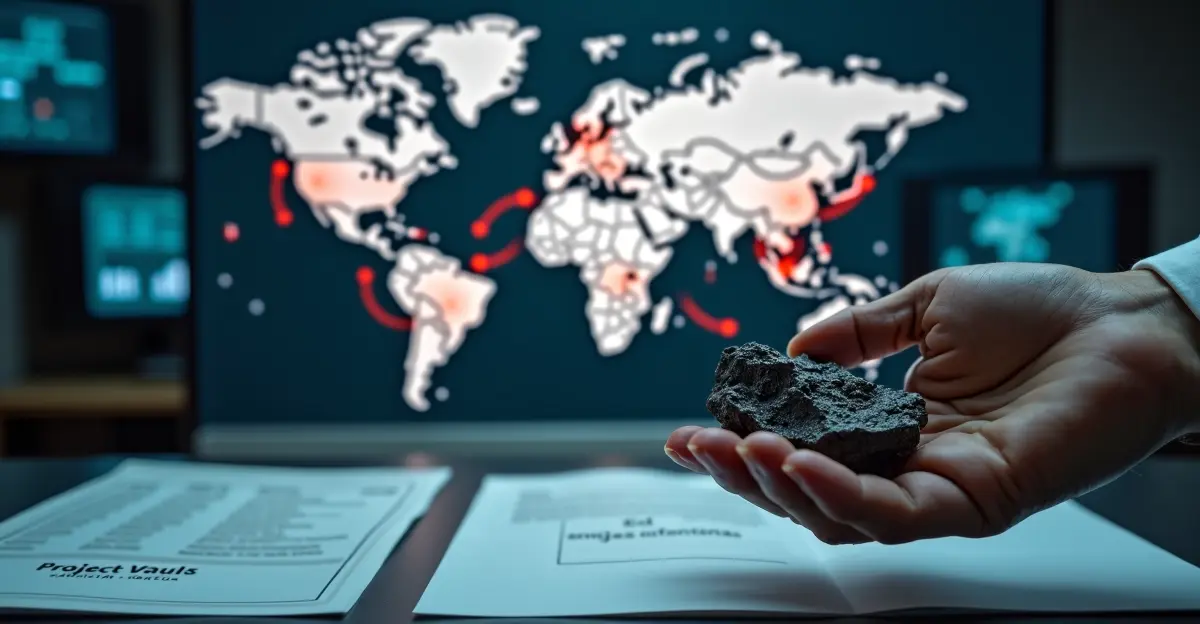
In an unprecedented shift in global security dynamics, critical minerals like tungsten, gallium, and rare earth elements have emerged as the new strategic battleground in international defense. With NATO formally identifying 12 defense-critical raw materials and China controlling 60-90% of global processing capacity, Western nations are scrambling to secure alternative supply chains amid growing geopolitical tensions. This mineral dependency creates profound vulnerabilities for military hardware production, from jet engines to missile guidance systems, transforming traditional defense strategy into an urgent resource security challenge.
What Are Defense-Critical Minerals?
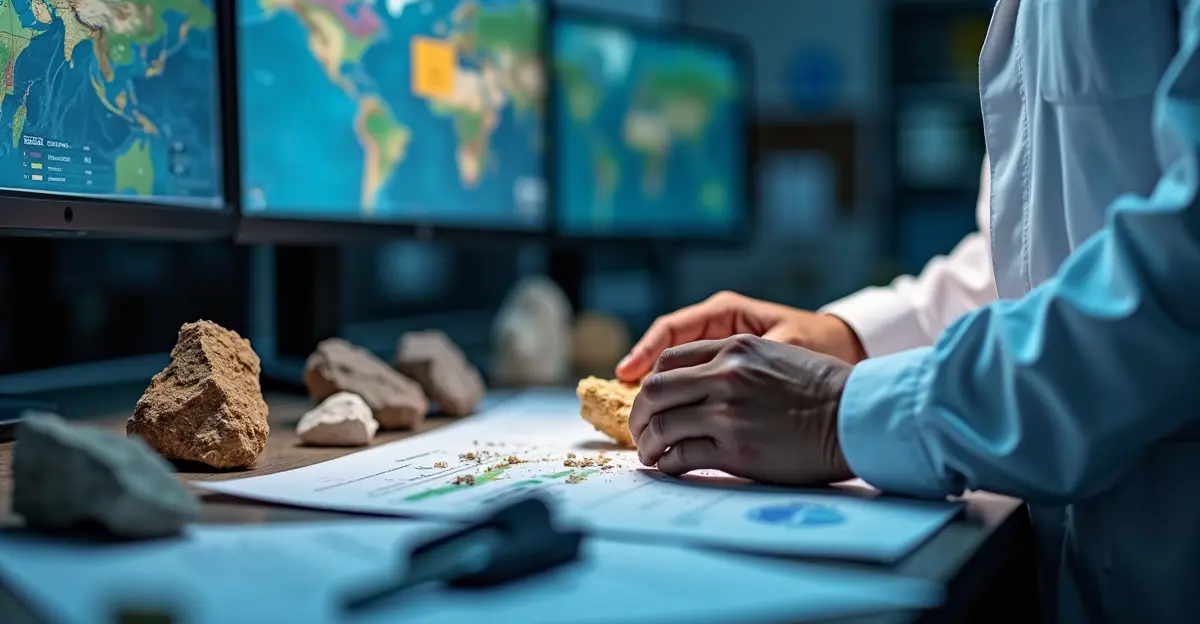
Defense-critical minerals are raw materials essential for manufacturing advanced military systems that cannot be easily substituted. In December 2024, NATO published its definitive list of 12 such materials: Aluminium, Beryllium, Cobalt, Gallium, Germanium, Graphite, Lithium, Manganese, Platinum, Rare Earth Elements, Titanium, and Tungsten. These materials form the backbone of modern defense capabilities, with each serving specific, irreplaceable functions in military technology. The rare earth elements category alone includes 17 metals crucial for magnets, lasers, and electronic warfare systems.
China's Processing Dominance Creates Strategic Vulnerability
China's control over critical mineral processing represents one of the most significant strategic vulnerabilities for Western defense industries. According to defense analysts, China processes 60-90% of global capacity for many of these minerals, with particularly concerning figures for specific materials:
- Gallium: China produces over 98% of global supply, essential for radar systems and missile guidance
- Tungsten: China controls 85% of global supply, crucial for armor-piercing munitions
- Rare Earth Elements: China processes 90% of global supply, vital for precision-guided weapons
- Germanium: China dominates production, critical for infrared optics and night vision
This concentration of processing power became alarmingly apparent in 2024-2025 when China imposed export restrictions on gallium and germanium, creating immediate supply chain disruptions for Western defense manufacturers. The US-China trade tensions have made these minerals potential weapons in economic warfare, with export controls serving as strategic leverage.
Western Response: Policy Initiatives and Supply Chain Diversification
US Defense Production Act Invocation
In response to the growing crisis, the United States has invoked the Defense Production Act to boost domestic critical mineral production. In 2025, the Department of Defense awarded $6.2 million to Golden Metal Resources through Title III of the DPA to develop a pre-feasibility study for the Pilot Mountain tungsten mining site in Nevada. This represents part of a broader $326.1 million investment in critical mineral production during fiscal year 2025. "We cannot maintain military superiority without securing our mineral supply chains," stated a Pentagon official familiar with the initiative.
Controversial US-Ukraine Minerals Deal
Perhaps the most controversial response has been the US-Ukraine critical minerals deal signed on April 30, 2025. This agreement aims to leverage Ukraine's mineral resources, particularly its Soviet-era titanium production capabilities, to reduce Western dependence on Chinese supplies. However, developing Ukraine's mineral sector in a war-torn nation presents significant challenges, with experts noting it could take decades to establish reliable production. The deal has prompted Ukraine to digitize geological archives and restart core drilling in 2026, adopting international resource classification standards.
Military Applications: From Battlefield to Production Line
Tungsten: The Armor-Piercing Essential
Tungsten's extraordinary properties make it indispensable for modern defense systems. With a density of 19.3 g/cm³ (heavier than lead) and a melting point of 3,422°C, tungsten is essential for:
- Armor-piercing munitions and kinetic energy projectiles
- Missile components and rocket engine parts
- Fighter jet components that withstand extreme temperatures
- Military vehicle armor and fragmentation warheads
The United States has not mined tungsten domestically in nearly a decade, creating acute vulnerability for defense manufacturing. Recent deals, such as Almonty Industries' agreement with Tungsten Parts Wyoming for 40 tonnes of tungsten oxide monthly, address only 15-20% of US defense-related consumption.
Gallium: The Radar and Guidance System Backbone
Gallium, particularly in gallium nitride (GaN) form, has revolutionized military electronics. With over 3,800 documented military applications, gallium is crucial for:
- Advanced radar systems like RTX's new APG-82(V)X radar
- Missile guidance and targeting systems
- Electronic warfare and communications equipment
- Infrared optics and night vision technology
The recent development of GaN technology enables greater radar range without additional power, providing aircrews with crucial first-look, first-shoot advantages against emerging threats. However, with China controlling over 98% of production, Western defense manufacturers face severe supply constraints.
Geopolitical Implications and Future Outlook
The critical minerals crisis is transforming global defense alliances and creating new geopolitical dynamics. The NATO defense strategy now explicitly includes resource security as a core component, while countries are forming new mineral-focused partnerships. The temporary suspension of Chinese export restrictions in November 2025 (lasting until November 2026) represents a tactical pause rather than a policy reversal, highlighting the ongoing volatility in mineral supply chains.
Experts warn that breaking dependence on Chinese mineral processing will require sustained investment and international cooperation. "This isn't just about mining—it's about processing technology, refining capacity, and complete supply chain security," notes a defense industry analyst. The global supply chain resilience efforts must address multiple vulnerabilities simultaneously, from extraction to final manufacturing.
Frequently Asked Questions
What are the 12 defense-critical minerals identified by NATO?
NATO's list includes: Aluminium, Beryllium, Cobalt, Gallium, Germanium, Graphite, Lithium, Manganese, Platinum, Rare Earth Elements, Titanium, and Tungsten. These materials are essential for manufacturing advanced military systems with limited substitution options.
Why is China's dominance in critical minerals a security concern?
China processes 60-90% of global capacity for many defense-critical minerals, including over 98% of gallium and 85% of tungsten. This concentration creates supply chain vulnerabilities that could be exploited during geopolitical tensions, potentially disrupting Western defense manufacturing.
How is the US responding to critical mineral shortages?
The US is using the Defense Production Act to fund domestic mining projects, pursuing international agreements like the US-Ukraine minerals deal, and investing in processing technology development. In 2025 alone, the Department of Defense allocated $326.1 million for critical mineral production initiatives.
What military systems depend on critical minerals?
Critical minerals are essential for F-35 fighter jets, Patriot missile defense systems, advanced radar technology, armor-piercing munitions, submarine detection systems, and precision-guided weapons. Tungsten is crucial for armor-piercing capabilities, while gallium enables advanced radar and guidance systems.
Are there alternatives to Chinese mineral supplies?
While alternative sources exist in countries like Australia, Brazil, and Canada, developing processing capacity outside China requires significant investment and time. The US-Ukraine deal and domestic mining initiatives represent long-term strategies that may take decades to fully implement.



Follow Discussion