


 Deutsch
 English
 Español
 Français
 Nederlands
 Português


 Share
Share




The Strategic Vulnerability of Critical Minerals: How Recent China Export Controls Reshape Global Supply Chains
China's recent one-year suspension of critical mineral export controls to the United States, announced in November 2025 following the October trade truce, has exposed the profound strategic vulnerability of Western supply chains. While providing temporary relief, this policy move highlights China's dominant position in rare earth elements and critical minerals processing—controlling approximately 60% of global production and 90% of processing capacity—creating systemic risks for defense technologies, semiconductors, electric vehicles, and climate goals. The geopolitical chess game over these essential materials represents one of the most significant economic security challenges of our time.
What Are Critical Minerals and Why Do They Matter?
Critical minerals encompass a range of essential materials including rare earth elements, lithium, cobalt, germanium, gallium, and graphite that are indispensable for modern technologies. According to the University of Michigan analysis, rare earth elements alone are crucial for manufacturing electronics, renewable energy systems, electric vehicles, and advanced defense applications. These 17 elements, including neodymium, dysprosium, and praseodymium, enable everything from smartphone screens to missile guidance systems and wind turbine magnets. The strategic importance of these materials has transformed them from mere commodities into instruments of geopolitical power.
China's Strategic Calculus: Temporary Relief, Persistent Leverage
The November 2025 suspension represents a calculated geopolitical maneuver rather than a fundamental policy shift. As reported by CNBC, China's Ministry of Commerce announced the one-year suspension of export controls on materials used in military hardware, semiconductors, and high-tech industries. This includes rare earth elements, lithium battery materials, processing technologies, and previously imposed restrictions on gallium, germanium, antimony, and super-hard materials dating back to December 2024. The easing followed the October 30 meeting between U.S. President Donald Trump and Chinese President Xi Jinping in Busan, South Korea.
The Limited Effectiveness of Western Stockpiling
A 2025 Atlantic Council report reveals alarming vulnerabilities in U.S. critical mineral supply chains. Through stress tests examining geopolitical and climate-related disruptions, the study found that while the U.S. has some emergency tools like the Defense Production Act and stockpiles, these would be depleted within weeks to months during a crisis. The analysis examined two scenarios: Scenario A1 where China imposes export bans on strategic minerals, and Scenario A2 where extreme weather events compound these disruptions. The findings indicate that scaling alternative production capacity would take years, leaving Western economies dangerously exposed to prolonged supply disruptions.
Sectors at Greatest Risk: Defense, Semiconductors, and EVs
The concentration of supply chain vulnerabilities varies significantly across industries, with three sectors facing particularly acute risks:
- Defense Technology: Advanced weapons systems, including fighter jets, missile guidance systems, and radar technology, depend heavily on rare earth elements for magnets, sensors, and specialized alloys. The national security implications of mineral dependencies have become a central concern for defense planners worldwide.
- Semiconductors: Gallium and germanium are essential for semiconductor manufacturing, with China controlling approximately 90% of mined germanium production. The U.S. faces 100% import dependency for gallium and over 50% dependency for germanium imports, creating critical vulnerabilities in the technology supply chain.
- Electric Vehicles and Renewable Energy: The green energy transition depends fundamentally on critical minerals. Lithium-ion batteries require lithium, cobalt, and nickel, while wind turbines and electric motors depend on rare earth magnets. As noted in the World Economic Forum's 2025 report, building resilient supply chains for electric vehicles and data centers requires addressing the entire value chain from mineral extraction to power generation.
The Multi-Year Timeline for Alternative Supply Chains
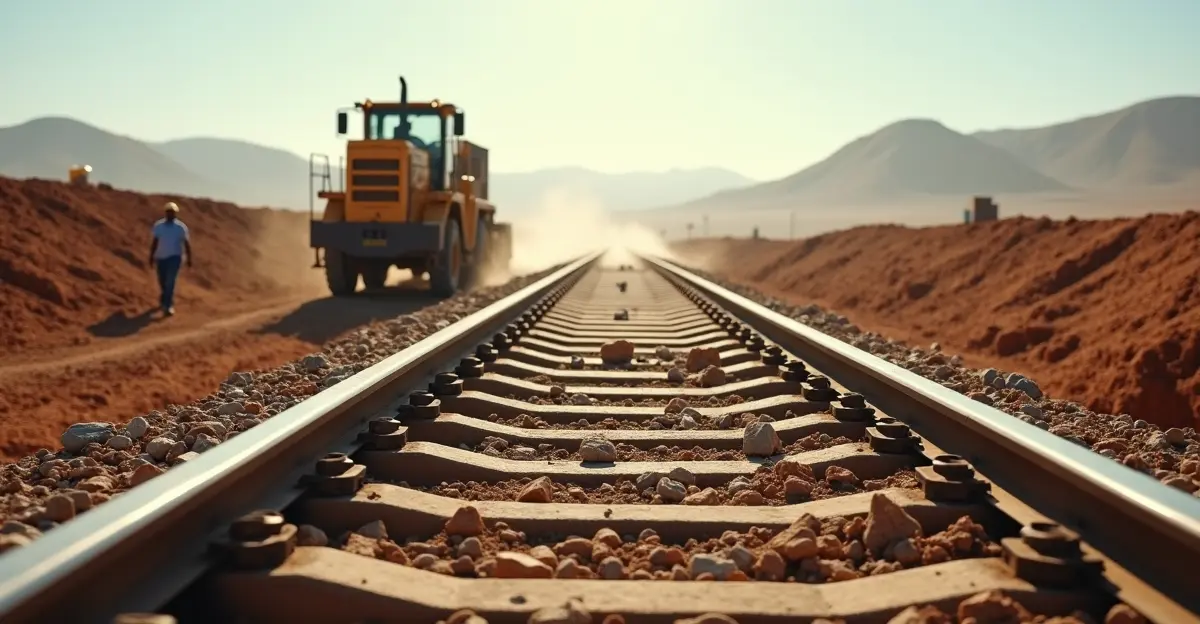
Building alternative supply chains represents a formidable challenge requiring significant time and investment. According to industry analysis, developing new mining operations typically takes 7-10 years, while establishing processing facilities requires 3-5 years and substantial technical expertise. The U.S. government has implemented a comprehensive four-pillar strategy to break China's supply chain dominance: onshoring domestic production, friend-shoring with allies, recycling/circular economy approaches, and technological innovation. However, as highlighted in a government strategy document, building resilient supply chains faces long-term challenges including permitting, infrastructure development, and technical scaling.
Climate Goals and Mineral Security: An Inextricable Link
The success of global climate initiatives depends fundamentally on securing reliable mineral supplies. The International Energy Agency estimates that demand for critical minerals could increase six-fold by 2040 to meet climate targets. Electric vehicles require six times more mineral inputs than conventional cars, while offshore wind farms need thirteen times more minerals per megawatt than gas-fired power plants. This creates a paradoxical situation where the transition to clean energy increases dependence on mineral supply chains dominated by a single nation. The EU's Critical Raw Materials Act represents one attempt to address this challenge through diversification and strategic partnerships.
Policy Responses Beyond Crisis Management
Effective responses to critical mineral vulnerabilities require moving beyond short-term crisis management toward building resilient, diversified supply networks. Key policy approaches include:
- Strategic Stockpiling Enhancement: Expanding and modernizing national stockpiles to cover longer disruption periods
- International Partnerships: Developing mineral security partnerships with allied nations including Australia, Canada, and European partners
- Technological Innovation: Investing in recycling technologies, material substitution, and more efficient use of critical minerals
- Supply Chain Transparency: Implementing tracking systems to monitor mineral flows and identify vulnerabilities
- Environmental Standards: Ensuring that alternative supply chains meet rigorous environmental and social standards
Expert Perspectives on the Strategic Landscape
Industry analysts emphasize the strategic nature of China's mineral policies. 'China has established a commanding monopoly over rare earths through decades of strategic state intervention,' notes Craig Hart in an Atlantic Council analysis. 'This dominance results from the Communist Party, state apparatus, military complex, industry, and research institutions working in coordination.' The Council on Foreign Relations recommends an innovation-focused strategy to leapfrog China's dominance by scaling disruptive technologies in materials science, waste recovery, and recycling rather than attempting to simply out-mine or out-process China.
Frequently Asked Questions
What critical minerals did China suspend export controls on?
China suspended export controls on rare earth elements, lithium battery materials, processing technologies, gallium, germanium, antimony, and super-hard materials for one year starting November 2025.
How long would it take to build alternative supply chains?
Developing new mining operations typically requires 7-10 years, while establishing processing facilities takes 3-5 years, creating a multi-year timeline for meaningful diversification.
Which industries are most vulnerable to mineral supply disruptions?
Defense technology, semiconductor manufacturing, and electric vehicle production face the greatest risks due to their heavy dependence on specific critical minerals.
What percentage of critical mineral processing does China control?
China controls approximately 90% of global critical mineral processing capacity and 60% of production, creating significant supply chain vulnerabilities.
How do climate goals depend on mineral security?
Electric vehicles require six times more minerals than conventional cars, and offshore wind needs thirteen times more minerals per megawatt than gas power, making mineral security essential for climate progress.
Conclusion: Navigating a New Geopolitical Reality
The temporary suspension of China's critical mineral export controls provides a brief respite but underscores the urgent need for comprehensive supply chain resilience strategies. As Western economies pursue climate goals and technological advancement, securing reliable access to essential minerals has become a fundamental economic security imperative. The path forward requires coordinated international action, strategic investment in alternative supply chains, and innovation in materials science to reduce dependencies. The geopolitical implications of mineral supply chains will continue to shape global power dynamics for decades to come, making this one of the defining challenges of the 21st century.
Sources
CNBC (November 2025), Atlantic Council (2025), University of Michigan (2026), Council on Foreign Relations, Government Strategy Documents, World Economic Forum (2025), Industry Analysis Reports


Follow Discussion