


 Deutsch
 English
 Español
 Français
 Nederlands
 Português


 Share
Share




The deep seabed mining showdown has reached a decisive phase in 2026, as regulatory deadlock at the International Seabed Authority collides with unilateral U.S. licensing and China's dominant exploration footprint in the Clarion-Clipperton Zone. With the ISA's 31st session again failing to finalize exploitation regulations, the race for ocean-floor minerals is no longer a distant prospect—it is reshaping alliances, supply chains, and environmental fault lines.
What Is Deep Seabed Mining and Why Does It Matter in 2026?
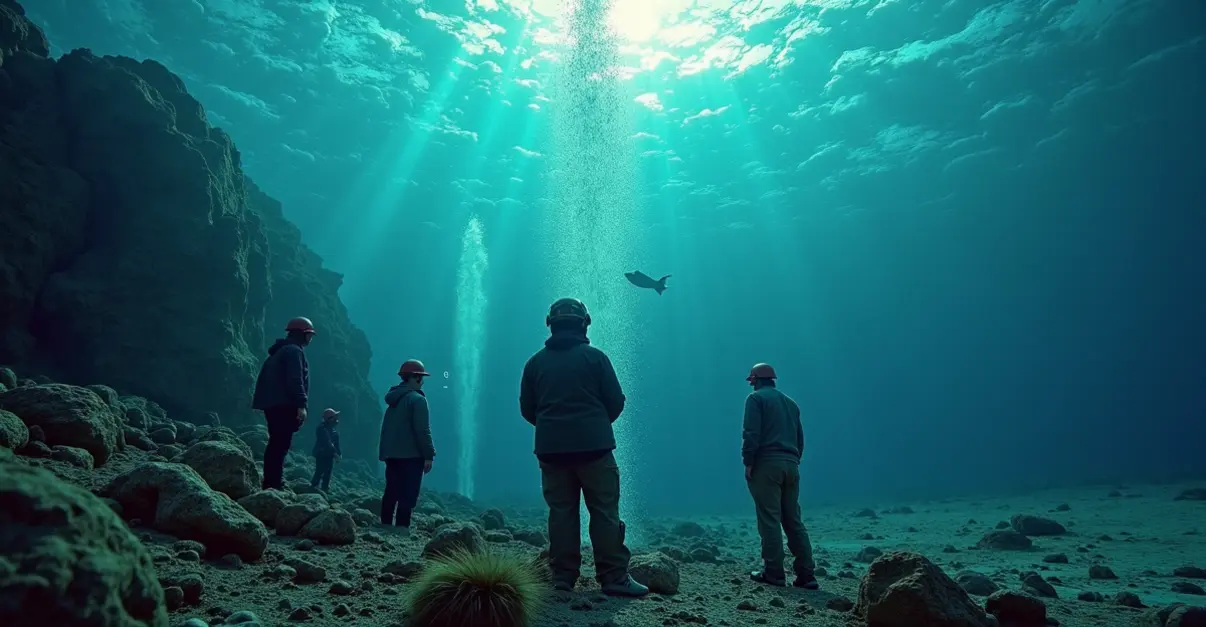
Deep seabed mining targets polymetallic nodules—potato-sized rocks rich in nickel, cobalt, copper and manganese that carpet the abyssal plain at depths of 4,000 to 6,000 metres. The Clarion-Clipperton Zone, a 4.5 million km² Pacific region, holds an estimated 21 billion tonnes of nodules containing more cobalt than all known land reserves, valued at roughly $380 billion. With battery-metal demand surging—the IEA projects copper and cobalt deficits through 2035—these deposits have become a strategic battleground for both energy transition and national security.
Regulatory Deadlock: The ISA's 31st Session Fails Again
At its July 2026 meeting in Kingston, Jamaica, the International Seabed Authority mining code negotiations stalled for another year. The 31st session left unresolved disputes over benefit-sharing, environmental thresholds, inspection powers and the scope of mining activities. The ISA also extended the exploration contract of Nauru Ocean Resources Inc., a subsidiary of The Metals Company, for five years—a move Greenpeace called a dangerous precedent, since the same parent company is now pursuing the area through a separate U.S. track. Talks are set to resume in March 2027, with no adoption expected this year.
The U.S. Unilateral Track
President Trump's April 2025 executive order revived the 1980 Deep Seabed Hard Mineral Resources Act, and NOAA's January 21, 2026 final rule created a consolidated exploration-and-recovery application. In 2026, The Metals Company's U.S. subsidiary filed the first such application, covering roughly 65,000 km² in the Clarion-Clipperton Zone with an estimated 619 million tonnes of wet nodules. CEO Gerard Barron described the move as a shovel-ready path to U.S. mineral independence; NOAA found the application substantially compliant and opened environmental review.
China's Dominant Exploration Position
China sponsors five of the ISA's 32 active exploration contracts—the largest share of any state—covering about 225,000 km², including three contracts in the CCZ. In 2025, China Minmetals and Beijing Pioneer received approval for pilot mining trials, while COMRA's China deep sea mining program continued expanding across polymetallic nodules, sulphides and cobalt-rich crusts. Because the U.S. is not a UNCLOS signatory, it holds zero votes in ISA rule-making, leaving the rules for seabed access through the 2030s and 2040s to be written largely without American input.
Pacific Island Nations Caught in the Middle
More than 30 states now support a moratorium or precautionary pause on deep seabed mining, but the Pacific Island nations are far from unified. Nauru remains the region's strongest advocate for commercial mining through the ISA, while the Cook Islands, Tonga, Kiribati and Niue are pursuing exploration with an emphasis on science and governance. In contrast, Palau, Fiji, Samoa, Vanuatu and the Marshall Islands back a moratorium pending stronger regulations and environmental science. This split reflects competing pressures: potential royalties and development finance versus ocean heritage and unproven ecosystem risk.
Economic and Environmental Stakes
The economic prize is enormous, but so are the risks. Polymetallic nodules in the CCZ contain an estimated 15.5 million tonnes of nickel, 12.8 million tonnes of copper and 2 million tonnes of cobalt in TMC's application area alone. Yet 82+ institutions managing €24 trillion in assets now restrict deep-sea mining investment, and 39 corporations—including BMW, Volkswagen and Samsung—support a moratorium. Environmental concerns centre on sediment plumes, noise and habitat loss in slow-regenerating ecosystems. A 2025 trial found macrofaunal density 37% lower in collector paths.
| Dimension | ISA Framework | U.S. DSHMRA Track |
|---|---|---|
| Legal basis | UNCLOS / ISA Mining Code | 1980 Act, revived by 2025 executive order |
| Status in 2026 | No exploitation regulations adopted | Consolidated applications under review; first TMC filing |
| China's role | 5 contracts, largest acreage, ISA financier | No direct role; warns against undermining ISA |
| U.S. role | Non-signatory, no vote | NOAA permits outside UNCLOS |
What Happens Next in 2026 and Beyond?
With ISA talks postponed to March 2027 and NOAA's environmental review for TMC's consolidated application underway, 2026 may be remembered as the year the regulatory dam began to crack rather than break. The convergence of deadlock, unilateral action and surging demand for critical minerals supply chains suggests that commercial deep seabed mining could begin in U.S.-licensed areas before a global code exists—forcing Pacific states, investors and environmental advocates to choose sides in an accelerating deep sea mining moratorium debate.
FAQ: Deep Seabed Mining Showdown in 2026
What is the deep seabed mining showdown?
It is the 2026 clash between the stalled ISA Mining Code, unilateral U.S. licensing under the Deep Seabed Hard Mineral Resources Act, China's dominant exploration acreage, and a growing global moratorium movement.
Why did the ISA's 31st session fail?
Negotiators could not resolve disputes over environmental standards, benefit-sharing, inspection powers and the scope of mining, leaving 46 outstanding standards and guidelines and no adoption timeline.
How much seabed does China control in the Clarion-Clipperton Zone?
China holds five ISA exploration contracts covering roughly 225,000 km², including three contracts in the CCZ—the largest national share of any state.
Which Pacific nations support a deep sea mining moratorium?
More than 30 states support a moratorium or precautionary pause, including Palau, Fiji, Samoa, Vanuatu and the Marshall Islands, while Nauru and others advocate for regulated commercial mining.
Conclusion
Deep seabed mining is no longer a theoretical frontier. In 2026, the showdown between a deadlocked ISA, a resurgent U.S. unilateral track and China's entrenched exploration advantage is redrawing the geopolitical map of the ocean floor—and the choices made this year will shape the deep ocean for decades to come.




Follow Discussion