


 Deutsch
 English
 Español
 Français
 Nederlands
 Português


 Share
Share




Global Initiative Launches to Address Deep Sea Mining Challenges
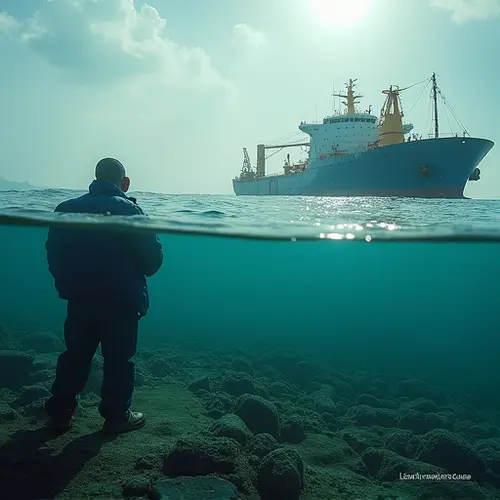
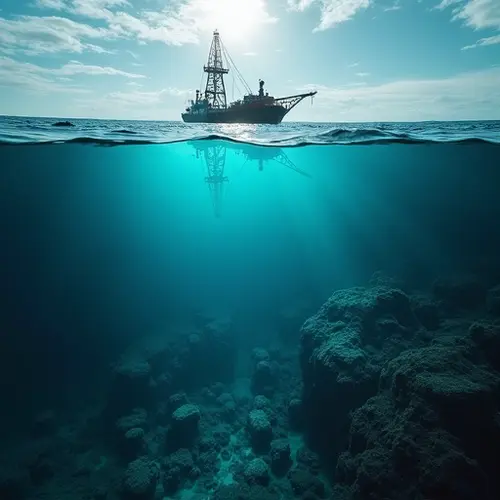
In a landmark development for ocean governance, an International Task Force on Deep Sea Mining has been formally established to assess environmental and legal frameworks governing the extraction of valuable minerals from the ocean floor. This multinational initiative brings together stakeholders from government, industry, scientific communities, and environmental organizations to address one of the most pressing marine resource challenges of our time.
Stakeholders Unite for Sustainable Ocean Management
The task force represents a collaborative effort between nations with significant deep-sea mineral interests, including Norway, the Cook Islands, and Pacific Island states, alongside environmental advocacy groups and mining corporations. 'This represents a crucial step toward balancing economic opportunity with environmental responsibility,' stated marine policy expert Dr. Elena Rodriguez. 'We cannot afford to repeat the mistakes of terrestrial mining in our oceans.'
The formation comes at a critical juncture as the International Seabed Authority (ISA) faces pressure to finalize regulations by 2025. The ISA, which administers deep seabed resources beyond national jurisdiction under the UN Convention on the Law of the Sea, has granted 31 exploration licenses but has yet to approve commercial-scale operations.
Environmental Concerns Drive Framework Development
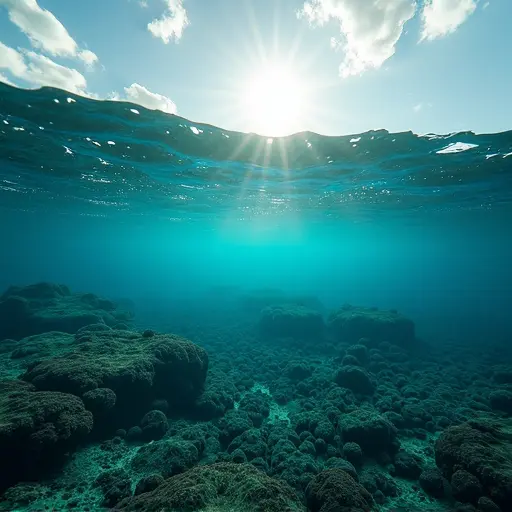
Deep sea mining targets three main mineral formations: polymetallic nodules found at depths of 4-6 km, polymetallic sulphides in mid-ocean ridges, and cobalt-rich crusts in the Western Pacific Ocean. The Clarion-Clipperton Zone alone contains over 21 billion metric tons of polymetallic nodules, with minerals such as copper, nickel, cobalt and manganese making up roughly 30% of their weight.
Environmental advocacy groups have raised significant concerns about potential ecosystem damage. 'The deep sea represents one of the last pristine environments on Earth,' noted Greenpeace marine biologist Dr. Sarah Chen. 'Mining operations could destroy fragile habitats and create sediment plumes that could spread pollution across vast ocean areas.'
Recent research published in Frontiers in Marine Science highlights deficiencies in current environmental impact assessment frameworks, particularly in risk assessment, cumulative impact evaluation, and stakeholder participation.
Legal and Regulatory Challenges
The task force will examine the complex legal landscape governing deep sea mining, including the role of the ISA's Mining Code and national regulations within exclusive economic zones (EEZs). Norway's government announced its intention to allow companies to apply for exploration permits in 2025, though these plans faced temporary setbacks due to political opposition.
Meanwhile, The Metals Company, a Canadian startup, is pushing forward with plans to launch the world's first deep-sea mine in the eastern Pacific Ocean, potentially bypassing the ISA's regulatory process. As reported by NPR, the company plans to seek approval from the United States by the end of June 2025.
'The legal framework is fragmented and evolving rapidly,' explained international law professor Dr. Michael Thompson. 'We need coordinated international standards to prevent a regulatory race to the bottom.'
Economic Drivers and Critical Minerals
The push for deep sea mining is largely driven by the global transition to clean energy technologies. Electric vehicle batteries, wind farms, solar energy systems, and battery technologies require substantial amounts of the critical metals found in deep-sea deposits. It is estimated that the global ocean floor holds more than 120 million tons of cobalt, five times the amount found in terrestrial reserves.
Developing nations are particularly interested in ensuring equitable distribution of economic benefits. The ISA's "parallel system" has resulted in over 30 exploration contracts with 22 contractors, potentially leading to multiple simultaneous mining operations.
Path Forward and Global Implications
The International Task Force will work to develop comprehensive recommendations for environmental protection, benefit-sharing mechanisms, and regulatory harmonization. Their work is expected to influence ongoing ISA negotiations and national policy decisions.
Over three dozen countries have called for a precautionary pause on mining until regulations are complete, citing potential harm to unknown deep-sea species and ecosystems. The task force's recommendations will be crucial in determining whether deep sea mining can proceed in an environmentally sustainable and socially responsible manner.
'This is about more than just mining regulations,' concluded task force coordinator Maria Santos. 'It's about defining our relationship with the ocean for generations to come.'



Follow Discussion