


 Deutsch
 English
 Español
 Français
 Nederlands
 Português


 Share
Share




The Rhine water scarcity that has already disrupted shipping and water supplies across Western Europe will become significantly more pressing in the coming decades, according to new research from the Netherlands' Delta Programme. The study warns that the seven-day minimum summer discharge at Lobith, where the Rhine enters the Netherlands, could fall by 10 to 30 percent by the year 2100 as a result of climate change — and that is before accounting for upstream water retention measures by Germany and Switzerland.
Why the Rhine's summer flow is shrinking
The new findings, based on KNMI'23 climate scenarios, examine the river's lowest seven-day summer flow, a critical benchmark for drought management. Projections show a decline of 10 percent under moderate warming and up to 30 percent in the most severe scenario. These figures exclude deliberate human interventions that neighbouring countries may take to hold back water when scarcity bites.
“We can assume that our neighbouring countries in the upstream part of the Rhine basin will start taking measures to retain water, just like the Delta Programme,” said Saskia van Vuren, a river expert on the staff of the Delta Commissioner. “They too will face reduced freshwater availability.”
If Germany or Switzerland were to maximise water retention during dry spells, the effects would be felt almost immediately in the Netherlands. The Rhine low water crisis is therefore not just a national issue but a cross-border challenge requiring coordinated planning.
How upstream countries could deepen the shortage
While robust agreements already exist for high-water situations, the same is not true for low water. Van Vuren stressed that international pacts on water distribution must be extended to cover droughts. “For high water there are already quite firm agreements. But for low water we will also have to make them,” she said, noting that such deals are “also in the interest of the Germans, where the economic losses during previous low-water events were the greatest.”
The Union of Water Boards (Unie van Waterschappen) recently called for European rules on water allocation across entire river basins, on top of the existing international river commissions. The international river agreements debate is gaining urgency as Brussels pays more attention to climate adaptation and water security.
Jeroen Haan, chair of the Union of Water Boards, said: “It is higher on the agenda. But not all policy works in the right direction to slow climate change.” He added that planning takes too long and that “with an eye on current events — and the expectation that this will happen much more often in the future — more speed and more consistent policy are needed.”
Current low water hits shipping and the economy
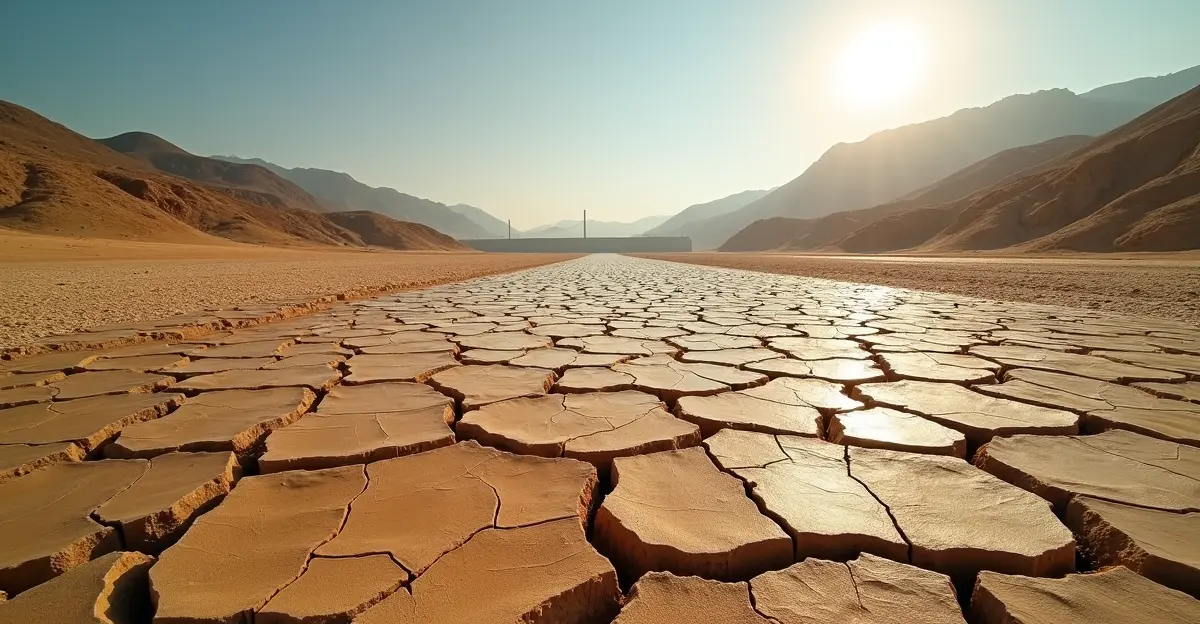
The warning comes amid a severe low-water episode. At Lobith, the Rhine discharge was around 640 cubic metres per second in mid-August 2026, well below the August norm of roughly 1,100 m³/s. The German gauge at Kaub, the river's shallowest point, fell to about 19 centimetres — below the 2018 record and the lowest since measurements began in 1880.
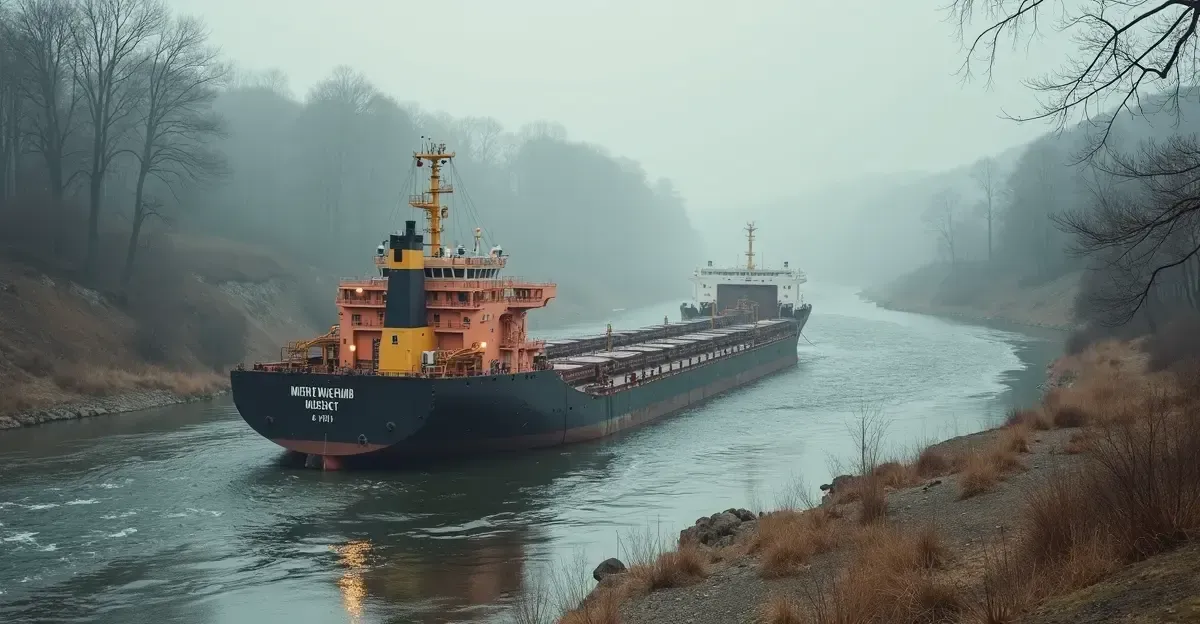
Shipping has been forced to carry lighter loads, and several locks and canals, including the Twentekanalen and the Parksluizen in Rotterdam, have been closed. The 2026 European drought has strained supply chains for chemicals, fuels, grains and coal, with some companies shifting cargo to rail and road. Economists estimate the disruption could trim Germany's third-quarter GDP by 0.1 to 0.2 percent.
Rijkswaterstaat has warned that low discharges could persist until December unless weeks of sustained rainfall arrive. The current crisis underscores the longer-term projections: without stronger cross-border cooperation and faster climate action, summer water scarcity on the Rhine will only intensify.
What needs to change
The Delta Programme is working toward a Preferred Strategy for the Rhine, with partners expected to present plans in 2026 as input for the national Delta Programme 2027–2033. Key priorities include preventing further riverbed erosion, exploring river widening, and addressing low-water allocation in sensitive areas such as the Gelderse Poort.
Experts agree that treating the river system as a whole — from Switzerland to the North Sea — is essential. “Look across borders at the rivers. What are the Germans doing, what are the Swiss doing? Consider the river system integrally,” Van Vuren urged.
Frequently Asked Questions
How much could Rhine summer flow drop by 2100?
The Delta Programme study projects a 10 to 30 percent decline in the seven-day minimum summer discharge at Lobith by 2100, depending on the climate scenario.
Why does upstream water retention matter for the Netherlands?
If Germany or Switzerland hold back water during droughts, the reduced flow reaches the Netherlands within days, cutting freshwater supplies for drinking water, agriculture and shipping.
What is the current Rhine water level in 2026?
In August 2026, the Rhine at Lobith was around 640 m³/s versus a norm of 1,100 m³/s, and the Kaub gauge in Germany fell to about 19 cm, a record low.
What is the Delta Programme?
The Delta Programme is the Dutch government's long-term plan to protect the Netherlands from climate change, focusing on flood risk, freshwater availability and spatial adaptation.
Are there international agreements for low water on the Rhine?
Not yet. Strong agreements exist for high water, but the Union of Water Boards and the Delta Programme are calling for new low-water protocols covering the entire river basin.


Follow Discussion